Robert Halfon MP

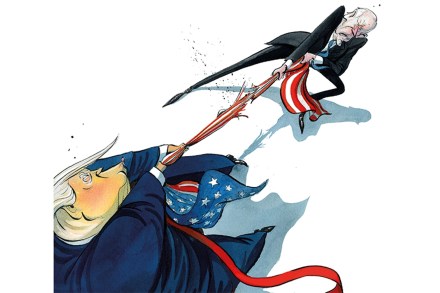
Is this the end for Trumpism?

From our UK edition

28 min listen

What are the latest developments in the US presidential election? (01:15) - Lara is joined by the Spectator's economics correspondent Kate Andrews and the Spectator US's editor Freddy Gray, who is currently in Pennsylvania.What is it like to care for a disabled child during a time of lockdown? (09:19) - The journalist Sam Carlisle discusses the lack of support for her daughter Elvi with the Education Select Committee Chairman Robert Halfon. And finally, should churches keep their doors open throughout the pandemic? (20:42) - Journalist Laura Freeman thinks so, and considers the issue with Reverend Steve Morris from St Cuthbert's Church in North Wembley.Presented by Lara Prendergast.
The conservative case for extending free school meals

From our UK edition

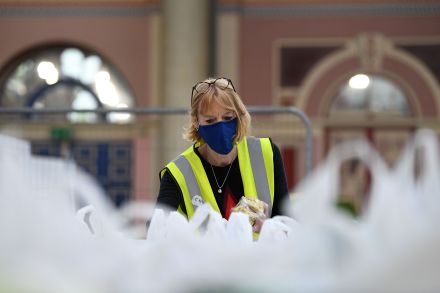
What do Conservatives care about? First, high-quality education and academic attainment. Second, value for money for the taxpayer. Third, (unless you are an arch-libertarian) recognition that the battle that must be won is not between big government or small government, but good government. Combating child hunger should, therefore, be a cause that all Conservatives can embrace. That should include the temporary extension of free school meals over the holidays while (and only while) the economic impacts of the pandemic continue to be felt. That’s why I voted against the government on Wednesday evening in favour of the proposal.

University Challenge: the next education mess

From our UK edition

31 min listen

While the government’s U-turn on A-level and GCSE results has been widely welcomed, universities are still in a dire state – why? (00:55) Plus, has Boris Johnson got the right approach in his war on fat? (15:00) And finally, are illegal raves during the pandemic socially irresponsible, or just young people sticking it to The Man? (25:45)  With academic and author Matthew Goodwin; chair of the Education Select Committee Robert Halfon; Spectator columnist Lionel Shriver; weight loss doctor Andrew Jenkinson; Spectator contributors Leaf Arbuthnot and James Delingpole. Presented by Cindy Yu. Produced by Cindy Yu, Max Jeffery and Alexa Rendell.

I suppose I should just get on with being an MP

From our UK edition

I was recently quoted in the Sun newspaper in a story about how MPs were reacting to the Brexit drama in the House of Commons. I said: ‘It feels like the Commons is having a collective breakdown — a cross between Lord of the Flies and One Flew Over the Cuckoo’s Nest. People are behaving in ways that were unimaginable even just a year ago, whether they be Remainers, Leavers or in-betweens. The Brexit madness has affected us all.

The Conservatives’ moral mission: jobs, jobs, jobs

From our UK edition

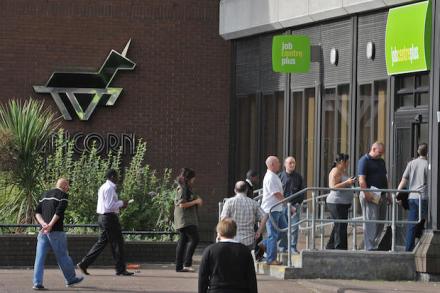
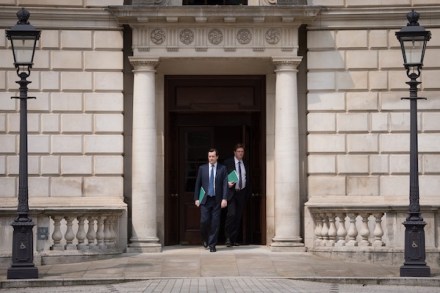
Remember Labour’s defining mission: ‘education, education, education’? Yesterday we had the Conservative equivalent ‘jobs, jobs, jobs’. In what some might see as an important day in the development of the mission of the Conservative Party, the Chancellor pledged the goal of Full Employment: ‘Today I’m making a new commitment. A commitment to fight for Full Employment in Britain, making jobs a central goal of our economic plan.’ What does this mean in practice? It suggests that cutting taxation and cutting the deficit is all about creating the conditions for work, not that tax cuts, and balancing the books are ends in themselves. It creates a moral imperative for economic reform which is not just about rolling back the size of the state.

We will never save the planet on the backs of the poorest

From our UK edition

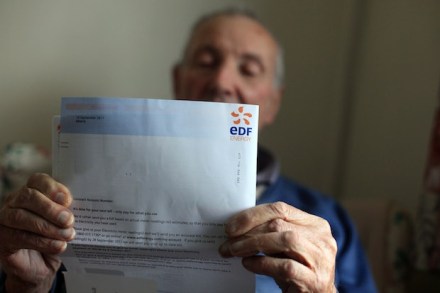
Yesterday – in a crunch vote in the House of Lords – Labour were narrowly defeated by 216 votes to 202. The issue? Energy bills. Except, this time, the Labour Party was demanding that your bills should RISE by £125 a year. Confused? The quarrel yesterday was all about the ‘2030 decarbonisation target’ – a technocratic term, which means in essence a new carbon tax on your utility bills. It would be a tax on everything. A tax on your fridge, your kettle, your oven, your TV, and every light-bulb in your home. If Britain were to commit to this now, it would mean locking in expensive forms of electricity generation over the next 17 years. Labour voted for this to happen, and they nearly won.

Motorists deserve a full inquiry into fuel price-fixing allegations

From our UK edition

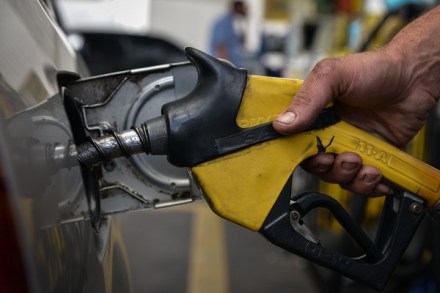
Everybody knows that the price of motoring fuel is too expensive. Often, this is blamed on the taxman: at nearly 60 per cent of the cost of fuel, it is a toxic tax that affects the price of everything. Of course, we should recognise that fuel duty is 13p cheaper in tax terms thanks to actions by the Chancellor, but fuel duty needs to be a top priority for tax cuts as soon as financial conditions allow. But the desire to see lower fuel taxation often means that the wider debate on the price of fuel is overshadowed. This changed in May this year when it was announced that the European Union had raided the offices of several oil giants to look into allegations of price fixing. Many have long suspected that there may be some manipulation of oil prices.

Spending review – a response from a Tory marginal

From our UK edition

If there was one thing the spending review has proved, it is that the Conservative-led coalition is a compassionate government. In fact, I would go further and argue that it is a government that has given true meaning to ‘cradle to grave’ conservatism. From the beginning of the life-cycle to the end, the coalition is investing in ways that are profoundly Conservative, while also passing known socialist yardsticks, such as the redistribution of wealth from the rich to the poor, by ensuring that the wealthiest bear the greatest burden of taxation and that resources are targeted at to those most in need.

Restoring the 10p tax rate would be fair and simple

From our UK edition

MPs will today debate taxes and the living wage - in particular, my campaign to restore the 10p rate of income tax. For Conservatives, a 'starter' rate of 10p would help us to counter the Labour war-cry that the Coalition is only interested cutting taxes for millionaires. It would prove to the electorate, that this Government is on a moral mission to help the poor, by boosting the cash income of a worker on minimum wage by more than £250 a year. As Tim Montgomerie puts it: 'We must declare very loudly and clearly that tax cuts for the working poor will be our priority as the economy picks up.' As an economic reform, it would be hugely cheaper than raising the personal allowance to £12,500 and it would be symbolic of the Coalition’s mission to repair our economy.

Trade unions are capitalist, community-minded, and Conservative

From our UK edition

Last week there were reports that Unite were going to be offering unemployed people a chance to join their trade union for as little as 50p a week. In doing so, they would be offered services such as  legal support and education facilities. Instead of welcoming this as a brilliant Big Society idea to help the jobless, some Conservatives indulged in their traditional union-bashing - making no distinction between the politics of Len McCluskey and the services that were being offered to vulnerable people. The principle behind this idea is something that every Conservative should support. The more help that can be offered to those without work, the better. I wish the Conservative Party offered these services as well. I am a proud trade unionist and a member of Prospect.

Democracy in the BBC

From our UK edition

What is that quote at the end of King Lear?  I think it is something like “the wheel has come full circle”. I felt a sense of that wheel with the announcement by Mr Miliband yesterday that the BBC should be democratised and become some sort of mutual co-operative. I have been campaigning for democratisation of the BBC licence fee for a while now, first writing about it on ConservativeHome in 2008 and most recently tabling an Early Day Motion, only a couple of weeks ago. Inevitably a few brickbats were thrown.