Richard Johnson

Richard Johnson is a historian of the Labour party and a politics lecturer at Queen Mary University of London.

Does British politics reward traitors or faithfuls?

From our UK edition

22 min listen

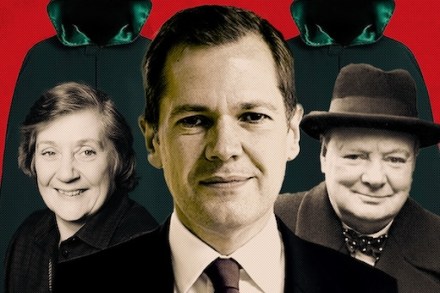
With the Conservatives on watch for further defectors, academic Richard Johnson and Conservative peer Danny Finkelstein join James Heale to discuss whether British politics rewards traitors or faithfuls. Richard points out that often personal success is dependent on whether the party goes on to be a major or minor player in British politics; Winston Churchill and Shaun Woodward fared better, while Shirley Williams and Mark Reckless had less success. Danny – whose political career began with the SDP in the 1980s – also takes us through his personal experience and the challenges of defecting, from ideology and demography to the perception of betrayal. How fundamental is the shift taking place in British politics? Produced by Patrick Gibbons.
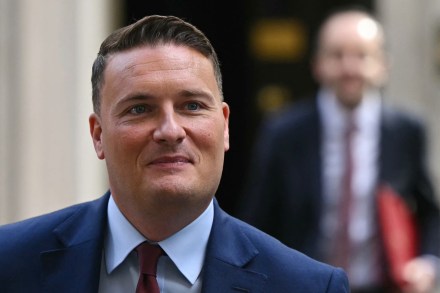
Could Wes Streeting move against Keir Starmer?

From our UK edition

Angela Rayner’s failure to get proper tax advice on her house in Hove could be one of those ‘butterfly effect’ moments, where a seemingly trivial incident (like the flap of a butterfly’s wings) sets off a chain of events with precipitous consequences. It could well lead to Keir Starmer’s removal as Labour leader. This is Streeting’s best chance of ever becoming party leader Labour is not unfamiliar with butterfly moments. In 2012, the Labour MP for Falkirk, Eric Joyce, headbutted a Conservative MP in Strangers’ Bar in Parliament, after growling, ‘There are too many fucking Tories in here’.

Revenge of the left

From our UK edition

12 min listen

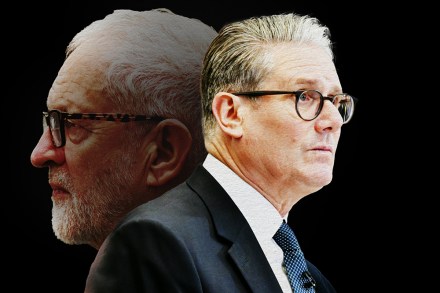
James Heale writes in The Spectator this week that Keir Starmer is facing a three-pronged attack from the left: the Greens, the Gaza independents and this new – as yet untitled – Corbyn party. It was not so long ago that we were giving Starmer credit for his ruthless streak, purging the party of the far left and making Labour an electable force once again. But now it looks like he may well be the architect of his own downfall. Each of these groups has a grievance against Starmer and it all seems just a little bit personal: ‘After the treatment meted out to Corbyn and the left, many of these figures are looking forward to returning the favour.’ So, what is left of the left of Labour?

The real Brexit betrayal, bite-sized history & is being a bridesmaid brutal?

From our UK edition

44 min listen

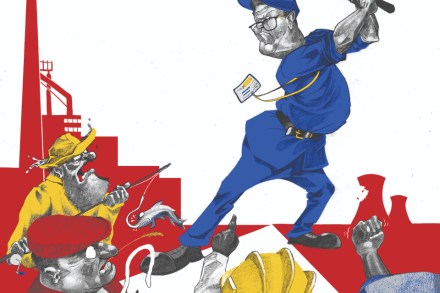
The real Brexit betrayal: Starmer vs the workers‘This week Starmer fell… into the embrace of Ursula von der Leyen’ writes Michael Gove in our cover article this week. He writes that this week’s agreement with the EU perpetuates the failure to understand Brexit’s opportunities, and that Labour ‘doesn’t, or at least shouldn’t exist to make the lives of the fortunate more favourable’. Michael makes the argument that ‘the real Brexit betrayal’ is Labour’s failure to understand how Brexit can protect British jobs and industries and save our manufacturing sector. Historian of the Labour Party Dr Richard Johnson, a politics lecturer at Queen Mary University writes an accompanying piece arguing that Labour ‘needs to learn to love Brexit’.

Labour must learn to love Brexit

From our UK edition

The problem with Keir Starmer’s approach to Brexit is that it fundamentally misunderstands the country. It isn’t that the Leave-voting public have realised that they made the wrong choice, foolishly tricked by the slogan on the side of a bus a decade ago. Voters in Grimsby have not suddenly been won round to the virtues of the Common Fisheries Policy. Most Leavers do not suddenly think shorter queues at the airport in Sofia is worth the downward pressure on wages caused by thousands of young Bulgarians who (understandably) will think Britain’s £12.21 minimum wage is more attractive than Bulgaria’s roughly £3 per hour. The reason people feel dissatisfied with Brexit is not that the UK has diverged from the EU but because it hasn’t diverged enough.

How the Blue Dogs have evolved

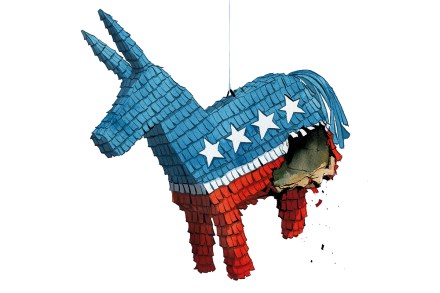
In every iteration of the American National Election Studies since 1952, respondents have been asked to name their biggest “like” and “dislike” when it comes to the two main parties. From 1952 to 2004, voters’ biggest “like” about the Democratic party was that it was the “party of the working class,” whereas the biggest “dislike” that voters had of the Republican party was that it was the “party of big business and the upper class.” Today, the parties’ reputations have shifted dramatically, mirroring the changing composition of their electorates. In the 1990s, nearly 60 percent of Democratic voters were white and didn’t have college degrees. For the 2020s, that proportion has fallen to 25 percent.

Blue Dogs