Richard Davenporthines

MaddAddam by Margaret Atwood – review

From our UK edition

The two opening volumes of Margaret Atwood’s trilogy have sold over a million copies. One of them managed to be shortlisted for the Man Booker prize in the nadir year that D.B.C. Pierre’s Vernon God Little won. Entitled Oryx and Crake (2003) and The Year of the Flood (2009), they depict planet Earth after humankind has been obliterated by a pandemic triggered by a newly devised pharmaceutical that arouses sexual rapture and retards ageing. A bioengineered humanoid species, the Children of Crake, however, survive: ‘free from sexual jealousy, greed, clothing and the need for insect repellent and animal protein’.
The Selected Letters of Willa Cather, edited by Andrew Jewell – review

From our UK edition

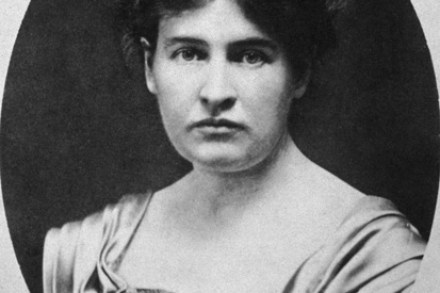
Willa Cather is an American novelist without name-recognition in Europe, yet she had a wider range of subject and deeper penetration of character than other compatriot novelist of her century. Hemingway, Fitzgerald, Faulkner, Bellow and Roth vie with, but never beat, her emotional force and the beauty of her prose. The great obstacle is that she is a woman, with a name that sounds silly. She knew more about survival in extreme conditions than other novelists, she wrote in 1913, ‘but I could never make anybody believe it, because I wear skirts and don’t shave’. As a young woman, Cather feasted on Virgil and Shakespeare — and it shows. In O Pioneers!

‘Death in the Baltic: The World War II Sinking of the Wilhelm Gustloff’, by Cathryn J. Prince – review

From our UK edition

Wilhelm Gustloff was a Nazi leader in Switzerland, who was shot dead in his Davos apartment by a Croatian Jewish medical student in 1936. Hitler at the ensuing state funeral promised that Gustloff would remain ‘immortal’ under the Third Reich. But his name is now only remembered because it was bestowed on a ship which later sank with the highest loss of life in maritime history. The torpedoing of the Wilhelm Gustloff in the Baltic in 1945 took an estimated 9,400 lives. This is double the number who perished with the Doña Paz in the Philippines in 1987, and far outstrips the 1,523 lost on Titanic in 1912.

Distant Intimacy: A Friendship in the Age of the Internet, by Frederic Raphael and Joseph Epstein – review

From our UK edition

One often hears the caterwaul that the harsh new technology of emails has killed the gentle old craft of letter-writing.  Joseph Epstein and Frederic Raphael — septuagenarian pen-pals who have never met, the one based in Chicago and the other dividing his year between South Kensington and Périgord — have set out to prove the doomsayers wrong by publishing their email traffic for the year 2009. Epstein and Raphael start with one disadvantage, perhaps. They have the wit to be great letter-writers, but not the frustration.  It is unfulfilled talents or time-wasters, failing to find other means of self-expression, who excel as correspondents.

The wilder shores of Wilde

From our UK edition

In 1946, as a Princeton graduate, J. Robert Maguire was attached to the American delegation at the Paris Peace Conference. He befriended an elderly survivor of the Dreyfus Affair, from whom he acquired important unpublished documents, and ever since has been a quiet, discriminating buyer of archival material relating to sensational trials and miscarriages of justice — particularly the Wilde and Dreyfus cases. After nearly 70 years he has published the sum of his researches into Carlos Blacker, Wilde’s friend and Dreyfus’s champion, and the ways in which those sensational cases interlocked and rebounded on Blacker. Ceremonies of Bravery is a recondite book, written with lawyerly precision and patrician understatement, but it also has rare charm.

The French connection | 15 November 2012

From our UK edition

When novelists write essays, they often boom through megaphones, aggrandise the importance of their views and inflate their stature.  Julian Barnes, however, seems to be a novelist who enjoyed feeling special when young, but now finds increasing rueful comfort in reminders of his own insignificance.  Certainly there is no swagger in his 17 essays about truth and fiction collected in Through the Window. The book relies on stylish intelligence and cool calm to accomplish its mastery. Barnes sees novelists as solitary truth-seekers and public truth-tellers. ‘The best fiction rarely provides answers; but it does formulate the questions exceptionally well,’ he writes. Novels inquire about the purpose, discipline, pleasures and value of life, and the meaning of its loss.

Flaws in our national treasure

From our UK edition

Charles Dickens remains in his bicentennial year as much a national treasure as Shakespeare, and just as deeply embedded in the English psyche as the Bard, declares Michael Slater, an Emeritus Professor of Victorian Literature at the University of London. Among the innumerable Victorians who sanctified domesticity, sentimentalised hearth and home and idealised family love, Dickens is especially conspicuous. Few people nowadays know Coventry Patmore’s Angel in the House, but many have seen depictions of Bob Cratchit’s humble Christmas dinner in A Christmas Carol.

Philida, by André Brink

From our UK edition

The location of Philida is a Cape farm which used to be named Zandvliet and is now the celebrated vineyard Solms Delta, owned jointly by Richard Astor and the eminent neuropsychologist Mark Solms. It was Solms who brought to André Brink the story on which the veteran South African novelist bases his 21st work of fiction, which has been longlisted for the Man Booker prize. The novel’s eponymous heroine is based on a real-life slave who in 1824-32 worked as a knitting-girl at Zandvliet, which then belonged to collateral ancestors of the author.

Preaching to the converted

From our UK edition

Jonathan Franzen is a pessimist with a capacity for quiet joy. In a revealing passage in this collection of essays, reviews and speeches he writes of his fellow novelist Alice Munro: ‘She is one of the handful of writers, some living, most dead, whom I have in mind when I say that fiction is my religion’. Explaining this, he apes the General Confession in a church service. Reading Munro makes him reflect ‘about the decisions I’ve made, the things I’ve done and haven’t done, the kind of person I am, the prospect of death’. The stealthy theme of Farther Away is Franzen’s secularised religiosity.

Hero or villein?

From our UK edition

‘Not one word’, exclaimed Turgenev of Tolstoy, ‘not one movement of his is natural! He is eternally posing before us!’ The recurrent underlying theme of A.N. Wilson’s prize-winning biography of Tolstoy, now re-issued after a quarter of a century, is the novelist as grand impersonator. Wilson (a prolific novelist himself) believes that there is a strong impulse in novelists to don masks or test alter egos, and that this impulse rioted in Tolstoy’s character. Throughout his long life Tolstoy switched between playing at sad orphan, landowner, libertine, crazed gambler, spiritual elder, holy fool, paterfamilias, historian, village idiot, cobbler and dissident.

A lord of thin air

From our UK edition

It is easy, especially if one is not American, to feel ambivalent about the fictions of John Updike. The immaculate clarity of his prose style, the precision of his vocabulary, the tenderness underlying his Wasp comedies of manners, the puckish wit rising above a sorrowful temperament — none of these can be gainsaid. But the ways in which his novels seemed to raise the banality of fornication to some remote altitude of meaning, his efforts to imbue the quandaries of adultery and cuckoldry with transcendent significance, can seem relentless and overdone.

A polished fragment

From our UK edition

One evening nearly 40 years ago the world’s press descended on Patrick White in Sydney: they rampaged outside his house, pounded its doors, shouted through windows, camped on the lawn. The reason for this hullabaloo was that White had beaten Saul Bellow in the race for the Nobel Prize for Literature of 1973. Yet in contrast to Bellow, there is scant recognition of White’s name nowadays. His books are seldom read. There is no bodyguard of loyal emulators, as Bellow has with Martin Amis. The publication — in the year of White’s centenary — of an austerely precise slice of his literary remains provides a moment to recall and appraise him. White had patrician Australian parents who sent him for an expensive education in England.

Picking up the pieces

From our UK edition

‘The World of Interiors’ might have been a better title for this novel. Its two chief protagonists, Catherine Gehrig and Henry Brandling, live a century and a half apart, but both are beset by circumstances that make them physically isolated and emotionally stunted. They rail in furious misery, and are sunk in interior communing. Commodities matter to them: they are materialists gift-wrapped as aesthetes. Gehrig muses on ‘the huge peace of metal things’, appreciates Clarice Cliff tea-cups, arrays with austere elegance the tools of her work, ‘pliers, cutters, piercing saw, files, hammer, anti-magnetic tweezers, brass and steel wire, taps and dies, pin vice.

Menace, mystery and decadence

From our UK edition

It is fitting that Charles Dickens’s bicentenary coincides with Lawrence Durrell’s centenary, for the two novelists have crucial resemblances: both of them are triumphant in the intensity and power of their writing, but capable of calamitous lapses of taste; both of them are riotous comedians who sometimes plunge into hopeless melodrama. It is true that Einstein’s theory of relativity, which Durrell foisted on the structure of The Alexandria Quartet (reprinted, with a new introduction by Jan Morris) has no more part in Martin Chuzzlewit than the ludicrous sexual obsessions derived from Sade and Henry Miller which sully Durrell’s plot. But Dickens in certain moods was, as Angus Wilson said of Durrell’s novels, ‘floridly vulgar’.

A horrid story of intellectual corruption

From our UK edition

The death of a great author often causes interminable displays of corrosive envy. Heirs, acolytes, interpreters and academics resent one another’s claims on the literary estate or cultural heritage. They try to engross the dead talent for their own. They claim privileges, and make spiteful stabs at people with whom they have the closest affinities. It was inevitable that this would be the fate of someone of the momentous stature, but sometimes arcane significance, of Henry James.

Poison Ivy

From our UK edition

‘Who was she?’, a browser might ask on finding three re-issued novels by Ivy Compton-Burnett, and ‘Why should I read them?’ Dame Ivy Compton-Burnett (1884-1969) was one of 13 children of a Victorian physician. After his death, his widow wrapped herself in anger and subjected her children to cruel, neurotic tyranny. Their verbal laceration continued after her death in 1911, for Ivy took control of her siblings, and enforced a sadistic autocracy learnt from her mother. On Christmas Day 1917, the two youngest girls, ‘Topsy’ and 18-year-old ‘Baby’, for whom family life seethed with aggression, nerve storms and spite, locked themselves in a bedroom, and died in one another’s arms of overdoses of barbiturates.

AfterWord edited by Dale Salwak

From our UK edition

‘Conjuring the Literary Dead’ is the sub-title of this outlandish, sometimes beguiling book. Its editor, Dale Salwak, coaxed 19 writers — of the status of Margaret Drabble, Francis King, Jay Parini and Alan Sillitoe — to write essays in which they imagine speaking to dead authors who intrigue them. The resulting chapters are often inquisitive, macabre and teasing, but occasionally flat or laborious. ‘Perhaps all writing is motivated, deep down,’ Margaret Attwood suggests in an introductory survey, ‘by a fear of and fascination with mortality — by a desire to make the risky trip to the Underworld, and to bring something or someone back from the dead.

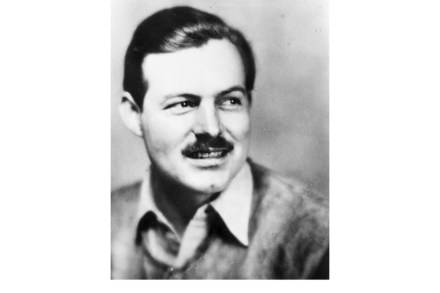
The Letters of Ernest Hemingway, Volume I, 1907-1922 by Sandra Spanier and Robert W. Trogdon

From our UK edition

There was a time when every alpha-male tyro author had to read Hemingway. He was an amalgam of Stephen Crane, François Mauriac and Errol Flynn, roistering war reporter, existential swaggerer and sexual aggressor, and a superb prose stylist to boot. When in 1978 Bruce Chatwin identified the literary masters whom an aspirant novelist should emulate, he recommended Chekhov, Maupassant, Flaubert and Turgenev for their piercing concision and stylistic richness, ‘and among the Americans, early Sherwood Anderson, early Hemingway and Carson McCullers’. It is a good list for non-fiction writers as well as novelists.

Well-lived

From our UK edition

‘Oh no! I’m keeping it for an officer,’ said a girl called Irma when the 17-year-old Alistair Horne made his first determined moves. ‘Oh no! I’m keeping it for an officer,’ said a girl called Irma when the 17-year-old Alistair Horne made his first determined moves. A little later Horne was being trained as a Guards officer at Pirbright camp, under a troop sergeant with terrifying powers of verbal demolition, well on his way into the pants of girls. One of Horne’s fellow cadets —heir to a dukedom — went to an Oxford cinema where he ‘partially lost his virtue’ to the ruthlessly roaming hands of ‘two beefy Land Girls who molested him from either side’ during a showing of Mrs Miniver.

When the great ship went down

From our UK edition

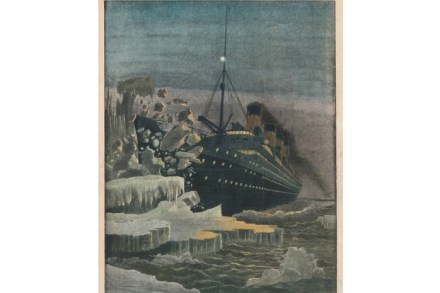
The looming centenary of the world’s most notorious shipping calamity, when the Titanic ruptured its starboard flank as it scraped the side of an iceberg on its maiden voyage in April 1912, presents publishers with a tactical challenge. The looming centenary of the world’s most notorious shipping calamity, when the Titanic ruptured its starboard flank as it scraped the side of an iceberg on its maiden voyage in April 1912, presents publishers with a tactical challenge. Almost as many books and articles have been written about the stricken liner as about Jack the Ripper — and for the same reason. Like the Whitechapel murders, the deaths at sea of 1,517 souls created a media storm which has never abated.