Richard Bratby

Richard Bratby is the chief classical music critic of The Spectator

Meet the king of comic opera 

From our UK edition

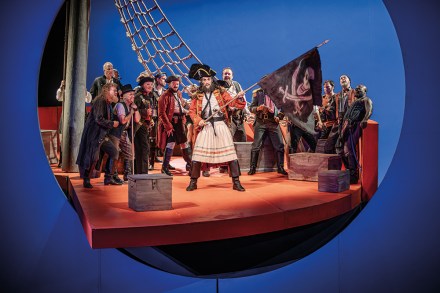
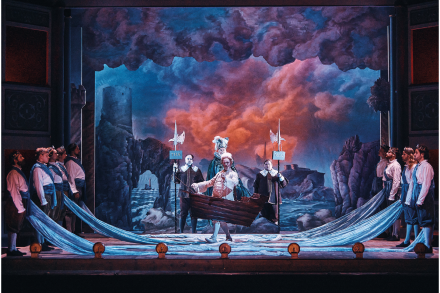
John Savournin has been busy. That comes with the territory for a classical singer – things often get a little hectic as the music world barrels towards Christmas. But with Savournin, it’s sometimes hard to keep track of which theatre – which city – he’s in on any given night. ‘This week has been Pirates of Penzance rehearsals at English National Opera,’ he says: we’re a fortnight away from opening night, and he’s playing the Pirate King. ‘On Thursday I was bobbing up to the Lowry in Salford for Ruddigore with Opera North.’ He’s been swirling his cape as Sir Despard Murgatroyd since late October. ‘And yeah – whenever I can, I’ve been checking in on panto rehearsals.

Vivid, noble and bouyant: AAM’s Messiah reviewed

From our UK edition

More than a thousand musicians took part when Handel’s Messiah was performed in Westminster Abbey in May 1791. It wasn’t the only item on the bill, either; it was part of a day-long blow-out that lasted from 11 a.m. to 5 p.m. and also included the whole of Handel’s Israel in Egypt. The crowd came prepared. According to Adalbert Gyrowetz, a Bohemian composer then living in London, the audience munched on ‘hard-boiled eggs, ham and roast meat’ during the intervals. ‘One had almost to wade through a mass of eggshells and other rubbish on the way out of the church,’ he noted.

Spellbinding: Herbert Blomstedt’s Mahler 9 reviewed

From our UK edition

Ivor Cutler called silence the music of the cognoscenti. But there’s silence and there’s silence, and a regular concertgoer hears a fair bit of both. The ability to fold silence into a musical line – to create the impression that a conductor is somehow sculpting a sound which doesn’t exist – is an indicator of high artistry on the podium. This was real: the concentrated hush of 2,700 people listening as if the silence was part of the symphony Conversely, there’s the embarrassing strained silence when, at the end of a work, a conductor decides to keep the baton raised and see how long he can hold back the tide of applause. It’s spray-on sublimity; an attempt to force the illusion of shared transcendence. It’s the musical version of faking an orgasm.

A keeper: ENO’s new The Elixir of Love reviewed

From our UK edition

There was some light booing on the first night of English National Opera’s The Elixir of Love, but it was the good kind – the friendly kind, aimed not at the baritone Dan D’Souza but his character, the caddish charmer Belcore. In other words, it was what opera snobs call ‘pantomime booing’, and which, as a peculiarly British phenomenon, they affect to deplore. If it happened in Munich or Milan they’d brandish it as evidence of an advanced opera-going culture – proof that an audience has been so completely transported by a performance that they’re reluctant to step out of its world. But any singer who’s remotely familiar with British theatrical traditions knows that it’s a compliment, and D’Souza beamed. It had been a thoroughly good-natured evening all round.

Fails to ignite: Royal Opera’s Tales of Hoffmann reviewed

From our UK edition

I couldn’t love anyone who didn’t love Offenbach’s The Tales of Hoffmann. Everything – everything – is stacked against this opera. Offenbach left the score unfinished when he died, tormented with gout and pilloried by bores, at the age of 61. Some of its best-loved numbers were upcycled from his earlier hits, and at least one isn’t by him at all. Yet somehow, it lives. More than that, it soars: a tale of disillusion that glows with wonder and hope; a hymn to the sweetness of life and the miracle of art, held together against all logic by the sheer charisma of a composer who shot for the moon and fell among the stars. ‘Opéra fantastique’ was Offenbach’s own description, and he’s not wrong. I’m not saying that Michieletto doesn’t care about this opera.

One beauty – one turkey: Wexford Festival Opera reviewed

From our UK edition

‘Theatre within Theatre’ was the theme of the 2024 Wexford Festival and with Sir Charles Villiers Stanford’s The Critic, that’s exactly what you get. Conor Hanratty’s production showed the interior of an 18th-century theatre, viewed from the stage. In the second act it flipped around to reveal the audience’s perspective. Were we now the audience? Clearly we were; which was awkward because where does that leave a critic? Obviously, one can’t be the critic because there’s already one on stage (the clue’s in the title), and as it turns out, The Critic isn’t really about critics, at all. Whatever – you get the picture. It’s all very meta; and more than a bit silly.

The striking musical world of Welsh composer Grace Williams

From our UK edition

Grade: A- There are neglected composers, and then there are Welsh composers. It’s just a question of geography. When Grace Williams’s Fairest of Stars was played at the Proms a few years back, it was hailed as a major rediscovery. That raised a few eyebrows in the Principality, where her music has long been standard repertoire. I grew up 20 minutes from the border and I’d played three of her orchestral works before I turned 30. Still, there’s always more to discover, and this new disc breaks over you with the force of a Snowdonia rainstorm. The BBC Philharmonic lives up to its reputation as the most brilliant of the BBC’s English orchestras, and the conductor, John Andrews, is the man behind recent recordings of operas by Ethel Smyth and Malcolm Arnold.

A lively and imaginative interpretation of an indestructible Britten opera

From our UK edition

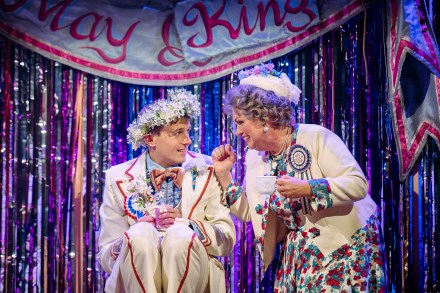
Scottish Opera’s new production of Albert Herring updates the action to 1990, and hey – remember 1990? No, not particularly, and I suspect that’ll be a common reaction if you were actually around back then. The director Daisy Evans was a toddler at the time and she imagines a gaudy, tawdry small-town world of bum-bags, WeightWatchers and decrepit gas heaters. Loxford Village Hall looks like it hasn’t been redecorated since the year the opera was composed, 1947, and that certainly rings true. Blancmange for the May Day feast, though? I’m pretty sure that even under John Major, blancmange was a throwback. But Evans has a show to put on after all, and a pink wobbling gelatine-based dessert is more theatrical than a bowl of Monster Munch.

You’re unlikely to see a better case made for this Bernstein double bill 

From our UK edition

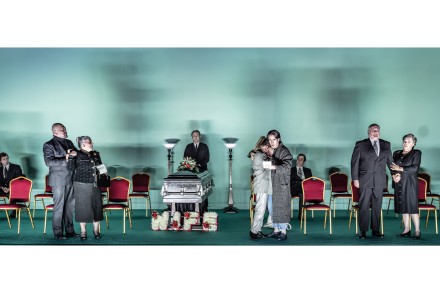
It’s rare nowadays to see a new opera production that’s set in the period that the composer and librettist intended, but they do occasionally come along. In the case of Leonard Bernstein’s operas Trouble in Tahiti and A Quiet Place, the time and place are basically the whole plot. Trouble in Tahiti dates from 1951; a sassy little one-act satire on America’s postwar consumer idyll. It’s practically perfect. A Quiet Place is from 1983 and it’s a sequel, set 40 years later – post-Vietnam and post-Woodstock, with the nuclear family in full meltdown. These performances, and this production, provoke thoughts that might rob you of sleep It’s a bit of a mess, in other words, and Bernstein never really made the pairing work.

Staying at the King’s Transylvanian home

From our UK edition

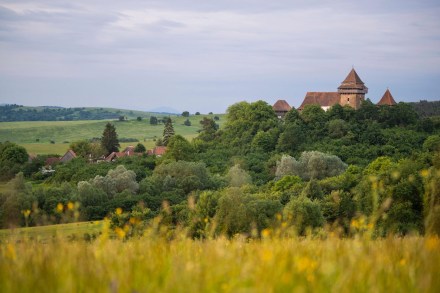
We hit downtown Zalánpatak at rush hour, and it was gridlocked. True, you get used to livestock on Romanian roads; the 30-minute gravel zig-zag from the nearest main road had brought us up against stray dogs, horses and carts and free-range pigs. A shepherd huddled near the roadside in a sheepskin poncho – crook in one hand, iPhone in the other. But it’s when you’re sitting immobile on a village street with a herd of cows pushing past on either side – when you feel the vehicle rock as bovine flank thwacks against the car door – that you start to grasp why King Charles III might have a bit of a soft spot for the place.

The BBC Singers Centenary Concert was toe-curling

From our UK edition

When does a new opera enter the repertoire? Judith Weir’s Blond Eckbert has only had a couple of UK productions since its première at English National Opera in 1994, but it’s been doing reasonably good business on the continent, where its source material – a story by German writer Ludwig Tieck – presumably has more cultural currency. In any case, it’s back now, as part of English Touring Opera’s autumn roster, and both the staging (by ETO’s general director Robin Norton-Hale) and the performances deserve to make Weir’s haunted, oddly unsettling opera a lot better known. If my toes had curled any harder I think I’d have dropped a shoe size As it should be: this is a small opera that makes a bigger and darker impression each time you see it.

Euston station is the best of London

From our UK edition

Euston Station has been in the news again, and that’s never good. After a summer of overcrowding and delays, public anger forced the Transport Secretary, Louise Haigh, to intervene last week, shutting down the monstrous, flashing digital advertising screen that spans the concourse and which has made passengers feel like battery hens trapped in a seizure-inducing neurological experiment. A ‘five-point plan’ of further improvements is promised, but no one believes it’ll work. This is Euston. It’s irredeemable. Everyone – just everyone – hates Euston. This has always been a station with its sleeves rolled up and serious work to do Well, I don’t. I hate what they’ve done to it, sure. I detest the lazy excuses, the neglect, and the tawdry retail outlets.

Heartfelt and thought-provoking: Eugene Onegin, at the Royal Opera, reviewed

From our UK edition

The curtain is already up at the start of Ted Huffman’s new production of Eugene Onegin. The auditorium is lit but the stage is in darkness and almost bare. Gradually, as Tchaikovsky’s prelude sighs and unfurls, the stage brightens and the theatre grows dim. But not before Onegin (Gordon Bintner) – tousle-headed and in a designer suit – has walked out, bowed to the house and retired to a chair at the back of the stage, to wait for the story to call him to life. Any competent maestro can whip up a big noise, but it’s a lot harder to make meaning out of silence Russophiles have grumbled for years about the way Tchaikovsky trimmed and tidied Pushkin’s raffish first-person narrative into seven self-contained ‘lyrical scenes’.

Committed performances – but who was the granny? Northern Ireland Opera’s Eugene Onegin reviewed

From our UK edition

It’s a critic’s job to pick holes in the dafter aspects of opera productions, but in truth audiences are usually capable of detecting nonsense when they see it. ‘She must be at least 150,’ commented the gentleman sitting behind me, referring to the wheelchair-bound old lady who was trundled on stage at the start of Northern Ireland Opera’s new production of Eugene Onegin, and then parked there, pretty much for the duration. It really buzzed along, even if the set resembled a public lavatory (urinal chic seems to be an emerging trend) He had a point. Was she meant to be an elderly Tatyana? Then why was she dressed in modern clothes when the rest of the action played out in the era of Pushkin?

The problem with Klaus Makela

From our UK edition

Klaus Makela is kind of a big deal. He’s a pupil of the Finnish conducting guru Jorma Panula – the so-called ‘Yoda of conducting’ – and he’s chief conductor of the Oslo Philharmonic as well as the Orchestre de Paris. Within the next three years he’s scheduled to take the baton at both the Chicago Symphony and the Royal Concertgebouw Orchestra in Amsterdam: blue-chip international positions, with fees to match. So we’re going to be hearing a lot more from maestro Makela, though possibly not in the UK where he has almost certainly (barring the LSO and Covent Garden) been priced out of the market. He is only 28, though apparently his agents would prefer it if you didn’t talk about that.

A lively showcase for a great central European orchestra at the Proms

From our UK edition

As the Proms season enters the home straight, it’s moved up a gear, with a string of high profile European guest orchestras. First up was the Czech Philharmonic playing Suk’s Asrael Symphony under Jakub Hrusa before moving on to Janacek’s Glagolitic Mass the following night. These grand, glittering monuments of Czech music were garnished with a couple of relative rarities – Dvorak’s Piano Concerto, played by Mao Fujita, and the Military Sinfonietta, composed in 1937 by (the then 22-year-old) Vitezslava Kapralova, who died at the age of 25. It’s unmistakably the work of a young composer. Xylophone?

Alt reich: Is Germany’s far right about to go mainstream?

From our UK edition

46 min listen

This week: Alt reich. The Spectator’s Lisa Haseldine asks if Germany’s far right is about to go mainstream, ahead of regional elections this weekend. Lisa joined the podcast, alongside the historian Katja Hoyer, to discuss why the AfD are polling so well in parts of Germany, and how comparable this is to other trends across Europe (1:13). Then: why are traditional hobbies being threatened in Britain? Writer Richard Bratby joins the podcast, alongside Chris Bradbury, the drone support officer at the BMFA, to discuss his article in the magazine this week about the challenge red-tape poses to model steam engine and aeroplane enthusiasts (18:47). And finally: how has sound design changed the world of theatre?

Aggressively jaded: Edinburgh’s Marriage of Figaro reviewed 

From our UK edition

‘Boo!’ came a voice from the stalls. ‘Boo. Outrage!’ It was hard not to feel a pang of admiration. British opera audiences don’t tend to boo; we’re either too polite or too unengaged. But there we were in Act Three of Kirill Serebrennikov’s production of The Marriage of Figaro – just after the scene where Susanna, the Count and the Countess enjoy a three-in-a-bed romp while singing the trio ‘Soave sia il vento’ – and at least one person felt passionate enough to raise his voice. It was hard not to feel a pang of admiration. British opera audiences don’t tend to boo Obviously, there’s no such trio in The Marriage of Figaro.

Save our steam engines!

From our UK edition

Last week, if you’d known what to listen for, you might have heard a chorus of miniature whistles in gardens across the UK. Other sounds too: the whirr of pistons, the hissing of steam from valves. Up and down the nation, enthusiasts were fuelling up their model traction engines and steamrollers and raising steam not in celebration, but in mourning. It was a tiny mechanical wake for Mamod, the Birmingham firm which has made model steam engines since 1936, and which has announced that it is ceasing production. It’s estimated that more than 2.5 million engines have been sold by the company over the years. As commerce and government push our behaviours down digital channels, older hobbies don’t register When a beloved brand perishes, there’s rarely a single reason.

Britain’s youngest summer opera festival is seriously impressive

From our UK edition

Waterperry is one of the UK’s youngest summer opera festivals: it started up in 2018, at the northern limit of the species’ natural habitat. You leave the motorway at Oxford services and double back through the fields to the hamlet of Waterperry. Drive past the ‘Cats Crossing’ sign and the life-sized effigy of Rowan Atkinson (honestly) and you’re there. There’s a big house (slightly run to seed), a farm shop, a garden centre and a nursery containing the national saxifrage collection, which is not something you see every day. The opera festival squeezes in between them. Let’s do the show right here! Well, why not? The Barber was literally staged on the lawn. And if it rains? ‘We hope it won’t. Would you like a poncho?