Richard Bratby

Richard Bratby is the chief classical music critic of The Spectator

Neither Tristan nor Isolde quite convinced: Glyndebourne’s Tristan und Isolde reviewed

From our UK edition

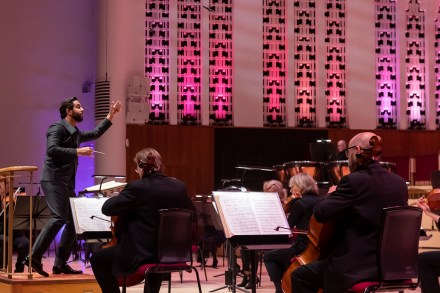
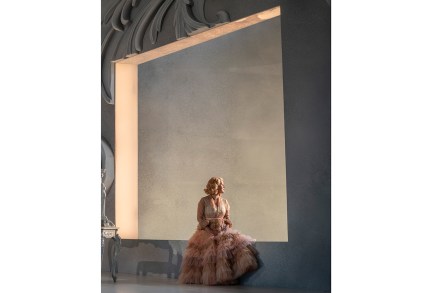
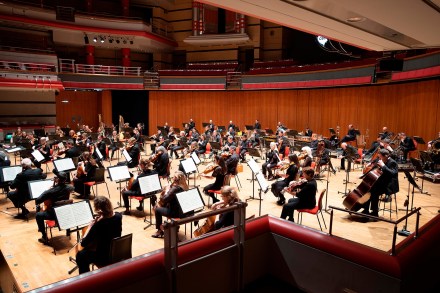
Glyndebourne is nothing if not honest. ‘In response to the ongoing Covid-19 restrictions our 2021 performances of Tristan und Isolde will be presented as a concert staging, after the 2003 production by Nikolaus Lehnhoff’, says the programme, and what we get is not a full production but a compromise imposed by the peculiar circumstances of August 2021. The London Philharmonic Orchestra huddles on stage. Behind them the back wall glows and fades in washes of blue and pink; in front, a stepped apron extends over the redundant orchestra pit. The singers slip on and off from the wings or, in a basic but effective trick of lighting design, appear to materialise from the embracing darkness. It’s an approach to Wagner that can work well.

Ecstasy from Birmingham Opera Company: Wagner’s RhineGold reviewed

From our UK edition

At the end of Birmingham Opera Company’s RhineGold, as the gods stood ready to enter Valhalla, Donner swung a baseball bat and summoned a rainbow bridge of human bodies — crawling, abject, before the new lords of creation. It was pretty much what we’ve come to expect from BOC’s founder Graham Vick, a director who never hints at a contemporary social message when he can ramraid our consciousness with one. Here, though, there was another twist of the knife. The human bridge was made up of delivery couriers, complete with branded cagoules and cycle helmets. Didn’t someone describe lockdown as ‘middle-class people hiding while working-class people bring them things?’. A smart touch, and vintage Graham Vick. Except Vick wasn’t there.

Springtime for Putin: Grange Park’s The Life and Death of Alexander Litvinenko reviewed

From our UK edition

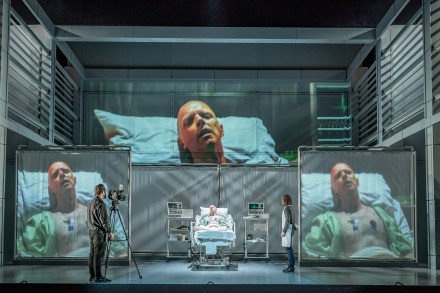
Alexander Litvinenko lies in a London hospital, dying of polonium poisoning. That photograph from 2006 haunts the memory: the medical robe, the electronic monitors, Litvinenko’s accusing gaze and bald, ravaged head. But in case we needed reminding, Grange Park Opera handed out copies of Death of a Dissident, the account of the crime by Litvinenko’s widow Marina, and the principal source for Anthony Bolton and Kit Hesketh-Harvey’s new opera The Life and Death of Alexander Litvinenko. Minutes later, a hospital bed rolled on stage replicating that exact image. And then Litvinenko — the tenor Adrian Dwyer — opened his mouth and started to sing. Opera plays a high-stakes game with dramatic realism at the best of times, but this was startlingly upfront.

Zips along with enormous vim: Malcolm Arnold’s The Dancing Master reviewed

From our UK edition

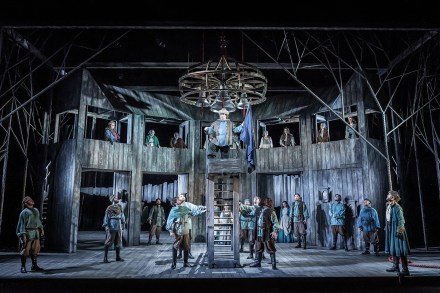
Malcolm Arnold composed his opera The Dancing Master in 1952 for BBC television. It never appeared, the problem being the source material — William Wycherley’s 1671 farce The Gentleman Dancing Master. Jokes about wedding nights and ‘scarlet foppery’ might have flown in the reign of Charles II but the New Elizabethans at Broadcasting House were altogether more shockable. ‘Too bawdy for family audiences,’ was Auntie’s official verdict, leaving The Dancing Master largely forgotten until a premiere recording late last year, and now — conducted by John Andrews and using almost the same cast — its first ever professional production, at the Buxton International Festival.

A short history of millionaire composers

From our UK edition

Let me tell you about the very rich. They are different from you and me, though if you’ve spent much time in the world of classical music, and you hadn’t realised just how different, you could do worse than attend an opening night at Grange Park Opera. True, Grange Park’s founder, Wasfi Kani, is famously adept at cultivating donors: you don’t build an opera house on the late Duchess of Roxburghe’s Surrey estate without a certain fundraising flair. It was when Joanna Lumley shimmered on stage in a midnight-blue ball gown and suggested that we might each like to leave the company at least £25,000 in our wills that I really choked on my prosecco.

Comedy genius: Garsington Opera’s Le Comte Ory reviewed

From our UK edition

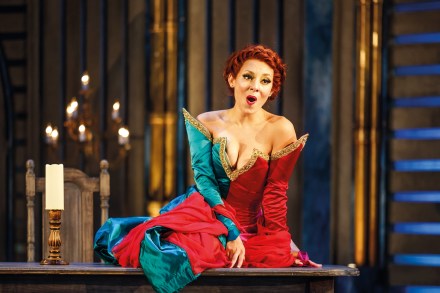
Melons. An absolutely cracking pair of melons, right there on a platter: the centrepiece of the banquet that the chaste, all-female inhabitants of the castle of Formoutiers have provided for their surprise guests, a band of nuns. Except these sisters all seem to be singing well below the stave, and judging from the way she adjusts her crotch, Mother Superior has something more than a chastity belt beneath her habit. We all know where this is going. You can’t get your melons out on stage unless, sooner or later, some great hairy bloke in a wimple is going to shove them down his front. It’s the law.

Wow, this is good: Grange Park Opera’s Ivan the Terrible reviewed

From our UK edition

There are worse inconveniences than having to wear a face mask to the opera. But there’s one consequence that hadn’t really struck home until an hour into Rimsky-Korsakov’s Ivan the Terrible. The citizens of Pskov are massing in the streets. The Tsar’s army is approaching, and Rimsky is building one of those surging Russian crowd scenes: bass-heavy chorus blazing away while ominous bell sounds — basses, horns and rasping gong — shake the orchestra to its bones. Suddenly a bloodstained figure staggers in and collapses; a refugee from nearby Novgorod. ‘Your brother-city sends its greetings, and asks you to arrange its funeral,’ he gasps.

A new concerto draws cheers in Liverpool: RLPO/Hindoyan reviewed

From our UK edition

There was no printed programme for the Royal Liverpool Philharmonic Orchestra’s first concert under its music director designate Domingo Hindoyan. Nothing to download either; just a piece of paper the size of a train ticket, handed out by a steward with a conspiratorial air, containing a bare listing of the pieces we were about to hear. Stravinsky, Ravel and Prokofiev: fair enough. Known quantities. But about the second item on the programme — the world première of a new Trombone Concerto by Dani Howard —there was no information at all beyond that all-or-nothing title. All to the good, you might think: pure music and unprejudiced listening. There’s no such thing, of course.

The promoter the critics love to hate: an interview with Raymond Gubbay

From our UK edition

When Raymond Gubbay left school, he was articled to an accountant’s firm. Fascinated by opera and depressed at the prospect of life as a Golders Green beancounter, he wriggled out of it in a matter of months, and into an assistant’s job at Pathé Newsreels. Sensing that newsreels had a looming expiry date, he asked Arnold Wesker (a family friend) to wangle him an interview with Victor Hochhauser, Britain’s leading promoter of mass-market classical concerts. Hochhauser sat behind a desk in his office above a fridge shop in Kensington and asked the 17-year-old Raymond three questions. Where did you go to school? Are you a Jewish boy? And can you start on Monday? Six decades later, even three questions feel unnecessary.

Lush, elegant and vivid: Der Rosenkavalier at Garsington reviewed

From our UK edition

At the turning point of Richard Strauss and Hugo von Hofmannsthal’s Der Rosenkavalier, all the clocks stop. Octavian has arrived at the house of the teenage bride-to-be Sophie von Faninal as bearer of the silver rose — the symbol of a love that is simultaneously as artificial and as eternal as any human creation can be. Sophie smells real roses; yes, says Octavian, there is a drop of Persian fragrance amid the silver petals. ‘Like a heavenly, not an earthly rose’, sings Sophie: and her voice soars higher and purer than anything we’ve heard so far, suspended in stillness while Strauss’s orchestra shimmers around her. The thing is, in Bruno Ravella’s new staging for Garsington Opera we already know the rose’s secret.

Hit every auditory G-spot simultaneously: CBSO/Hough/Gardner concert reviewed

From our UK edition

Rejoice: live music is back. Or at least, live music with a live audience, which, as Sir Simon Rattle admitted, addressing the masked and socially distanced crowd immediately before the LSO’s first full-scale public performance for 14 months, is kind of the whole point. Yes, he said, they’d streamed online concerts from the Barbican, but the silence of emptiness is a very different proposition from the silence of a hall containing 1,000 human beings. He’s right, of course. Those 14 months have tested to destruction the notion that digital platforms can offer the same sort of emotional nourishment. Once again, then — rejoice! And nobody mention the Indian variant.

For fans of neglected, niche and uncool music, lockdown has been a blessing

From our UK edition

When this whole mess is over, there’ll be a shortish MA thesis — or at least a blog post — to be had from analysing classical music’s evolving response to the crisis. Already, looking back, distinct phases are emerging from the viral fog. Phase One: the Banana Bread Apocalypse — that first lockdown, when Jamie Oliver was telling us to smoosh up frozen peas and pretend it was pesto, and phonecam footage of a cellist playing Bach in the spare bedroom felt like a kind of miracle. Phase Two: orchestras working out what they could actually do while socially distanced and audienceless. Cue a spike in online performances of works for small (or spaced-out) orchestra. Lots of Tallis Fantasias and Siegfried Idylls.

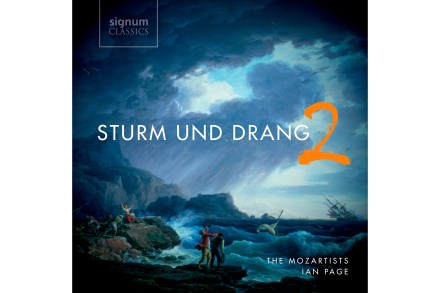
Are Mozart’s forgotten contemporaries worth reviving?

From our UK edition

There are worse fates than posthumous obscurity. When Mozart visited Munich in October 1777, he was initially reluctant to visit his friend, the Bohemian composer Josef Myslivecek. Myslivecek was in hospital, undergoing treatment (as he told it) for a facial cancer brought on by a recent coach accident. But this being the 18th century, and Myslivecek having a reputation as a gallant, Mozart suspected venereal disease. When he finally appeared at Myslivecek’s bedside, he was appalled by what he saw: ‘The surgeon, that ass, has burned off his nose! Imagine the agony he must have suffered.’ Within four years, the luckless — and noseless — Myslivecek had died in poverty, aged 43. His music effectively died with him.

The Mozarts of ad music

From our UK edition

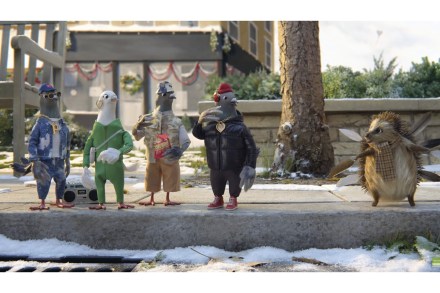
It’s Christmas 2020 and Kevin the Carrot is on a mission. Snow swirls, ice glistens and roast turkeys and cold cuts wait on the table, bathed in cosy firelight. The visual symbols of Christmas are all present and correct in the big Aldi seasonal advert, but what pulls them together is the music. A hint of John Williams on a solo horn, a burst of swashbuckling rhythm; symphonic strings as our vegetable hero makes it home. It’s all there, sumptuously scored and precisely gauged to make you feel that in 30 seconds, you’ve experienced an epic. And then, of course, to go out and buy parsnips. ‘I was lucky, because the mood had already been chosen,’ says Guy Farley, the composer who wrote that score.

How real is the performing arts exodus?

From our UK edition

Think back 12 months to when you first felt the pandemic. Not when you first read about Covid-19, but the moment of impact — the lurch in the stomach as it hit you that this time, it really wasn’t going to be OK. For Emma Cook, a freelance stage manager on the John Cleese farce Bang Bang!, the moment came during a rare week off. ‘I was sitting in a restaurant near the Bush Theatre in London, waiting to go and see The High Table, and I got a message from a friend who had just flown back from overseas: “Why are the theatres all closed?”. I thought, no they’re not, I’m about to see a show. So I walked over to the theatre and they told us: “No, sorry. We’ve had to stop everything.” And that was when Covid suddenly became big and real.

Three new releases that show the classical recording industry is alive and well

From our UK edition

Rachmaninov’s First Symphony begins with a snarl, and gets angrier. A menacing skirl from the woodwinds, a triple-fortissimo blast from the brass, and then the full weight of the strings, hammering out one of those doomy Russian motto-melodies like lead boots dragging you to the bottom of the Neva. ‘Vengeance is mine; I shall repay’ glowers the epigraph that Rachmaninov inscribed at the top of the score, and you’d better believe it. The symphony’s première in 1897 was a disaster that stunned the 23-year-old composer into near-silence.

Perfect English songs in fresh new colours: Roderick Williams sings Butterworth

From our UK edition

Another week, another online concert; and since orchestral music seems likely to be confined to screens and stereos for a while longer, one might as well try and experience something new. But not too new — I’ve pretty much had it up to here with the present. The Hallé orchestra is currently streaming a collection of Shropshire Lad songs by George Butterworth, conducted by Sir Mark Elder and sung by the baritone Roderick Williams in orchestral versions of his own creation. That seems ideal: music by the most perfect of English classical songwriters, in fresh and unfamiliar new colours. And time spent with an artist as likeable and intelligent as Williams is never wasted.

The two composers who defined British cinema also wrote inspired operas

From our UK edition

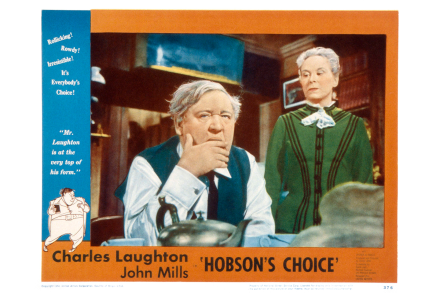
It’s my new lockdown ritual. Switch on the telly, cue up the menu and scroll down to where the vintage movies gather — Film 4, or the excellent Talking Pictures TV. Then search through their early-hours offerings, and press ‘record’ more or less at random. Gainsborough costume flicks; Rattigan adaptations; anything with John Mills in a submarine — it’s all good. Then, next day, trawl through the catch to see what’s surfaced, and who wrote the music. On a good night you might get Vaughan Williams in 49th Parallel, Richard Rodney Bennett in Billy Liar or — bewilderingly — the fire-breathing serialist Elisabeth Lutyens, keeping herself in cigarettes and brandy with scores for The Skull or Dr Terror’s House of Horror.

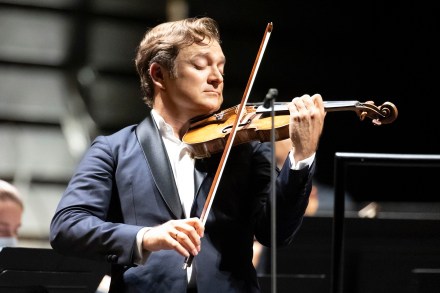
From bad joke to 21st-century classic: the best recordings of Korngold’s Violin Concerto

From our UK edition

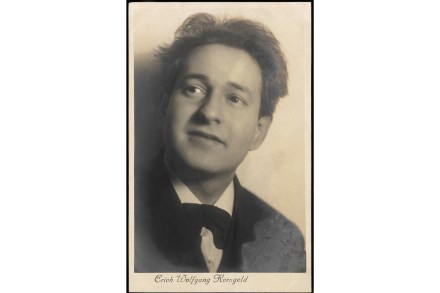
Erich Korngold was what you might call an early adopter. As a child prodigy in Habsburg Vienna, he’d astonished the world: a schoolboy composing orchestral scores that made Elektra sound tame. Jump ahead three decades, and Korngold, in his fashion, was still ahead of the curve. He was one of the first residents of Toluca Lake, North Hollywood, to buy a television. There wasn’t much to watch in 1947, but (according to Korngold’s biographer Brendan Carroll) Jascha Heifetz would drive over anyway from Beverly Hills, and the two exiles — the former protégé of Gustav Mahler, and the greatest violinist on earth — would sit there glued to the live wrestling.

The music we need right now: James MacMillan’s Christmas Oratorio reviewed

From our UK edition

The two most depressing words in contemporary classical music? That’s easy: holy minimalism. I know, I know. Lots of people love the stuff, and I wish them joy. But the notion that one simply jettisons the whole western tradition of struggle, of purpose, of wholehearted emotional argument — and that the greatest and most crucial of human questions can be answered by a mush of soothing stylistic mannerisms — well, I’ve tried and so far I just can’t do it. I can’t simply tune in and drop out amid a haze of Yankee Candle harmonies. I hear those static choral clusters and watery melismas, and it feels like being suffocated in velvet. Silently, the spirit begins to scream.