Rana Mitter

Rana Mitter is ST Lee Chair in US-Asia Relations at the Harvard Kennedy School.

China is wary of American intentions

From our UK edition

In 2024, China exported three times more to the US than the US did to China, and President Donald Trump’s aim is to get this trade balance down to zero. On ‘Liberation Day’, Wednesday 2 April, Trump announced that Chinese goods coming into the US would now have an additional tariff of 34 per cent imposed on them, added to an extra 20 per cent imposed earlier this year. This means that those goods are now subject to an overall rate of 54 per cent. China has now lodged a complaint at the World Trade Organisation, declaring: ‘This practice of the US is not in line with international trade rules, seriously undermines China’s legitimate rights and interests, and is a typical unilateral bullying practice.’ Can China force the US to change direction?
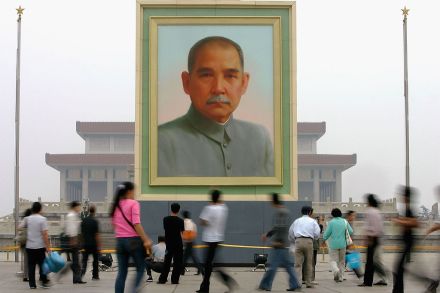
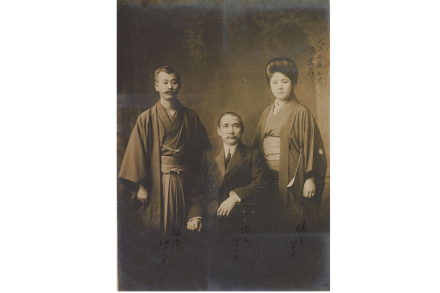
Rana Mitter on the legacy of Sun Yat-sen

From our UK edition

43 min listen

Walking around Taipei a couple of years ago, I spotted a familiar sight – a bronze statue of a moustachioed man, cane in his right hand, left leg striding forward. The man is Sun Yat-sen, considered modern China’s founding father. I recognised the statue because a larger version of it stands in the city centre of Nanjing, the mainland Chinese city that I was born and raised in. That one figure can be celebrated across the strait, both in Communist PRC and Taiwanese ROC, is the curious legacy left behind by Sun. March 12th this year is the centenary of Sun’s death, so what better opportunity to look at his legacy, and who better to discuss Sun than the historian Rana Mitter, who needs no introduction with Chinese Whispers listeners.

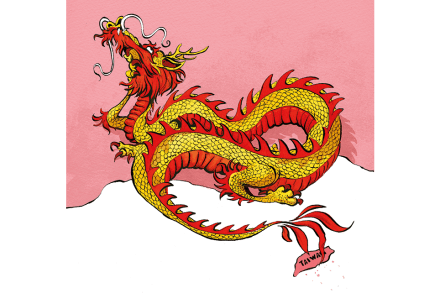
China’s ‘soft siege’ of Taiwan

From our UK edition

‘There is only one China in the world,’ Wang Wenbin, the spokesman for China’s foreign ministry, declared at a press conference late last month. ‘Taiwan is an inalienable part of China’s territory.’ The previous day, on 23 May, Beijing carried out major military exercises around the island under the title ‘Joint-Sword 2024A.’ The Chinese Communist party (CCP) said it wanted to practise how to ‘seize power’ in Taiwan, and to ‘punish’ its new leader, Lai Ching-te, and his supporters in the US. J-16 aircraft and Type 052D destroyers – some of China’s best military assets – led the exercises, surrounding Taiwan and practising bombing runs.

Japan’s role in the making of modern China

From our UK edition

49 min listen

Just before Christmas, it was reported that the billionaire Jack Ma had moved to Tokyo after getting into trouble with the Chinese authorities. If he's still living there, he'd be one of several well known Chinese who seems to have made Japan their home after run ins with Beijing. In so doing, they’re following in the footsteps of those who came over a century ago – other Chinese exiles who holed out in Japan because of a hostile political environment back home. This episode is all about how important it was that Japan served as a safe haven for these exiles – both reformers and revolutionaries – at the turn of the 20th century. That would later contribute to the establishment of a Chinese national identity and even the creation of the Chinese republic itself.

Svitlana Morenets, Rana Mitter and Mia Levitin

From our UK edition

20 min listen

This week: Svitlana Morenets explains why Ukraine won't accept compromise in any form (00:56), Rana Mitter details Japan's plans for an anti-China coalition (05:43), and Mia Levitin reads her review of Muppets in Moscow by Natasha Lance Rogoff (13:17).  Produced and presented by Oscar Edmondson.

Japan’s plans for an anti-China alliance

From our UK edition

As the world’s attention focused last month on whether to send tanks to Ukraine, Japan’s Prime Minister, Fumio Kishida, was on a whistle-stop tour of the West. He held various meetings with G7 leaders, including Rishi Sunak and Joe Biden. His objective was clear: to create a new alliance that can counter China. Japan has been forming a ‘Quad’ with Australia, India and the US on naval manoeuvres  Japan adopted a ‘peace constitution’ in 1947 when it was occupied by the US, pledging that the country would never again wage war. For the past half a century, the military budget was capped at 1 per cent of GDP, and Japan sought to project its image abroad as a semi-disarmed economic giant, an Asian Germany of sorts. Now all this has changed.

China’s baby bust

From our UK edition

36 min listen

In this week’s episode:Is China heading for a demographic disaster?Rana Mitter and Cindy Yu discuss China’s declining birth rate and what this could do to the economy. (0.52)Also this week:What would foreign policy look like under a Liz Truss government?The Spectator's deputy political editor, Katy Balls is joined by Rishi Sunak supporter, Dr Liam Fox who is the MP for North Somerset, Former Defence and Trade Secretary. (13.40)And finally: As Rishi comes face-to-face with the Tory members, can he win them over?Fiona Unwin, who is the vice president of the West Suffolk Conservative association writes that to wow the grassroots, all Rishi Sunak has to do is meet them. But not all the members were persuaded.

Baby bust: China’s looming demographic disaster

From our UK edition

This week, the world is gripped by the risk of conflict between the US and China. The People’s Liberation Army has fired live missiles into the Taiwan Strait in retaliation for US House Speaker Nancy Pelosi’s visit to Taipei and those who fear that China vs America is the next world war see Taiwan as a flashpoint. Some analysts imagine a repeat of the Cold War: two countries, two rival political systems, vying for world economic supremacy. China’s dominance is inexorably linked to the size of its population. It has long been the world’s most populous country. A technologically advanced society, with a great army of young workers and soldiers, is inevitably a power to be reckoned with.

China is becoming a hermit kingdom

From our UK edition

There is an unprecedented experiment under way in China as it reshapes its economy to accommodate its zero-Covid strategy. There are two elements to the policy. The more visible one is the harsh lockdowns, enacted most recently in Shanghai – where for the past two months 25 million people were confined to their homes or forced into quarantine holding centres. Though restrictions were officially eased last week, already 2.7 million residents are back under lockdown and confined to their homes following an outbreak in the city. Anyone who catches Covid faces quarantine or hospital. The second element of China’s zero-Covid policy is the continued closure of its borders. This has been less noticed until now.

The secret behind South Korea’s Covid success

From our UK edition

At the start of the pandemic, the situation in care homes looked particularly grim. One report on 19 March said: ‘Experts warn that hundreds of substandard long-term care facilities could serve as hotbeds for the contagious coronavirus.’ The alert came not from Wiltshire or Manchester, but from Park Chan-kyong, Seoul correspondent of the South China Morning Post. There was real fear that the residents of the city’s care homes would become victims of the Covid-19 pandemic. Yet three months on, South Korea as a whole — let alone its care homes — has suffered fewer than 300 deaths nationwide. The world is asking: how? Things have looked slightly worse recently — 49 new cases discovered last week — but this is nothing in comparison with Europe.

Does China want to change the international rules-based order?

From our UK edition

35 min listen

China is often accused of breaking international rules and norms. Just last week at Mansion House, Foreign Secretary Liz Truss said: 'Countries must play by the rules. And that includes China'. So what are its transgressions, and what are its goals for the international system? My guests and I try to answer this question in this episode through looking at China's attitude to and involvement in international organisations, past and present. Professor Rana Mitter, a historian at the University of Oxford and author of China's Good War, points out that there's a fundamental difference in China's approach compared to, say, Russia. 'Russia perceives itself as, essentially, a country that is really at the end of its tether in terms of the international system.

Could the Ukraine war save Taiwan?

From our UK edition

The phrase wuxin gongzuo – ‘working with your mind on Ukraine’ – has been trending on Chinese social media network Weibo. Essentially what it means is ‘distraction from work because you’re obsessed with the war’. One blog that monitors the site, What’s on Weibo, reports that shortly after Russia’s invasion of Ukraine a page with updates on the conflict had received more than two billion views. Censorship, of course, limits what Chinese social media commentators can say, but there is clearly plenty of sympathy for the dying civilians and fleeing refugees.

Politics and language: decoding the CCP

From our UK edition

59 min listen

All political parties have weaknesses for jargon and buzzwords, and the Chinese Communist Party more than most. It's why Party documents – whether they be speeches, Resolutions or reports – can be hard going. Sentences like the following (from the Resolution adopted at the Sixth Plenum) abound: All Party members should uphold historical materialism and adopt a rational outlook on the Party’s history....We need to strengthen our consciousness of the need to maintain political integrity, think in big-picture terms, follow the leadership core, and keep in alignment with the central Party leadership. In other words, full of platitudes and dense Marxist terminology. So what is, then, the purpose of official Party documents?

Why does China care about Taiwan?

From our UK edition

41 min listen

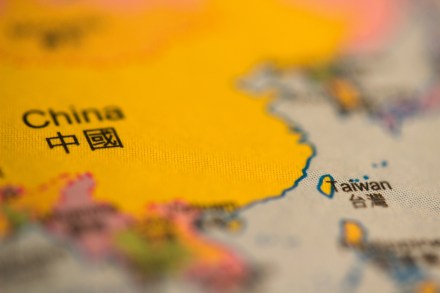
Cross-strait relations between China and Taiwan seem to be hotting up, with headlines frequently touting the possibility of a military takeover by Beijing. But why does China care so much about this set of islands that is around a seventh of the size of the UK? Cindy Yu speaks to historian Rana Mitter and analyst Jessica Drun about Taiwan's unique history and its modern identity.

China’s long history of student protests

From our UK edition

29 min listen

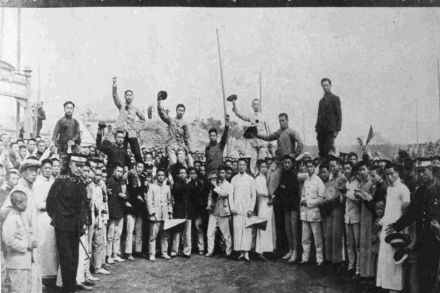
When thinking about Chinese student protests, you'll inevitably think about Hong Kong or Tiananmen. But there's one that kicked it all off in modern Chinese history, and its reverberations are still felt throughout the century, not least because of its role in the founding of the Chinese Communist Party. It's the May Fourth Movement of 1919, which is the topic of this episode. Professor Rana Mitter, former head of the China Centre at the University of Oxford and author of numerous books on Chinese history, joins the podcast on why China is no stranger to student protests.

Xi’s world: how Covid has accelerated China’s rise

From our UK edition

32 min listen

China has come out on top from this pandemic year - what does this mean for the world? (00:50) Was Test and Trace doomed from the start? (12:35) And what's with all these Covid excuses? (22:35)With historian Rana Mitter; security expert Nigel Inkster; analyst Richard Dobbs; virologist Elisabetta Groppelli; editor of the Oldie Harry Mount; and Real Life columnist Melissa Kite.Presented by Cindy Yu.Produced by Cindy Yu, Max Jeffery and Matt Taylor.

Xi’s world: Covid has accelerated China’s rise

From our UK edition

Back in February, the Chinese state appeared to be in trouble. A terrifying virus had infected thousands of people and the country’s social media exploded in anger against the authorities faster than Chinese censors could scrub away the critical comments. Like governments elsewhere, the Chinese Communist Party (CCP) turned to the emergency analogy of choice, the second world war. Channelling Mao Zedong’s guerrilla campaign against the Japanese in the 1930s, state media declared that China was fighting a ‘people’s war’ against the virus. As in that earlier war, China’s conflict with the virus has shifted from a defiant retreat to a declaration of victory. Nor is this just bluster.

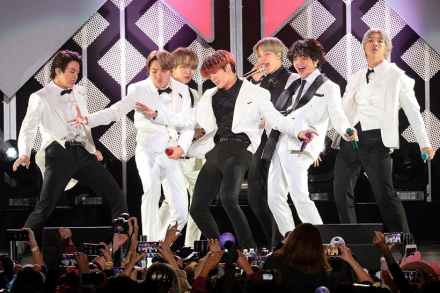
The Korean wave: how Seoul film and music won over the world

From our UK edition

If you think that Boon Jong-ho’s Parasite (which won four Oscars this week, including Best Picture) is pretty black as comedies go, you should try the South Korean film The President’s Barber. Set in 1970s Seoul, a working-class hair clipper is appointed to tend the dictatorial leader Park Chung-hee, and tensions grow between his family and the upper-class presidential entourage. The barber becomes convinced that the head of state is a vicious, violent maniac, and his son ends up as the victim of an electrode punishment — played onscreen for laughs of the bleakest kind.

Is Europe’s centre-ground shrinking?

From our UK edition

41 min listen

As Sinn Fein enters coalition talks with Fianna Fail, economist Fredrik Erixon writes that the encroachment of fringe parties on the mainstream is a part of a wider European trend. What's more, he argues that the only the mainstream parties that adapt can survive. On the podcast, Fraser Nelson bats for Fredrik's thesis, and debates with Anne McElvoy, senior editor at The Economist. Plus, is citizenship a privilege that can be revoked, or a right to anyone who identifies as British? Earlier this week, a group of Jamaican nationals - all of them holding criminal records - were due to be deported.