Rachel Cunliffe

The William Sitwell row is nothing to do with free speech

From our UK edition

When William Sitwell fired off a rude response to a vegan journalist he probably didn't think it would cost him his job as editor of Waitrose Food magazine. Nor is it likely that he would have anticipated his email kickstarting the latest battle in the ongoing culture war. Yet that is exactly what has happened. At first glance, the story seems clear-cut: it is surely just another clash between the outrage army of censorious, over-sensitive millennials – so-called 'snowflakes' – and the free speech warriors. The former seek out offence; the latter decry Sitwell's departure as another example of ‘political correctness gone mad’. The thought police have struck again, they say, claiming that this shows how expressing the wrong opinions can cost you your job.
Without Uber, London will be a more dangerous city for women

From our UK edition

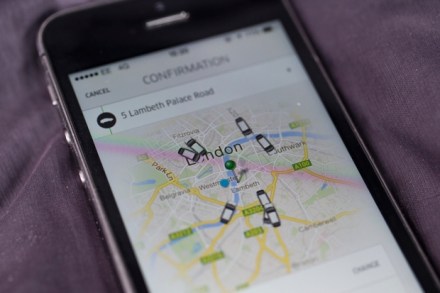
Transport for London has decided it knows what will keep me safe better than I do. The transport regulator has today refused to reissue Uber’s private hire licence, on the basis of 'public safety and security implications'. Let me tell you about security implications as a woman in London. If I come out of a club or bar in the middle of the night, I do not want to be hanging around alone on the pavement for half an hour while my minicab fails to materialise, engaged in a frustrating negotiation with the operator about where exactly my driver is. I don’t want to trawl the streets in the hope of finding a black cab to hail down, only to be told my zone 3 address is too out of the way for them.

Why has the Prime Minister waded into a fight about chocolate eggs?

From our UK edition

Cadbury has changed the name of its annual 'Easter Egg Trail' to 'Cadbury's Great British Egg Hunt', callously dropping any reference to the Christian festival celebrated by 31.5 million Brits. (Actually, the word 'Easter' appears multiple times in the marketing, but it’s out of the title, and that’s the important bit.) Theresa May has taken this as an opportunity to tell everyone yet again that she is the daughter of a vicar, calling the decision 'absolutely ridiculous' and reminding the country that Easter is 'a very important festival for the Christian faith for millions across the world'. So it is - far more so than the overhyped Christmas celebration.

The flight ban for laptops is a classic protectionist scheme

From our UK edition

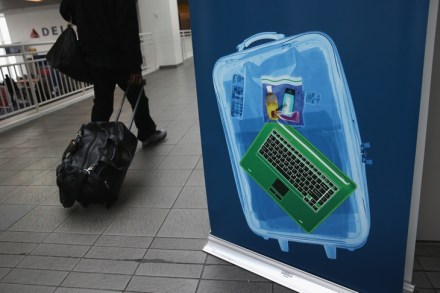
First they came for your nail scissors, then your liquids, and now they’re after your electronics. The news this week that the US has banned passengers from taking laptops as carry-on onto flights from ten Middle Eastern airports has sparked horror among the global jet-setting community, which only intensified when the British government promptly followed suit. Smartphones will be allowed, but from now on if you’re travelling from the Middle East you’ll have to make do with an old-fashioned book rather than a kindle, iPad or laptop. We are told that this is for 'security' reasons. According to US media sources, the ban was sparked by intelligence suggesting Islamic State has been developing ways to hide explosives in laptops.

In defence of compulsory sex education

From our UK edition

There are two ways to protect children from the damaging and misleading depictions of sex they get from online pornography. One is to give them comprehensive age-appropriate sex education, so that they understand porn is not a guide to real life and have the information to process what they see. The other is to ban porn for everyone, adults included. David Cameron’s government tried the latter approach, with mandatory safeguards enforced by internet providers and censorship of adult websites.

Uber has become the labour market’s scapegoat

From our UK edition

The offensives against Uber are coming thick and fast. In October, a UK court ruled against the ride-sharing giant in favour of two drivers demanding minimum wages and vacation pay, even though Uber is a platform, not an employer. At the moment, the company is on trial in the EU, where judges are trying to determine what it actually is after European lawmakers (primarily in France) dragged it to court. And on Monday, Uber lost a case in Quebec on whether its drivers were employees or contractors.  Last week, it emerged that the fight is still raging in the US too, where Uber has just settled a lawsuit for $20 million over claims it inflated estimates of how much prospective drivers could earn if they signed up and misled them about the cost of car financing deals.

Politics can be sexist, but Arlene Foster was wrong to play the misogyny card

From our UK edition

Let’s say you’re a rising minister put in charge of the department for enterprise. You have the great idea to incentivise businesses to invest in low-carbon energy by offering a subsidy for renewable fuel used. Unfortunately, something goes wrong in the planning or execution of the scheme, with the result that claimants are paid more for low-carbon fuel than the amount the fuel actually cost them. Market forces kick in, businesses use as much fuel as possible to gain the maximum profit, the fancy renewable energy scheme ends up £490 million over budget. The opposition, the media, and most importantly the public are understandably very upset, and call for you to resign.

Uber is useful, convenient and safe. How can TfL justify cracking down on it?

From our UK edition

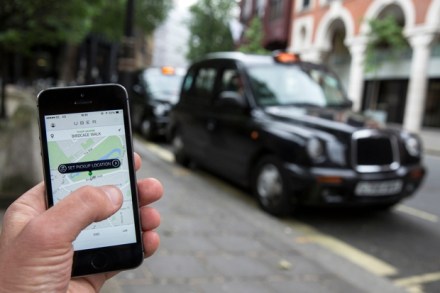
Oh, Transport for London. How could you? That was my reaction when I read the plans to crackdown on Uber in the capital. And it seems over 80,000 people agree with me, judging by a petition that was launched on Tuesday. For a city which is meant to be the centre of global commerce, with Boris Johnson who supposedly loves markets as its mayor, London really isn’t doing too well. First the night tube service, which was meant to start on the 11th of September, got delayed thanks to pressure from the unions, and now Transport for London (TFL) is protecting taxi drivers from innovation and competition.