Philip Patrick

Philip Patrick

Philip Patrick is an exiled Scot, who lectures at a Tokyo university and contributes to the Japan Times

I think we’re turning Japanese

From our UK edition

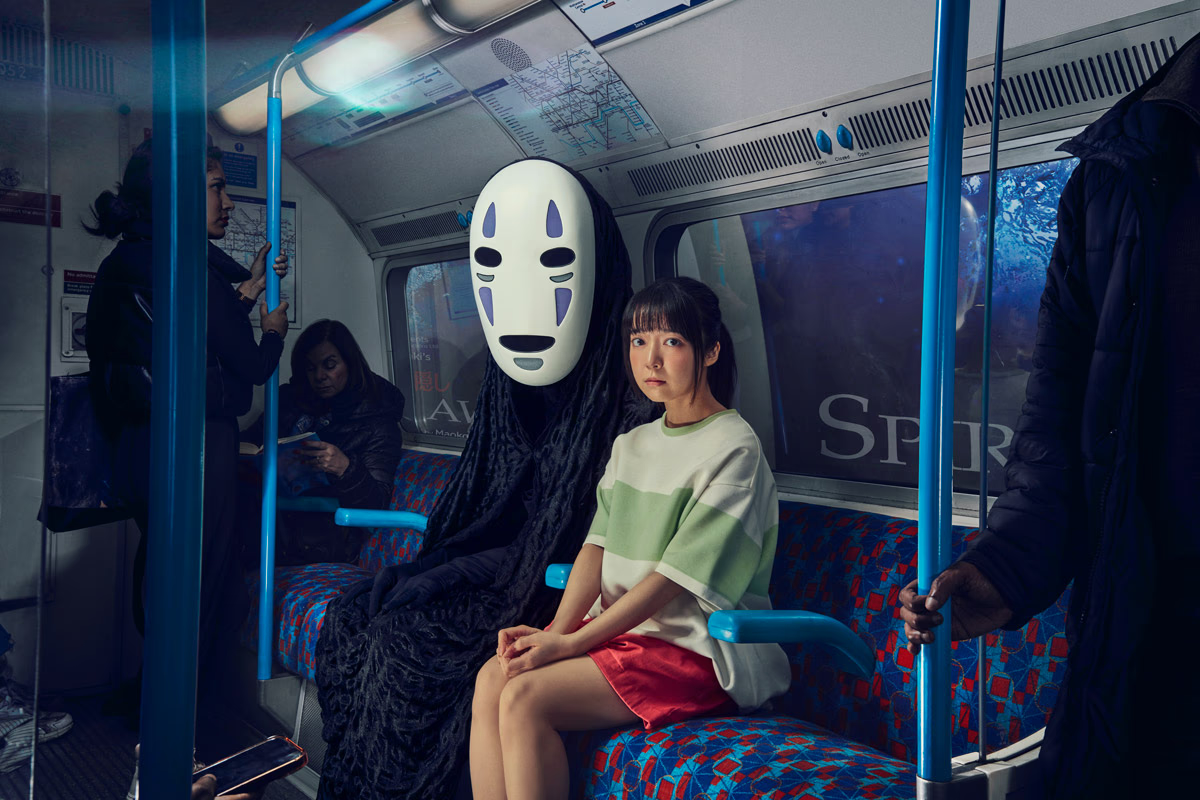
Japanese culture is rapidly colonising the West, from our theatres to our cinemas, to our streaming services and our bookshops, to the food we eat and the clothes we wear, even the footballers we cheer on. This year alone I must have written half a dozen articles on different areas where Japanese culture is making its mark worldwide (and especially in the UK). Some are quite surprising, such as novels. By one estimate, a quarter of the two million translated novels sold in the UK last year were Japanese. It has become almost de rigueur to be seen reading the latest volume by Banana Yoshimoto, Sayaka Murata, et al.

Wimbledon won’t be the same without line judges

From our UK edition

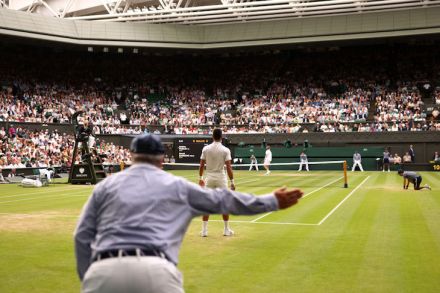
It will soon be the end of an era at Wimbledon. From 2025, the All England Club has announced that the services of line judges, who ringed the court and were responsible for crying ‘out’ and ‘fault’ on serves, will be dispensed with. From then on, all line calls will be decided entirely by the Hawkeye electronic line calling system (ELC). The move comes in the wake of the Association of Tennis Professionals' (ATP’s) decision to adopt ELC across the men’s tour from 2025, and is thus perfectly logical. But it is not without controversy, and it will not please everybody.

Japan’s next prime minister is a bit of a maverick 

From our UK edition

The 67-year-old Shigeru Ishiba will become Japan’s new prime minister on 1 October after winning a surprisingly exciting play-off vote against his rival Sanae Takaichi. For a moment it looked as if Japanese MPs were set to elect the country’s first female leader (Takaichi was ahead of Ishiba in the first round of voting) but in the end the Liberal Democratic party (LDP) opted for experience and former defence minister Ishiba’s safe, and crucially clean pair of hands. Ishiba is at first glance a typical Japanese politician and an unexciting choice for PM. He’s a former banker and has been in politics for nearly 40 years. He doesn’t have a particularly interesting backstory or much in the way of charisma. He looked like the dullest of the final three candidates.

The tragic cost of Japan’s floods

From our UK edition

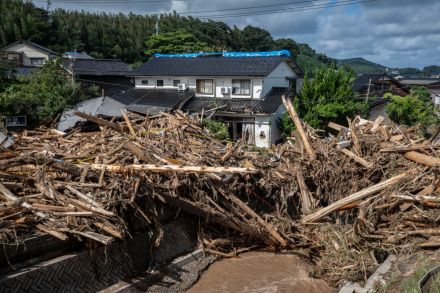
Yet another natural disaster has struck in Japan as floods and landslides in the Noto peninsula, precipitated by ‘unprecedented’ rainfall, have killed seven (according to the state broadcaster NHK) with 10 people missing. As usual, these numbers are expected to rise. The Ishikawa area was pounded on Saturday with the heaviest continuous rainfall (540 millimetres in 72 hours in the city of Wajima) since records began. One resident Akemi Yamashita described scenes as ‘heart-breaking’ with the floods, which she saw rising quickly to half the height of her car as she drove through town, like ‘something from a movie’.

The trouble with the Champions League

From our UK edition

The revamped Champions League kicks off this week with all the gushing hyperbole we have come to expect from this glossy, money-saturated event. Five British football teams will be in action along with a record 31 others for the first-round ‘league’ stage. The difference this year is that the marketing blitz is accompanied by earnest attempts to explain the new format – which is a tad complicated to say the least – and sell it to us.  There is one super-size ‘league’ in which teams play eight of their 35 (!) rivals once We are now getting the ‘Swiss’ system, invented in the late 19th century by Julius Muller, a teacher and chess player from Brugg near Zurich. There is one super-size ‘league’ in which teams play eight of their 35 (!

Hot springs have doomed Japan’s net zero ambitions

From our UK edition

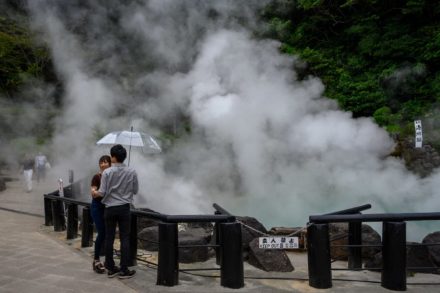
Most people know that Japan is a country cursed with considerable seismic activity; frequent, and very occasionally devastating, earthquakes and tsunamis are a fact of life – and death. Less well known is the blessing the country’s position along the Ring of Fire brings – or potentially brings: abundant geothermal energy. It is estimated that Japan’s geothermal resources, a sort of natural subterranean cauldron, could meet 10 per cent of the country’s energy needs. At the moment though, geothermal makes up just 0.3 per cent of energy consumed, according to the International Renewable Energy Agency (IRENA).

Why won’t the England manager sing the national anthem?

From our UK edition

England’s interim manager Lee Carsley has intimated that he will not be singing the national anthem as his team takes on Ireland in the Nations League in Dublin today – his first game in charge. Carsley is at least being consistent in this, he similarly demurred as a player for Ireland and when he was England’s under-21 coach. This clearly isn’t just an aversion to the admittedly dirge-like ‘God Save the King’. But whether he joins in with his team today is a bit more of an issue.  Is it too much to ask to belt out a few verses of ‘God Save the King’? Carsley has defended his career long anthem-phobia, saying he needs to ‘focus’ on the game ahead, and maintain his concentration.

Why are Britain’s diplomats virtue-signalling to South Korea?

From our UK edition

An important international conference will take place this week in South Korea, focused on the peninsula’s security concerns. The UK will not be participating. The reason? A lack of female ‘representation’, apparently. It seems that all the 18 of the initially invited speakers to the Global Korea Forum were men, though since the UK pullout three more speakers have been included, one of whom is female.  A spokesperson from the British Embassy told the Korea Times that ‘the ambassador (Colin Crooks) is unable to take part in the Global Korea Forum next week. The British Embassy is committed to gender equality. We believe that events are enriched by the diversity of perspectives of those participating.

Scottish Nats still haven’t worked out why they lost

From our UK edition

Unlike a slightly more high-profile reunion event, the ticketing website for the Scottish referendum tenth anniversary show is not expected to crash. But there will no doubt be much looking back in anger at the IMAX theatre at the Science Centre in Glasgow on 14 February as ‘the stars’ (it says) of the 2014 referendum gather to ‘reflect’ on the defining moment in their lives and ‘outline their hopes for the future’.   In a fine Scottish tradition, they clearly still see themselves as the moral, if not actual, victors of 2014 The headliner (surprise, surprise) is Alex Salmond, who will be in discussion with STV political journalist Bernard Ponsonby.

Shanshan may be the strongest typhoon in Japanese history

From our UK edition

The Japanese are battening down the hatches – again – as typhoon Shanshan wreaks devastation to the south-west of the country, with worse, possibly much worse, to come for the rest of us further north. Millions of people have been told to flee their homes in the face of what officials are calling one of the strongest storms ever to hit the region. Shanshan may even prove to one of the strongest typhoons in Japanese history – which is some boast.  It is shaping up to be something close to the perfect storm in terms of its power and unpredictability Four people have died so far with 94 injured, but those figures will increase greatly as the hours pass. An ultra-rare ‘special warning’ has been issued in some regions by the meteorological agency.

The allure and terror of Mount Fuji

From our UK edition

Six men have died on Japan’s iconic Mount Fuji since the start of the climbing season in July. This figure, two more than last year, is especially worrying given that steps had only recently been taken to mitigate the dangers of climbing the mountain. Various restrictions were introduced earlier this year to deal with overcrowding, which has become a feature of the mountain. A cap of 4,000 climbers a day was imposed along with a fee of 2,000 yen (£10). A website giving advice about weather conditions and congestion on the mountain was set up. Prayers were offered in an official ceremony before the climbing season opened.

Japan just can’t find the staff

From our UK edition

‘Kanko kankai’ (tourism pollution) is the latest buzz phrase here in Japan as the double-edged samurai sword of the visitor boom continues to cause profit but also pain. The latest problem, along with the overcrowding, poor behaviour, and squeezed out locals, is a shortage of staff at the main attractions and the hotels and restaurants that surround them. Which, given the importance of quality service in Japanese culture, is a veritable crisis. Healthcare, distribution and agriculture are all facing, to varying degrees, serious issues due to a lack of manpower There is nothing especially new in this. Labour shortages have long been a problem as the society ages, the fertility rate remains low and the pool of fit young people shrinks.

The decline of football speak

From our UK edition

The new Premiership season kicked off this weekend and, with all the usual hype, will come novelties. There are the gamely optimistic new arrivals and returnees, no doubt a breakout star or two, some eyebrow-raising new hairstyles (Mo Salah) and some ingeniously tweaked – and therefore ‘must-have’ – revenue-gouging strips. As ever, there will be new rules, including yet further tinkering with VAR. But what interests me, as an English teacher and student of socio-linguistics, will be any novelties in the figurative language which the players, fans and journalists use to describe the game. Over nearly 50 years of watching football, it has been fascinating to hear the football lexicon evolve in ways that can be quite culturally revealing.

How scandal brought down yet another Japanese leader

From our UK edition

Japanese prime minister Fumio Kishida has announced he will be stepping down as leader of the Liberal Democratic party next month. This means yet another new leader, the 13th in my quarter century in the country (unless one of the previous incumbents fancies another go) but almost certainly not a radical new direction.  Whoever wins the LDP leadership election will become prime minister, as the party controls both houses of parliament, though no general election need be held until 2025. The announcement has been declared a ‘surprise’, but in truth, the resignation of a Japanese premier is never really that much of a surprise.

Nagasaki shouldn’t have snubbed Israel from its A-bomb ceremony

From our UK edition

Nagasaki’s Peace Park held a ceremony today to mark the 79th anniversary of the dropping of the atomic bomb on the city (which killed 74,000 people). It was a sombre and moving occasion, as it always is, and one usually attended by high level representatives of all nations. This year was different though: the ambassadors of the UK, US and Israel were elsewhere, holding their own memorial at a Buddhist temple in Tokyo, 750 miles away. Nothing spooks the Japanese as much as disorder The reason is an unseemly row over the withdrawal of an invitation to Israel, by the mayor of Nagasaki Shiro Suzuki, apparently over fears of potential protests in the wake of the ongoing conflict in Gaza.

Japan’s volatile stock market is causing panic

From our UK edition

Japan’s Nikkei 225 index registered its biggest ever daily fall on Monday, plummeting by over 12 per cent and continuing the extraordinary collapse that began last Friday. Meanwhile, the Yen, which had been slowly eroding in value for months continued its dramatic resurrection moving from 162 to the dollar to under 140. At the time of writing, a technical rebound seems to be underway – but such volatility is alarming. After years of nothing very interesting happening to the Japanese economy, such upheavals have stunned locals and provoked urgent questions about causes and consequences.

Japan is running out of rice

From our UK edition

Japan is running out of rice. Stocks have fallen to their lowest levels in decades, prompting fears that emergency reserves may need to be accessed. Prices have hit a 30-year high as private companies held just 1.56 million tons in June, the lowest level since 1999 and 20 per cent less than the previous year. Partly this is just the result of a poor crop caused by unfavourable climatic conditions – high temperatures combined with water shortages. But there is more to it than that: whereas Japan would once have shrugged off an occasional bad year, the poor state of the farming industry in Japan means seasonal fluctuations in yield are now more serious.

What’s the problem with playing Premier League football in the US?

From our UK edition

Sadiq Khan has suggested that the long rumoured prospect of Premier League fixtures being played in the United States is now inevitable. Khan, a Liverpool supporter (largely an armchair one), told the Sports Agents podcast that he believes a stateside ‘international round’ of Premier League fixtures, similar to the NFL and NBL games played in London, was ‘the way things were going’: ‘They (the big clubs) have big fans in America. Why can’t those fans see a competitive game?... All 32 NFL teams have played in London, all of them have had a great experience. We have some of the top baseball teams playing in London’, Khan explained.

Why the punishment fits the ‘crime’ for Japan’s smoking gymnast

From our UK edition

Japan’s Olympics have got off to the worst possible start. The captain of their women’s gymnastics team Shoko Miyata has withdrawn, or more accurately been obliged to withdraw, after admitting breaking the team’s code of conduct while at their training camp in Monaco. Her Olympic dream is over and she leaves in disgrace. So, what was this unacceptable behaviour? Well, it appears Miyata smoked a cigarette and drank alcohol (once, for each). Smoking and drinking are prohibited for anyone under the age of 20 in Japan. Miyata is 19.

Japan’s weird celebrity culture is coming to Britain

From our UK edition

The Japanese singer, actor and heartthrob Matsumoto Jun, who I’ve always thought of as an Oriental David Cassidy (thus showing my age), will make his UK acting debut later this year when he appears in acclaimed playwright Hideki Noda’s very loose adaptation of the Brothers Karamazof at Sadler’s Wells. Jun is, not to sell him short, a superstar in Japan. It should be quite an event. In many ways, Japan (and South Korea’s) talent factory is like a throwback to the Hollywood star system of the 1920s to 1960s If you can’t get your head round the David Cassidy analogy, perhaps Harry Styles would be more meaningful, though even the former One Direction star would struggle to attract the kind of devotion inspired by Jun (it really is more like Cassidy – look him up).