Philip Patrick

Philip Patrick

Philip Patrick is an exiled Scot, who lectures at a Tokyo university and contributes to the Japan Times

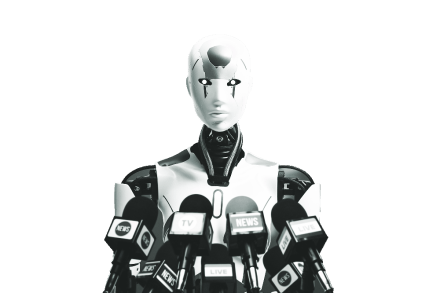
Could Japan soon be governed by chatbots?

From our UK edition

Tokyo Could Japan be the world’s first -algocracy – government by algorithm? The concept has been flirted with elsewhere: in 2017 a chatbot called Alisa challenged Vladimir Putin for the Russian presidency. But there is reason to believe that if any major country is going to replace its politicians with AI, it will be Japan.  The citizens of Yokosuka in Kanagawa have had a remarkably lifelike AI avatar of their mayor, Katsuaki Uechi, at their service for over a year now. It (he?) speaks perfect English with a slight Japanese accent, with Uechi’s facial features manipulated to make it look as if he is pronouncing the words correctly. The avatar exists on the city’s website and YouTube channel, standing at a podium, making speeches.

Japan is running out of time to save itself from Trump’s tariffs

From our UK edition

‘This is a serious situation for Japan’. That was the verdict of the business editor on NHK’s morning news programme today. Given the normally exquisite understatement of Japanese broadcasters, this kind of language suggests a full-blown crisis is looming. The crisis in question is the Trump administration’s declaration that it would be slapping a 25 per cent duty on all Japanese goods (separate to sectional tariffs already in place) to kick in from 1 August. This outcome is not set in stone and there is still the possibility of further movement in the remaining three weeks or so.

In defence of Wimbledon’s AI line judge

From our UK edition

Does anything work in Broken Britain? You’d be forgiven for wondering when even during our most prestigious sporting tournaments the transport is chaos, the digital  ticketing system has crashed leaving gaps in the crowd, and even the supposedly cutting-edge line-call technology appears to go on the blink. Wimbledon has seen three major ‘Electronic Line Calling’ (ELC) controversies in just the first week, raising questions about the line calling system’s reliability and ongoing viability. The occasional misfires are highlighted and endlessly discussed while the correct calls, often excruciatingly tight and hugely significant, are rarely appreciated.

Will China interfere in choosing the next Dalai Lama?

From our UK edition

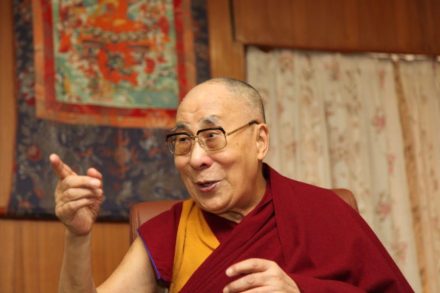
Tenzin Gyatso, otherwise known as His Holiness the XIVth Dalai Lama, spiritual leader of Tibetan Buddhism, will celebrate his 90th birthday on Sunday. Despite once predicting he would live to 110, the Dalai Lama has perhaps prudently decided that the time is right to discuss his succession. He will host a conference of Lamas and luminaries (including the actor Richard Gere) to discuss the question. China, which annexed Tibet in 1959, causing the then young holy man to flee to India, will be following the preemptive Buddhist conclave with great interest. Whoever the next Dalai lama is will have large sandals to fill and is unlikely to be as charismatic or affable Traditionally, a Dalai Lama is found according to an ancient system of mystical rites, rather than chosen.

Nissan’s future looks bleak

From our UK edition

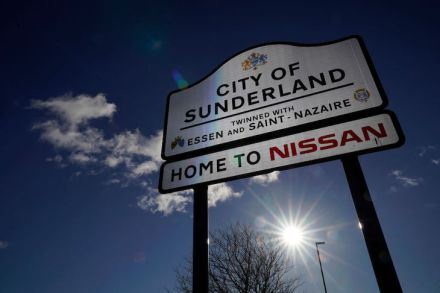
Nissan has announced that hundreds of jobs will be cut at its Sunderland plant. The Japanese auto-maker said the lay-offs would be in the form of ‘voluntary redundancies'. The move is part of the beleaguered corporate behemoth's plan to reduce its global workforce by 15 per cent following several disastrous years, not least because of slow demand for its fleet of electric cars. Some sympathy is due perhaps, at least for Nissan in the UK While the cuts only affect four per cent of the plant's 6,000 workers, the question now is whether this is just the start. So serious is the state of Nissan’s finances – it announced losses of $4.5 billion (£3.3 billion) in 2024, with this year not expected to be any better – that it would be foolish to assume this is where it will end.

Where have all the Japanese tourists gone?

From our UK edition

Is the Japanese tourist, for so long in good numbers a welcome and reliable fixture at our most famous tourist spots, now in serious decline? The number of Japanese travelling abroad is still well down on pre-Covid times and with government data just released revealing that fewer and fewer Japanese even hold a passport, the slump could be prolonged, which would be disastrous for the UK tourism and hospitality industry. According to the Japanese government, only around 17 per cent of Japanese adults currently hold a passport, a significantly lower rate than the US and UK (50 and 85 per cent respectively). It seems the Japanese are less and less inclined to travel. The reasons are not difficult to identify but quite hard to address.

Why the Japanese don’t believe Fukushima is safe

From our UK edition

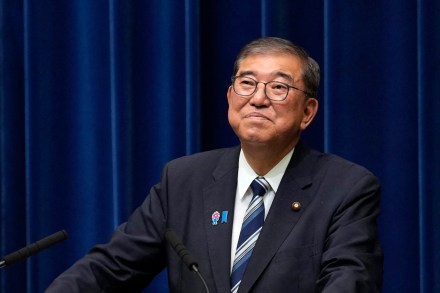
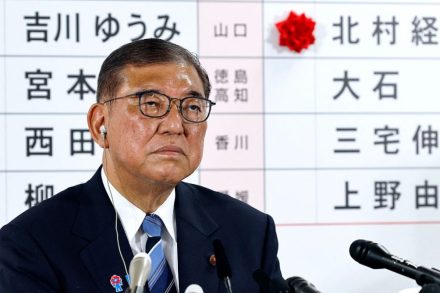
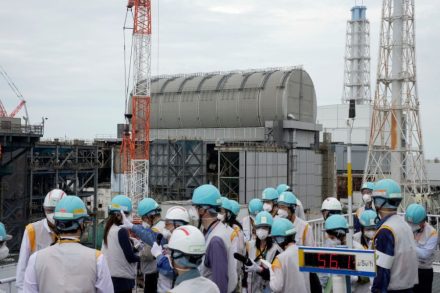
Soil samples from Fukushima, the prefecture where Japan’s Dai-Ichi Nuclear reactor exploded in 2011 sending plumes of radioactive material into the sky, will be transported to the garden of Prime Minister Shigeru Ishiba to serve as flower beds. Far from horticultural, the real purpose is to reassure the Japanese people that Fukushima is now safe and to allow the government to get on with the colossal task of moving the mountains of top soil now stocked in the prefecture around Japan to be used for agriculture and as building materials.

Great football writers are different

From our UK edition

Brian Glanville, who died this week at the age of 93, was a unique voice in the crowded and often hysterical field of football writing and a uniquely important one. His historical reach was unparalleled. He published his first book (a ghosted autobiography of Arenal striker Cliff Bastin) at the age of 16 and attended 13 World Cups, starting with the 1958 tournament in Sweden.  His lean, elegant, novelistic style, informed by his parallel career as a fiction writer, could be found nowhere else in the UK. As Patrick Barclay put it, ‘most football writers fall into two categories: those who have been influenced by Brian Glanville and those who should have been’. Glanville was simply different.

What the Europa League losers’ final reveals about English football

From our UK edition

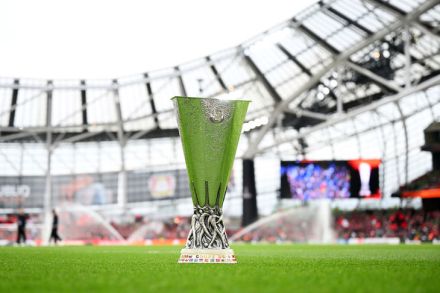
Two of world football’s biggest but worst performing clubs Manchester United and Tottenham Hotspur face off in Bilbao on Wednesday in the Europa League final. There is quite a lot at stake, not only Europe's second most important club title but the substantial bonus of a place in next year’s Champion’s League (worth an estimated £60 million) and with it the kudos to attract top players. It’s been called back door entry to UEFA’s elite tournament, but it feels more like a magic portal transporting the currently humdrum aspirant super clubs into another dimension, and not one where they necessarily belong. If football is all about stories, this is a very odd one.

Ian Williams, Philip Patrick, Guy Stagg, Ysenda Maxtone Graham, Mark Mason and Catriona Olding

From our UK edition

37 min listen

On this week’s Spectator Out Loud: Ian Williams looks at Chinese influence in the UK (1:39); Philip Patrick interviews Japan’s last ninja (9:35); Guy Stagg reviews Damian Le Bas and explores the myths behind the city of Atlantis (18:23); Ysenda Maxtone Graham reviews an exhibition on school dinners at the Food Museum in Stowmarket (23:38); Mark Mason provides his notes on quizzes, ahead of the Spectator’s garden quiz (28:00); and, swapping Provence to visit family in America, Catriona Olding takes us on a trip up the east coast (31:27).  Produced and presented by Patrick Gibbons.

‘It is sad that we are sometimes seen as just killers’: an interview with Japan’s last ninja

From our UK edition

Getting an interview with Jinichi Kawakami, the man known in Japan as ‘the Last Ninja’, was no easy task – but nor should it have been. Ninjas, Japan’s legendary covert operatives and assassins, were renowned for their elusiveness, so it would have been disappointing if tracking one down had proved a cinch. It took a good deal of research and persistence before I was granted an interview by landline telephone – which also seems appropriate since ninjas were reputedly able to make themselves invisible. Kawakami is head of the Banke Shinobinoden school of ninjutsu (ninja culture), director of the Iga-ryu Ninja Museum and Ninja Council, and a professor of Ninja Studies at Mie University.

Trump’s tariff pause has given Japan time to plan its next move

From our UK edition

Asian markets are rebounding after President Trump announced a 90-day ‘pause’ in the implementation of the ‘Liberation Day’ tariffs that had sent shock waves through the financial community. Most dizzying perhaps were events in Japan, where after a vertiginous plunge on Monday, the Nikkei surged over 8.5 per cent on this morning's trading. Japan’s iconic companies had a good day: Toyota was up 6 per cent, Sony 12 per cent and Mitsubishi 10 per cent. Elsewhere in Asia, the South Korean KOSPI rose 6 per cent, the Hang Sang climbed 2.69 per cent, the Singapore Composite Index 1.29 per cent and Taiwan’s stock exchange was up over 9 per cent.

Trump is bending Japan to his will

From our UK edition

‘National crisis’ was how Japanese Prime Minister Shigeru Ishiba described the fallout from President Trump’s ‘Liberation Day’ tariffs in a speech on Friday. That was strong language from the normally measured Ishiba, but was borne out by the bloodbath in the Nikkei stock exchange over the last few days of trading. Stock markets around the world have been battered, but Japan’s has been one of the worst. It plunged 2,600 points to close down a whopping 8 per cent today, the third largest fall on record. Amongst the worst casualties were the Mizuho Financial Group, whose shares fell 10.6 per cent, and Mitsubishi, whose stock plunged by 10.2 per cent. Trading on futures was briefly suspended as circuit breaker limits were reached amid the carnage.

They think it’s all over for President Yoon – it is now

From our UK edition

Yoon Suk Yeol, elected South Korea’s president in 2022, has been removed from office. The Constitutional Court in Seoul has upheld Yoon’s impeachment over his actions in the ultra-short-lived declaration of martial law last December. After lengthy deliberations the court delivered a decisive eight-zero verdict. A snap election must now be held within 60 days with Prime Minister Han Duck-soo serving as acting president in the interim. Yoon’s PPP (People Power party) accepted the verdict and the man himself issued a humble apology to the nation saying, ‘I deeply regret not being able to live up to your expectations. It has been the greatest honour of my life to serve our nation.

I’m bored by this blossom worship

From our UK edition

It’s cherry blossom season in Japan and about half the population (according to a Kansai University study) will gather at the viewing spots to pose for photos (Japanese Instagram may collapse) and enjoy picnics in the shade of the sakura trees. Japan will also welcome close to four million visitors to witness the floral marvel. The season is brief, peaking in about a week and disappearing by the end of April, during which time the progress of the blooms across the country is followed with breathless enthusiasm by reporters on the news bulletins. We are assumed to be, expected to be, giddy with excitement about all this, and to swoon with childlike wonder at the profusion of vivid yet delicate flowers. But I’m afraid I’m not quite up to it any more.

Japan has been stunned by the Trump tariffs

From our UK edition

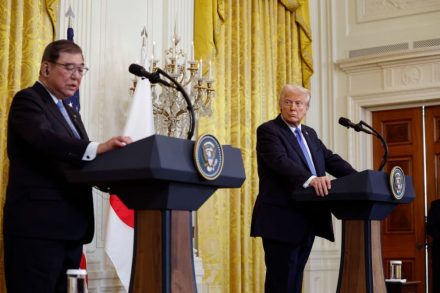
Virtually the whole world is waking up to the reality, not threat now, of President Trump’s Liberation Day tariffs, but in few places will the sense of shock and resultant anxiety be greater than Japan, where a whopping 24 per cent has been slapped on exports to the US. The Japanese, who have grown used to a decent relationship with successive American administrations and a whopping trade surplus, will have many sleepless nights ahead. The reaction here has not been one of anger or resentment – more stunned bemusement. Prime Minister Shigeru Ishiba, who did his best to cozy up to Trump on a recent summit in Washington (he presented Trump with a golden ‘kabuto’ helmet) has said the tariffs are ‘very hard to understand’.

What’s wrong with a Spinal Tap reboot?

From our UK edition

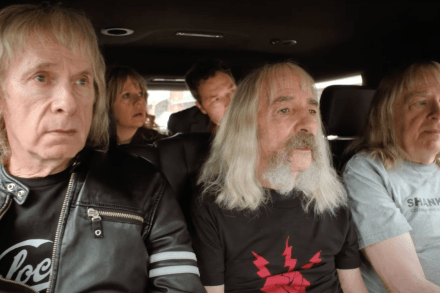
The wigs are being dusted off, the spandex jumpsuits laundered and the amps turned up, not to 11 but to infinity. Rock legends Spinal Tap, one of the world’s loudest bands, are back with a sequel to their seminal 1984 mockumentary, to be released on 12 September. But can Spinal Tap 2: The End Continues possibly live up to the nearly flawless original, or are we about to witness an act of cultural sacrilege? https://youtu.be/P-Y51nBET8k Happily, nearly all the original cast will be in the sequel, and we are promised some big-name cameos from Paul McCartney, Elton John and Garth Brooks.

Does Japan want its own nuclear weapons?

From our UK edition

Japan is planning to strengthen its ‘counterstrike capabilities’ by deploying long-range missiles on the southern island of Kyushu. The missiles have a range of 621 miles, meaning they could hit targets within North Korea and China. The move comes amidst rising tensions in the region and in an atmosphere of increased uncertainty in Japan about American security guarantees. The weapons, upgraded versions of the GSDF (Ground Self Defense Force – Japan’s army) Type 12 land-to-ship guided missiles, will be stored at bases with existing military garrisons and will be able to defend the strategically vital Okinawa island chain.

Football is demolishing its past

From our UK edition

Saturday 17 May will see the final ever game at Everton’s Goodison Park, and with it the end of 133 years of history. Unless the rumour of a last-minute reprieve involving the women’s team turns out to be true (highly unlikely), the bulldozers will soon get to work and the ground will be reduced to rubble. The club will move into a new ‘super arena’ at Bramley-Moore Dock, Vauxhall, for the 2025/26 season. Sad? Well, yes. The club, on its website, has acknowledged the mixed feelings of the faithful but promised the move will be an ‘exciting new chapter in the club’s history’, with the additional 13,000 seats in the new ‘365-day’ ground offering space for additional ‘fandom’, including many more of those all-important, merchandise-hungry ‘tourists’.

Is Trump going to rip up the US security alliance with Japan?

From our UK edition

Another day, another Trumpian bombshell, this one aimed at the country he says he loves: Japan. Trump told reporters this week that the US-Japan security alliance which has bound the two countries together militarily since 1952 and offered military guarantees to Japan since 1960 was ‘interesting’ but unequal as it obliged the US to defend Japan but not vice-versa. Trump added that the Japanese ‘make a fortune with us economically’ a reference to Japan’s trade surplus with the US. Trump was speaking ahead of a visit by Japan’s trade minister who will reportedly ask (perhaps beg) for an exemption from pending US tariffs on steel and aluminium (25 per cent due next week with ‘no exceptions’).