Philip Patrick

Philip Patrick

Philip Patrick is an exiled Scot, who lectures at a Tokyo university and contributes to the Japan Times

The BBC has much to learn from Japan’s national broadcaster

From our UK edition

NHK is Japan’s version of the BBC – it was actually modelled after the Beeb way back in the 1920s. It has four terrestrial, two satellite TV stations, and three radio stations. It is advert-free, and funded by a license fee. It could be seen as one of Auntie’s nephews perhaps, with many of the same family traits, but a few important differences that embattled BBC executives might do well to take notice of. Unless you have a weird fondness for the noisy and inane (see the Takashi Fuji episode in ‘Lost in Translation’) NHK is probably the only ‘terebi’ you would want to watch in Japan.
Did Carlos Ghosn really flee ‘injustice’ in Japan?

From our UK edition

Q: What were the this year’s big New Year films on Japanese TV? A: The Great Escape and Ghosn with the Wind. Former Nissan supremo Carlos Ghosn's dramatic escape from house arrest in Tokyo in December, ahead of his trial for financial irregularities, has produced plenty of jokes and divided pubic opinion in Japan. Some see Ghosn's successful flight to Lebanon as damning proof of his guilt, while others still believe he deserves a measure of sympathy and support. Whether Ghosn really was, as is being reported, smuggled out of his closely surveilled Roppongi residence in an instrument case after a private concert, in a scheme masterminded by his second wife Carole and facilitated by 'paramilitary groups', will no doubt become clear in time.

Could Prince Andrew learn from Japan’s royal family?

From our UK edition

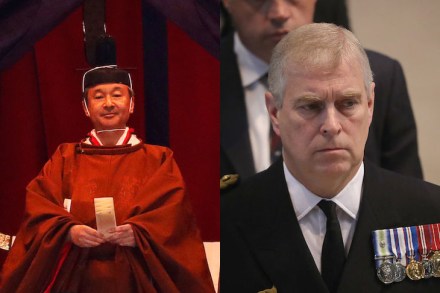
Most British people who watched Prince Andrew’s cringeworthy interview with Emily Maitlis this month will have done so with a certain amount of disbelief. But for Japanese observers, the spectacle of a crown prince being asked awkward questions about his private life by a forensic interviewer would have been totally incomprehensible. The Japanese royal family doesn’t really do big royal scandals. It's not because embarrassments never occur, or that individual members aren’t prone to all the usual human failings, it’s just that the institution as a whole is much better protected, the media far more carefully regulated, and the public has significantly less appetite for juicy tidbits of royal gossip.

Extinction Rebellion has already won

From our UK edition

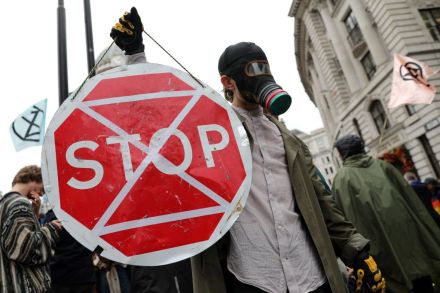
'I wouldn’t be here if you were a climate denier'. This was William Skeaping, spokesperson for Extinction Rebellion (ER), talking to Toby Young on The Spectator podcast. That statement tells us much about the environmental pressure group’s tactics and strategy. It also reveals that, in the battle behind the climate war, Extinction Rebellion has already won. ‘Deny’ these ‘truths’ and we will simply refuse to talk to you. You will be nothing to us. That's the message from ER. Skeaping’s words were a neat framing of his movement’s preconditions for engaging in debate.

Theresa May says goodbye to old friends at Japan’s G20

From our UK edition

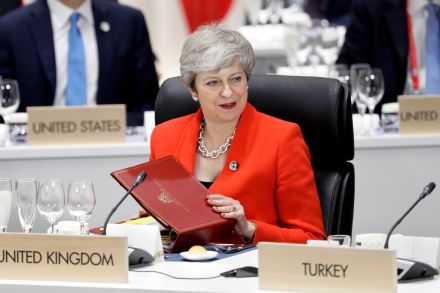
Theresa May makes her final bow on the world stage in Japan, where she is attending the G20 heads of government meeting in Osaka. It’s a funny place for it all to end. Japan’s second city prides itself as the country's comedy capital. It is home to Japan’s ‘manzai’ tradition – a slapstick straight man/funny man double act which involves a lot of head slapping and cross talk. Besides their sense of humour, Osakans are known for their garrulousness, gaudy clothing and their suspicion of haughty, overly serious Tokyo. Think of Glasgow’s relationship to Edinburgh, or Newcastle’s to London, and you’re not far off.

Shinzo Abe and Donald Trump’s budding bromance

From our UK edition

Whenever I see pictures of Donald Trump and Shinzo Abe together I hear the theme music from the Neil Simon comedy The Odd Couple. For Trump and Abe are indeed the Felix and Oscar of global politics, a gently comic double act with starkly different but oddly complimentary personalities and all the appearance of a twilight years bromance. The pair met soon after Trump’s inauguration when Abe rushed stateside to be the first foreign leader to pay his respects to the new president. Since then the relationship has blossomed, and they’ve met frequently, and conversed on some 40 separate occasions. There have been some choice comic moments along the way.

Will Japan’s far right spoil the new Emperor’s party?

From our UK edition

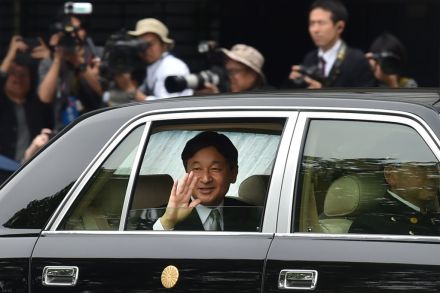
When the new Japanese Emperor Naruhito makes his first public appearance, greeting well-wishers at the Imperial Palace in Tokyo today, there is a fear that the official images of the cheering crowds will need to be carefully framed, if not cropped. For among the multitudes of proud, happy Japanese welcoming the new Emperor and the new era with openness and positivity, a darker presence – the notorious ultra right-wing nationalists known as the Uyoku Dantai – are expected to be out in force. The Uyoku are a familiar site on the streets of Japan's capital and are easy to spot. Dressed in WWII-era military uniforms and carrying the older, more militaristic of Japan’s national flags, they look like extras from the BBC series Tenko.

What did Japan make of Jeremy Hunt’s Brexit mission? 

From our UK edition

Attempting to explain Brexit in 90 seconds might remind you of a Monty Python sketch, but this is what Jeremy Hunt attempted in front of a class of Japanese high school students on Monday. The foreign secretary gave a carefully worded summary of the Brexit situation using the graded language of the English language teacher he used to be. It’s not clear whether the students were any the wiser after he spoke, but the real aim of the lesson was achieved: to generate positive headlines for the Foreign Secretary on his latest visit to Japan. Hunt has some advantages. He lived in Japan in his early 20s, mastered the language and developed an enduring affection for the country, even once making the Freudian slip of referring to his wife as Japanese (she’s Chinese).

Japan managed to win its war on drugs, why can’t we?

From our UK edition

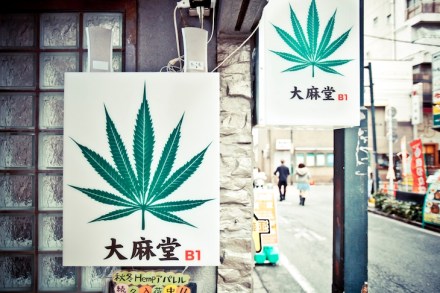
Walking along Tottenham Court Road on a recent, rare, trip to London I was struck by a sweet, pungent odour, which I couldn’t immediately identify. The answer arrived moments later while cutting through a dark Dickensian alley en route to Oxford Street. My way was blocked by a group of wild-eyed, ragged looking men, all smoking marijuana. It was like a scene from Michael Jackson’s Thriller video, except genuinely scary. The men were staring at me as if I were a trespasser. Concluding that proceeding with my shortcut was probably unwise; I turned on my heels and took the long way round. The reason I had forgotten that distinctive aroma is simple: I’ve lived in Tokyo for the last 20 years.

Unpacking Marie Kondo’s mission to clear unnecessary items from your home 

From our UK edition

If I’ve learned one thing in my twenty years in Japan it’s how to enter someone’s home. What you did is this: take off your shoes at the genkan (porch) and say the following, o jama shimasu (the nuisance is here). Under no circumstances should you copy the de-cluttering Goddess Marie Kondo, who in her new Netflix show begins her transformative mission to tidy an American couple’s junk filled house by kneeling on the floor, falling into a trance, and offering a solemn benediction to the soon to be de-cluttered home.