Philip Marsden

First ash dieback, then the world’s scariest beetle

From our UK edition

The ash tree may lack the solidity of oak, the magnificence of beech or the ancient mystique of yew. In terms of habitat it may support fewer species of fauna, insect and fungus than other trees. It may, in this country at least, occupy a smaller cultural space than many of its woodland neighbours: according to Oliver Rackham, the combined works of Shakespeare, Wordsworth and Tennyson mention oak 134 times, pine 113 times and ash just 23. But with its delicate compound leaves, the pale bark and the swoop of its lower branches (likened by the writer and environmentalist Roger Deakin to the arc of a diver), ash is the prettiest of our common trees. Its timber has peculiar qualities. Both malleable and strong, it was favoured by spear-makers and wheelwrights.


What seamen fear more than Somali pirates

From our UK edition

If a time traveller were to arrive in our world from, say, 1514 — a neat half-millennium away — what single feature would strike them most? What could they use on their return to try and explain the sheer weirdness of the future? A crowded mega-city? A hospital? An international airport? A computer? What about this — a container ship, a fifth-of-a-mile of steel transport travelling thousands of miles across unknown oceans filled with 150 tonnes of New Zealand lamb, 138,000 tins of cat food, 12,800 MP3 players and any amount of the paraphernalia for which the frenetic people of the 21st century work so hard to be able to afford? In fact, you don’t need to come from the Tudor period to be amazed by the scale and extravagance.

Rock of ages | 19 September 2012

From our UK edition

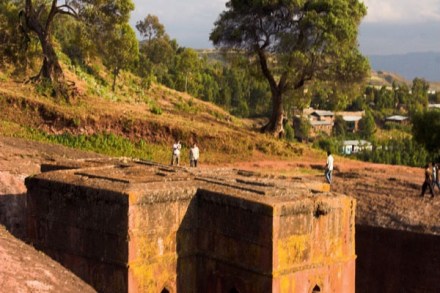
By any measure the small town of Lalibela, hidden away amongst the gorges and plateaux of Ethiopia’s central highlands, is one of the most remarkable religious sites on earth. A dozen or so churches have been carved out of the rock and connected by a labyrinth of trenches, tunnels, culverts and crypts. The churches are substantial, elaborate and in their overall effect unlike anything else in the Christian world. Interiors disappear into chiselled-out arcades and apses; the light falls through intricate cruciform windows. The columns are so evenly spaced, the vaults so regular that it is easy to forget that every inch of these ‘buildings’ had to be designed and executed using negative space, a stone-carver’s technique that allows for no margin of error.