Philip Mansel

The enlightened rule of the Empress Maria Theresa

From our UK edition

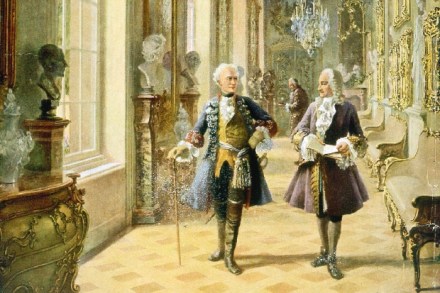
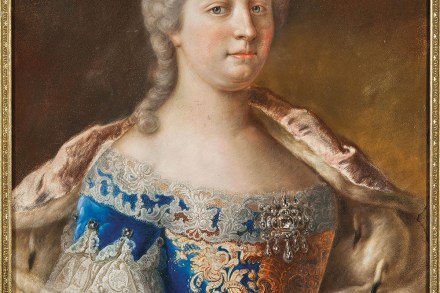
The role of personality and charm in running a state is one theme of Richard Bassett’s superb book, the first English biography of the Empress Maria Theresa since Edward Crankshaw’s in 1969. The different parts of the Habsburg monarchy – Austria, Tyrol, Bohemia, Hungary, Croatia and Milan – had little in common except dynasty, geography and Catholicism. Yet, partly owing to Maria Theresa’s force of character, this complex tapestry of nationalities remained a great power After she came to the throne in 1740, she felt ‘forsaken by the whole world’. Encouraged by France, Austria’s neighbours Prussia, Saxony and Bavaria invaded the monarchy in order to divide it between them.
Versailles’s role as a palace of science

From our UK edition

Versailles was a palace of science, as Anna Ferrari shows in this stimulating and innovative study, accompanying a dazzling exhibition of the same title at the Science Museum, London (until 21 April). Soldiers were subjected to electricity experiments in the Galerie des Glaces. The king watched the dissection of an elephant or a horse in the Menagerie. The latest globes and clocks, microscopes and barometers, miracles of precision and beauty, were, and in some cases still are, on display in the royal apartments. The gardens were exercises in trigonometry and hydraulics as well as planting. Louis XV had the largest and most varied plant collection in Europe.

‘Enough to kill any man’: the trials of serving Queen Victoria

From our UK edition

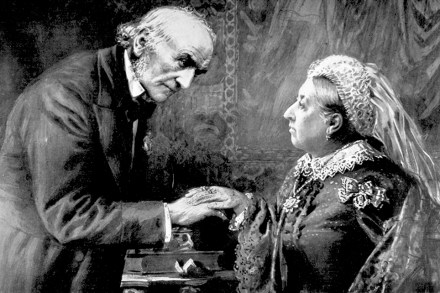
Monarchy was as characteristic of the 19th century as nationalism and revolution. The Almanach de Gotha was a better guide to power than the Communist Manifesto. Constitutional monarchy, in particular, was considered the panacea of the age. On the first morning of her reign, Queen Victoria announced: ‘I have promised to respect and love the constitution of my native country.’ The Times declared her ‘steeped in the spirit of the constitution’. Gladstone said: ‘All the principles of the constitution have been observed by the Queen... in a manner more perfect than has ever been known.’ In reality, as Anne Somerset’s magnificent, disturbing and innovative history of Queen Victoria and her prime ministers shows, this was untrue.

The emperor as ruler of heaven and Earth

From our UK edition

Geography, climate, economics and nationalism are often seen as decisive forces in history. In this dynamic, original and convincing book Dominic Lieven considers emperors and their dynasties as motors of events. Defying constrictions of time and space, ranging from Sargon of Akkad, the ruler of what is now northern Iraq (r. 2334-2279 BC), to the Emperor Hirohito of Japan (r. 1926-89), he believes that ‘for millennia, hereditary sacred monarchy had been the most desirable and successful form of polity on Earth’. (Inhabitants of city states, from Athens to Venice, might not have agreed.) Emperors could create and extend states more easily than impersonal forces, as Lieven shows in chapters on many different empires, from China to Austria.

Philip Mansel: King of the World

From our UK edition

44 min listen

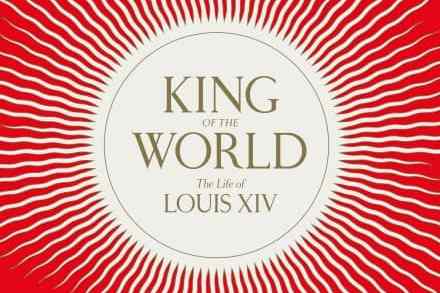
In this week’s Book Club podcast, my guest is the historian Philip Mansel. We talk about his new biography King of the World: The Life of Louis XIV. He tells me what really drove the great megalomaniac, whether he was a feminist avant la lettre, how his depredations in the Rhineland anticipated Putin’s in Ukraine – and why, if he hadn’t revoked the Edict of Nantes, the first man on the moon might have been speaking French.

The Greeks’ bitter fight for freedom

From our UK edition

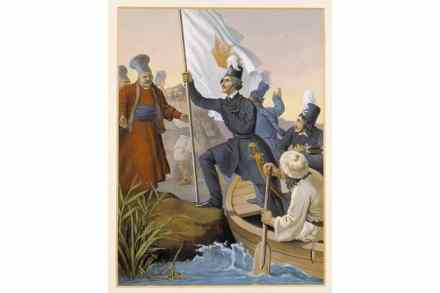
Last year was the 200th anniversary of the outbreak of the war of Greek independence in March 1821. It has been celebrated by a flood of books and events, a particularly instructive exhibition at the Benaki Museum in Athens and this gruesome page-turner. Mark Mazower, professor of history at Columbia University and the author of many books on modern Greece, stresses the passion for freedom, exceptional stamina and heroism which helped Greeks establish an independent state between 1821 and 1830. Greeks had long felt oppressed as subjects of the Ottoman empire. One of them called it ‘a tyranny so frightful... neither equal nor comparable to any other and so unjust’.

A prince among men: could Albert have changed the course of history?

From our UK edition

Double identities have never been rare: Norman French conquered England. Anglo Irish led its armies to victory. German Jews helped create the modern world. Perhaps thinking of the many Germans living in London, and British in Hamburg, Munich and Dresden, Prince Albert’s eldest daughter Vicky, Crown Princess of Prussia, invented another hybrid: ‘Anglo-Germans’. This new biography of her adored father, Albert: The Man who Saved the Monarchy is, appropriately, an Anglo-German book, written from both English and German sources and perspectives, by an English author who knows Germany well.

Where three empires met

From our UK edition

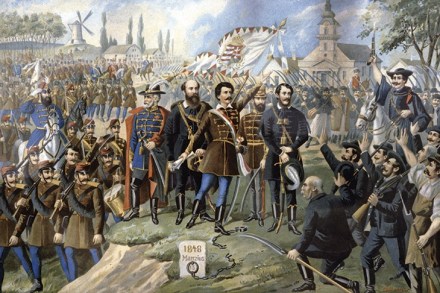
Norman Stone has already written, with a brilliant blend of humour, understanding and scepticism, histories of the Eastern Front, Turkey, Europe between 1878 and 1919, both world wars and the Cold War. A history of Hungary is his latest book. He has one qualification increasingly rare in England. As polyglot as an educated archduke, he knows Hungarian in addition to German, French, Russian and Turkish. Moreover, he has been visiting Hungary for more than 50 years, since he first went as a student in the dark days of 1962. He has returned many times — his Hungarian improved in a communist prison and he reported the fall of the communist regime in Budapest in October 1989 — and now lives there part of the time.

The kings are holding court again

From our UK edition

A hundred years after the Russian revolution, Russia has a tsar and a court. Proximity to Putin is the key to wealth, office and survival. The outward signs of a court society have returned: double-headed eagles, the imperial coat of arms, the cult of Nicholas II (one of whose recently erected statues has ‘wept tears’), an increasingly wealthy and subservient Orthodox Church. In 2013, ‘to strengthen the historical continuity of the Russian armed forces’, the main honour guard regiment in Moscow was renamed Preobrazhensky, after the oldest regiment of the Imperial Guard, founded by Peter the Great in 1683.

Holding court

From our UK edition

A hundred years after the Russian revolution, Russia has a tsar and a court. Proximity to Putin is the key to wealth, office and survival. The outward signs of a court society have returned: double-headed eagles, the imperial coat of arms, the cult of Nicholas II (one of whose recently erected statues has ‘wept tears’), an increasingly wealthy and subservient Orthodox Church. In 2013, ‘to strengthen the historical continuity of the Russian armed forces’, the main honour guard regiment in Moscow was renamed Preobrazhensky, after the oldest regiment of the Imperial Guard, founded by Peter the Great in 1683.

The road to catastrophe

From our UK edition

France’s problems today should lessen the condescension of posterity towards Louis XVI. Presidents of the Republic have proved just as incapable as the King of reforming privileged corporations — stemming the flight of skills and capital — and winning popular confidence. Louis XVI’s failure to manage France after 1789 is easier to understand after reading John Hardman’s complex , well-researched, gripping 500-page biography . Louis XVI’s greatest problem was the French national debt. It had reached four billion livres — accumulated over many wars — and there was an annual deficit of 100 million livres. As a result, Hardman points out, in the 1780s, whereas the British government could borrow at 3.

Sodom in Potsdam

From our UK edition

Reacquaintance with Germany is long overdue for most English people. Before 1914 it was at least as familiar as France and Italy. Tim Blanning, former professor of Modern European History at Cambridge, has already written brilliantly about Germany in books such as The Culture of Power and The Triumph of Music. His latest is a 625-page biography of Frederick II (a hero in his lifetime to many Englishmen), which also illuminates Berlin, Potsdam and Prussia in the 18th century. It is sure to be the standard English-language account for many years. It instructs; it entertains; and it surprises. Blanning shows that this hereditary monarch, born in Berlin in 1712, could be more radical than most leaders today.

How to ruin a country – the belligerent life of ‘Kaiser Bill’

From our UK edition

Wilhelm II: Into the Abyss of War and Exile, 1900–1941 John C.G. Röhl, translated by Sheila de Bellaigue and Roy Bridge The role of personality in politics is the theme of this awe-inspiring biography. This is the third volume, 1,562 pages long, of John Röhl’s life of the Kaiser. It has been brilliantly translated — the labyrinth of imperial Germany navigated by many headed subdivisions in each chapter — by Sheila de Bellaigue. The fruit of what Röhl calls a ‘dark obsession’ with the Kaiser, it had its origin when, writing about Germany after the fall of Bismarck at the apogee of social and institutional history in the 1960s, he realised that he was analysing not a modern government but a court society.

Kaiser Wilhelm’s guide to ruining a country

From our UK edition

The role of personality in politics is the theme of this awe-inspiring biography. This is the third volume, 1,562 pages long, of John Röhl’s life of the Kaiser. It has been brilliantly translated — the labyrinth of imperial Germany navigated by many headed subdivisions in each chapter — by Sheila de Bellaigue. The fruit of what Röhl calls a ‘dark obsession’ with the Kaiser, it had its origin when, writing about Germany after the fall of Bismarck at the apogee of social and institutional history in the 1960s, he realised that he was analysing not a modern government but a court society. Personalities and dynasties were as important as classes and parties.

Sublime port

From our UK edition

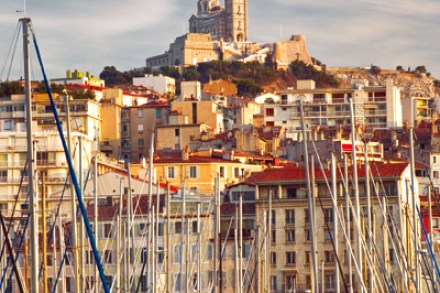
Ports can challenge national stereotypes: think of the difference between St Petersburg and Russia, or Naples and Italy. Since England is so small, and London so big, few English ports have generated their own identities. In France, however, despite the alleged stranglehold of Paris, ports such as Bordeaux, Nice and Marseille have remained remarkably different in culture and character. Of them all, Marseille is not only the oldest city in France — it was founded by  Greeks in 600 BC — but also the most independent; in 1907 Jules Charles-Roux called it ‘a separate republic, neither national nor French’. Incredibly David Crackanthorpe’s wise, erudite and sensitive book on Marseille is the first in English.

Love letters to foreign lands

From our UK edition

Xenophilia is as English as Stilton. Despite a reputation for insularity, no other nation has produced so many writers who have  immersed themselves in other countries. From Borrow to Lawrence, Byron to Auden, the list is impressive. In one of the wonderful letters quoted in this perceptive, haunting and highly readable biography, Patrick Leigh Fermor called living in England ‘like living in the heart of a lettuce. I pine for hot stones and thorns and olive trees and prickly pears.’ In the opinion of his biographer Artemis Cooper he had an ‘entirely European sensibility’. In the house he built in the mountains of Mani in the Peloponnese, between olive groves and the sea, however, he sometimes missed London.

Charming, cold-eyed cosmopolitan

From our UK edition

At last a diary as penetrating on Berlin as the Goncourt brothers’ on Paris has been translated into English. The author, Count Harry Kessler, resembled a character from Sybille Bedford’s masterpiece, A Legacy. Born in Paris in 1868, he was educated in England, France and Germany. His father was a Hamburg banker; his mother was an Irish-Scottish beauty called Alice Blosse Lynch, admired by the Emperor Wilhelm I. At once German and European, Kessler rotated, as freely as some do today, between London, Paris and Berlin. After a year in the army, and a voyage round the world, Kessler devoted himself to the arts. Exhibitions and parties, and  long descriptions of landscape, fill his diary. He did not find social life hollow.

Gunboat diplomacy

From our UK edition

Britain’s links with the Continent were once  deeper and more extensive than those of any other European country. Paris, Rome and German universities played as vital a role in British culture as many native cities. Mediterranean connections were especially strong. Most cities on its shores contain an English church and cemetery. From Minorca to Cyprus, there are few Mediterranean islands that have not been occupied by British troops: the oldest company in Beirut is Heald and Co., the shipping agents (est.1837). Blue-Water Empire aims to tell the story of ‘the British in the Mediterranean since 1800’: 1800 is the year that Malta, soon to be the headquarters of the British Mediterranean fleet, was conquered from France, with Maltese help.

The battle for the holy city

From our UK edition

In a tour de force of 500 pages of text Simon Sebag Montefiore, historian of Stalin and Potemkin, turns to a totally different subject: the city of Jerusalem. Founded around 1000 BC by Jews on Canaanite foundations, it has been, in turn, capital of the Kingdom of Judah; scene of the crucifixion of Jesus and of Mohammed’s night ride to heaven; a provincial city in the Persian, Hellenistic, Roman, Arab, Ottoman and British empires; and finally the capital of Israel. Using the latest archaeological evidence, Montefiore recounts with verve the manias and massacres of the different dynasties which ruled the city. The line of David, the blood of the Prophet, the Crusader dynasties of Flanders and Lusignan dominated the city as well as competing religions.

Under Eastern eyes

From our UK edition

The Ottoman Empire inspired great travel books as well as great architects. Travellers like George Sandys, Richard Pococke or the Chevalier d’Arvieux in the 17th and 18th centuries were curious, erudite and less arrogant than their 19th-century successors. The Ottoman Empire inspired great travel books as well as great architects. Travellers like George Sandys, Richard Pococke or the Chevalier d’Arvieux in the 17th and 18th centuries were curious, erudite and less arrogant than their 19th-century successors. Like cameras, they recorded monuments, encounters, manners and customs. They can make the reader feel that he or she is there, in Smyrna or Beirut, at that time. Ottoman travel writers on Europe, however, are far fewer.