Philip Clark

More terrible beauty

From our UK edition

At some point during your reading of this book the realisation might dawn, if you didn’t already know about his creative double life, that Richard Skelton demonstrates an unusual sensitivity to sound. Barbed wire unfolds over a dry-stone wall, an image which he reimagines as a mutant stringed instrument. ‘What harmonies would result if all were sounded in unison?’, Skelton asks — a question which he is uniquely placed to answer. Beyond the Fell Wall is a graceful meditation upon the relationship between landscape, language and sound, written by the most strikingly original composer of electronic music currently working in the UK — a man who spends his days exploring and gathering in the sounds of the fell land that borders his Cumbrian home.

Richard Strauss was no conservative

From our UK edition

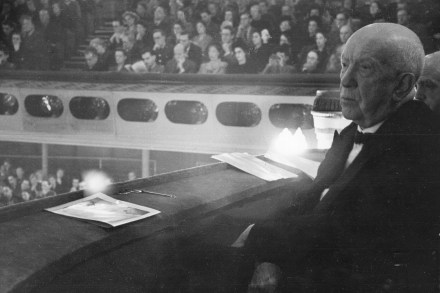
With the ardent zeal characteristic of the freshly converted, I found myself channelling waves of anger towards Stanley Kubrick. The closing bars of Also sprach Zarathustra had utterly turned my head, transforming what had been my passing interest in the music of Richard Strauss into an infectious bout of Strauss monomania. Kubrick’s exquisitely consummated marriage of music and image, however, dared to hoodwink our collective consciousness into believing that Strauss’s 1896 Nietzsche-inspired tone-poem is actually sci-fi space music – more Star Wars than Übermensch – a reality that felt unmerited and unjust.

I wish the cult of Frank Sinatra would end

From our UK edition

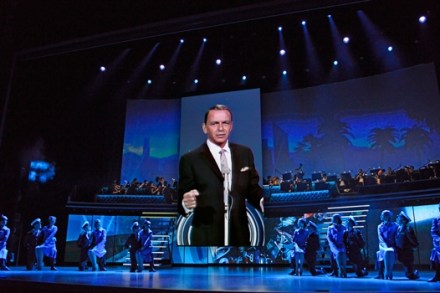
Walking around central London, I’ve been struck by how many shows Frank Sinatra has been performing in town recently. He played a string of concerts in July at the Royal Albert Hall (which as any schoolboy knows was actually named after Sinatra’s middle name), and he is currently performing an extended summer season at the London Palladium. Quite how Frank is going to cope this Friday evening, when this eternal Sinatra séance requires his spirit to put in an appearance as his life and music is celebrated at the Proms, at the same time as he gigs at the Palladium, I’m not sure.

The London ear

From our UK edition

The opening bars of Ralph Vaughan Williams’s A London Symphony (1914) are scooped out from the gloopy bedrock of the city. Vaughan Williams was dredging through the same mud, silt, slime and ooze as those scene-setting paragraphs of Our Mutual Friend (1865), where Charles Dickens shows that the real glue binding his book together will be the River Thames. Dickens’s famed ‘boat of dirty and disreputable appearance’ berths Our Mutual Friend in the earth and experience of London. Similarly, Vaughan Williams’s cellos and double basses, which launch his symphony, plod out from the sludge of the river. But, by the time his bucolic Scherzo waddles into view, you could be forgiven for assuming that RVW has taken a genteel amble around the countryside.

Mistress of modernism

From our UK edition

Everyone keeps talking about classical music’s image problem, and proposals on the table designed to rescue the music from apparent extinction have included the suggestion that conductors ought to face audiences rather than orchestras, and the cunning plan, mooted by Julian Lloyd Webber, that we stop calling it ‘classical music’. But what classical music really needs right now are more performers like Barbara Hannigan, whose embrace of music is absolute; whose solution to the problem of what classical music might represent in our increasingly fragmented culture is not to go into denial but to dive deeper, forever deeper, inside music. Hannigan has anchored her reputation around high-wire modernism.