Peter Wood

Peter Wood is the President of the National Association of Scholars. He is author of 1620: A Critical Response to the 1619 Project and A Bee in the Mouth: Anger in America Now.

New Yorkers embrace street justice

From our US edition

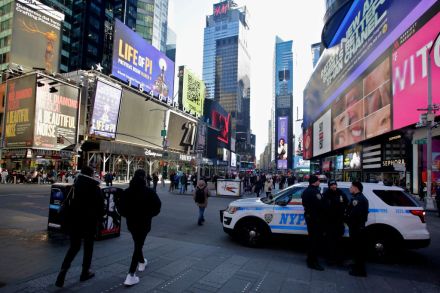
New York City isn’t as tough as it once was, but it’s practicing. A few weeks ago, I saw a young black woman barreling down the sidewalk on Madison Avenue. She tackled an elderly white woman at a bus stop. I was on the bus and saw the whole thing unfold. The elderly woman rolled over to protect her purse, which prompted her assailant to start choking her. At that point two clerks from a shop ran out and the attacker fled. The bus driver opened the door and the elderly woman hobbled abroad to the cheers of the other passengers.  Our bus proceeded up Madison where three blocks later we saw the same young woman tackling another elderly woman. This time the bus didn’t stop. As far as I know, no police were involved.

new york crime

San Francisco reparations and the Golden Age of Revision

From our US edition

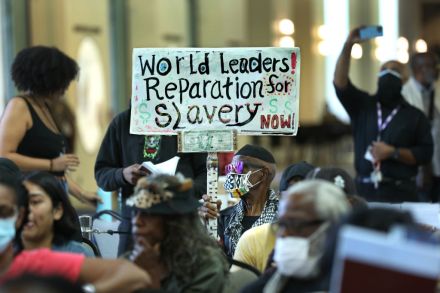
We live in the Golden Age of Revision. Not everyone has noticed, so let me mention some of the highlights of the art of the Michelangelos and Monets of the revisionist moment. First, of course, we have found the path to revising birth certificates and chromosomes on the matter of an individual's sex, or as we have been taught to say, gender. This is revision par excellence, but only the beginning. Then we have the New York Times in the company of many thousands of American school teachers who have miraculously overthrown the burden of snow-capped mountains of historical evidence and wizened learning of generations of historians. Their revision reveals that the real history of America began in 1619 with the arrival of Angolan captives at Jamestown.

san francisco

The university fighting back against the diversocrats

From our US edition

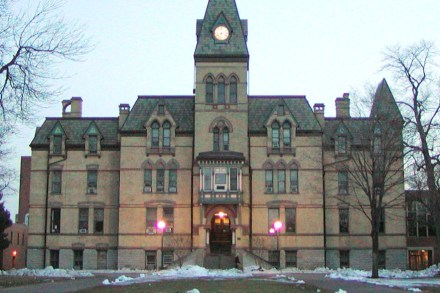
The latest news in the Hamline University saga is that a large majority of the faculty — seventy-one of ninety-two members — have called on university president Fayneese Miller to resign. Miller had played the principal part in the dismissal of art history instructor Erika López Prater, after Prater had shown two images of the Prophet Mohammed in her online art history class. One image was a slide of a fourteenth-century painting by a Muslim artist; the other was Muslim painting from the sixteenth century in which the Prophet is veiled. Condemnation of the Hamline administration for dismissing Prater has been nearly universal in American higher education.

When the masks come off in blue states

From our US edition

The other night, I went to the Vermont State Fair in distinctly downscale Rutland, where my wife and I watched the pig races, ambled through the livestock exhibits, and examined the farm equipment, while enjoying corndogs and the crowd of distinctly overweight Rutlanders. The next day, I was back in my office in midtown Manhattan. A thin man wearing a mask got into the elevator with me and used a cloth to press the elevator button. Then he used the cloth to open the two doors to the street. He was clearly annoyed to have had to share the elevator with a maskless heathen. As he walked away, it occurred to me that I hadn’t seen a single mask or Covid-crazed person of any sort at the Vermont State Fair.

Covid Mask

One worldview has taken over the historical profession

Professor James H. Sweet is a temperate man. He seeks to avoid extremes. But he also seeks to be bold in his temperance. You can do that by emphatically stating an opinion that seems above reproach. But Professor Sweet miscalculated. His emphatic bromide blew up, and he was left offering emphatic apologies. For those who have not followed this little academic circus, Professor Sweet, who teaches history at the University of Wisconsin at Madison, is also the president of the American Historical Association (AHA). That’s an important post. The AHA has more than 11,500 members. It publishes the American Historical Review, ‘the journal of record for the historical profession in the United States’. And AHA holds a huge conference each January.

The strange effort to ‘decolonize’ global health

From our US edition

"Global health” has emerged in the last decade or so as one of the growth areas in the medical and quasi-medical world. The CDC has a Center for Global Health which “works to protect Americans from dangerous and costly public health threats, including Covid-19, vaccine-preventable diseases, HIV, TB and malaria — responding when and where health threats arise.” Global Health “is a collaborative effort by technologists and researchers from leading international institutions to build a trusted, detailed and accurate resource of real-time infectious disease data.” The Global Health Corps is “a diverse community of health equity leaders.

global health

The two Americas: California vs. Florida

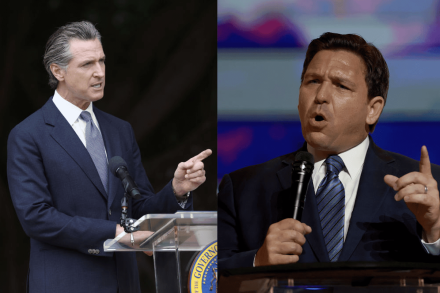
What is America? The answer to that simple question can get you into a lot of trouble. Or it can propel you to the Oval Office. You can try to run away from the question with adverbs. 'Well, historically, America was the name a European mapmaker slapped on the unexplored continents across the Atlantic.' Maybe Amerigo Vespucci, that mapmaker, had Florida in mind, though Vespucci would have struggled to imagine a future figure such as the 46th governor of the state, Ron DeSantis. Or, 'Linguistically, America is an abbreviated form of the United States of America, a political union that traces itself to a local rebellion of thirteen British colonies in the 18th century, which grew into territorially aggressive entity.

The Democrats put on a January 6 pageant

From our US edition

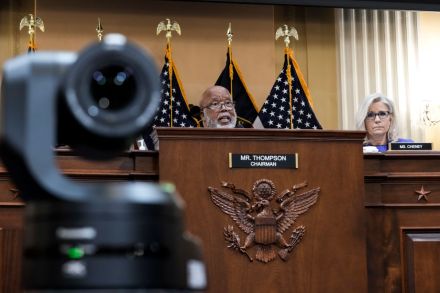
The best comedies always begin on a note of solemnity. Charlie Chaplin’s The Kid opens with an unwed mother driven to abandon her newborn. Buster Keaton’s The General opens with news arriving in Marietta, Georgia, that the South has fired on Fort Sumner and the Civil War is on. Thus did Congressman Bennie Thompson open Thursday's January 6 Pageant with a solemn story about the "conspiracy to thwart the will of the people," in which an insurrection "put two and a half centuries of constitutional democracy at risk." He was followed by the even more solemn Liz Cheney, who promised a thrilling line-up of testimony that will prove beyond the shadow of a sunspot that Donald Trump planned the whole thing. Well, maybe so.

January 6 Committee

A flag under foot

From our US edition

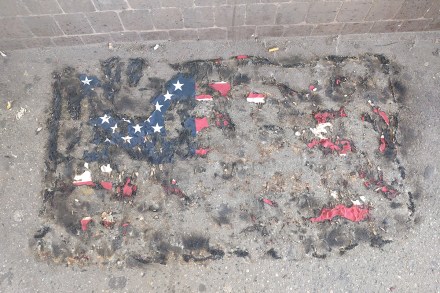
On my way to work in Midtown Manhattan each day, I pass down 50th Street. Near the corner of Broadway, not long ago someone glued an American flag to the sidewalk and set fire to it. The scorched remnants cry out in resistance to the attempted insult and erasure. I have no idea what protest prompted this indignity, or whether the person who sealed the flag to where pedestrians would trample it was the same who decided to set it on fire. I haven’t noticed any passersby taking special note of Old Glory reduced to such an inglorious state, surrounded by cigarette butts and other debris. This isn’t New York City’s fault. We are amid more pressing crises. The subway entrance nearby — one of the main points of access to Midtown — reeks of urine and sometimes worse.

flag

The diversity monster is loose

From our US edition

Monsters, of course, come in a variety of shapes and forms, but they have some deep commonalities. Among these are a voracious appetite, an affinity for darkness, and a talent for evasion. They are hard to kill and very dangerous, especially to the innocent and the naive. Often they inspire a perverse kind of worship. I have been thinking about monsters as I contemplate the Diversity, Equity, and Inclusion mandates that have swept through the nation’s schools, colleges, and businesses, and nearly every other institution of note. The National Archives has a “Diversity and Inclusion Program.” So does Major League Baseball. So does the American Public Gardens Association. One is hard put to find a significant public body that is not committed to DEI.

Stop reading

From our US edition

Like you, I enjoy reading. I know, of course, because you are reading this. But perhaps you also share my interest in preventing others from reading. In case you are not yet enlisted in the Restricted Literacy Movement, allow me to point out our three basic claims. (Call it RLM, why don’t we: acronyms don’t have to be read, after all.) First, literacy beyond the rudimentary has become unnecessary. Most people can do their jobs and find fulfilling leisure without it. Second, attempting to produce literacy in the unwilling is an expensive, typically futile undertaking. Third, literacy is simply harmful to many who have acquired it. It engenders discontent, self-doubt and destructive impulses.

reading

Finding the religious right in remote Wisconsin

From our US edition

The New York Times has re-discovered the religious right. In a front-page story, we learn the awful truth that there is a "right-wing political movement powered by divine purpose, whose adherents find spiritual sustenance in political action." They sing hymns; they pray; they burn candles. They import “their worship of God, with all its intensity, emotion and ambitions, to their political life.” Quite a few support Trump and also protest “against Covid restrictions,” among other unspeakable acts. Once, long ago, I ventured into this dark territory, not armored by the shield of New York Times-style contempt for the deplorables, but like Marlowe heading up river into the Heart of Darkness. It was a hard-won lesson.

How ‘questioning authority’ gave us wokeness

From our US edition

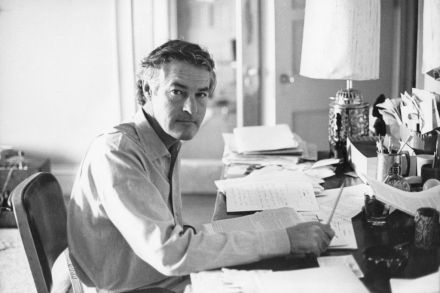
When I was in high school in the late 1960s, a bumper sticker, “Question Authority,” became a common sight, as did a button saying the same thing, usually worn on a tie-dye T-shirt or denim jacket. I was among those contrary teenagers who wanted to know, “On whose authority am I commanded to question authority?” The answer wasn’t hard to find. The man who most visibly pushed the slogan was former Harvard clinical psychologist and ardent LSD proponent Timothy Leary. He was known for his counsel “Drop out, turn on, tune in,” which was adopted by his League of Spiritual Discovery, which turned LSD into a sacrament. Whether Dr. Leary originated “Question Authority” or just promoted it is unclear, but that seems apposite.

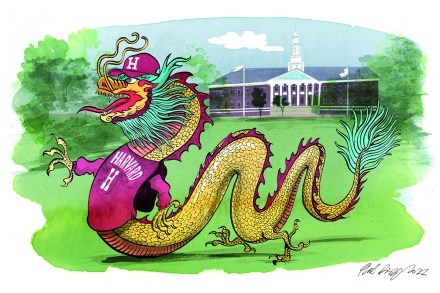
When Harvard canceled a black professor

From our US edition

Roland G. Fryer is a tenured professor of economics at Harvard — an anointed member of the elite by most definitions. He is also black, widely published and the recipient of numerous awards, including a MacArthur “genius” grant for his work on the black “achievement gap” in grade school. Fryer was a student of Nobel laureate Gary Becker and a close associate of other economists who focus on rigorous analysis of empirical data. That's led him to observations that were a bit unsettling to higher education orthodoxies. For example, Fryer found that the academic achievement gap accelerates between kindergarten and eighth grade. He also found that controlling for a few variables, the initial disparity disappeared.

The reporter who covered up the Ukrainian famine

From our US edition

Now would seem to be an excellent time for the Pulitzer Committee to withdraw the award it bestowed on Walter Duranty in 1932 for his reporting on events in the Soviet Union. I know I am far from the first to call on the Pulitzer Committee to withdraw the award. I know as well that the Pulitzer Committee responded to one such call in 2003 by declaring that it could find no “clear and convincing evidence of deliberate deception” in Duranty’s 1931 reports from the Soviet Union published in the New York Times in 1931. Those thirteen reports on which the original award was based, admits the Pulitzer statement, amount to work that “measured by today's standards for foreign reporting, falls seriously short.” And time has moved on, etc., etc.

walter duranty

The strange ideology that could be driving Putin

From our US edition

Vladimir Putin’s motives in attacking Ukraine have become the subject of many deep and searching speculations. Is he seeking a personal legacy by attempting to reassemble the parts of the Soviet Union that fell asunder? Is he pursuing Russian national security by making sure Ukraine never becomes the frontline of NATO? Is he gleefully taking advantage of a weak and incompetent US president? Is he vindicating the glorious history of the KGB? These theories are not mutually exclusive, and there are many more possibilities. I want to enter the discussion from my nearly pristine ignorance of Russian geopolitical designs.

eurasianism

Emma Camp almost gets it

From our US edition

In 2014, Sandra Y.L. Korn, a Harvard undergraduate, published a column in the Harvard Crimson, in which she denounced “The Doctrine of Academic Freedom.” Korn’s preferred alternative was what she called “academic justice.” Under this doctrine, a university would drop the silly pretense of letting proponents of dumb, bigoted or politically naive ideas have their say. Instead, Korn asked, “If our university community opposes racism, sexism and heterosexism, why should we put up with research that counters our goals simply in the name of ‘academic freedom?’” Korn’s screed provoked a lot of attention.

emma camp

The latest smear campaign against Clarence Thomas

From our US edition

Justice Clarence Thomas and his wife Virginia (Ginni) made the cover of the New York Times Magazine on February 27 amid an eleven-page article titled “The Long Crusade of Clarence and Ginni Thomas.” The authors are Danny Hakim and Jo Becker. It is in essence a hit piece, and the latest of several in the left-wing media aimed at undermining the legitimacy of Justice Thomas’s jurisprudence. The first salvo came in late January from Thomas’s long-time antagonist Jane Mayer in The New Yorker, but other eager journalists have stepped through Mayer’s muddy footprints. Three of their publications — the New Yorker, the Guardian, and CNN — contacted me because Ginni Thomas serves on the advisory board of my organization, The National Association of Scholars (NAS).

Is Europe a continent? Does it matter? 

From our US edition

Nikole Hannah-Jones, who is never at a loss for a tweet, ridiculed Americans who are expressing alarm over the threat to Europe implicit in Putin’s invasion of Ukraine. She put down those spoilsports for their referring to Europe as a “continent.”  Quoth Hannah-Jones, under her nom-de-plume Ida Bae Wells: What if I told you Europe is not a continent by definition, but a geopolitical fiction to separate it from Asia and so the alarm about a European, or civilized, or First World nation being invaded is a dog whistle to tell us we should care because they are like us. The triumphant silliness of the author of the 1619 Project always comes down to her desire to find racism at the root of whatever happens.

europe nikole hannah-jones

Our present bewilderment

From our US edition

Bewilderment, a novel by Richard Powers issued last September, has been praised to high heavens by Oprah Winfrey, Barack Obama, Naomi Klein, and reviewers at NPR, the New York Times, the Washington Post, and The New Republic, among others. This ought to be enough to warn any sensible reader to stay far away from its pages and to resign promptly from any reading group that nominates it for collective perusal. But I am not always sensible. The title lured me, for what better word to describe our Zeitgeist?

bewilderment