Peter Wood

Peter Wood is the President of the National Association of Scholars. He is author of 1620: A Critical Response to the 1619 Project and A Bee in the Mouth: Anger in America Now.

Harvard’s plagiarism hypocrisy

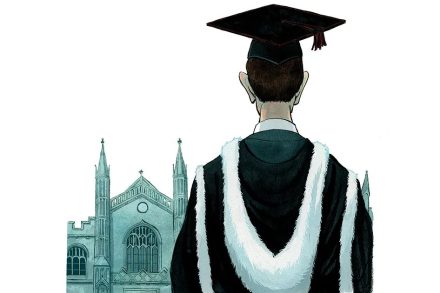
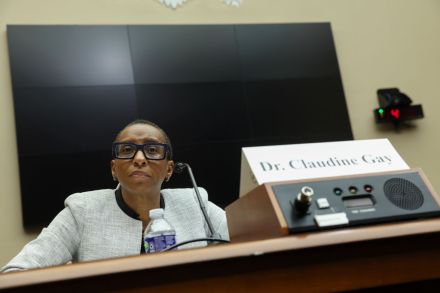
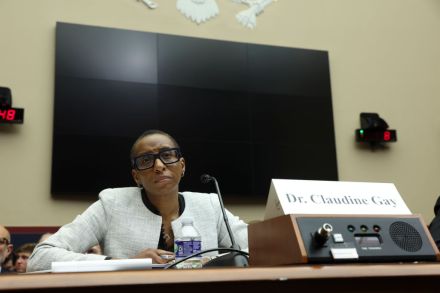
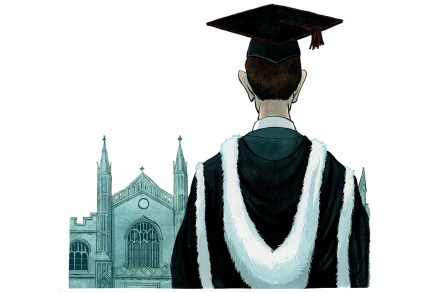
Claudine Gay is the self-declared ‘transformational’ president of Harvard university. She campaigned for the job by promising to retire the old Harvard of privilege and patrimony and to bring into being a new Harvard founded on principles of anti-racism and social justice. How is she doing?  At the moment, she is a bit distracted by allegations of plagiarism in her slim portfolio of publications. But she has a whole sea of troubles to take arms against. Let’s let her rest a moment on the shore and consider a small story from the not-always-illustrious past of America’s greatest university.   In 2007 Harvard admitted as a transfer student a young man, Adam Wheeler, who had completed his first two years at Bowdoin College in Maine.

Behind the anger of the young American Hamas apologists

From our US edition

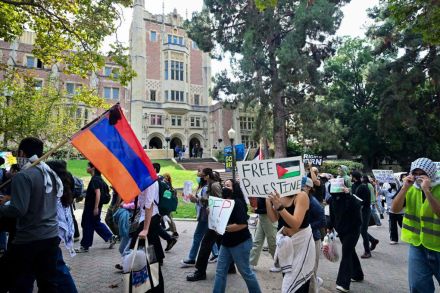
“Goddess, sing of the cataclysmic wrath,” opens Emily Wilson’s new translation of The Iliad. The goddess Homer summoned isn’t named, but it is usually assumed he meant Calliope, the muse of epic poetry —and much later, circus music. But Homer might have meant Lyssa, the Greek goddess of mad rage and frenzy. She was well known to the ancients. The Romans called her Furor or Rabies — which gets the idea across fairly well. The Norse had two versions: Odr, who represented fury and frenzy, and Fenrir, a giant wolf who represents uncontrollable savagery.    By whatever name she may have been called, Lyssa appears to have been active in human affairs for a very long time.

anger pro-palestine hamas

The shrinking lifespan of the college president

From our US edition

Twenty-five years ago I published an essay titled “Dogfish.” It was not about the little sharks that skim along the bottom of the Atlantic and Pacific coasts and only rarely end up on the American dinner table. It was rather a fanciful way to draw attention to the brevity of the average tenure of the college president. Back then the average president served 6.7 years. The spotted dogfish, by contrast, was believed to live almost three times as long. A lot has changed in the intervening quarter century. For one thing, it is now believed that the natural lifespan of the dogfish is thirty-five to forty years, though some say eighty.  Meanwhile the average term of a college president has shrunk to 5.9 years.

college president

The Sycamore Gap tragedy is one of a long list of tree killings

From our US edition

My ancestors presumably had something to do with trees — and true to my heritage, I enjoy some amateur forestry on my land in Vermont. The crack, the whoosh and the thunder of a tree coming down exactly where you aimed it thrills the Upper West Side me, chainsaw in hand.  But it grieves me when a good tree is blown down or uprooted. I cut only those that have to be removed because they are dying or might crush house or head if not tended to.  The Spectator reports on the murder of the Sycamore Gap, a 300-year-old tree along Hadrian’s Wall, chainsawed by a vandal when no one was looking. The culprit apparently is a sixteen year-old boy. It was an act of gratuitous violence. But not a singular act.

sycamore gap tree

The slow death of ‘balanced literacy’

From our US edition

To start a fire, you need a match, something that burns and air. So to speak. If you don’t have a match, you can use flint, but that takes patience and skill. What you burn should have a low combustion point. And the air should have sufficient oxygen. Starting a fire, like starting anything, has predicates: the things you need before you can truly started. But when it comes to education, some people believe we can go directly to the steak sizzling on the grill, never mind the preliminaries. This hastiness never works out very well. The latest example is the slow death of “balanced literacy.” That’s the approach to teaching children how to read that was championed by Professor Lucy Calkins, from her perch at Columbia University’s Teachers College Reading and Writing Project.

literacy

The incredible meltdown of the Center for Antiracist Research

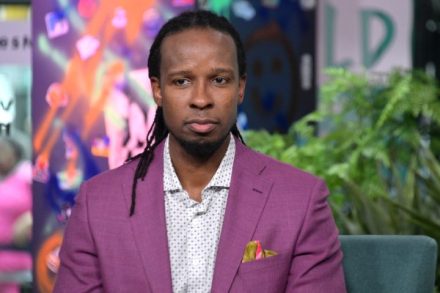
Professor Ibram X. Kendi has run into a spot of trouble. His fantastically funded Center for Antiracist Research – more than $43 million (£35 million) in the first two years alone – at Boston University is in financial meltdown. What happen to the $10 million (£8 million) from Twitter co-founder Jack Dorsey? Where are the donations from discount retailer TJ Maxx, food emporium Stop & Shop, and exercise empire Peleton? Why did the centre lay off almost all its staff last week?  No one at Boston University can give a straight answer. The story has made it into the national press, but the most illuminating details come from the student newspaper, the Daily Free Press.

The virtue-signaling behind the renaming of the Middlebury College chapel

From our US edition

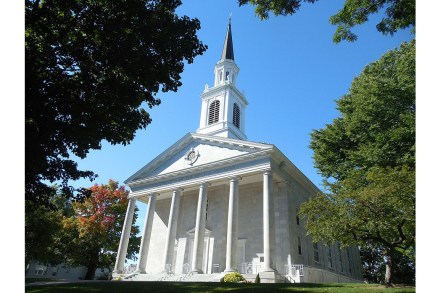
Early on the morning of September 27, 2021, Middlebury College president Laurie Patton had a stone bearing the name of the campus chapel removed from the building. It was done deftly. I don’t imagine she showed up with her own hammer and chisel, but the campus groundsmen executed her orders. Later that day, Patton and the chairman of the board of trustees sent out a message to the community announcing that they had de-named Mead Memorial Chapel, which henceforth would be known simply as Middlebury Chapel. The de-naming was a stealth operation. Outside of a small circle, no one knew it was coming.  Picture a small liberal arts college tucked away in the American hinterland. Picture on the crest of a hill a white marble church with an impressive spire flanked by academic halls.

middlebury college chapel

Disinfo-nation: the new censorship is here to stay

From our US edition

Lying is the great American pastime. We’ve been at it ever since some of the Pilgrim fathers shined on some of the folks back home with tales of the Eden they had found on the barren coast of Massachusetts: For fish and fowl, we have great abundance; fresh cod in the summer is but coarse meat with us; our bay is full of lobsters all the summer and affordeth variety of other fish; in September we can take a hogshead of eels in a night, with small labor, and can dig them out of their beds all the winter; we have mussels; and ... As the American Socrates, P.T. Barnum, may once have said, “There’s a sucker born every minute.” Or he may have not said. The Fort Wayne Weekly Sentinel in 1894 said he said it, but P.T. denied it.

disinformation

The gentlemanly legacy of the Shine-O-Mat

From our US edition

Next to the Harvard Club in Boston’s Back Bay stands the old Eliot Hotel, named after Harvard’s most famous and probably most influential president, Charles William Eliot. The hotel was built in 1925 as a genteel way of easing aging Harvard professors into semi-retirement. In 1939 it was purchased by a private family and became one of the city’s finer hotels, with many amenities including a top-of-the-line Uneeda Shine-O-Mat.  Any well-dressed gentleman striding out onto Commonwealth Avenue would be embarrassed to show a scuffed wingtip, and shoeshine boys were not exactly welcome in that part of town. The Shine-O-Mat, installed in about 1947, solved the problem.  The Eliot Hotel had its ups and downs over the years.

shine-o-mat

In defense of cranky professors

From our US edition

Thanks to a panel of the Fourth Circuit Court of Appeals, firing faculty members for “lack of collegiality” is suddenly a bright prospect for college administrators eager to rid themselves of gadflies, diversiphobes, conservatives and other riffraff. The case involved Stephen Porter, a tenured professor in the school of education at North Carolina State University, who had had the bad grace to object to various forms of mandatory diversity saluting. Some details to follow, but let’s first roll around in the hay of “collegiality.”  The two members (out of three) on the Fourth Circuit who invoked the term were not entirely breaking new ground. The woker sort of faculty and college administrators have been fondling the idea for a while.

Stanford’s Marc Tessier-Lavigne and the messiness of modern science

From our US edition

The president of Stanford University, neuroscientist Marc Tessier-Lavigne, has resigned in the shadow of an investigation that revealed that some scientific papers he had overseen contained “manipulated data” or evidence of other kinds of scientific malpractice.    His resignation may well be warranted — but before he disappears into ignominy, it would be wise to consider the situation.  In the now dimly remembered past, a scientist devised experiments and, working alone or with the help of a loyal assistant or two, carried them out. Or he sat in a room, as Einstein did, and thought through deep problems, eventually penning an article in which he said forth a bold new hypothesis.

Marc Tessier-Lavigne

Shakespeare in black and white

From our US edition

Sarah Karim-Cooper first came to public attention at the cosmetics counter. Her book on makeup in Renaissance theater, Cosmetics in Shakespearean and Renaissance Drama, was published in 2006. Its enduring popularity is not so much a testament to her scholarly insights on powdered hogs’ bones mixed with poppy oil — the old stage recipe for pale skin — or Shakespeare’s sardonic references to the kind of beauty “purchased by the weight” in The Merchant of Venice, as to Karim-Cooper’s celebrity: for more than a decade she’s been one of the leading racializers of Shakespeare’s work. Perhaps the key moment in her rise to fame was her 2018 curation of the Globe Theatre’s first “Shakespeare and Race Festival,” now held annually.

shakespeare

Why legacy students aren’t a civil rights issue

From our US edition

I just caught the news that four pages in a notebook dated 2014 and stuffed into a couch cushion have been accepted as a valid will for the late singer Aretha Franklin. The jury that decided this enriched two of her sons and disappointed a third son, who was favored in an earlier will. This is what I call a legacy. But America is all worked up about another kind of legacy. I refer, of course, to the endearing habit of colleges and universities to give a leg up to the kinder of their alumni. Why do they do this? And why are so many people worked up over it?  These aren’t hard questions. Colleges have two reasons for their legacy programs.

legacy

A better way to go to college: at sea

From our US edition

I have been pondering ways to rescue young Americans from the trouble and often the waste of the four-year undergraduate college education. Many young people as I recently pointed out are looking for alternatives. But there aren’t very many good ones. In what follows, I propose we put some of these discontented souls in a ship and sail them around the world. It is not entirely a new idea, and before I turn my rudder in that direction, I’d like to survey the horizon. Once, long ago, I was asked by the senior administration of my university to look after the playboy son of a wealthy European family who had decided to enroll in an undergraduate degree program. He was handsome, smooth, reckless and not very bright.

semester sea

Why the Supreme Court’s Harvard decision matters

From our US edition

The decision is all anybody can talk about. Well, that’s not exactly true. It’s the banner headline in the New York Times, but if you scroll down or turn the pages, you will find something on “Smoke From Canada Fires Stretches From Midwest to East Coast,” and ‘Dangerous High Temperatures Stretch Across the South.” The world hasn’t stopped spinning and Mr. Putin is still causing trouble. A French police officer killed a seventeen-year-old French citizen of Algerian and Moroccan descent, touching off riots in several cities.  But the story that has riveted the attention of America is the Supreme Court’s decision in Students For Fair Admissions, Inc. v. President and Fellows of Harvard College. And for good reason.

harvard supreme court

In praise of encyclopedias

From our US edition

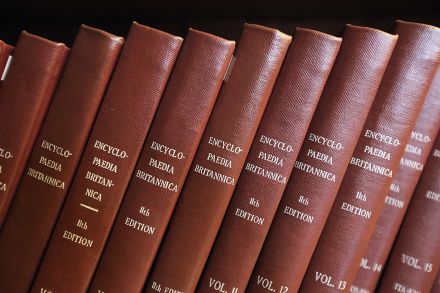
Simon Winchester recalls the time — he was not yet three — when, stepping into his rubber boot, he was stung by a wasp. He rates this penetrating moment as his first “acquisition of knowledge.” Readers of his many books may thank that wasp for starting Winchester on his ever-widening path to further knowledge. His new book, Knowing What We Know: The Transmission of Knowledge, from Ancient Wisdom to Modern Magic (KWWK for short), is what that wasp hath wrought. It follows close on the heel of Simon Garfield’s entertaining study, All the Knowledge in the World: The Extraordinary History of the Encyclopedia (AKW for short). Despite the title, Garfield’s ambitions are more cabined than Winchester’s.

knowledge

The China influence puzzle

From our US edition

A “Chinese puzzle” in its classic version is a game where you must fit a variety of ill-assorted boxes inside other boxes. The term came to mean any intricate problem, especially one in which what looks like the way forward leads only to new obstacles.   These days, in which we are warned not to use ethnonyms for fear of giving offense, it might be safer to say something like “brainteaser.” But the efforts of the Chinese Communist Party (CCP) to manipulate American society genuinely deserve the old term. The news this past week adds a few curious details to those efforts. Details first; explanations to follow.

china ccp

Stanford students vote to Make College Fun Again

From our US edition

Last week Stanford University students elected a new government led by a coalition calling itself “Fun Strikes Back.” You won’t have caught this development in the mainstream news, though it was noticed by the distinctly non-mainstream press — outlets such as Pirate Wires and OutKick. It is, however, a very significant event. One of the most important American universities that has spent a generation groaning under the dour, self-righteous domination of progressive virtue-signaling witnessed a rebellion. Students rose up and demanded a campus social life free from the onerous control of the university’s moralistic busybodies.

stanford students

This is how small colleges die

From our US edition

Iowa Wesleyan is the latest. Finlandia University before that. Pennsylvania College of Health Sciences as of January 2024. Many others you have probably not heard of: Stone Academy, Cazenovia College, Bloomfield College. These are colleges and universities that have breathed their last. Most often they are just local stories. A college that has been reduced to a few hundred students and perhaps two dozen faculty members comes to its final, final end.  In most cases, that final end has been dragged out long past the point where there was any realistic hope of saving the institution. As a former college president once told me, “Colleges die hard.” The faculty and administrators rarely have other career options.

small colleges legacy

How real is America’s discontent?

From our US edition

Homer goes right at it: “Sing Goddess, the Rage of Achilles.” Adapted to our times: “Sing, Bragg, your rage against the Trumpies.” Alvin Bragg, who grew up in a section of Harlem aptly named Striver’s Row, is by most accounts one angry man. Since he was elected New York County’s district attorney in 2021, he has set himself to punishing the city for what he takes to be generations of wrongful prosecution of black offenders — and incidentally most other lawbreakers. His policy writ large has been to treat all felonies as misdemeanors, which are promptly dismissed.  He occasionally compromises in favor of prosecution but only if the crime has aroused a special level of public outrage. Bragg’s tenderheartedness towards criminals, however, has limits.

fear