Peter Parker

Sophia Duleep Singh: from socialite to socialist

From our UK edition

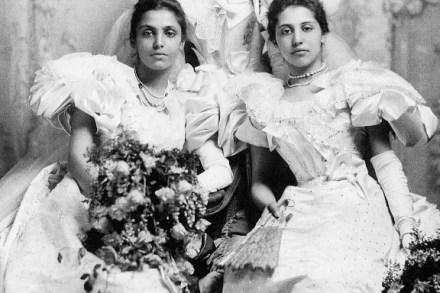
Princess Sophia Alexandrovna Duleep Singh (1876–1948) had a heritage as confusing as her name. Her father was a deposed Indian maharajah who had been exiled to England, her mother the Cairo-born illegitimate daughter of a German merchant and an Abyssinian slave. The young princess was brought up in considerable splendour on a vast Suffolk estate as a thoroughly anglicised aristocrat who would be presented at court and become an enthusiastic participant in the Season before unexpectedly joining the battle for women’s suffrage. Anita Anand traces what she calls the ‘roots of rebellion’ to Sophia’s father.

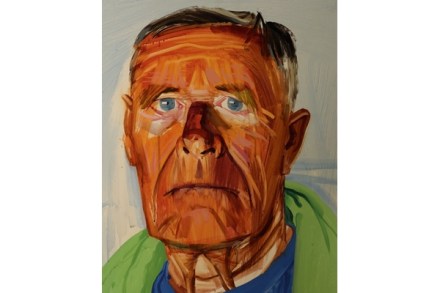
David Hockney, our most popular and hardworking living artist, returns to the easel

From our UK edition

The first volume of Christopher Simon Sykes’s biography of David Hockney ended in the summer of 1975. The 38-year-old painter had just returned to Paris, where he was then living, ‘energised’ by the widespread acclaim that greeted his designs for the Glyndebourne production of Stravinsky’s The Rake’s Progress. Energy was something Hockney would need in the years ahead when the time he always wanted to devote to painting was frequently interrupted by side-projects such as stage design or an investigation into earlier painters’ use of the camera lucida, sudden passions for new technology, and the increasing demands of celebrity.

The long and disgraceful life of Britain’s pre-eminent bounder

From our UK edition

In his time, Gerald Hamilton (1890–1970) was an almost legendary figure, but he is now remembered — if at all — as the model for the genial conman in Christopher Isherwood’s novel Mr Norris Changes Trains (1935). ‘There are some incidents in my career, as you doubtless know, which are very easily capable of misinterpretation,’ Arthur Norris tells the book’s narrator, and Hamilton affected to be deeply shocked by the assorted vices attributed to his fictional alter ego. He nevertheless exploited the connection throughout his long and disgraceful life. When Isherwood met him, Hamilton (né Souter) was employed in Berlin by the Times as its German sales representative.

From Scylax to the Beatles: the West’s lust for India

From our UK edition

From the Greek seafarer Scylax in 500 BC to the Beatles in 1968, there is a long history of foreign visitors being drawn to India. Many have come in search of the ‘exotic’ or the ‘other’, an idea of India that persists despite the best efforts of Edward Said’s post-colonial disciples.

A truth too tender for memoir

From our UK edition

It has been 14 years since Akhil Sharma published his first, widely acclaimed novel, An Obedient Father. Though its subject matter is very different, Family Life more than fulfils the expectations raised by that grim but compelling story of financial, political and moral corruption in India. Growing up in Delhi in the 1970s, the eight-year-old Ajay Mishra believed that his father ‘had been assigned to us by the government. This was because he appeared to serve no purpose.’ Everything changes when Mr Mishra leaves for America in 1978, followed a year later by Ajay, his 12-year-old brother Birju, and their mother.

Brains with green fingers

From our UK edition

‘Life is bristling with thorns,’ Voltaire observed in 1769, ‘and I know no other remedy than to cultivate one’s garden.’ This is the remedy espoused by Candide at the end of Voltaire’s satirical novel, published ten years earlier, and the literal and metaphorical cultivating of gardens is the subject of Damon Young’s sprightly and stimulating little book. Young examines the relationship between gardening and philosophy in the life and work of 11 writers, from the 18th to the 20th century, topping and tailing these individual essays with a consideration of the Ancient Greeks.

Lawlessness, corruption, poverty and pollution: the city where we’re all headed

From our UK edition

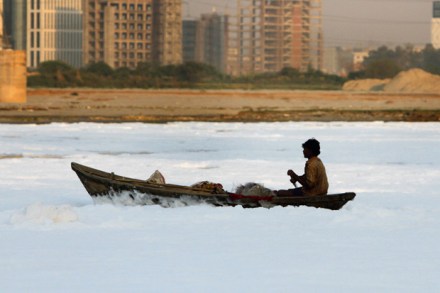
Rana Dasgupta, who was born and brought up in Britain, moved to Delhi at the end of 2000, principally to pursue a love affair and to write his first novel. He soon found himself mixing in bohemian circles, spending his evenings in ‘small, bare and, in those days, cheap’ apartments, talking with ‘artists and intellectuals’. These are not the people, nor is this the life or the city that he describes in Capital. The book’s title is in fact a pun, since its principal subject is money: how it is acquired, how it is spent and what it has done to Delhi and its citizens.

Pine by Laura Mason; Lily, by Marcia Reiss – review

From our UK edition

After the success of their animal series of monographs, Reaktion Books have had the clever idea of doing something similar for plants. Writers are commissioned to investigate the botanical, historical, social and cultural aspects of individual plants, with volumes on oak and geranium already published, and yew, bamboo, willow, palm and orchid forthcoming. The structure and content of the books appears to be left up to the writers, but all the volumes combine scholarship with lively anecdote and are beautifully and generously illustrated. While lilies seem an obviously attractive choice for such a series, who would have thought conifers could be so interesting?

Francois Truffaut, by Anne Gillian – review

From our UK edition

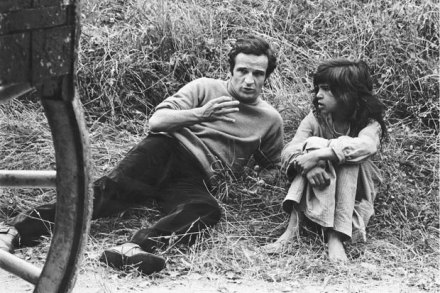
Almost 30 years after his death, François Truffaut remains a vital presence in the cinema. Terrence Malick and Wes Anderson are among maverick directors who have acknowledged their debt to him, while Noah Baumbach’s recent Frances Ha is in part an hommage à Truffaut in a way the French director would have appreciated: for example, the quick succession of scenes establishing the friendship of Frances and Sophie is borrowed from Jules et Jim (1962), Jean Constantin’s music from Les Quatre Cents Coups (1959) appears on the soundtrack, and a poster for L’Argent de poche (1976) is glimpsed on a wall just in the way significant posters and pictures appear in the backgrounds of Truffaut’s own films.

The Hermit in the Garden, by Gordon Campbell – review

From our UK edition

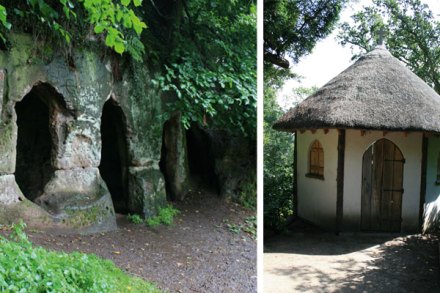
In his 1780 essay On Modern Gardening Horace Walpole declared that of the many ornamental features then fashionable, the one ‘whose merit soonest fades’ was the hermitage. Inspired by the ancient cells of genuine religious anchorites, but largely decorative, garden hermitages had flourished in Britain during the 18th century. While some were appropriately primitive in design, others had Gothick doorways and windows filled with stained glass, floors made of pebbles or sheep’s knucklebones arranged in elaborate patterns, ceilings ornamented with pine cones, rustic furniture made from elm boles ‘distorted by fungal disease’, and inscriptions carved in stone to aid philosophical reflection.

The Blind Man’s Garden, by Nadeem Aslam – review

From our UK edition

Set in the immediate aftermath of 9/11, Nadeem Aslam fourth novel begins with two young Pakistani men slipping over the border into Afghanistan. Jeo is a third-year medical student who has secretly volunteered to treat those wounded in the ‘war against terror’, and he is accompanied by his adopted brother Mikal, who works at a gun shop. The action moves back and forth between the bloody chaos of Afghanistan and the small Pakistani town of Heer, where Naheed, who is married to Jeo but in love with Mikal, awaits their return. Trying to do the right thing in impossible circumstances, whether in love or in war, is central to the novel.

The land of lost content

From our UK edition

Published at the author’s expense in 1896, A.E. Housman’s A Shropshire Lad did not at first attract many readers. It was only after it had been taken up by an ambitious young publisher called Grant Richards that it began to sell. The poems’ popularity increased further when English composers, deciding that they had found their own Heine or Müller, began setting them individually or as song cycles. Between 1906 and 1911 the average annual sale rose to more than 13,500, and by the time the first world war broke out the book was reputed to be ‘in every pocket’.

Blending the old with the new

From our UK edition

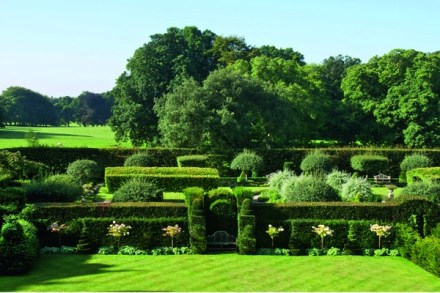
Holker Hall is situated in a beautiful Cumbrian landscape within sight of Morecambe Bay, and in 1950 it became the second stately home, after Longleat, to be opened to the public. The house itself dates back to the 16th century, with a Victorian west wing replacing one that burned down in 1871. It is, however, the extensive park and gardens surrounding the house that have made it famous. Several generations of the Cavendish family have left their mark on this land, but the present garden is largely the creation of Hugh Cavendish — who was brought up at Holker and inherited it on his father’s death in 1972 — and his wife Grania. Taking on an historic garden involves one fundamental decision: whether to preserve or to evolve.

Girls and boys come out to play

From our UK edition

‘You are in the polymorphous-perverse stage,’ the school psychiatrist tells the assembled boys of Favorite River Academy in Vermont in the late 1950s. Just how polymorphously perverse his audience turns out to be would have surprised even Dr Grau, had he not fallen over drunk one evening and frozen to death. It is no accident that the all-male private school in which much of the action of John Irving’s new novel takes place should be in a town with the unusual name of First Sisters. Irving’s narrator is a bisexual novelist called William Abbott, known to friends and family as Billy. ‘Abbott’ is in fact the name of his stepfather, who teaches at the school: Billy’s real father disappeared during the boy’s infancy and is rarely talked about.

Photo finish

From our UK edition

Christopher Isherwood kept diaries almost all his life. The first extant one dates from 1917, when he was 12, and like most schoolboys he used it more to measure than record his days: ‘Work in morning, walk in afternoon. In choir. More work. Nothing special.’ At Cambridge, however, inspired by the W.N.P. Barbellion’s The Journal of a Disappointed Man, he began keeping a more detailed and reflective record of his experiences. Fragmentary diaries survive from the years 1928 to 1938, but the four volumes of Isherwood’s published diaries begin with his arrival in America in January 1939 and end in 1983, three years before his death.

The greatest show on earth | 10 December 2011

From our UK edition

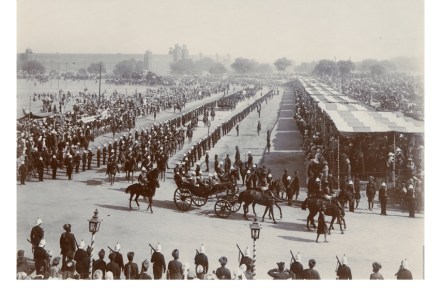
Jessica Douglas-Home’s aptly titled book is based on the diaries of her grandmother Lilah Wingfield, who attended the Delhi Durbar in 1911 and then spent some weeks touring India. It is a glimpse of Empire from a privileged position since Lilah was the daughter of a viscount and the grand-daughter of an earl, brought up at Powerscourt Castle in Ireland and spending her summers at Holkham Hall in Norfolk. She sat in the grandstand for ‘Distinguished Spectators’ at the Durbar and was the guest of several Indian rulers during her tour. She did not, however, ‘share the assumption of superiority that afflicted many of the officials of the Raj’, her granddaughter writes. ‘She was too Irish for that.

Poetry in paint

From our UK edition

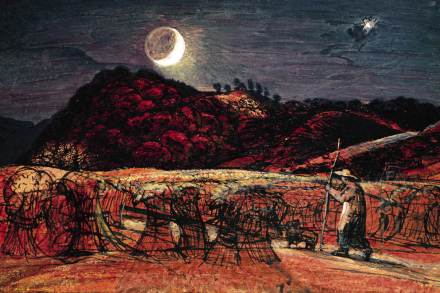
At the age of just 21, Samuel Palmer produced one of British art’s greatest self-portraits. At the age of just 21, Samuel Palmer produced one of British art’s greatest self-portraits. Although he is wearing the clothes of the period (1826), the face that surmounts the casually fastened soft high collar is both Romantic and modern, instantly and thrillingly bridging the gap between his century and our own. As Rachel Campbell-Johnston notes in her welcome biography, Palmer’s hair is unbrushed and he seems not to have bothered to shave: ‘It’s hardly the image you would expect from an upcoming artist at that time. He does not strike the pose of the ambitious young professional; make a bid for new clients by parading palette and brush’.

Citizen of the world

From our UK edition

When Francis King returned to Oxford at the age of 24 in order to resume an education interrupted by the second world war, he had already published two novels. ‘Eager to publish more’, he decided to switch from Classics to what he saw as the easier option of English so as to leave more time for his writing. And publish more he did, with a bibliography that eventually ran to over 50 items, comprising not only novels and volumes of short stories, but poems, plays for radio and several distinguished works of non-fiction. He had an equally prolific career in literary journalism, which started during the war when J.R. Ackerley recruited him to review first poetry and then fiction for the Listener.

Goodbye to Berlin

From our UK edition

Peter Parker is beguiled by a novel approach to the lives of Europe’s intellectual elite in flight from Nazi Germany In his time, Heinrich Mann was considered one of Germany’s leading writers and intellectuals. Unlike his rivalrous younger brother Thomas, who always put his literary career before any other consideration, Heinrich was an early and outspoken critic of the Nazis, and so forced to leave Germany in February 1933. He was based for several years in the south of France, while travelling around the world to denounce the regime he had left behind, and he eventually emigrated to America in 1940, settling in Los Angeles. Unlike many European emigrants who thrived in the Californian sun, Mann did not adapt well to transplantation.

In the pink

From our UK edition

In 1988 Katherine Swift took a lease on the Dower House at Morville Hall, a National Trust property in Shropshire, and created a one-and-a-half acre garden in what had been a field. In The Morville Hours (2008), she placed that garden in its landscape and wrote one of the finest books about the history, philosophy and the practice of gardening you are likely to read. She is currently working on a sequel, and The Morville Year is a very welcome interim volume, gathering the columns she wrote for The Times between 2001 and 2005.