Peter Oborne

Peter Oborne writes for Middle East Eye.

The unbearable ingratitude of Kevin Pietersen

Seven years ago Kevin Pietersen produced his first attempt at autobiography, Crossing the Boundary: The Early Years in My Cricketing Life. Atrociously written, it demonstrated no awareness of the world outside himself. This time round Mr Pietersen has taken the precaution of hiring an excellent ghost writer, David Walsh of the Sunday Times. It is hard to overpraise Mr Walsh’s vivid prose. The book is a brilliant portrayal of Pietersen as a misunderstood genius continually brought down by lesser men: a Mozart beset by a sequence of Salieris. Three of his England teammates fare especially badly: Stuart Broad, Graeme Swann and Matt Prior. He describes their behaviour as egotistical, bullying and treacherous.

How Nigel Farage gave British democracy back to the voters

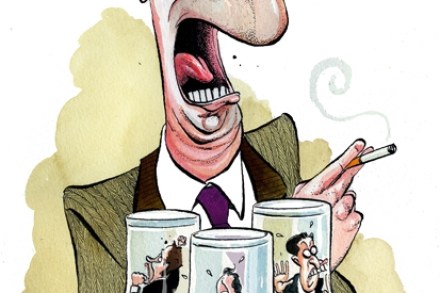
[audioplayer src="http://traffic.libsyn.com/spectator/TheViewFrom22_22_May_2014_v4.mp3" title="Peter Oborne debates Matthew Parris on Ukip's impact on British politics" startat=41] Listen [/audioplayer]Whether or not Ukip wins, this month’s European election campaign has belonged to one politician alone: Nigel Farage. Single-handedly he has brought these otherwise moribund elections to life. Single-handedly he has restored passion, genuine debate and meaning to politics. Single-handedly he has reinvented British democracy. This is a superlative achievement, and Mr Farage deserves to be celebrated. Instead strenuous attempts have been made to turn him into a figure of odium and contempt.

Notes from Damascus

As I looked out of the window of my hotel bedroom, studying the view of central Damascus, the mobile phone rang. Peter Walwyn was on the line. I have not seen Mr Walwyn, who was twice British champion racehorse trainer and trained Grundy to win the Derby in 1975, for several years. I reminded him of our lunch at Simpson’s-in-the-Strand. He had sat down, ordered a vodka and tonic, and told me that the evening before he had placed flowers on Jeffrey Bernard’s grave. After Bernard died several Lambourn trainers, along with Peter O’Toole, held a ceremony at the top of the gallops. A simple granite stone memorial now marks the spot.

In it together? Matthew d’Ancona’s book on the coalition is a huge letdown, says Peter Oborne

There are two ways of being a political journalist. One is to stay on the outside and try to avoid being compromised by too much contact with politicians. This approach comes at what many regard as an impossible cost. After all, the job of a journalist is to get stories and gain insight. Story-getting can only come through access, but this too creates a problem. The politicians who supply information, atmosphere, gossip and revelation tend to demand loyalty — and protection — in return. There is no right answer. Matthew d’Ancona has always sought the status of an insider. His Sunday Telegraph column is valuable because it provides an accurate and informed account of the stresses at the heart of the government.

A man of his Times: Lord Danny Finkelstein

Thomas Barnes, who edited the Times from 1817 to 1841, declared that the ‘newspaper is not an organ through which government can influence people, but through which people can influence the government.’ There have been periods when principle guided the Times — for instance when the great war correspondent W.H. Russell exposed government incompetence in the Crimean War. At other times the newspaper has a tendency to become the organ of official opinion, impartially supporting any political party (just so long as it happens to be the one in power). Ten years ago its political pages resembled a New Labour noticeboard.

No, Iran does not posses nuclear weapons

In the course of a long career as a polemical journalist I have got thoroughly used to being insulted, libelled and attacked in a multitude of different ways. It comes with the territory, and is probably good for the soul. As a general rule the best policy is to allow these assaults to pass by outside the off-stump without playing a stroke. Disputes between journalists tend to be fruitless, self-important and (worst of all) tedious. However, two weeks ago I published a book, co-authored with David Morrison, A Dangerous Delusion: Why the West is Wrong about Nuclear Iran. Since then my co-author and I have been subject to a series of misrepresentations and innuendo on a scale and (in some cases) virulence that I have never encountered before.

Will Boston still fund the Real IRA?

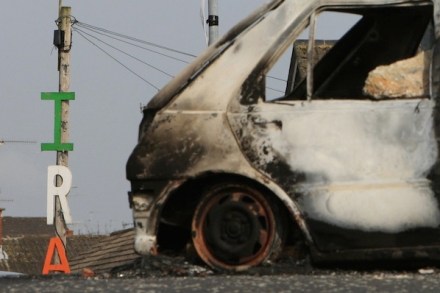
One of the first world statesmen to send a message of sympathy to Boston after last week’s outrage was Gerry Adams, president of Sinn Fein. ‘Just watching news of the explosion in Boston,’ he tweeted, ‘Sympathy with people of that fine city.’ Mr Adams has every reason to think fondly of Boston. Throughout the troubles, while he sat on the IRA war council, Boston was one of the major American centres which he (through Noraid) could rely on for support and funding. Bostonian money would have been used to help pay for the IRA attack on Margaret Thatcher’s democratically elected government in Brighton, the grotesque Birmingham pub bombings that left 21 dead, and of course the Lisburn van bombing of 15 June 1988.

The Boston bombings should make ‘Real IRA’ supporters in the US stop and think

One of the first world statesmen to send a message of sympathy to Boston after last week’s outrage was Gerry Adams, president of Sinn Fein. ‘Just watching news of the explosion in Boston,’ he tweeted, ‘Sympathy with people of that fine city.’ Mr Adams has every reason to think fondly of Boston. Throughout the troubles, while he sat on the IRA war council, Boston was one of the major American centres which he (through Noraid) could rely on for support and funding. Bostonian money would have been used to help pay for the IRA attack on Margaret Thatcher’s democratically elected government in Brighton, the grotesque Birmingham pub bombings that left 21 dead, and of course the Lisburn van bombing of 15 June 1988.

Will the Guardian and the Independent kill the Grand National?

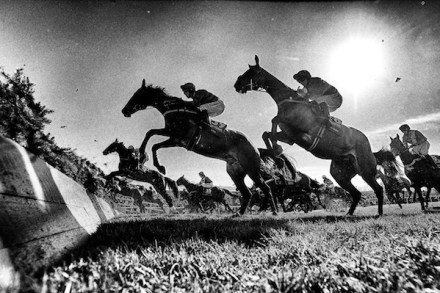
Over the past few years a new trend has emerged in British journalism. Our trade has become over-run with reporters or columnists who are not quite what they seem. They pretend to report objectively on events. In practice the true loyalty of these campaigning reporters or columnists is not just to their readers. Sometimes covertly, sometimes furtively, they also further the agendas of political parties and interest groups. This confusion of loyalties is a notorious problem at Westminster, but is now spreading beyond the political desks of national newspapers. Last weekend’s reporting of the Grand National was a very troubling example of the muddling of categories between straightforward reporting and campaigning journalism.

Shameful home truths

One of our more cherished national myths is that we British do not torture prisoners of war and criminal suspects. We support decency and fair play. Ian Cobain’s book proves beyond doubt that we do indeed make use of torture, and sometimes with relish. It shows that the British state has long practised a secret torture policy and continues to do so. It is easy to predict the fate of this carefully researched and well-written book. It will be ignored, glossed over and quietly rubbished by a political and Whitehall establishment which has persistently covered up or denied the very troubling state crimes that are documented here. Cobain traces British involvement with torture and prisoner abuse back to the second world war.

Libya notebook

The battle had the busy, obsessive yet irrelevant air of a point-to-point. It was a social event, held outdoors, a good place to see and be seen. The jeunesse dorée of the western Libyan town of Zuwara were out in force. People had come from miles around. Rather than tweed suits and barbours they were wearing battlefield fatigues and clung to machine-guns and rocket-launchers. As artillery rounds and bullets whistled overhead, the Zuwarans made informed comments, ducking when the shooting got too close. Half a mile ahead, street fighting had already claimed some 20 lives and inflicted 300 casualties. Welcome to post-revolutionary Libya.

Dangerous territory | 14 April 2012

Fifteen years ago Ahmed Rashid wrote an original, groundbreaking and wonderful book about the Taleban, a subject about which few people at the time knew or cared. Then along came 9/11 and Rashid turned overnight from obscure scribbler into global sage. He was courted (as he reminds us from time to time in this book) by presidents and celebrated by Washington think-tanks. But all this recognition, while well deserved, has had a terrible effect on his prose. Instead of writing very good books, he now writes very bad ones. His Descent into Chaos, published in 2008, an account of the years after 9/11, was ponderous and loaded with received wisdom. This volume is no better.

Guilty by association

It has become increasingly obvious that something went terribly wrong with British intelligence-gathering, both its methods and morality, after the destruction of the Twin Towers on 11 September 2001. Earlier prime ministers had displayed scruples about the use of intelligence gained from torture. But during the Blair premiership this changed. Britain became part of a nightmarish universe where the standards which we claim to represent were undermined and sabotaged. It is important to stress that there is no evidence at all that our intelligence officers were (unlike their gung-ho counterparts at the CIA) directly engaged in torture.

A tangled web

Almost two decades ago, as a junior political reporter on the Evening Standard, I heard the cabinet office minister William Waldegrave tell a parliamentary committee that in certain circumstances it was right for a prime minister to lie. The words made no impression on the committee itself, but I nevertheless dashed up to my office in the press gallery and constructed a story around his observations, which duly appeared as the late edition Evening Standard splash. The most enormous row followed. There were calls for poor Waldegrave’s resignation. The Labour opposition made out that his comment showed that no Conservative government could be trusted. This was terribly unfair.

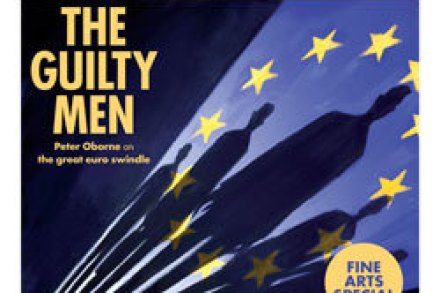
In this week’s Spectator: The great euro swindle

Very rarely in political history has any faction or movement enjoyed such a complete and crushing victory as the Conservative Eurosceptics. The field is theirs. They were not merely right about the single currency, the greatest economic issue of our age — they were right for the right reasons. They foresaw with lucid, prophetic accuracy exactly how and why the euro would bring with it financial devastation and social collapse. Meanwhile the pro-Europeans find themselves in the same situation as appeasers in 1940, or communists after the fall of the Berlin Wall. They are utterly busted. Let’s examine the case of the Financial Times, which claims to be Britain’s premier economic publication. About 25 years ago something went very wrong with the FT.

The enemy within | 3 September 2011

The most telling figure in Carey Schofield’s book on the Pakistan army is Faisal Alavi, a major general who was murdered in November 2008. The most telling figure in Carey Schofield’s book on the Pakistan army is Faisal Alavi, a major general who was murdered in November 2008. As head of Pakistan’s special forces, Alavi found himself in a bitter struggle against influential military opponents in the Pakistan army. They favoured secret deals, paying large sums to the Taleban leader Baitullah Mehsud so that his supporters should not target the army. Alavi was by contrast desperate to attack the Taleban, and made no secret of this when on a visit to SAS headquarters at Hereford in 2005.

What the papers won’t say

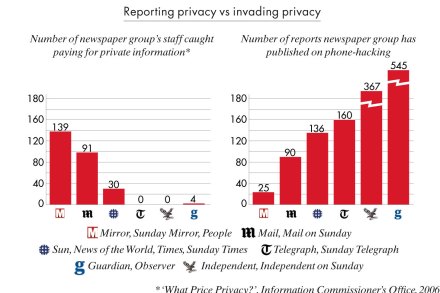
Let’s try a thought experiment. Let’s imagine that BP threw an extravagant party, with oysters and expensive champagne. Let’s imagine that Britain’s most senior politicians were there — including the Prime Minister and his chief spin doctor. And now let’s imagine that BP was the subject of two separate police investigations, that key BP executives had already been arrested, that further such arrests were likely, and that the chief executive was heavily implicated. Let’s take this mental experiment a stage further: BP’s chief executive had refused to appear before a Commons enquiry, while MPs who sought to call the company to account were claiming to have been threatened.

PAKISTAN NOTEBOOK

Karachi is a notoriously lively city, with gun battles on the streets a daily occurrence — so it seems only sensible to stay in the comfort and safety of the Sind Club, a grand institution built during British rule in the centre of the town. Karachi is a notoriously lively city, with gun battles on the streets a daily occurrence — so it seems only sensible to stay in the comfort and safety of the Sind Club, a grand institution built during British rule in the centre of the town. It was here that my travelling companion, Charles Alexander, and I watched the royal wedding in Urdu in company with elderly members. I blubbed as we joined in the hymns, but when it was all over it did seem odd that there had been no kiss.

Where’s the divide?

The outcry over Sayeeda Warsi’s speech on Islamophobia last week cannot be understood without a clear grasp of the balance of power within the coalition government. There are two factions, and the strongest can loosely be described as neoconservative. This faction remains an unconditional supporter of the United States of America, continues to defend the Iraq invasion, powerfully admires and in some cases worships Tony Blair, and automatically takes the side of Israel in the middle east. This section of the coalition also takes a hard line on domestic security arrangements, supporting control orders and the divisive Prevent strategy for confronting its special interpretation of the Islamic terror threat.

Tartan Taleban

On a freezing January morning two years ago, I joined a US army assault in an al-Qa’eda-controlled village in northern Iraq. We were dropped by helicopter half a mile from the village not long after midnight and shivered till dawn, when the soldiers launched their assault. They met with no resistance and by late afternoon had completed their searches and were mostly asleep. I sat in the garden of the makeshift company HQ — the largest house in the village, commandeered from a reluctant sheikh. Above me a US soldier was on sentry duty, while at the bottom of the garden women were cleaning clothes in a stream. There was just enough warmth from the winter sun, so I took out my book, Sir Walter Scott’s Chronicles of the Canongate.