Peter Oborne

Peter Oborne writes for Middle East Eye.

Peter Oborne, Kate Andrews and Jonathan Maitland

18 min listen

On this week's Spectator Out Loud, Peter Oborne reads his letter from Jerusalem (00:55), Kate Andrews talks about why Rishi Sunak has made her take up smoking (07:20), and Jonathan Maitland explains his growing obsession with Martin Bashir (12:15). Presented by Cindy Yu. Produced by Cindy Yu and Natasha Feroze.

Britain should back a ceasefire

Six weeks ago, I invited Ahmed Alnaouq, a young diplomat who recently joined the Palestinian mission in London, to stay for a cricket weekend in Wiltshire. He resisted all entreaties to play the game but was in every other way a delightful guest. On Sunday, Ahmed learnt that his family in Gaza has been wiped out by an Israeli bomb. His father, siblings, and more than 15 nieces and nephews had all been killed. Twenty-three dead, no injuries. Another brother was killed by an Israeli bombing in 2014. His mother died three years ago because, he says, Israel denied her medical treatment. When I sent him a text message saying that he and his family were in my thoughts and prayers – it felt hopeless, but what else can one say? – he replied: ‘My family is gone Peter. All of them.

India’s land grab

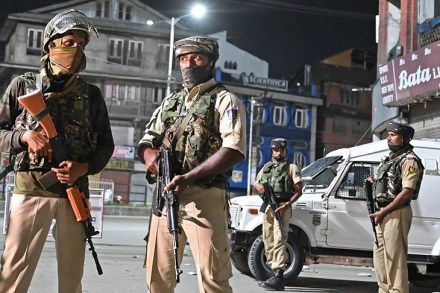
Frank Johnson, editor of The Spectator until cruelly sacked to make way for Boris Johnson, never wasted ideas. He liked to reuse them. Often. Every summer he would write the same column attacking the silly season. August, Mr Johnson maintained, was not silly at all. The first world war started in August. The Nazi-Soviet pact was signed in August. Hitler ordered the invasion of Poland in August. Saddam Hussein marched into Kuwait also in the horror month of August. Once again August has vindicated Mr Johnson — and not only because of Brexit. Darkness has descended on the former princely state of (British-controlled) Kashmir. Meanwhile freedom is dying in the former British colony of Hong Kong. These two events are reported as if unconnected.

The case for keeping Chris Grayling in the Cabinet

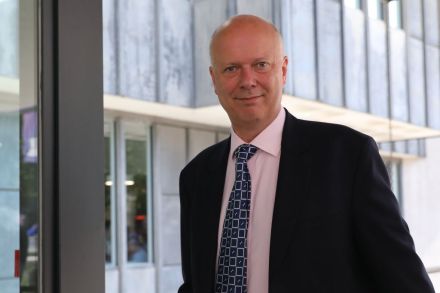
Fairness is not a concept known to political reporting. That’s not how the lobby works. I used to be a Westminster correspondent. We hunted as a pack. We kicked those who were down and sucked up to the winners.  In this article, far too late, I will try rescue the reputation of one of Theresa May’s and David Cameron’s most loyal and capable ministers. Few politicians have been the object of such sustained and brutal criticism as Transport Secretary Chris ‘Failing’ Grayling. Few have deserved it less.  I will show that a great deal of the criticism has been unfair. I’ll argue that Mr Grayling is paying the price for his personal decency and loyalty to colleagues. Let’s start with the much-vaunted ferry fiasco late last year.

It’s not just cricket: India vs Pakistan is the greatest rivalry in world sport

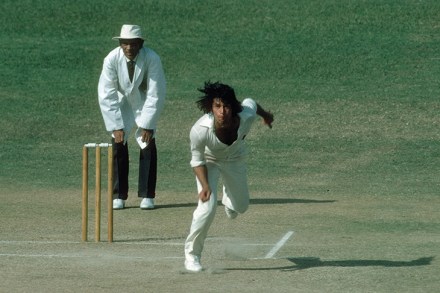
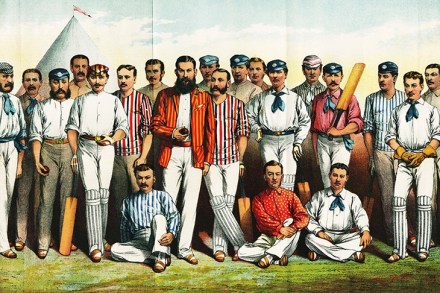
There are plenty of much-anticipated contests in the 2019 Cricket World Cup. But nothing to compare with today's match at Old Trafford, where India play Pakistan in the latest epic in a rivalry that dates back to Partition in 1947. It’s a rivalry that is regularly punctuated by war. No cricket was played between the two countries from 1961 until 1978. The 1965 conflict, caused by Pakistani aggression, severed relations. By the time a ceasefire was declared, Indian tanks were on the outskirts of Lahore, where a 12-year-old Imran Khan was distraught not to be allowed to join a local militia. The two countries fought again in 1971 when India backed insurgents in the liberation war which led to the secession of East Pakistan and the creation of Bangladesh.

It’s not just cricket

There are plenty of much-anticipated contests in the 2019 Cricket World Cup. But nothing to compare with this Sunday’s match at Old Trafford, where India are billed to play Pakistan in the latest epic in a rivalry that dates back to Partition in 1947. It’s a rivalry that is regularly punctuated by war. No cricket was played between the two countries from 1961 until 1978. The 1965 conflict, caused by Pakistani aggression, severed relations. By the time a ceasefire was declared, Indian tanks were on the outskirts of Lahore, where a 12-year-old Imran Khan was distraught not to be allowed to join a local militia. The two countries fought again in 1971 when India backed insurgents in the liberation war which led to the secession of East Pakistan and the creation of Bangladesh.

The ballad of Conrad Black

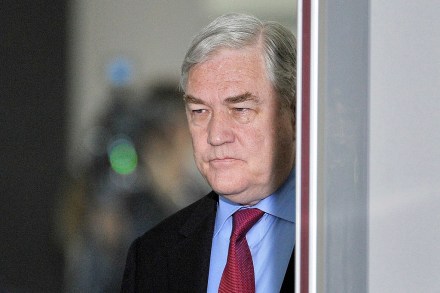
Conrad Black, who was jailed in the US for fraud and obstructing justice, has been pardoned by Donald Trump. Here Peter Oborne profiles the former media mogul and his wife Barbara in an article published in The Spectator in 2004: A few weeks ago executives were endeavouring to bring home to Conrad Black the full horror of his personal and corporate predicament, when a sight met their eyes. His wife Barbara, clad only in a leotard and shades, had swept into the room. For a moment nobody spoke. ‘Oh Conrad,’ Barbara Black proclaimed: ‘Let’s just get out of here. They hate us.’ Barbara Amiel was born in Watford, and she enjoyed the kind of childhood that, if survived at all, instils resilience through life.

Who’s really to blame for Pakistan’s terror attacks?

 Islamabad Six months into Imran Khan’s premiership and the new Pakistan prime minister has been plunged into his first major foreign crisis. Last week, a suicide bomber attacked Indian soldiers in Kashmir, killing more than 40 paramilitary troops. Simultaneously, another suicide attack massacred 27 members of Iran’s Revolutionary Guard near the Pakistani border of Iran’s troubled Sistan and Baluchestan Province. Khan has spent the early months of his premiership attempting to strengthen links with neighbours. He stretched out the hand of friendship to India. He opened the Kartarpur corridor to allow the visa-free passage of Sikh pilgrims. He has warmed up Pakistan’s old alliance with Iran, while working hard to flatter her bitter enemy Saudi Arabia.

Modi’s operandi

 Islamabad Six months into Imran Khan’s premiership and the new Pakistan prime minister has been plunged into his first major foreign crisis. Last week, a suicide bomber attacked Indian soldiers in Kashmir, killing more than 40 paramilitary troops. Simultaneously, another suicide attack massacred 27 members of Iran’s Revolutionary Guard near the Pakistani border of Iran’s troubled Sistan and Baluchestan Province. Khan has spent the early months of his premiership attempting to strengthen links with neighbours. He stretched out the hand of friendship to India. He opened the Kartarpur corridor to allow the visa-free passage of Sikh pilgrims. He has warmed up Pakistan’s old alliance with Iran, while working hard to flatter her bitter enemy Saudi Arabia.

Not always cricket

At the beginning of August this year, the England test team played what is supposed to have been the 1,000th test match since the 1877 Ashes test against Australia in Melbourne, a match which was won by Australia by 45 runs. But was it really a test match? The players in that 1877 game had no idea they were test cricketers. England’s finest player, W.G. Grace, wasn’t there. Nor was Australia’s great bowler, Fred Spofforth. England played as James Lillywhite’s XI and only later was the match awarded test status. Nevertheless, the show was on the road. Simon Wilde, cricket correspondent of the Sunday Times, has had the engaging idea of telling the story of the England national team.

Syria Notebook

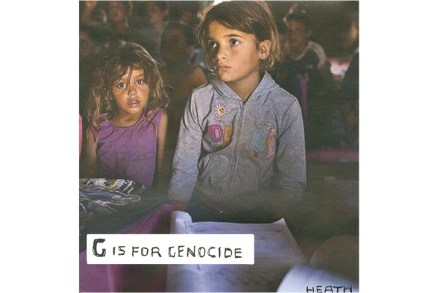
In order to avoid the Labour conference and yet more predictable media attacks on Jeremy Corbyn, I escaped late last month to Syria, where children were returning to school after the summer holidays. Large tracts of the country have recently been liberated from the control of jihadi groups, meaning that in some places children are going back to school for the first time in five years. At Sinjar elementary school in Idlib province, I found the local headmaster painting the school sign. Five years ago rebels gave him the choice of closing down or being killed. He was confined to his house while the school buildings were converted into an arsenal.

Tariq Ramadan and the integrity of French justice

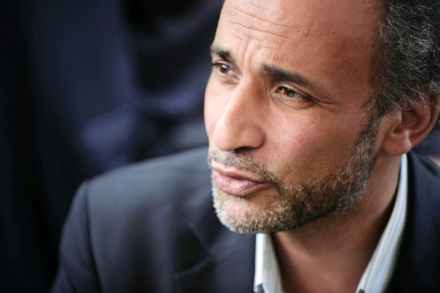
For the last four months, Oxford professor Tariq Ramadan has been rotting in a French jail, like Jean Valjean. He stands accused of rape by several women who came forward during the #MeToo scandal. One says that in a hotel room in Paris in the spring of 2012, the world-renowned Swiss scholar of Islam “choked me so hard that I thought I was going to die”. Another has reportedly described “blows to the face and body, forced sodomy, rape with an object and various humiliations, including being dragged by the hair to the bathtub and urinated on”. If Ramadan is guilty of these despicable acts, he must face the full weight of French law. But he must first be given the chance to defend himself. And there are grave concerns that he is not.

Tariq Ramadan and the integrity of French justice | 15 June 2018

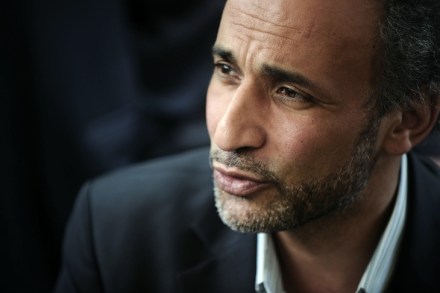
For the last four months, Oxford professor Tariq Ramadan has been rotting in a French jail, like Jean Valjean. He stands accused of rape by several women who came forward during the #MeToo scandal. One says that in a hotel room in Paris in the spring of 2012, the world-renowned Swiss scholar of Islam “choked me so hard that I thought I was going to die”. Another has reportedly described “blows to the face and body, forced sodomy, rape with an object and various humiliations, including being dragged by the hair to the bathtub and urinated on”. If Ramadan is guilty of these despicable acts, he must face the full weight of French law. But he must first be given the chance to defend himself. And there are grave concerns that he is not.

False friends

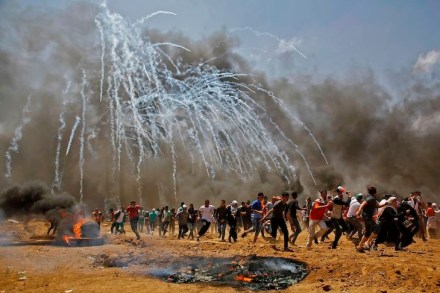
Harold Macmillan once remarked that: ‘There are three bodies no sensible man ever directly challenges: the Roman Catholic Church, the Brigade of Guards and the National Union of Mineworkers.’ Today it’s tempting to add a fourth name to this list: the Conservative Friends of Israel. The CFI counts an estimated 80 per cent of Tory MPs among its members. It can whistle up cabinet ministers for its dinners and has superb access to Downing Street and Whitehall. This week, the CFI pulled off what looks like yet another coup with the remarkably muted British government reaction to Israel’s killing of approximately 60 and wounding of more than 2,500 Palestinian protesters on the Gaza border.

In defence of Olly Robbins

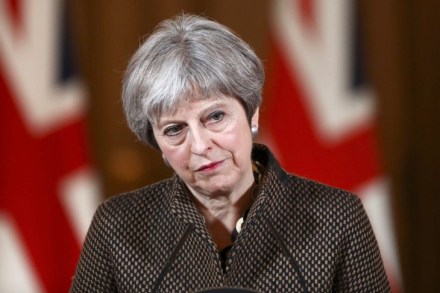
I dislike the attacks on Theresa May’s Brexit adviser Olly Robbins. Mr Robbins is a capable and patriotic official charged with the exceptionally demanding task of extricating Britain from the European Union. This job is as difficult and complicated as taking Arizona out of the United States. I detect no evidence to support claims that Mr Robbins, whom I have not met, is sabotaging Brexit. He understands that his job is to carry out the orders of the government of the day as smoothly and skilfully as possible. The Conservative party has historically been dedicated to the preservation of our great institutions: parliament, monarchy, civil service, rule of law, etc.

Diary – 3 May 2018

After reading Christopher Isherwood’s Lions and Shadows, Somerset Maugham remarked: ‘That young man holds the future of the English novel in his hands.’ Isherwood never quite fulfilled his early promise, but Lions and Shadows remains an entrancing book. I relish in particular the history teacher, of whom Isherwood recorded: ‘Almost everything Mr Holmes did or said contributed to a deliberate effect: he had the technique of a first-class clergyman or actor. But unlike most clergymen, he was entirely open and shameless about his methods.

We have a moral duty to mistrust the government on Syria

Almost two years have passed since Sir John Chilcot produced his 12-volume report on the lessons of the Iraq war. We collectively promised to learn the lessons. Last weekend it was as if the Chilcot report never happened. Britain, cheered on by a bellicose press and a largely docile Parliament, launched airstrikes that showed the same disregard for due process against which Chilcot warned. Remember what Chilcot told us: 'The judgements about the severity of the threat posed by Iraq’s weapons of mass destruction – WMD – were presented with a certainty that was not justified.' He concluded: 'the UK chose to join the invasion of Iraq before the peaceful options for disarmament had been exhausted. Military action at that time was not a last resort.

Zimbabwe on the brink

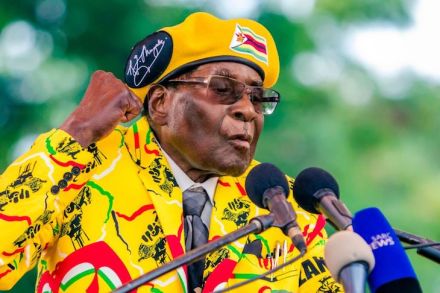
History will curse Robert Mugabe. When he took over as prime minister in the wake of the Lancaster House agreement in early 1980, Zimbabwe was one of the most prosperous countries in Africa. Mugabe inherited excellent infrastructure, a strong economy, stable institutions, an independent judiciary, an excellent school system and the goodwill of the world. In the course of nearly 38 years, he wrecked all of this. He corrupted his country’s democratic institutions, destroyed the economy and debauched the currency while making himself and a tiny circle of cronies and relatives spectacularly rich. The complacent British view is that Mugabe started out well but went wrong.

Should we celebrate Balfour?

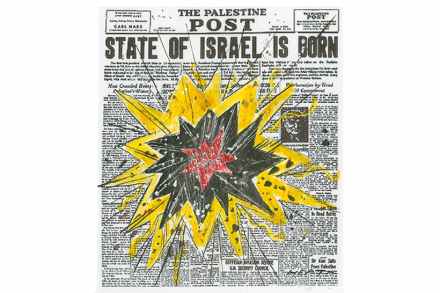
Should we celebrate Balfour? Britain has honoured the first half of Balfour’s letter, which promised to deliver a Jewish homeland. But we have miserably failed to keep our second promise to protect the civil and religious rights of Palestinians. Last month I visited East Jerusalem and the West Bank. Above the Jordan Valley I spent an afternoon with a Bedouin chief for whom Balfour has been a disaster. He told me how he tried to build a school, but the Israelis knocked it down. So he tried to construct a road to the nearest school, but the Israelis destroyed the road. They bulldozed his encampment. They have taken his water supply. He told me the army had confiscated his livestock, and when that failed, shot at his farm animals from jeep helicopters.

Notebook | 2 November 2017

There are many reasons political journalists get so many things so badly wrong. One is our tendency to overvalue liberal politicians. This explains why we have misunderstood Benjamin Netanyahu, the Israeli Prime Minister, who has flown to London this week to join Theresa May at a dinner to celebrate the centenary of the Balfour Declaration. Frequently dismissed as a political thug, Mr Netanyahu is arguably the most successful Israeli premier of all time. If he wins the next election, he will overtake David Ben-Gurion, Israel’s father figure, as his country’s longest-serving prime minister. He has seen off all his domestic rivals. He faced down Barack Obama, and anticipated the rise of the alt-right.