Peter Oborne

Peter Oborne writes for Middle East Eye.

Imran’s biggest test

From our UK edition

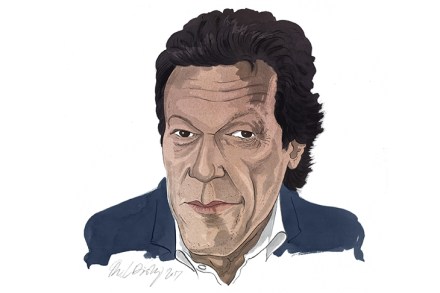
It’s been a long journey for Imran Khan. He founded his political party, PTI (Pakistan Movement for Justice), in 1996, and for many years made no real progress. Many mocked him. The Guardian journalist Declan Walsh dismissed him as ‘a miserable politician’, whose ideas and affiliations had ‘swerved and skidded like a rickshaw in a rainshower’. PTI did make a limited amount of progress in the 2013 general elections, when it emerged as the second largest party by national vote and with 30 parliamentary seats. Furthermore, Khan’s party secured control of Khyber Pakhtunkhwa (formerly North-West Frontier Province). But none of this was enough to challenge for national power. The outlook has changed dramatically over the past three months.
How to beat terrorism

From our UK edition

Until a few years ago, Pakistan was one of the most dangerous countries on earth. The tribal areas in the north were infested by the Taleban, whose bases stretched to within 100 miles of the capital, Islamabad. Western intelligence agencies feared that the Taleban could seize one of the country’s nuclear installations, then hold the world to ransom. Large parts of the country elsewhere were lawless or terrorised by armed groups. It would be foolish to claim that Pakistan’s security problems are over. But something extraordinary and unexpected has certainly happened. Since it fails to fit the established narrative of Pakistan as a dangerous nation, it’s gone unacknowledged in the West. Violence has not just dropped a bit.

What Ed Miliband got right

From our UK edition

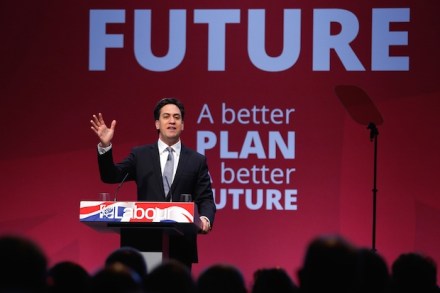
We're republishing our ten most-read articles of 2015 and no8 is from Peter Oborne in defence of Ed Miliband. The Spectator has a proud tradition of running well-written features that go against the magazine's own political sympathies and challenging conventional wisdom. In the end, Miliband lost - but on election day every opinion poll and bookmaker had him on course to win - or, at least, deny Cameron a majority. And those who think that Miliband's manifesto was a pile of guff should ask why George Osborne has now implemented so much of it. Oborne's piece is a wonderful example of the argument that almost prevailed. We also include his discussion with Dan Hodges. [audioplayer src="http://traffic.libsyn.

It’s time to judge Assad’s Aleppo campaign by the standards that we set ourselves in Mosul

From our UK edition

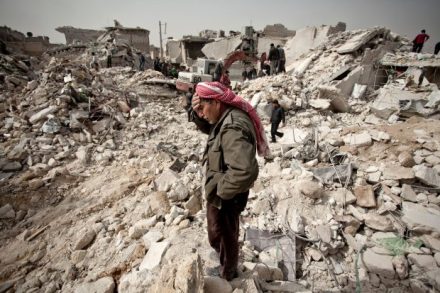
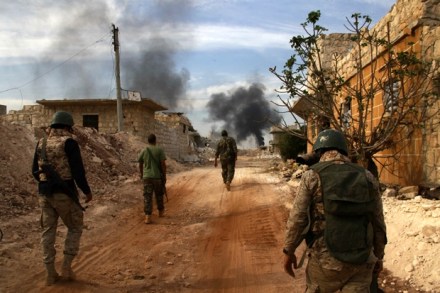
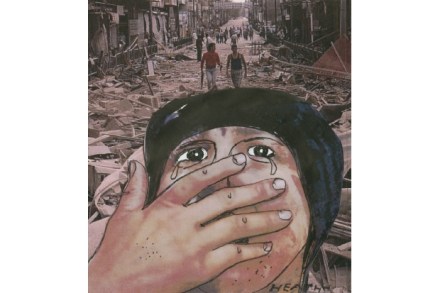
For the past few weeks, British newspapers have been informing their readers about two contrasting battles in the killing grounds of the Middle East. One is Mosul, in northern Iraq, where western reporters are accompanying an army of liberation as it frees a joyful population from terrorist control. The other concerns Aleppo, just a few hundred miles to the west. This, apparently, is the exact opposite. Here, a murderous dictator, hellbent on destruction, is waging war on his own people. Both these narratives contain strong elements of truth. There is no question that President Assad and his Russian allies have committed war crimes, and we can all agree that Mosul will be far better off without Isis. Nevertheless, the situations in Mosul and Aleppo are fundamentally identical.

A tale of two battles

From our UK edition

For the past few weeks, British news-papers have been informing their readers about two contrasting battles in the killing grounds of the Middle East. One is Mosul, in northern Iraq, where western reporters are accompanying an army of liberation as it frees a joyful population from terrorist control. The other concerns Aleppo, just a few hundred miles to the west. This, apparently, is the exact opposite. Here, a murderous dictator, hellbent on destruction, is waging war on his own people. Both these narratives contain strong elements of truth. There is no question that President Assad and his Russian allies have committed war crimes, and we can all agree that Mosul will be far better off without Isis. Nevertheless, the situations in Mosul and Aleppo are fundamentally identical.

Yemen Notebook

From our UK edition

Most nights Saudi bombers fly low over the Yemeni capital of Sanaa dealing out random destruction. High up in the Yemeni mountains, Sanaa claims to be the oldest inhabited city in the world. Its old city, a Unesco world heritage site, is at least as unique, ancient and priceless as any western city. Many of its buildings have been destroyed or damaged by Saudi bombs. Imagine the outcry in the West if Venice or Florence were being targeted in this way. However, nobody seems to care one way or another about Yemen. This is because the country is under attack from Britain’s oldest ally in the region, Saudi Arabia. So that’s all right then. Sanaa is in the hands of Houthi rebels.

Mugabe’s last gasp

From our UK edition

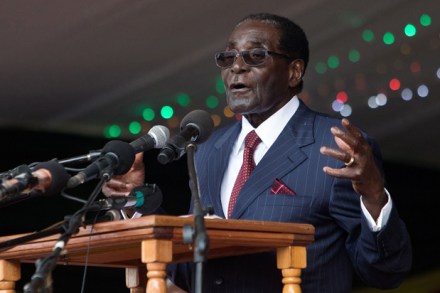
Last week rumours swirled round Zimbabwe that Robert Mugabe, the 92-year-old president, had either died or been incapacitated. The government banned demonstrations after Mugabe’s-presidential aircraft had been diverted in mid-air to Dubai during a scheduled journey to Singapore. Then the man himself turned up alive (though far from well) at Harare-airport, where he made a reasonably good joke about his ‘resurrection’. The president, who has ruled his country throughout its 36-year history, is nevertheless mortally wounded. We are entering the last few months of the Mugabe era. His health is not the real problem.

Pakistan’s great leader

From our UK edition

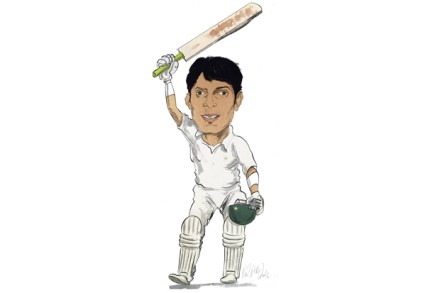
There have been three great captains of Pakistan. The first was A.H. Kardar, the country’s first Test captain. Born in Lahore, and talent-spotted by the senior Nawab of Pataudi, Kardar played for India before Partition. He led Pakistan to victory over India in its second-ever Test match in Lucknow in 1952, and even more famously over England at the Oval Test in August 1954. Uniquely, Kardar won at least one Test match in Pakistan’s inaugural series against each other country. Pakistan’s next great captain was Imran Khan, the all-rounder who inspired his country to a famous World Cup victory in 1992, and now has honourable aspirations to become Pakistan’s prime minister. The third is Misbah-ul-Haq, and he has a claim to be the greatest.

Brexit, and the return of political lying

From our UK edition

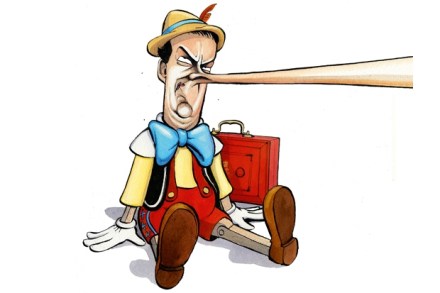
Sir John Chilcot’s report into the Iraq invasion, due to be published on 6 July, is expected to highlight the novel structure of government created by New Labour following its landslide victory of 1997. As Tony Blair started to make the case for war, he began to distort the shape and nature of British government in several ways — the most notable being the deliberate debasement of the traditional idea of a neutral, disinterested civil service. Under Blair, civil servants were told to concern themselves less with the substance than the presentation of policy. They were informed that their loyalty lay more with the government of the day, less with the British state. This had dramatic effects.

Revealed: UK government blocks foreign journalists from press freedom conference

From our UK edition

On its website the Foreign and Commonwealth Office claims that 'we’re strengthening the Commonwealth as a focus for democratic practice and development. We’re working with the Commonwealth Secretariat to strengthen its institutions so it promotes human rights, democratic values and the rule of law.' It continues: 'we’re engaging with civil society across the Commonwealth.' In the light of this declaration  one would expect the FCO to welcome this week’s conference in London by the Commonwealth Journalists Association. The would-be participants spend their lives, often at high personal risk, to bring the truth to their followers in their own countries. They include many of the best and bravest editors and reporters.

Barack Obama is right: David Cameron let Libya fall into the abyss

From our UK edition

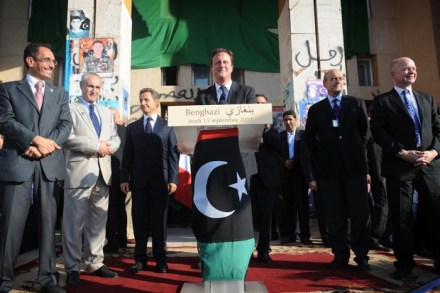
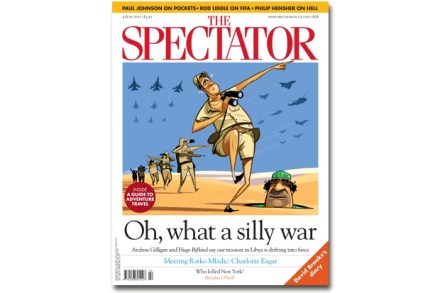
In their interview in the Christmas edition of The Spectator, Fraser Nelson and James Forsyth asked the Prime Minister whether he now considered that his intervention in Libya had been a mistake. David Cameron accepted that matters could have gone better since the fall of Gaddafi, but insisted that ‘what we were doing was preventing a mass genocide’. Like Saddam Hussein’s weapons of mass destruction, Gaddafi’s genocide seems to have been a fiction. It was reiterated over and over again by government and in the media in order to whip up support for the imposition a no-fly zone in March 2011. However, there was never any convincing evidence.

Aleppo Notebook

From our UK edition

I had been trying to get to Aleppo for ages, but was unable to do so because rebel activity had cut off the city from the outside world. Syrian government military successes at the start of January meant there was at last a safe road. I hired a driver, was allocated a government minder (very handy at checkpoints), and booked into a hotel. Driving north from Damascus, we picked up a 22-year-old Syrian army lieutenant called Ali, returning to his unit after eight days’ leave with his family. We drove through Homs — miles and miles of utter devastation — and then east on to the Raqqa road. Ali told me that he had been assigned to Kuweires military airport east of Aleppo, which was under siege for three years from Al Nusra and Islamic State forces.

Benghazi notebook

From our UK edition

In their interview in the Christmas edition of The Spectator, Fraser Nelson and James Forsyth asked the Prime Minister whether he now considered that his intervention in Libya had been a mistake. David Cameron accepted that matters could have gone better since the fall of Gaddafi, but insisted that ‘what we were doing was preventing a mass genocide’. Like Saddam Hussein’s weapons of mass destruction, Gaddafi’s genocide seems to have been a fiction. It was reiterated over and over again by government and in the media in order to whip up support for the imposition a no-fly zone in March 2011. However, there was never any convincing evidence.

Dear Sirs and Madams

From our UK edition

Those who write letters and send them by post are a dying breed. I was fortunate to have served as a newspaper columnist and received a great many. Often eloquent, sometimes humorous, their breadth and depth of experience was wonderful. With the exception of letters that were racist or completely mad, I tried to answer every one of them. If a reader took the trouble to write to me, it was the least I could do to send him or her a personal reply. There was the occasional correspondent from London, but most lived in the country or in provincial towns or cities. Most were Conservatives and many were lifelong readers of the Daily Telegraph.

Diary – 4 June 2015

From our UK edition

For the first time since the terrorist attack on the Sri Lankan team six years ago, a Test match side has visited Pakistan. The Zimbabwe tourists, playing at the same Lahore stadium where the attack was mounted, were greeted with wild enthusiasm. Less well reported has been the fact that a team of English cricketers (including myself and Alex Massie of this parish) has been touring the Hindu Kush. We played in Chitral, Drosh, Ayun, Kalash and Booni. In these mountain areas many of our opponents were using pads, gloves and a hard ball for the first time. Still, we were overwhelmed, rarely losing by fewer than 200 runs in games which never exceeded 30 overs.

Did Yemen’s intelligence service collude with Al Qaeda?

From our UK edition

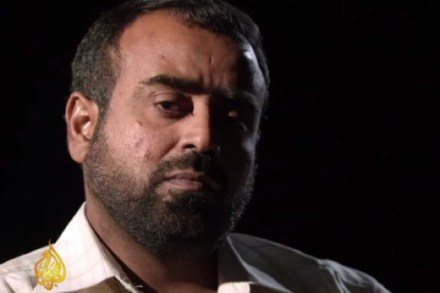
Al Qaeda terrorists have never had good press. For sound reasons they are always represented as evil, nihilistic, faceless murderers. There are certain interesting signs this is starting to change. This is happening in part because the emergence of Isis has shown that there is something worse than Al Qaeda. It is in part because the West has joined forces with Al Qaeda in some of its wars. The Al Qaeda affiliate Al Nusra, for instance, seems to have become a western ally in the war against Assad. Tonight Al Jazeera presents an intriguing portrait of an Al Qaeda terrorist. The documentary Al Qaeda Informant tells the story of the life of Hani Mujahid, a Yemeni citizen who joined Al Qaeda as a foot soldier in the late 1990s.

Fighting talk from a dove — Peter Oborne interviews Charles Kennedy

From our UK edition

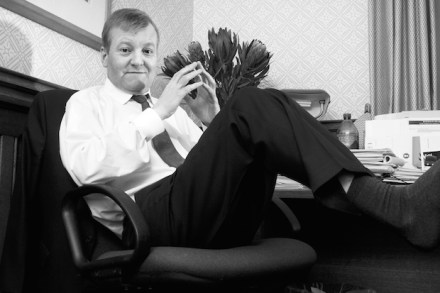
The former leader of the Liberal Democrats Charles Kennedy has died at the age of 55. He was the party's most successful leader in 80 years, winning 62 seats in 2005 general election following the Iraq war. On the eve of the 2002 Lib Dem conference, The Spectator's then political editor Peter Oborne interviewed Kennedy about his opposition to military action in Iraq and his chances of overtaking the Conservatives as the main party of opposition. No politician has the opportunity that Charles Kennedy has today: he just might reconfigure the political landscape.

Lord Freud: the man who saved the welfare system

From our UK edition

It was mid-October and Downing Street was in a panic. Lord Freud, the welfare minister, had been secretly recorded suggesting that disabled people could be paid less than the minimum wage. Labour demanded Freud should go. The No. 10 press office was briefing journalists that he would be out within hours. Craig Oliver, excitable Downing Street director of communications, advised the Prime Minister that Freud was finished. There was talk of the return of the nasty party, and days of dreadful headlines. In the end David Cameron stayed loyal. Within 48 hours the story was forgotten. Welfare reform is the coalition’s most important achievement. Universal Credit is at the heart of welfare reform.

Ed Miliband’s critics hate him for his success

From our UK edition

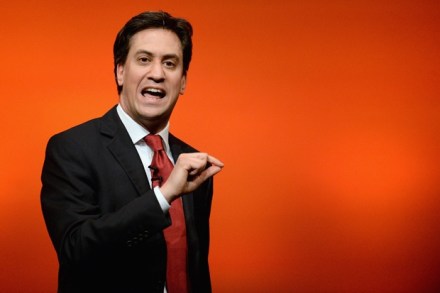
[audioplayer src="http://traffic.libsyn.com/spectator/TheViewFrom22_12_Feb_2015_v4.mp3" title="Peter Oborne and Dan Hodges discuss Ed Miliband" startat=1343] Listen [/audioplayer]Most political commentators consider Ed Miliband a useless leader. In a narrow sense they are right. He is not very good at getting a positive press or eliciting the support of important outside voices in the media and the business community. Even small stories of no consequence have the potential to turn into minor nightmares for Mr Miliband. The latest of these is his education spokesman Tristram Hunt’s innocuous remark about nuns, transformed by a voracious press into a minor scandal. Mr Miliband’s bacon sandwich is a far more damaging example of the same phenomenon.

The unbearable vanity of Kevin Pietersen

From our UK edition

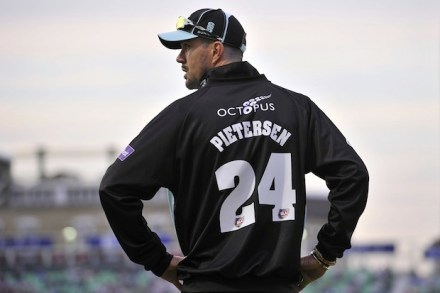
Seven years ago Kevin Pietersen produced his first attempt at autobiography, Crossing the Boundary: The Early Years in My Cricketing Life. Atrociously written, it demonstrated no awareness of the world outside himself. This time round Mr Pietersen has taken the precaution of hiring an excellent ghost writer, David Walsh of the Sunday Times. It is hard to overpraise Mr Walsh’s vivid prose. The book is a brilliant portrayal of Pietersen as a misunderstood genius continually brought down by lesser men: a Mozart beset by a sequence of Salieris. Three of his England teammates fare especially badly: Stuart Broad, Graeme Swann and Matt Prior. He describes their behaviour as egotistical, bullying and treacherous.