Peter Jay

National Service, by Colin Shindler

From our UK edition

For over 15 years after the second world war young men between the ages of 18 and 20 were conscripted by law to serve in Britain’s armed forces for two years. This was officially in order to man the army, navy and air force sufficiently for them to be able to perform the roles which government assigned to them, mainly in the management of British colonies and, after the formation of Nato, in opposing the feared westward expansion of the Soviet Union. Some serious fighting was done in Korea and later in Malaya, which was surprisingly successful from the colonial point of view. Others of us disported ourselves in the Middle and Near East, in Cyprus, in Africa and — reputedly the most boring — in the British Army on the Rhine. Some were just stuck in Britain.
… while others fade

From our UK edition

For Watergate junkies, another raking of the old coals is irresistible. For those underage younger persons who never understood what all the fuss was about, here is the chance to get with it. Just to remind: in June 1972, a bunch of nasties, some of whose day job was with the CIA but currently working for Richard Nixon the President of the USA, broke into the offices of the rival Democratic party in the Watergate building and got caught red-handed. Nixon’s White House tried to cover up this illegal entry. A junior reporter at the Washington Post, Bob Woodward, unearthed a five-star source known on the Post and round the world as ‘Deep Throat’.

The Price of Civilization by Jeffrey Sachs

From our UK edition

Half a century ago J.K. Galbraith’s The Affluent Society changed the political consciousness of a generation in the English- speaking world and beyond. It vividly re-established in the minds of civilised men and women the paradox of private affluence in a sea of public neediness — for which, as Matthew Arnold reminds us, Cato reported by Sallust had a name in his description of ancient Rome: ‘publice egestas, privatim opulentia’ (public poverty, private opulence). From this premise he made the case for the mixed economy, one in which the genius and power of market forces is balanced and harnessed by effective government in promoting public goods and correcting market failures — including gross inequality — that mar unconstrained laissez-faire.

George, you need a holiday

From our UK edition

Why is it all going so wrong for George Osborne? Only 16 months ago, the poor guy entered the Treasury full of sound principles and good intentions. He would put in order the dodgy public finances inherited from Gordon Brown’s regime, stand back and let market forces do the rest. The Office for Budget Responsibility would certify that he had. Within a short period, the benign influence of sound finance would restore confidence in the private sector; and room for it to take up the running in promoting national economic growth would be created by reining back the bloated public sector.

Athene ruled the waves

From our UK edition

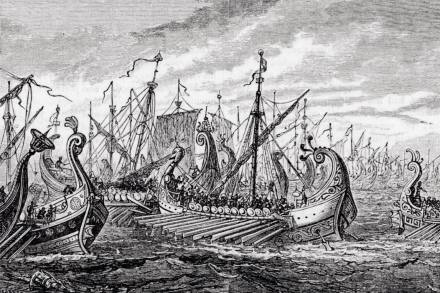
One thing is certain: George W. Bush was no Pericles. For which reason it is a pity that John Hale’s new history of Athens in the fifth and fourth centuries BC is launched with a rhetoric more Texan than Attic. The ancient Greeks knew that building a navy was an undertaking with clear-cut political consequences. A naval tradition that depended on the muscles and sweat of the masses led inevitably to democracy: from sea power to democratic power. Athens was exhibit A in this argument, and radical democracy would indeed be the Athenian navy’s greatest legacy.

From heroes to hicks

From our UK edition

The flavour of Stephen Graubard’s account of the American presidency in the 20th century may be quickly grasped from his comparison of the only two presidents to follow their fathers into the White House, John Quincy Adams (1825-29) and George W. Bush (2001-?): Adams, fluent in seven languages, accomplished in both science and mathematics, took pride in the cultivation he had acquired through years of living in close proximity to his gifted and influential father, benefitting from his schooling in Paris and service as a very young man as an additional secretary to the American negotiators that ended the war with Britain …. A student at the University of Leiden and Harvard ….