Peter Hoskin

The new welfare consensus

From our UK edition

The New Statesman's George Eaton has already homed in on the key passage from James Purnell's article in the Times (£) today, but it's worth repeating here. According to the former welfare minister, he pitched something like Iain Duncan Smith's Universal Credit to Gordon Brown, and the reception it received catalysed his departure from government: "Before I resigned from the Cabinet, I proposed a similar plan to Mr Brown. But he was scared that there would be losers, and his refusal to give me any answer made me think that there was no point in staying inside the Government to try to influence him." This is of more than simple historical interest, not least because it suggests why both Labour and the coalition are where they are on welfare.


Gordon Brown speaks out about not speaking out

From our UK edition

Courtesy of Andrew Sparrow's ever-superb live blog of the political day, from Brown's appearance before the Commons development committee: "Let's not get into this in any detail because it's a diversion from what we're doing, and I think it's unfortunate that this is the sort of question that is the first question to this committee from a member. Let's put it this way, most former prime ministers have rarely spoken in the house at all. I have decided obviously to concentrate on my constituency work and on some of the work that I've been doing internationally. But, at the same time, I have taken a very big interest in some of the questions that the government I led was involved in ...

Ten highlights from the Bush serialisation

From our UK edition

Number 43 is back. And judging by his interview (£) with the Times editor James Harding – and that paper's serialisation (£) of his memoirs – he is standing defiant. As Bush himself puts it to his critics, "I ask those people to read the book. I understand that the filter can be harsh. But I think people will see someone who deliberated carefully on key issues, someone who did not sell his soul for politics, that he was willing to stand on principle and people can draw their own conclusions." "The book" is out tomorrow, so we will be able to draw our own conclusions then. But, in the meantime, here's a selection of extracts from the first part of the Times serialisation. The second part will come tomorrow, and cover 9/11, Blair and Katrina.

Transparency is only half of the accountability story

From our UK edition

And the word of the day is … accountability. Or at least it's the guiding ideal behind these departmental business plans that the government is releasing. When David Cameron introduces them later he will call it a "new system of democratic accountability". The idea is that, if we know what each department is tasked with achieving, we can praise them should they succeed – or attack them when they fail. Which is all very heartening. The Tories, in particular, came to power promising to lift the bonnet on the engine of Whitehall – and they are doing just that. But transparency is only one half of the accountability story. The other is the rather more bloody, but no less crucial, business of blame.

Congratulations to Ed Miliband and Justine Thornton

From our UK edition

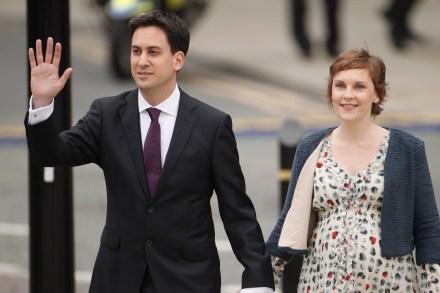
Congratulations to the Labour leader and his partner on the birth of their second son. Miliband will now take two weeks of paternity leave, during which time Harriet Harman will step into his brogues, etc. Here's the official statement: "Ed and Justine are overjoyed at the birth of their second child and can't wait to introduce the new arrival to his big brother, Daniel. Both are keen to pass on their thanks to the NHS staff at the hospital.

Strike out

From our UK edition

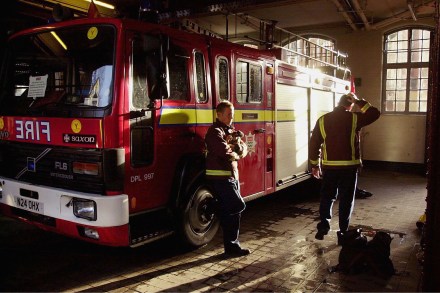
Spark up those Roman candles, the firefighters have called off their strike for today and tomorrow. According to the general secretary of the Fire Brigades Union (FBU), it's all because "we've listened to the concerns about public safety and we were extremely concerned about the capabilities of the private contractors being brought in to cover our strike" – which is awfully thoughtful of them, considering that they previously stoked those "concerns about public safety" by threatening to strike over Bonfire Night. Oh, and they appear to have won some concessions too: the London Fire Brigade will no longer sack any firefighters who refuse to accept contracts that include the disputed shift system.

Alan Johnson: this time it’s personal

From our UK edition

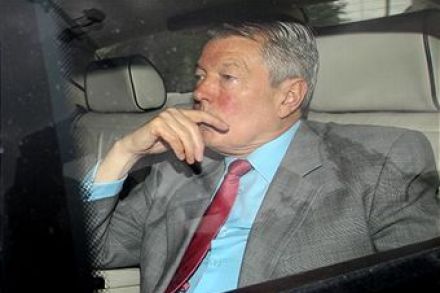
Alan Johnson has been more comic than cutting during his spell as shadow chancellor. It's not so much that he's doing a bad job, but rather that he's taken a singular approach to the biggest political issue of the day. Where Labour MPs have wanted moral outrage, he has delivered easy quips. Where the public might expect self-confidence, he has chosen self-deprecation. It may be charming, but the question is: does it win votes? Which is why it's intriguing to see Johnson change course today, via a surprisingly spiky article in the New Statesman. There is, so far as I can tell, not one intentional gag in the entire piece – but a sizeable dollop of coalition baiting. Johnson calls for a new mantra from his party: "Labour's record was good".

Cameron’s bad news day

From our UK edition

Yesterday, Nick Robinson set out why the past week may count as David Cameron's worst in office so far. It's not a great news day for the Prime Minister today, either. First up is a new report from the Commons public accounts committee. Its headline finding relates to the last government, but has stark implications for this one: only £15 billion of the £35 billion of savings identified in the 2007 Spending Review have been implemented, and only 38 percent of those have come from "definitely legitimate value-for-money savings". In other words, all those efficiency savings may not be as straightforward as you were led to believe - even if there are efficiencies to be made. Osborne & Co.

Why Ed Miliband was being deceptive over debt

From our UK edition

"Remember, our government paid down the debt before the crisis hit." That's what Ed Miliband said in a speech last Friday, and I took exception to it at the time. My point was, admittedly, quite blunt: how could the Labour leader make such a claim when debt was around £500 billion in 2006, and rising? So I'm glad that the excellent Full Fact blog has since looked into the matter, and come down broadly on my side – giving Miliband a 2-out-of-5 rating on their truth scale. But some of their wider points are worth developing, which is why I'm returning to the topic now. First, though, the observation that I made on Friday. Here's a graph which shows our national debt throughout the Labour years.

PMQs live blog | 3 November 2010

From our UK edition

VERDICT: Perhaps the snappiest exchange between Cameron and Miliband so far, with both men on combative form. Miliband's charge was that, from tuition fees to child benefit, the coalition is breaking promises that it made before the election. And Cameron's counter was that he has had to take tough action to deal with the mess that Labour left behind, and that Ed Miliband has nothing to offer to that process other than kneejerk opposition. As exchanges across the dispatch box go, that's pretty standard stuff – but at least it was packaged with some wit (although little real insight) today. A score draw. 1232: And that's it. My short verdict coming up.

The tuition fees compromise

From our UK edition

Away from the mid-terms, we have the little issue of tuition fees. David Willetts will today set out the government's response to the Browne Review, and it's expected to look something like this: a £9,000 cap on fees, but universities will have to show that they are making extra provisions for poorer students if they charge over £6,000. Students would effectively be loaned the money by the state, and would start paying it back once they earn £21,000 after graduation. It's certainly a compromise arrangement, constructed with one eye on the Lib Dems and another on the universities. For Clegg's backbenchers, there's a rejection of the unlimited fees advocated by Browne, and an overall emphasis on "fairness" and on helping the less well-off into university.

Return of the Gord

From our UK edition

Oh look, the Old Crowd are moving in on the New Generation's patch. Not only has David Miliband broken his post-defeat silence with an engaging little article in the Mail on Sunday, but we also have news that Gordon Brown is to make his first Commons speech since the general election. That's right, after 174 paid days of, erm, indiscernible activity, Gordon will tomorrow insist that maintenance on Britain's two new aircraft carriers should be carried out on a Scottish shipyard, rather than in France. Everyone else is surprised that he didn't get that written into the contracts already. The return of the Gord throws up some questions for Ed Miliband. It's not just the speech tomorrow, but rather the release of our former Prime Minister's book on 7 December.

The Lib Dems, breaking doors in anger

From our UK edition

This one, from the Mail on Sunday, needs adding to the scrapbook: "Colchester MP Bob Russell’s fury over the Coalition’s housing benefit cuts boiled over at a stormy private meeting with the Deputy Prime Minister. To the astonishment of fellow Lib Dem MPs, it ended with Mr Russell storming out and slamming the Commons’ committee room door behind him. Witnesses said last night: ‘He took the door off its hinges.' In a bizarre twist, Mr Russell’s ally and fellow Lib Dem MP Mike Hancock - himself a fierce critic of Mr Clegg - tried to spare his colleague’s blushes by creeping back the following morning to repair the door before Commons authorities noticed it was even damaged.

The Tories rally after the Spending Review

From our UK edition

It's just one poll, but today's YouGov effort for the Sunday Times seems to underline many of the themes of recent weeks. It has the Tories on 42 percent, 5 points ahead of Labour on 37 percent, and with the Lib Dems on 13 percent. So the Spending Review – accompanied, as it has been, by rows over housing and child benefits – has not yet had a precipitous effect on the Tories' poll rating. If anything, YouGov have had the blue vote rallying since 20 October. As always we should be wary of drawing too many conclusions from the shifting landscape of opinion polls and surveys, but some of YouGov's subsidiary findings could help explain the Tories' position. First up, 72 percent of respondents back the coalition's plan to impose a cap on housing benefit.

Barack Obama: suspicious packages contained explosives

From our UK edition

The terror scare surrounding two planes in the UK's East Midlands Airport and Dubai is now, officially, serious. In a statement this evening, Barack Obama has confirmed that packages on both aircraft contained explosive devices. The packages were sent from Yemen, and were headed for synagogues in Chicago. As Obama put it, this is a "credible terrorist threat" against the US. There is little detail yet, although the Yemeni connection suggests that this is an al-Qaeda plot. And the White House is not ruling out the grim possibility that there are more packages out there. Sadly, Islamist terror is casting its shadow across the West once again.

From the archives: The Cuban Missile Crisis

From our UK edition

48 years ago this week, the Cuban Missile Crisis came to an end. Here are the two Spectator leading articles that bookended our coverage of those thirteen momentous days in October: Trial of strength, The Spectator, 26 October, 1962 The West faces a grave situation. It would be absurd to think that the showdown on Cuba is only a Soviet-American affair. Rather it is the testing-ground of the determination of the freedom-loving peoples to defend themselves – one selected by Russia with a view to causing as much confusion as possible in the countries of the Atlantic Alliance and the uncommitted States. We notice one crucial point at once. The Russo-Cuban calculation has failed in the most crucial zone.

More perspective on housing benefit

From our UK edition

A useful reminder of the opinion polls on housing benefit from ConservativeHome's Harry Phibbs: "...in coming out with such hyperbole Labour show themselves to be out of touch with the voters. An ICM poll in June asked: "Do you support or oppose imposing a maximum weekly limit of £400 on Housing Benefit." Support was 68% with 23% opposed. Even among Labour voters there was strong support - by 57% to 35%. A YouGov poll in August asked: "Here are some policies the coalition government have announced in their first hundred days. For each one please say if you oppose or support it?" Among them was: "Putting a limit on housing benefit." 72% expressed support. 17% said they were opposed.

Victory or defeat?

From our UK edition

What has David Cameron achieved in Brussels so far? In truth, it's fairly hard to tell. In a meeting with his European Council counterparts last night, our prime minister didn't get the "freeze or a cut [in the EU budget]" that he mentioned last weekend. But ten other countries, including France and Germany, have now allegedly hardened their resolve not to go beyond the 2.9 percent increase that they agreed back in August. A Downing Street spokesman explains that these countries will resist the usual compromise between their 2.9 percent and the European Parliament's demand for 6 percent, when the two sides meet over the next 21 days.

Sarah Palin and the presidency

From our UK edition

It's not the confirmation that her fans are after, but it's pretty close: in an interview airing on US television this evening, Sarah Palin will say that she would run for the presidency, "if there's nobody else to do it." Which brings us neatly to this piece by John Heilemann in New York magazine, highlighted by Gideon Rachman over at the FT. In it Heilemann sets out how, despite the odds, Palin could actually triumph in 2012. It's a scenario which involves a generous sprinkling of ifs and buts, including Michael Bloomberg running as an independent candidate – but it's strangely persuasive nonetheless. Worth a read.