Patrick O’Flynn

Patrick O’Flynn

Patrick O’Flynn is a former MEP and political editor of the Daily Express

Border farce

42 min listen

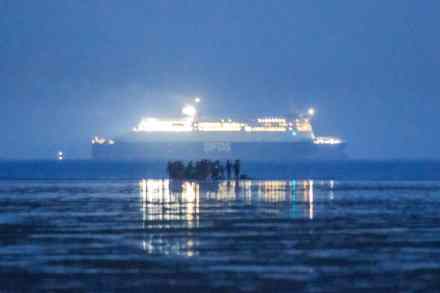
In this week’s episode: is the UK dragging its feet when it comes to Ukrainian refugees?For this week’s cover piece, Kate Andrews and Max Jeffery report from Calais, where they have been talking with Ukrainian refugees hoping to make it to Britain. Kate joins the podcast along with former MEP Patrick O’Flynn to discuss the UK’s handling of the refugee crisis. (00:48)Also this week: are commodity traders finding a moral compass?In the wake of colossal sanctions on Russia are commodity traders feeling pressured to look more critically at the people they buy from? In this week’s issue, Javier Blas, Bloomberg’s commodities columnist and the co-author of The World for Sale, reveals what’s going on in the world of commodity trading.
Why is Britain reluctant to open its doors to Ukrainians?

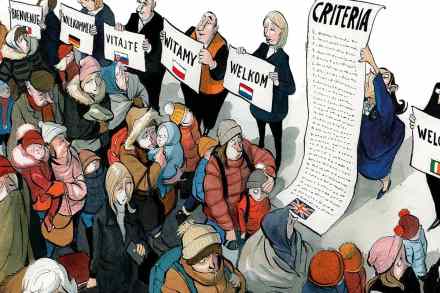
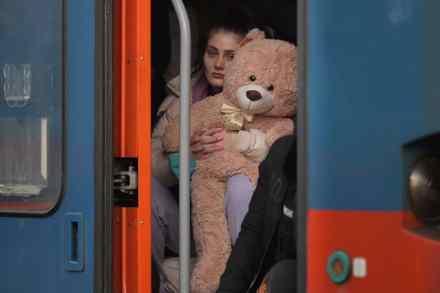
Among opposition politicians there is a new question being asked of the war in Ukraine: why has the UK not taken in more refugees? A mere 50 visas were initially issued by the Home Office. Meanwhile, Poland had taken in more than a million Ukrainians, Hungary 180,000, Slovakia 128,000 and even little Moldova 83,000. Labour shadow home secretary Yvette Cooper, whose now-ancient personal offer to accommodate refugees in one of her own homes remains mysteriously unmentioned, hit out at a Home Office update that 300 family scheme visas had in fact been issued. She branded the revised number 'shockingly low & painfully slow'. Never mind that the countries listed above actually border Ukraine, while the UK is more than 1,000 miles away.

Is Rishi Sunak any good at politics?

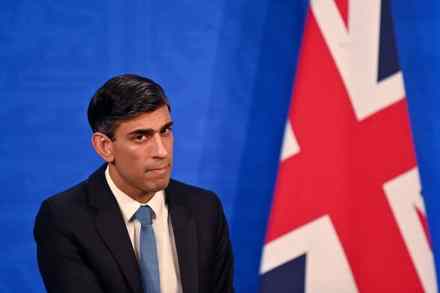
Is Rishi Sunak any good at politics? In recent days Labour sources have been putting it about that they no longer fear the prospect of the Chancellor stepping up to take over from Boris Johnson if he is forced out by partygate. According to one briefing to the left-wing New Statesman, Keir Starmer’s team has concluded that ‘Little Rishi’ is ‘crap at politics’ after observing his response to the cost-of-living crisis and now thinks that Liz Truss may prove a more formidable successor to Johnson in electoral terms at least.

Labour’s obsession with race shows no signs of fading

After a relatively successful spell attempting to side itself with ordinary folk, Labour has lurched back into hardline identity politics with a particular focus on the issue of race. Over recent days some of the party’s leading figures have stoked up the idea of Tory Britain being a hotbed of discrimination. Shadow foreign secretary David Lammy is leading the way with a call for a posthumous royal pardon of those who took part in an anti-slavery uprising in Guyana in 1823. According to Lammy, the pardon would help Britain find a ‘path to repair' in regard to its ‘acknowledgment of its role in the history of slavery’.

Will Starmer apologise for his slur against Boris?

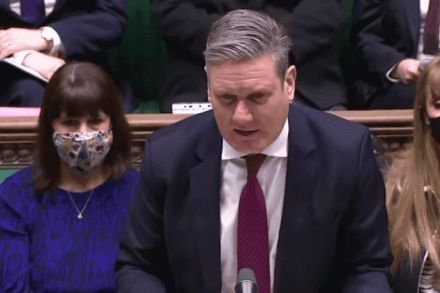
Well I don’t know about you, but I definitely heard a nasty slur flung from one leader to another during the parliamentary debate on the Sue Gray report. Not Boris Johnson’s claim that Keir Starmer had failed to prosecute Jimmy Savile while he was Director of Public Prosecutions. That was merely a pathetic, unbecoming, unwise and unfair insult thrown from a position of weakness and unattractive impetuosity. No, the insult that had me taking a sharp intake of breath was one made moments earlier by Starmer towards Johnson. It ran as follows:  'Just as he has done throughout his life, he has damaged everyone and everything around him along the way.

The great Tory Red Wall betrayal

Boris Johnson may well have to go. His own proximity to a party in his private flat in Downing Street on 13 November 2020 – the very day he fired Dominic Cummings – could be the thing that does for him. Were the police to decide that this event was a criminal breach and hand out a fixed penalty notice to the Prime Minister, it is inconceivable that Tory MPs would fail to remove him from office. But we do not have to await a police report to spot that the Tory party as a whole, Johnson included, has committed a far bigger crime: the political sin of neglecting and disrespecting the Red Wall voters who gave it a landslide majority in 2019.

The rampant egotism of Boris’s backbench MPs

The post-war Conservative statesman David Maxwell Fyfe once claimed that loyalty was the Tory secret weapon. Like many of his ideas – he was also a notable advocate of European integration – this one did not stand the test of time. Indeed, it crashed and burned when he became one of the highest profile victims of Harold Macmillan’s ‘Night of the Long Knives’ reshuffle. Jeremy Thorpe wittily characterised that brutal event as showing that a Tory leader was willing ‘to lay down his friends for his life’. These days the disloyalty primarily flows the other way in the Conservative party, with backbenchers increasingly viewing bids to topple the party leader as opportunities to improve their own profile and prospects.

Boris can’t fix the migrant crisis

British prime ministers like to deploy the armed services in civilian life because doing so is one of the few levers they can pull that seems to be attached to something that makes an actual difference. While billions extra can be thrown at the NHS with no discernible change or poured into failing public services which go on to fail again in just the same way, calling in the British Army, Royal Air Force or Royal Navy means handing a problem over to men and women of action. The forces are goal-orientated and don’t partake in go-slows, strikes, inclusivity workshops or any of the myriad other things that sap public sector productivity. Their involvement in a problem usually brings forth helpful headlines that convey the idea a tricky nettle is being grasped.

Boris’s biggest mistake was taking his allies for granted

It is often said that there are few convinced ‘Boris-ites’ to be found among the ranks of Conservative MPs and that this lack of a praetorian guard of diehard supporters is a major weakness for the Prime Minister. But a much bigger weakness is the rapid ebbing away of the ranks of Boris-ites among the public at large. Last spring, when the progressive establishment thought it had the Prime Minister bang to rights over the refurbishment of his Downing Street flat, he sailed through the controversy and on to excellent results in the big round of elections at the start of May.

How long until we tire of Boris?

The brilliant but troubled footballer Mario Balotelli once scored a goal in a Manchester derby match and then lifted up his jersey to reveal a t-shirt with the slogan: 'Why always me?' Those who had followed his chaotic career closely could have told him that being the sort of bloke who allows fireworks to be let off in his own bathroom — as he had done the night before, starting a fire that caused £400,000 worth of damage to his house — probably had something to do with it. Today Boris Johnson would seem to have pulled off a similar feat, as he faces the increasingly likely prospect of police questioning after details emerged of yet another lockdown-flouting gathering at Downing Street.

Boris’s bending of the rules won’t bring him down

Boris Johnson is a bit of a wide boy when it comes to his personal finances and the trappings of office. Though such an observation may offend some of the PM’s most ardent supporters – the kind of people who initially claimed that his outrageous attempt to get Owen Paterson off the hook was perfectly fine – it has permeated the national consciousness. No doubt the same ardent Boris-backers will happily accept he wasn't hinting at a quid pro quo when he mentioned a pet project of Lord Brownlow’s in the same WhatsApp message in which he asked about funds to bankroll his high-end aspirations for his personal living quarters.

The flaw in Starmer’s ‘patriotic’ pitch for power

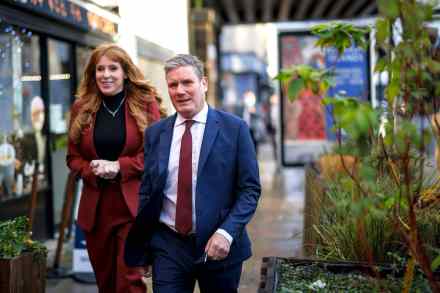
If campaign messaging is too subtle then the chances are that the electorate won’t even notice it, so in his first speech of 2022 Keir Starmer kept things very simple. Standing in front of not one Union flag, but two, an immaculately turned-out Labour leader in notably perky form told an audience in Birmingham today: 'We are patriotic.' 'The Labour party is a deeply patriotic party rooted in the everyday concerns of working people,' he added. And he sought to embody this alleged spirit of patriotism in a 'Contract with Britain' which he said would be both 'solemn' and 'binding' and based on three core principles of security, prosperity and respect.

Why have the Tories given up on fixing immigration?

In the fiercely competitive world of politics, it is not often that an opponent presents you with an Achilles heel that runs the whole way up the back of his leg. It would be even more unusual for someone presented with such a copious target to then fail to go in hard, studs-up against it. Yet both those conditions prevail in British politics today. The Labour party’s bizarre attitude towards immigration policy ought to render it utterly incapable of depriving the Conservatives of a parliamentary majority. And yet the Conservatives are conspiring to undermine rather than underline their own natural advantage on this crucial issue.

Boris’s lockdown gamble could spell big trouble for Labour

Has Boris Johnson just been thrown a lifeline by a devolution settlement that has caused nothing but trouble for UK prime ministers over the past 20 years? The PM’s decision not to impose further restrictions on social mixing before New Year celebrations has been underlined in the public consciousness by the opposite choices of devolved administrations in Scotland, Wales and Northern Ireland. Among the UK nations, only in England will people be free to indulge in New Year festivities on anything like a normal basis. In Scotland, in particular, where the occasion customarily eclipses Christmas as the key celebration of the year, there is growing resentment that Nicola Sturgeon has chosen to be a party-pooper once again.

Labour looks like a proper opposition. That doesn’t mean they’ll win

There's no point denying it, Labour is doing a bit better these days. Its poll rating is averaging a 39, which is back where it was this time last year after a long dip down into the low thirties that coincided with Boris Johnson’s 'vaccine bounce'. These days it is the Tories languishing on an average score of 33 per cent. Labour’s shadow cabinet looks more plausible as well. Rachel Reeves is a big step up from Anneliese Dodds as shadow chancellor and Yvette Cooper has been subbed in for the low wattage Nick Thomas-Symonds as shadow home secretary. Wes Streeting seems like a bit of a star in the making too in the health brief.

It’s time to end the era of forced lockdown restrictions

Monday’s Cabinet meeting held over Zoom was a fraught affair by the sounds of it. Michael Gove and Sajid Javid were reportedly the leading voices calling for more restrictions on household mixing and on the hospitality sector, while the likes of Rishi Sunak and Liz Truss argued that the data did not warrant such a draconian and retrograde step. The Prime Minister seems to have been swaying somewhere in the middle. In the end it was agreed that no new restrictions would be imposed that day but the data would be constantly analysed with a view to imposing restrictions swiftly and before Christmas if alarming trends were picked up on the burden Omicron was placing on the NHS.

Johnson is imperilled. So why are his enemies helping him?

It's a topsy turvy world when your friends and allies do you all kinds of damage and then your enemies and detractors accidentally ride to the rescue. But that’s what's going on in the life of Boris Johnson. His lax approach to the conduct of his own circle is a major factor in his popularity slump. Whether that be backing Owen Paterson, wilfully being taken in by partying Downing Street staffers or over-indulging his wife’s focus on animal rights, utopian environmentalism and support for the Stonewall agenda.  Yet now the cavalry has appeared over the brow of the hill and it is made up of people who wish to bring him down. But they serve only to remind the Tory tribe why it turned to him in the first place.

Boris’s successor should be Rishi Sunak, not Liz Truss

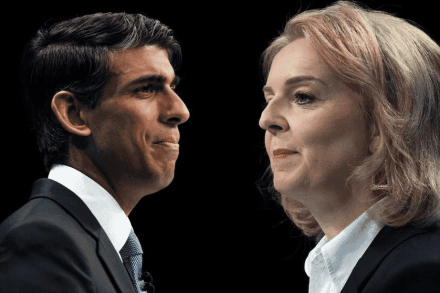
Is the ball about to come loose at the back of the scrum? Though an imminent defenestration of Boris Johnson is still just about odds-against, the chances of him leading the Tories into the next election are certainly receding. Should a leadership contest be required as early as next year it is already clear who the two leading candidates would be. The Chancellor Rishi Sunak will face off against the Foreign Secretary Liz Truss for the right to define yet another new Tory era. Truss is a total rookie in a great office of state, having been in post for just a few months. As someone yet to mark his second anniversary as Chancellor, Sunak is hardly a seasoned statesman either. But there is nobody around the Cabinet table who eclipses these two media performers.

Boris cannot ask us to sacrifice more freedoms

If Boris Johnson is brought down by his team’s lax attitude to the Covid restrictions they imposed on everyone else then Keir Starmer will be fully entitled to claim a share of the spoils. For yesterday Starmer, or more likely a scriptwriter with real political nous, delivered an understated killer of a line at PMQs. It was the kind of line that gets people thinking and gains weight as the hours pass. The Labour leader reminded Boris Johnson:  Her Majesty the Queen sat alone when she marked the passing of the man whom she had been married to for 73 years. Leadership, sacrifice – that is what gives leaders the moral authority to lead. Does the Prime Minister think he has the moral authority to lead and to ask the British people to stick to the rules?

‘Partygate’ is Boris’s biggest crisis yet

In politics some rows gain potency from blowing up at a bad time. Some because of their symbolic power. Some because of a single memorable televised gaffe that can be constantly replayed. And some because they involve very serious lapses. It is rare for a single story to encompass all of these damaging dimensions but that is the case with the furore over the Christmas Party at Downing Street last year. Veteran Tory Sir Roger Gale was probably not trying to be helpful when he told the BBC this morning that the matter had the 'potential to become another Barnard Castle'. Yet if that is all it becomes then people around the Prime Minister will surely breathe a huge sigh of relief. Because Barnard Castle, or 'Domgate', involved one official bending the rules to protect his family.