Patrick O’Flynn

Patrick O’Flynn

Patrick O’Flynn is a former MEP and political editor of the Daily Express

Will the government stand up to mob rule?

A very big week is in store for the government’s strategy to tackle illegal immigration with all eyes on the planned first air transfer of irregular migrants to Rwanda, due to take place on Tuesday. Whether the flight takes off at all and how many migrants will be on board is yet to be seen. But the policy has already attracted strong adverse commentary from leading lights in Britain’s unelected establishment, from the Archbishop of Canterbury to the heir to the throne. But another struggle over the enforcement of immigration law is being waged at ground level, with the springing up of networks of local activists seeking to prevent immigration enforcement officers accompanied by the police from detaining illegal immigrants to facilitate their deportation.

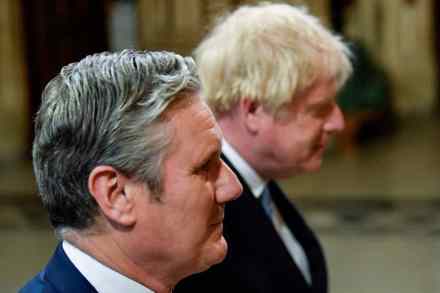
Starmer has spotted Boris’s big weakness

Boris Johnson’s relaunch speech this week contained something for everyone: a clear-sighted policy on Ukraine, the bizarre idea that stoking up housing demand is the way to overcome a shortage of housing supply and a take on the economy that one might charitably describe as a Keynesian-Thatcherite synthesis. But the most telling line came in a section about energy policy, when the Prime Minister claimed to be 'building a new nuclear reactor every year rather than one every ten years'. Not to be planning to do so, but actually to be doing so right now, in real time as it were. In Johnson’s mind, the preliminary expression of an intention to do something complicated, time-consuming and difficult clearly means it is being done.

The Tories are becoming ungovernable

Today’s no-confidence vote in Boris Johnson is best seen as the next stage of a determined long-term plot to bring him down rather than as a stand-alone event. That is to say, Johnson will not be safe or restored to anything like full political health simply by winning it. Unless he triumphs by a crushing margin, he will have been further weakened and face new waves of attacks from a Labour opposition into whose lap huge amounts of extra ammunition will have been deposited by Conservative backbenchers. One can almost already hear Keir Starmer at PMQs this week making the taunting observation that ‘more than a hundred of the people sitting behind him right now agree with most of the British people that he isn’t fit for office’.

Is the fall of Boris inevitable?

A funny thing happened on the way to the cathedral for the service of thanksgiving to the Queen on Friday. It wasn’t just that Boris Johnson got booed, it was also that Sadiq Khan got cheered. GB News solemnly reported that the Mayor of London ‘received extensive cheers from members of the public who were adorned with Union Jack hats and flags’. So who were these royalist admirers of Mr Khan and detractors of Mr Johnson? I don’t know and neither do you. Given that the mayor secured an underwhelming vote share last year and is one of Labour’s most partisan figures, it seems a stretch to think of him as a figure capable of commanding great acclaim among the monarchists of England.

Did Jeremy Corbyn win the general election?

Almost five years ago to the day, Amber Rudd had her finest hour in politics. Standing in for the frit Theresa May at the BBC leaders’ debate on May 31, 2017 – even though her father had died only two days earlier – Ms Rudd rescued a Conservative election campaign that appeared to be collapsing. Fixing Jeremy Corbyn with a confident stare, she declared: ‘There isn’t a magic money tree that we can shake that suddenly provides for everything that people want.’ The phrase was such a hit that Mrs May repeated it a week or so later after she had finally emerged from the wreckage of her ‘nothing has changed’ U-turn on the dementia tax. The Labour advance was arrested and Mr Corbyn was kept out of Downing Street.

Boris has his enemies to thank for surviving partygate

The surest way to put people off an opinion they might otherwise agree with is to get somebody they actively despise to articulate it. Yet this is what the anti-Boris Johnson political class proposes to do repeatedly in the House of Commons on Sue Gray Day, perhaps as early as tomorrow. One does not have to be equipped with the clairvoyant powers of a Gypsy Rose Lee to envisage the moralistic huffing and puffing from Keir Starmer or the death stares and withering, shivering condemnation of Theresa May that will occur as they pound away at the lockdown partying antics of Boris Johnson and his team. Leaked photographs of Johnson proposing a toast at impromptu leaving drinks held for Lee Cain during lockdown certainly seem to depict enjoyment being had, verging on outright partying.

The return of Tory sleaze should trouble Boris

For those of us who were reporting on politics way back in the 1990s, 'Tory sleaze' is a phrase that echoes down the ages. Though there had been plenty of run-of-the-mill scandals involving Tory MPs in the first couple of years of John Major’s premiership, things really took off after his 'back to basics' conference speech of October 1993. 'It is time to return to core values, time to get back to basics, to self-discipline and respect for the law, to consideration for others, to accepting responsibility for yourself and your family,' Major said. Within days the tabloid press was making merry, highlighting cases of Conservative parliamentarians apparently taking more of an interest in other people’s families than in their own.

Sticking with Boris Johnson looks like a safe bet for the Tories

Labour spin doctors this morning whisked Keir Starmer to the scene of his party’s biggest gain in the north in order to provide the TV networks with pictures of him celebrating victory. They took him to Barnet. That’s Barnet, North London. For that’s how far the red tide ran last night. It couldn’t even sweep over nearby Hillingdon, the borough that contains the Prime Minister’s parliamentary seat. And though Starmer told his activists in strangulated, overly-urgent tones that Labour had also won in Cumberland, where a new unitary council was having its first election, the list of other gains he recited – Wandsworth, Westminster, Southampton – made the point that the Red Wall had not fallen into his lap. Far from it.

Starmer’s partygate hypocrisy

Awarding themselves the unearned prize for moral superiority and assuming that the electorate will do so too is a crippling fault of the modern Labour party. Labour leader Sir Keir Starmer has just outed himself as a severe sufferer of the syndrome via the wounded tone he has taken over being questioned about the events of so-called ‘beergate Friday’ in April 2021.  In Starmer’s eyes, the venal Boris Johnson and his lackeys mock a nation by gorging on cake but when he and his entourage gather for beer and pizza in an indoor space it is merely a ‘pause for food’ and to suggest anything else amounts to ‘Tory mudslinging’.

Why Channel crossings are starting again

For a week and a half no migrants at all crossed the Channel in dinghies. A theory began to take hold that the mere prospect of migrants being transferred on to Rwanda – a plan unveiled by Home Secretary Priti Patel in mid-April – was already acting as an overwhelming deterrent to people in camps around Calais. A few rash souls broadcast this theory directly. Tory MP Andrew Bridgen, for example, boldly declared a few days back: ‘Priti’s migrant policy is working already. No illegal migrant crossing for a week and no income for people traffickers.’ Others of a more cautious frame of mind chose to add caveats, but still allowed for the possibility of success before actual implementation of the plan.

Britain needs Kemi Badenoch – but not just yet

It seems to many of us that British society is falling apart and that this – even more than our present economic difficulties – is the biggest problem politics has to deal with. This falling apart is not by accident, but by the design of a new cult of leftism that seeks to divide people into rigid identity groups ranked in a hierarchy of vice and virtue based upon the privilege they are said to have enjoyed or the oppression they have suffered.

Why the Tories can’t replace Boris with a Remainer

Readers of a certain vintage will remember the 1980s heyday of the light entertainment show Blind Date. A series of well-scrubbed young men and women would compete to be taken out by a potential paramour who was hidden on the other side of a screen. They would begin their moment in the spotlight with a tightly-scripted introduction in which they would offer their name and where they were from. The mass television audience, who had the advantage of being able to see each contestant, would very often form an instant impression based on these few seconds of exposure and its own prejudices. I have often thought this merciless formula is not a bad approximation for the challenge a new political leader faces when seeking to make an impression beyond the party faithful.

Theresa May and the new Tory awkward squad

The Tory party has always had an 'awkward squad' of MPs ready to stir up trouble against their party leadership at the slightest pretext. Its members used to be right-wingers marked out by their penchant for extravagant attire – stripey blazers and bow ties loomed large – and their failure ever to get near a career on the frontbench. These days the awkward squad is made up of a dispossessed establishment of former ministers who served under Theresa May. And it is led by May herself. When the former PM stood up in the Commons today to question Home Secretary Priti Patel about her new deal with Rwanda to take asylum seekers, it hardly came as a surprise when she immediately stated her opposition to it on grounds of 'legality, practicality and efficacy'. https://www.

The Rwanda plan could save Boris

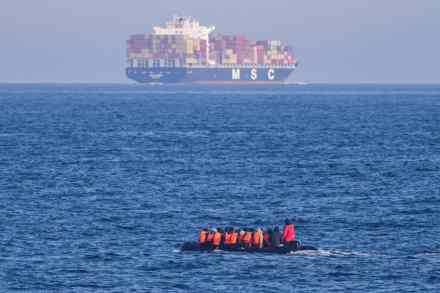
If you want to see what explosive growth looks like then I invite you to eschew all the old Covid charts and instead make your own graph plotting the number of Channel-hopping migrants year on year. In 2018 there were 299, in 2019 there were 1,843, in 2020 there were 8,466 and in 2021 there were 28,527. So far in 2022 arrivals are running at easily more than twice last year’s month-by-month tally, meaning we are heading for 60,000+ by the end of the year. Extrapolating the trend to the general election year of 2024 takes us into the ballpark of 250,000 – roughly equivalent to the entire population of Wolverhampton or Portsmouth.

Why Boris may well survive

When the original Sue Gray report was published at the end of January it seemed indisputable that Boris Johnson would be toast if he received a fixed penalty fine as a result of the partygate furore. Back then the PM was hanging on to majority support on the Tory benches in Parliament by his fingertips. He put on a disastrous, flailing-around show in the Commons chamber involving various failed attempts at distraction, such as his notorious ‘Jimmy Savile’ attack on Keir Starmer. The media clamour around alleged breaches of Covid laws by Johnson and his circle was running white hot and had garnered plenty of traction among the British public. A hitherto durable Tory poll lead evaporated in a matter of days.

It’s time to clamp down on militant protesters

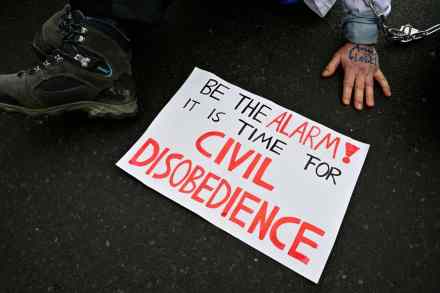
The right to protest against the policies of the government of the day, the system in general or even just to 'stick it to the man', as 1960s radicals used to put it, is fundamental to a free society. But when the freedom to protest is deliberately used by activists to take away the freedom of others to go about their normal lives then we reach an ethical crunch point. One man’s freedom has then become, as it were, another’s suppression and the law must adjudicate between the competing claims. So it is with the campaign tactics of various climate alarmist groups that have sprung up such as Extinction Rebellion, Insulate Britain and most recently Just Stop Oil.

Sulky Sunak has scuppered himself

There is a scene in one of the Lord of the Rings films in which kindly Bilbo Baggins becomes contorted with fury as he glimpses the ring around the neck of his young cousin Frodo and tries to snatch it away. This shocking loss of emotional balance reminds us of the old saying that power corrupts. It also puts one in mind of the recent snappy and petulant public displays of the hitherto mild-mannered Rishi Sunak. In his latest interview, the Chancellor has even started referring to himself in the third person – always a psychologically revealing moment in the life of a celebrity.

Does Rwanda offer the answer to Britain’s Channel migrant crisis?

Away from the well-merited focus on Ukraine, normal politics carries on in Britain. One has to poke around a bit to find it, but there are several issues, rendered all but invisible, that will weigh heavily on the minds of voters at the next general election. Rather than Russian barbarism in Ukraine, it is these things that will determine Boris Johnson's fate. Britain’s broken immigration and asylum system is close to the top of the list. Among Leave voters, it is the second most important political topic, above healthcare and defence and security. Eclipsed only by economic pressures, Boris cannot afford to ignore what is happening in the Channel.

Has Rishi been rumbled?

Poor Rishi Sunak. Within two months the Chancellor has gone from someone confident enough to publicly rebuke the Prime Minister over his choice of words to someone who merely seeks to ape them. 'I wouldn’t have said it,' Sunak grandly told a press conference at the start of February when asked about Boris Johnson’s jibe that Keir Starmer had failed to prosecute Jimmy Savile. That intervention came just minutes after Johnson had suffered the resignation of his policy chief Munira Mirza, whose husband is a close friend of Sunak’s. Events were on such a trajectory that much of Westminster, possibly including Sunak himself, expected him to be ushering in yet another new Tory era by now in the wake of Johnson’s defenestration. But it didn’t happen.

Starmer is playing into Iran’s hands

Who was to blame for Nazanin Zaghari-Ratcliffe being held captive in Iran? It shouldn’t take a professor of ethics to answer such a question. Mrs Zaghari-Ratcliffe was being held on trumped-up charges by a despotic regime that has used hostage-taking to advance its agenda ever since its formation in the Iranian revolution of 1979. Back then it was said to be 'students' who spontaneously over-ran the US embassy in Tehran and took more than 50 hostages, holding them for more than a year while the new theocratic government ruthlessly exploited the situation to humiliate the US administration of Jimmy Carter. In the case of Mrs Zaghari-Ratcliffe, at least no pretence was made that anyone other than the government of Iran was behind her detention since spring 2016.