Patrick Kidd

Patrick Kidd is former diary editor of the Times and author of The Weak are a Long Time in Politics, an anthology of his Times political sketches from 2014-19.

The Church of England’s volunteering crisis

John Betjeman knew that a church cannot run on prayers alone. ‘Let’s praise the man who goes to light the church stove on an icy night,’ he wrote in his poem ‘Septuagesima’, going on to celebrate the ‘hard-worked’ wardens, cleaners, treasurers, the organist and, most of all, ‘the few who are seen in their accustomed pew’ come rain or shine. ‘And though they be but two or three,’ he concluded. ‘They keep the church for you and me.’ In smaller churches, filling voluntary vacancies is a headache, not helped by ever-increasing bureaucracy Some vicars today may feel fortunate to garner two or three volunteers. A recent Church Times survey found a worrying decline in numbers taking on the lay roles of warden, secretary and treasurer.

The trials and tribulations of a churchwarden

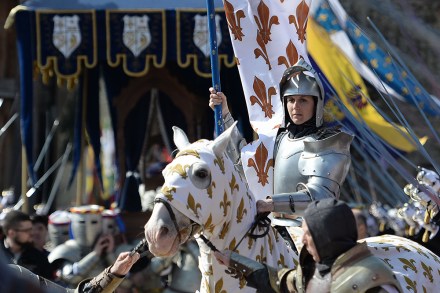
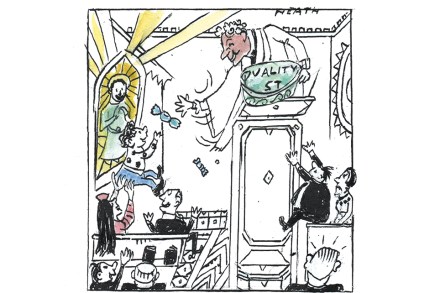
Missing: one king, answers to Balthazar. Wandered off last Epiphany with a French peasant girl who had a basket under each arm and an eye for wise men bearing gold and smellies. Could have returned to Babylon, more likely made for Lewisham. We will miss him at our church crib this year. While paintings of Jesus’s birth have been found in early Christian catacombs, the first live Nativity scene is said to have been created 800 years ago next Christmas by St Francis of Assisi as a visual aid for preaching. The idea spread, with statues replacing the living oxen, asses and shepherds. During the French Revolution, when churches were closed, one Jean-Louis Lagnel, an artist from Marseille, made clay figures of the Holy Family and supporting cast so that people could create Nativities at home.

David Amess’s long campaign to make Southend a city

The last two contributions that Sir David Amess made in the Commons were to call for a debate on animal welfare and to express disappointment that he had not been asked in the reshuffle to become minister for granting city status to Southend. They were two subjects close to his heart, which he seldom missed an opportunity to raise. 'I do not think that my honourable friend has asked me a single question in the House that has not mentioned Southend becoming a city,' remarked Theresa May on the seventh occasion, out of eight in all, when Sir David bounced to his feet in PMQs, gave his usual hopeful smile like a puppy begging for a biscuit and pleaded with her to make his dreams come true.

No blues, just reds and whites: the Oxford vs Cambridge wine-tasting

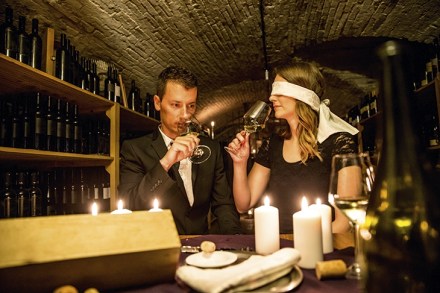
The cellar room is almost silent save for the sound of slurping and spitting and the odd gentle sigh. One woman has her head buried in a bucket, while a chap lays his on the desk before raising a hand and asking for a refill. It has the air of a rather polite orgy, only everyone is fully dressed. Welcome to the 67th blind wine-tasting Varsity match. The 14 men and women in the basement of Berry Bros & Rudd in St James’s have the most educated palates in Oxbridge. They know their D’Arsac from their Albariño. Unlike in the Boat Race, there are no blues on offer, just reds, whites and the chance to win a trip to Maison Pol Roger in Epernay where they will compete against the champion student wine-tasters of France. Aux armes! Or at least aux verres.

Christmas tales from the prison pulpit

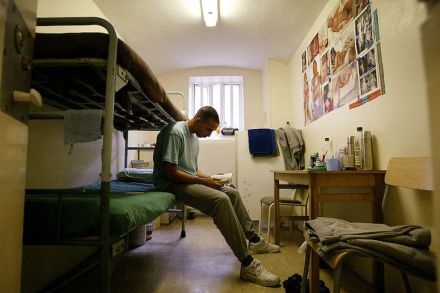
It was an unusual Christmas morning chapel service. There was a bishop, for a start, and a baptism and then, somewhere between the peace and the eucharist, two of the congregation started trying to thump each other. Boxing day, it seemed, had come early. 'It unnerved the bishop slightly,' the priest in charge admits, 'but as these things go it was a very mild flurry of fisticuffs. Punches were thrown but none landed.' The Bishop of Kensington, paying a Christmas Day visit to HMP Pentonville, may not be used to this sort of laying on of hands during the liturgy but for the Rev Jonathan Aitken, now six months into his new career as a prison chaplain, it was business as normal.

Story of the hurricane

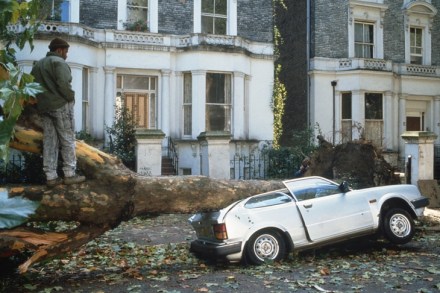
The Great Storm of 1987 doesn’t have a name like those hurricanes that devastate the Caribbean and the United States each winter — it wasn’t until Abigail in November 2015 that British storms were given a personality — but it deserves its capital letters. The worst storm to hit England since 1703 killed 18 people, felled 15 million trees, famously reducing Sevenoaks to Oneoak, and cost the insurance industry more than £2 billion. It also left the City, where trading was closed at lunchtime the next day, unprepared for the Wall Street crash that led to Black Monday on 19 October. The storm, which struck 30 years ago this Sunday, left such a mark on the nation that it even featured in the opening ceremony of the 2012 Olympic Games.