Owen Matthews

Owen Matthews

Owen Matthews is an Associate Editor of The Spectator and the author of Overreach: The Inside Story of Putin’s war on Ukraine.

The diplomat expulsion game is a pointless charade

Diplomats are poker chips. The pomp and mystery that accrues to the diplomatic and intelligence services en poste overseas conceal a simple truth: in today’s world, journalists, bankers, NGOs and bloggers are, far more often than not, better informed than diplomats about the countries in which they operate. I know this to be true in Russia – I speak to senior British and US diplomats in Moscow regularly. Believe me when I say that I can think of half a dozen veteran foreign correspondents in Russia who have considerably more extensive, diverse and senior contacts in the Russian establishment than any Western diplomatic mission.

Putin’s poison

Vladimir Putin’s spies have a dizzying variety of weapons at their disposal. This week Britain learned of a new one: Novichok, a nerve agent used in an attempt on the life of a former Russian intelligence officer in Salisbury. But Putin’s real power, far more dangerous than all the rockets and poisons in his arsenals, lies in his toxic ability to corrode truth. Putin lies, barefacedly and repeatedly. So do his acolytes. Even when the forensic evidence is massive and incontrovertible, Putin tells palpable falsehoods with easy fluency. In March 2014 he insisted that there were no Russian troops in Crimea, claiming that ‘anyone could buy’ Russian military uniforms. Within a month, he publicly thanked the troops that had participated in the annexation.

Political football

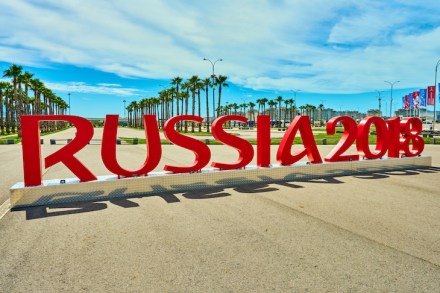
Authoritarian regimes love grand international sporting events. There’s something about the mass regimentation, the set-piece spectacle, the old-fashioned idea of nation states competing for glory that appeals to leaders who wish to show off the greatness of their country to the world. Berlin ’36, Moscow ’80, Sochi ’14 — nothing says ‘we’re here, get used to it’ better than a giant sporting jamboree. The 2018 football World Cup doesn’t offer quite the same degree of validation as an Olympic Games. But for Vladimir Putin, it’s still a major opportunity to demonstrate not only Russia’s new-found greatness but also its continued membership of the civilised world.

Turkish delights | 30 November 2017

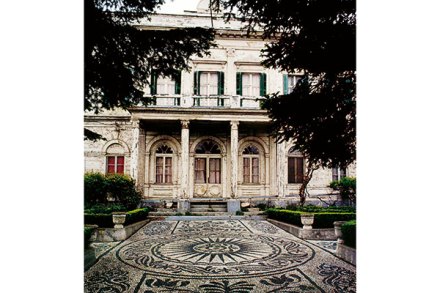
Patricia Daunt’s collection of essays is a fascinating exploration of some of Turkey’s most beautiful and evocative places, from the crumbling grandeur of Count Ignatiev’s Russian embassy summer villa on the upper shores of the Bosphorus to the remote and fog-bound manor houses of the Black Sea. But the Palace Lady’s Summerhouse is much more than a beautifully illustrated book: it’s about the people who lived — and live — in these buildings, and a portrait of the vanishing worlds they represent. We meet the gentlemanly descendants of a dynasty of grand viziers who quizzically watch the maritime traffic of the modern world passing by their ancestral waterside palace.

Ukraine’s last best hope

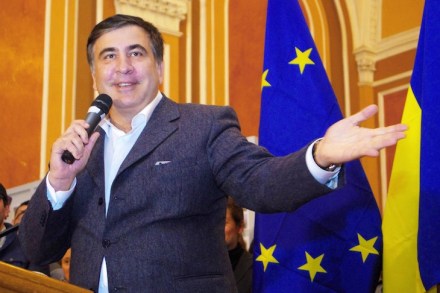
You have to hand it to Mikheil Saakashvili: the man doesn’t give up. After a tumultuous nine years as president of Georgia, which began with a furious anti-corruption purge, culminated in a short but disastrous war with Russia in 2008 and ended with accusations of embezzlement and authoritarian practices, he is determined to return to power — not in his own country, but in Ukraine. Saakashvili is brilliant and divisive. His many fans, principally drawn from the educated and the young of Georgia and Ukraine, see him as exactly the kind of clear-thinking, fearless leader who can sweep away the tangle of cronyism that has turned most former Soviet states into kleptocratic autocracies.

The hunger

In 1933 my aunt Lenina Bibikova was eight years old. She lived in Kharkov, Ukraine. Every morning a polished black Packard automobile would draw up to the door of the handsome pre-revolutionary mansion her family shared with other senior Party cadres to take her father to his job as Party boss at the Kharkov Tractor Factory. When he returned in the evening her father would be carrying bulging packets of sausages and meat from the factory canteen. Lenina did not remember wanting for anything. Yet in reality Kharkov, like all Ukraine’s cities in that terrible year, was an island of plenty in a sea of starvation. All over Ukraine millions of peasants were dying of hunger in a massive, man-made famine deliberately unleashed by the Soviet state.

Syria used to be Putin’s great asset. Now, it’s a huge liability

For Vladimir Putin, Syria has been the gift that kept on giving. His 2015 military intervention propelled Russia back to the top diplomatic tables of the world — a startling comeback for a country that had spent two decades languishing in poverty and contempt on the margins of the world’s councils. At home, the war took over as a booster of Putin’s prestige just as the euphoria over the annexation of Crimea was being eroded by economic bad news caused by low oil prices and sanctions. In the Middle East, Russia was able to show both friends and enemies that it was once again able to project power every bit as effectively as the Soviet Union had once done.

Putin’s Syria problem

For Vladimir Putin, Syria has been the gift that kept on giving. His 2015 military intervention propelled Russia back to the top diplomatic tables of the world — a startling comeback for a country that had spent two decades languishing in poverty and contempt on the margins of the world’s councils. At home, the war took over as a booster of Putin’s prestige just as the euphoria over the annexation of Crimea was being eroded by economic bad news caused by low oil prices and sanctions. In the Middle East, Russia was able to show both friends and enemies that it was once again able to project power every bit as effectively as the Soviet Union had once done.

Only obeying orders | 12 January 2017

Spare a thought for the poor Gulag guard: the rifleman standing in the freezing wind on the outside of the wire, almost as much a captive of the Stalinist prison machine as the inmates he’s guarding. Alexander Solzhenitsyn, Evgeniya Ginzburg and Varlaam Shalamov have left the world a rich, searing portrait of the Gulag from the point of view of the prisoner. But the diary of Ivan Chistyakov is unique — a narrative of the brutal conditions in Stalin’s Gulag, told from the point of view of one of the captors. Chistyakov was a senior guard at the Baikal-Amur Corrective Labour Camp or BAMLag, and he wrote his personal diary in 1935–6, just as Stalin’s henchman Naftaliy Frenkel was putting his scheme for mobilising convict labour into high gear.

Red faces

How to celebrate the centenary of the Russian revolutions of 1917? Modern Russians are deeply divided over the legacy of that tumultuous year. Russia’s few remaining liberals remember that the overthrow of the tsar in February 1917 ushered in a flowering of the artistic avant-garde, a brief period of feminism, liberal values and democracy. Putin supporters, on the other hand, have been convinced by years of state television propaganda that popular revolutions are by definition dangerous and anarchic, and usually orchestrated by dark outside forces. Whether in Maidan Square in Kiev in 2013, Tahrir Square in Cairo in 2011 or Palace Square in Petrograd in 1917, the very idea of the people taking power into their hands is anathema to the Kremlin’s ideologues.

Moscow rules

 Moscow To the Union Jack pub on Potapovsky Lane for a US election night party. The jolly Muscovite Trump supporters who organised the event had gone to the effort of providing girls with tight--fitting Trump-Pence T-shirts and Make America Great Again baseball caps. In pride of place beside the bar hung a specially commissioned triptych of oil paintings — heroic Soviet-style portraits of Russia’s new heroes: Vladimir Putin, Donald Trump and Marine Le Pen. Among the guests were a group of young men from Tsargrad TV, Russia’s popular new Orthodox nationalist channel. Sporting neatly trimmed beards and sharp suits, they were a Russian version of Republican evangelicals.

Russia’s puritan revolution

Last weekend a group of young activists turned out on a Moscow street to protest against western decadence. They were a hard-faced bunch, standing defiantly in military poses and wearing uniforms bearing the logo ‘Officers of Russia: Executive Youth Wing’ as they blocked access to an exhibition by American photographer Jock Sturges that featured images of nude adolescents. ‘We are here to protect people from paedo-philic influences,’ one Officer of Russia told journalists — while another protester sprayed the offending photographs with urine.

Russia’s dumping ground

Almost as soon as Siberia was first colonised by Cossack conquistadors in the 17th century, it became a place of banishment and punishment. As early as the 1690s the Russian state began to use Siberia as a dumping ground for its criminals, as though its vastness could quarantine evil. Katorga — from the Greek word for galley — was the judicial term for a penal sentence where inmates performed hard labour in the service of the state. The sentence was commonly imposed in place of death from the reign of Peter the Great onwards. And in many ways Siberia truly was a House of the Dead — as Daniel Beer, who borrows the title of Fyodor Dostoevsky’s prison novel for his masterful new study, recounts in horrific and gripping detail.

Bear baiting

Oh those Russians. When they’re not beating up English football fans, they’re cheating at the Olympics. They occupy other countries and shoot down civilian airliners, then pretend it wasn’t them. They’re helping Assad win the Syrian civil war. They’re even driving up London house prices. There’s no infamy, apparently, of which Russians are not guilty. ‘OK — we did do all those things,’ admits a Moscow broadcaster friend, a little sheepishly. ‘But everyone else does them too! We’re the only ones to get punished, because everyone hates us.’ Since the annexation of Crimea in 2014, Russians have become the world’s official pariahs.

Putin’s great game

[audioplayer src="http://rss.acast.com/viewfrom22/putinsendgameinsyria/media.mp3" title="Putin's endgame in Syria"] Listen [/audioplayer] Russia’s bombing of the city of Aleppo this week sent a clear message: Vladimir Putin is now in charge of the endgame in Syria. Moscow’s plan — essentially, to restore its ally Bashar al-Assad to power — is quickly becoming a reality that the rest of the world will have to accept. America, Britain and the rest may not be comfortable with Putin’s ambitions in the Middle East, or his methods of achieving them. But the idea of backing a ‘moderate opposition’ in Syria has been proved a fantasy that leaves the field to Putin and Assad.

How Putin outwitted the West

Saddam Hussein hanged: is Iraq a better place? A safer place? Gaddafi murdered in front of the viewers: is Libya a better place? Now we are demonising Assad. Can we try to draw lessons? — Sergei Lavrov, Russian foreign minister, United Nations, 1 October Russia was right about Iraq and Libya, and America and Britain were dead wrong. Regime change doesn’t seem to have changed Middle Eastern countries for the better, as Vladimir Putin has been warning for years. His policy is not to support any armed groups ‘that attempt to resolve internal problems through force’ — by which he means rebels, ‘moderate’ or otherwise.

Putin and the polygamists

Homosexuality may not be tolerated in today’s Russia, nor political dissent. Polygamy, though, is a different matter. Ever since news broke this summer of a 57-year-old police chief in Chechnya bullying a 17-year-old local girl into becoming his second wife, Russian nationalists and Islamic leaders alike have been lining up to call for a man’s right to take more than one wife. Most vocal has been Ramzan Kadyrov, the flamboyant 38-year-old president of Chechnya (part of the Russian Federation), who advocates polygamy as part of ‘traditional Muslim culture’. Veteran ultranationalist politician Vladimir Zhironovsky has long held that polygamy is the solution for ‘Russia’s 10 million unmarried women’.

Panic, profiteering and a mysterious girl in a Mini: notes from Moscow

 Moscow Here we go again. The rouble slides, then tumbles, and slides again. For those of us who remember the crash of August 1998, the drill is familiar. For Muscovites, the old instincts have surfaced from the 1990s like a sausagey burp. Shoppers besieged Ikea, Auchan and other mega-markets, desperate to spend rapidly devaluing roubles. Cynical expatriates such as myself did much the same with our newly inflated hard currency. I cleared my local posh wine shop of a thousand bucks’ worth of Burgundy, now half-price in dollar terms. A correspondent colleague raided the Moscow Apple store to the tune of two iPhones and a pair of laptops before they shut down to recalculate prices.

Letter from Donetsk: peace, with missile attacks

For what is technically peacetime, there’s a lot of shelling going on round here. Donetsk airport is still held by the Ukrainian army and the rebels of the Donetsk People’s Republic bombard it furiously every day. The Ukrainians reply by lobbing back artillery shells and Grad missiles. Both sides bristle with anti-tank and anti-aircraft missiles, so the war is a static one, fought by a series of artillery duels, first world war-style. Underneath the smart new airport built by Turks for the Euro 2012 championships is a warren of deep Soviet-era bunkers and tunnels, where the Ukrainian defenders retreat with their howitzers when the barrages get too heavy. Construct your own metaphor: deep, indestructible veins of the past lying underneath the fragile modernity of the present.

Meet Vladimir Putin’s real challengers (they’re even worse than he is)

Strange times throw up strange heroes — and in Russia’s proxy war with Ukraine, none is more enigmatic than the Donetsk rebel leader Igor Girkin, better known by his nom de guerre of Igor Strelkov. In a few short months, Strelkov has gone from being an obscure military re-enactor to the highest-profile rebel leader in eastern Ukraine. But at the same time Strelkov’s fame and outspoken criticism of Vladimir Putin for failing to sufficiently support the rebels has earned him the enmity of the Kremlin. Moreover, Strelkov’s brand of sentimental ultra-nationalism, extreme Orthodoxy and Russian Imperial nostalgia offer a frightening glimpse into one of Russia’s possible futures.