Oliver Wiseman

China erupts. What happens next?

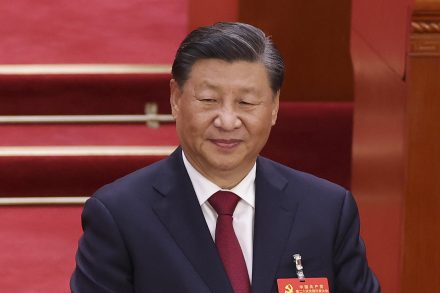
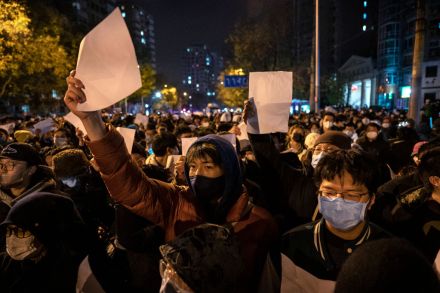
China erupts. What happens next?  In the last few days, growing Chinese frustration at the country’s draconian zero Covid policy has bubbled over. Just weeks after Xi Jinping set his regime on an even more authoritarian and nationalistic course at the Chinese Communist Party’s twentieth national congress, protests have erupted in cities across China. The proximate cause of this wave of anger seems to have been a fire in an apartment block in Urumqi, a city in Xinjiang. Ten died and footage appears to show lockdown measures delaying firefighters trying to save the residents’ lives. And the scale of the protests make this the most significant expression of dissent in China in years.
Biden pays back younger voters

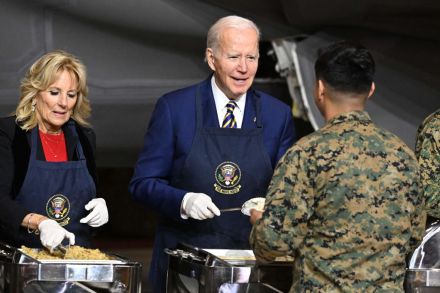
Biden repays younger voters With his student debt forgiveness plans now blocked by courts, Biden has extended the “emergency” freeze on federal student payments. The freeze was set to expire at the start of 2023 but will now run until June. In a video message yesterday, Biden said he was “completely confident” that his debt forgiveness plan was legal, and that the Supreme Court would soon clear up the confusion. (We’ll see about that.) Until then, the president argues, it would be unfair to expect graduates to resume their payments. I won’t rehash the arguments against forgiveness here (illegal, unfair, regressive), or do any more than point out the absurdity of the idea that we are really still in a “national emergency” at the moment.

A bipartisan case for taming TikTok

A bipartisan case for taming TikTok Lawmaker warnings about the social and national security hazards of TikTok, the Chinese-owned social network, aren’t new. But it has invariably been Republicans expressing their concern. That, though, is changing. On yesterday’s Sunday shows, two senators — one Republican and one Democrat — used their appearances to label the app a Chinese surveillance tool. On Fox News Sunday, Arkansas Republican Tom Cotton called TikTok “one of the most massive surveillance programs ever, especially on America’s young people.

Pelosi bows out

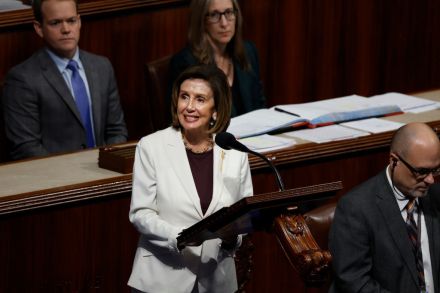
Pelosi bows out “The hour’s come for a new generation to lead the Democratic caucus that I so deeply respect,” said Nancy Pelosi when she announced she would not be seeking re-election to leadership in a speech on the House floor Thursday. Steny Hoyer will also be stepping aside. This changing of the guard moment hardly comes as a big surprise. Pelosi, now eighty-two, has led her party in the House for two decades. But the smoothness of the transition to a new generation is striking. Brooklyn congressman Hakeem Jeffries is set to take over having been a long-standing favorite of Pelosi’s and the heir apparent in the eyes of his party. He formally announced his candidacy this morning with a letter to colleagues.

He’s running

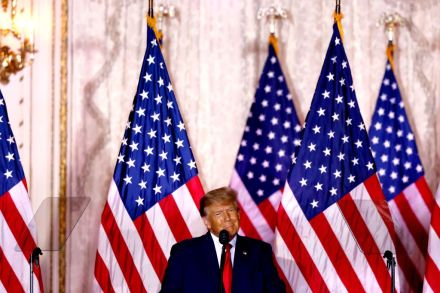
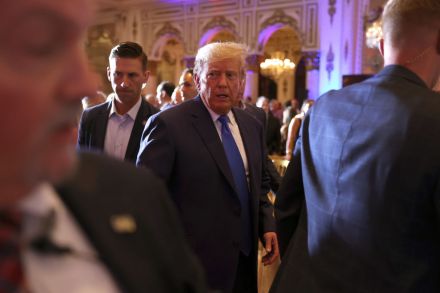
He’s running Politics is a game of unwritten rules. In announcing his bid for a return to the White House at Mar-a-Lago last night, Donald Trump is betting that those rules haven’t changed quite as much as it has seemed in the days since the midterms. By pledging to “make America great and glorious again,” Trump is making a two-part and paradoxical gamble. First, Trump is banking on one of the oldest rules in the book: the power of incumbency. Despite what you might read in QAnon chatrooms, Trump is not the sitting president. But his unusual position of ex-president running for election means he is running on his track record. Evidently he and his team think that is their best bet.

When Biden met Xi

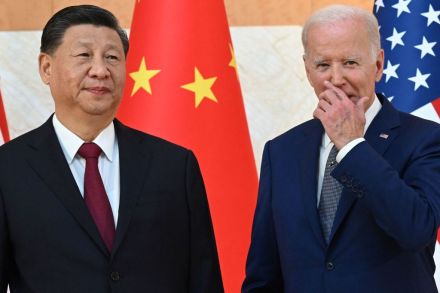
When Biden met Xi Joe Biden’s meeting with Xi Jinping this morning was arguably the most important of his presidency so far. The two leaders spoke for more than three hours ahead of the G20 summit in Bali. It is their first in-person meeting since Biden became president and it comes at a low ebb for US-China relations. The aim appears to have been to deliver a reassuring message of deescalation and cooperation. “I absolutely believe there need not be a new Cold War,” said Biden after the meeting. “We’re going to compete vigorously, but I’m not looking for conflict. I’m looking to manage this competition responsibly.

A tale of two post-midterm missives

A tale of two post-election missives With the votes still being counted and Republicans coming to terms with Tuesday’s disappointing results, the last few days have seen the publication of two very different score-settling memos. The first was from Mike Pence on Wednesday. Writing in the Wall Street Journal, Pence divulged new details about his “last days with Donald Trump” Pence details his interactions with the former president in the days between the 2020 election and Inauguration Day in January 2021. He paints a picture of Trump losing patience with his VP. Pence recounts a conversation on the morning of the day Congress was set to certify the election results: I rose early that day and worked on my statement to Congress. When the phone rang a little after 11 a.m.

Red ripple

Red ripple The red wave wasn’t to be. As I write, control of the Senate and the House both remain up for grabs. It looks likely that the Republican Party will grab control of the House while John Fetterman’s victory in Pennsylvania gives Democrats the upper hand in the battle for the Senate. The ramifications of a disappointing night for Republicans will be wide-ranging. To name a few, the results underscore the need for the party to move on from Donald Trump (more on that below), call for a rethink to the GOP message on abortion and leave House minority leader Kevin McCarthy with a much more complicated route to the Speaker’s chair. I was at what was supposed to be a raucous victory party thrown by McCarthy in downtown Washington last night.

Ron DeSantis

Donald Trump is an albatross around the Republican neck

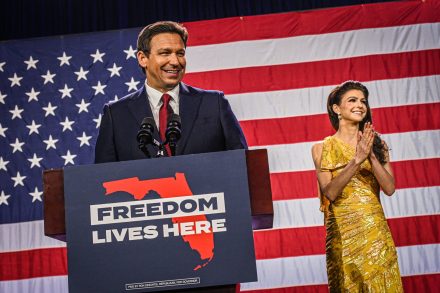
Donald Trump spent the days immediately before the midterms teasing and threatening his biggest Republican rival, Florida governor Ron DeSantis. At a rally in Philadelphia, he coined the nickname Ron DeSanctimonious. Then, on the night before the election, flying in his 757 from Ohio to Florida, he said that he thought a DeSantis presidential run would be a “mistake,” that “the base would not like it” and that “if he did run, I will tell you things about him that won’t be very flattering. I know more about him than anybody other than perhaps his wife, who is really running his campaign.” DeSantis said nothing. Instead, he let the voters do the talking. And their voice was heard very clearly last night.

Blake Masters grows up

In the clusters of billboards at intersections in Phoenix, positioned to grab the attention of drivers waiting for the lights to change, one candidate’s signs stand out. In a familiar red-white-and-blue collage of names, stars and stripes, the crisp bold-type white lettering on a black background reads: “BLAKE MASTERS FOR SENATE.” The monochrome placards are one of many conspicuous displays of disruption by Masters, the thirty-six-year-old Peter Thiel acolyte hoping to topple Arizona Democrat Mark Kelly. The video with which he launched his campaign last summer was starkly shot and melancholic: the Sonora desert at dawn and a synth-y soundtrack, not the in-your-face, truck commercial aesthetic that is par for the course on the right these days.

blake masters

Is democracy on the ballot tomorrow?

Is democracy on the ballot?  Joe Biden has chosen to make his final pitch to voters all about democracy. That was the subject of his speech in Washington last week. The hastily scheduled event bore all the signs of being the president’s own idea. He returned to the democracy theme on the campaign trail this weekend, including at a big rally in Philadelphia with Barack Obama on Saturday. “Democracy is on the ballot,” Biden said on Thursday. In California yesterday, he said “you can’t call yourself a democracy or supporting democratic principles if you say, ‘the only election that is fair is the one I win.’” There’s a lot not to like about Biden’s democracy rhetoric.

Why these midterms will be the crime elections

The crime elections The District of Columbia’s City Council might seem a strange place to start a political newsletter a few days out from the midterms. As Democrats will never miss an opportunity to remind you, voters in Washington, DC will not get a say in a race that will help decide control of Congress. But a meeting of city leaders this week is an instructive part a national story that will be central to next week’s vote. On Tuesday, the DC Council voted 12-0 to support a rewriting of the capital’s criminal code. Reforms include reduced mandatory minimum sentences, the expansion of the right to jury trials for most misdemeanors, a broadening of the opportunities for early release and the elimination of accomplice liability in felony murder cases.

The meaning of Biden’s midterm meandering

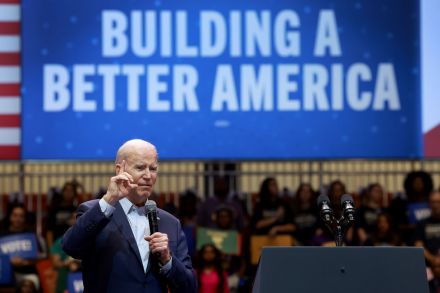
What Biden’s midterm meandering reveals On Tuesday night, Joe Biden characterized next week’s midterms as “a choice between two vastly different visions for America.” It is just one of the ways in which Biden has painted the vote as a high-stakes contest. Earlier in the year, the focus was on “ultra-MAGA” Republicans with the November contest framed as a “battle for the soul of America.” Now he has fallen back on a tried-and-tested Democratic strategy of fear-mongering over Republican designs on Medicare and Social Security. Hardly an indicator that the president and his party think things are going well. But as striking as Biden’s closing message is, where he is delivering it really drives the message home.

All signs point to a red wave

All signs point to a red wave It’s now just under two weeks until the midterms. Judging by the mood music on both sides of the aisle, all signs point to a very good night for the Republican Party. In the last few weeks, Democratic anxiety that their summer bounce had faded has morphed into something approaching a full-blown panic. The party’s closing message has shifted away from abortion and democracy — themes that many Democrats had hoped could deliver a stronger-than-expected showing come November — and onto the economy and healthcare. Look at the flight paths of the party’s big beasts as well as where last-minute money is being spent, and it all indicates a party playing defense — and struggling.

The Alaska GOP votes to punish Mitch McConnell

What to watch for in the governors’ races Given the razor-thin margins and an array of races that range from the compelling to the indecent (more on that later), the focus during these midterms has been on the Senate. That’s understandable, if not inevitable. But in thirty-six states, voters will also be selecting their next governor. Those races are of great local significance, of course. But they are also part of the national picture. Here are some of the trends to watch. Blue-state blues It’s possible that the most eyebrow-raising result come election night is not in a closely watched swing state like Georgia or Pennsylvania, but in deep-blue New York.

Joe Biden starts to swing at Elon Musk

Lessons from Liz Ever wish your politics were a little more British? As Liz Truss heads to the exits after just six weeks in power, making her the shortest serving prime minister in the country’s history, that may seem a strange question. Westminster shenanigans feel more ignominious than enviable at the moment. Not to my colleague Matt Purple. Observing the Downing Street meltdown from Washington, he wonders what it must feel like to hold incompetent leaders accountable. He writes: If British politics has lately been ugly, grant it this much: at least they don’t have to stand for bad leaders. Truss was never a saint or a sun god; she was merely the current leader of the Conservative Party. Ho hum.

The Democrats become the MSNBC party

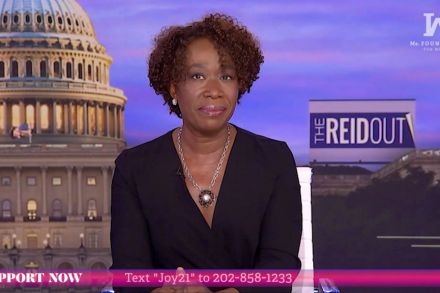
The MSNBC party Today’s diary begins with a tweet from MSNBC host Joy-Ann Reid. For that I apologize. But with the midterms looming, and Democrats getting nervous, one of her hyperbolic missives was notably typical of left-wing frustration: “It’s terrifying how many Americans will choose literal fascism, female serfdom, climate collapse and the reversal of everything from Social Security & Medicare to student loan relief bc they think giving Republicans the power to investigate Hunter Biden will bring down gas prices.” These are the ramblings of someone living in a hyper-partisan bubble. They exaggerate and demonstrate a complete lack of understanding of, or even curiosity about, their ideological opponents’ appeal.

Xi, Biden and a changed world

Biden knows that the world has changed Yesterday, while Joe Biden was picking up some competitively priced work outfits at a strip mall in Delaware (more on that later), Xi Jinping took to the stage in Beijing to deliver the opening address of the Chinese Communist Party conclave at which he is set to extend his rule into a second decade. Over more than two hours, Xi set out an uncompromising, nationalistic path for China’s future. The longest applause came as he took a hard line on Taiwan: “The wheels of history are rolling on toward China’s reunification and the rejuvenation of the Chinese nation. Complete reunification of our country must be realized, and it can, without doubt, be realized.

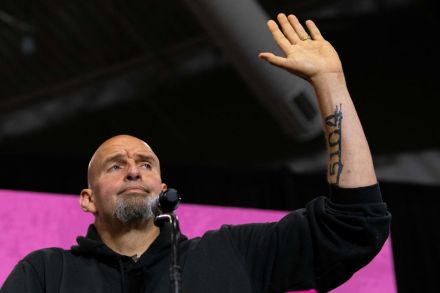
The Fetterman fuss about nothing

The Fetterman fuss about nothing This week, John Fetterman sat down for his first on-camera interview since he suffered a stroke just a few days before the Democratic primary in May. Fetterman’s circumstances — running for Senate while recovering from a major medical incident — are highly unusual. Dasha Burns and her NBC colleagues conducted an exemplary interview given these circumstances. They allowed Fetterman the use of closed caption software that he says he needs to overcome the auditory processing difficulties he has dealt with since the stroke. In questioning Fetterman about his health, Burns was tough but sympathetic.

Meet the Democratic misfits

Misfit Democrats This week, almost identical critiques of the Democrats’ midterms strategy came from two surprisingly different sources. Leftist senator Bernie Sanders expressed his “alarm” at the idea that Democrats could “cut the thirty-second abortion ads and coast to victory.” It would, he said, “be political malpractice for Democrats to ignore the state of the economy.” Former Bill Clinton strategist James Carville agreed: “A lot of these consultants think if all we do is run abortion spots that will win for us. I don’t think so. It’s a good issue. But if you just sit there and they’re pummeling you on crime and pummeling you on the cost of living, you’ve got to be more aggressive than just yelling abortion every other word.

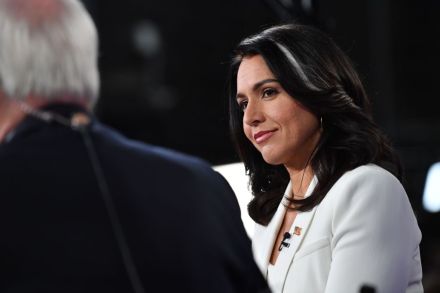
msnbc tulsi gabbard