Norman Lebrecht

Playing dirty?

From our UK edition

A young Korean, 22 years old, won the Dublin International Piano Competition last month. Nothing unusual about that. Koreans and Chinese, raised in a school of hard knocks and rounded off in western conservatories, are winning most prizes. A few — like the phenomenal Lauren Zhang who made child’s play of Prokofiev’s second piano concerto in the BBC Young Musician of the Year — are prodigious talents with bright futures ahead. Dublin’s winner Sae Yoon Chon is probably not one of them. His Prokofiev, an effortful shadow of Zhang’s electrification, trundled along at pedestrian pace with one or two stumbles. I was therefore surprised to see that Chon won. I also noticed that he is a student of the jury chairman.

Restoration man | 3 May 2018

From our UK edition

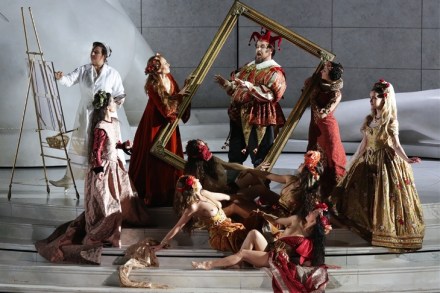
As the curtain opens on the second act of Don Pasquale, I hear a rustle of discomfort. Donizetti’s opera has not been seen at La Scala since 1994. Its restoration, on the orders of a new music director, sets off a critical flutter and Davide Livermore’s new production, set in the Cinecittà film studio during the 1950s dolce vita, seems designed to tweak the Roman nose of national vanity. Italy is supposed to be a serious country these days, burying buffoonery and hedonism among the Coliseum ruins. Even Silvio Berlusconi is seen as an archaeological relic, not to be disturbed. So Riccardo Chailly’s embrace of opera buffa in his first full season as music director provokes the kind of disquiet that we might feel if Covent Garden reinstated Gilbert and Sullivan.

‘I was really, really scared’

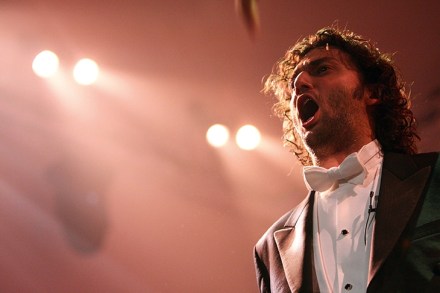
‘Hi, it’s Jonas.’ When the great tenor rings from Vienna, I ask if there are any topics he wants me to avoid, such are his minders’ anxieties. ‘Ask anything,’ laughs Jonas. ‘I’m not shy.’ He is heading in from the airport to see a physio — ‘these concerts, you have to stand there all the time’ — before taking Hugo Wolf’s Italian Songbook on a seven-city Baedeker tour: Vienna, Paris, London, Essen, Luxemburg, Budapest, Barcelona. I wonder if he is aware that Wolf is a hard sell to English audiences. ‘Not just the English,’ he replies. ‘Even in Germany promoters say to me, please don’t do a Wolf-only recital, no one will buy tickets.

Sex, lies and conductors

From our UK edition

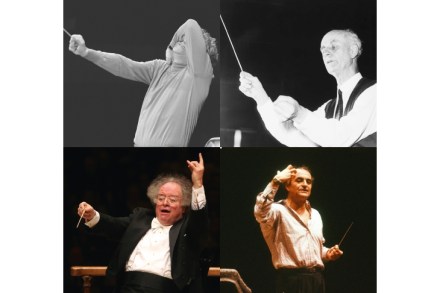
I once knew a great conductor who claimed that he never boarded a plane to a new orchestra without a tube of lube in his pocket. Just in case he got lucky (which he often did). Conductors are migratory birds who fly where their agents point them, hopping from one hotel bed to the next. There is no shortage of bright young things on an orchestra’s staff and besotted fans backstage who are open to a wink and the whisper of a room number. A maestro is never alone for very long. Sex is one of the perks of conducting. Mostly, it’s consensual. My middle-aged maestro would sit up half the night reading poetry to a young woman before he made anything so crass as a lunge. Down the years, there have been few complaints about maestro sex. Seduction techniques vary.

The Chinese are coming

From our UK edition

On a bullet train out of Shanghai, a nuclear family catches my eye. The father, weather-beaten and wearing an ill-fitting suit, is clearly a working man. His wife, younger and city sleek, is dressed to impress. Their son, an only child, is four or five years old. Curious, I get talking and discover they are from a northern city, near the Russian border. What were they doing in Shanghai? Entering the boy in a piano competition. The number of children learning to play the piano in China varies from 40 to 60 million, depending on who you ask. Walk through a tower-block residential area in Shanghai at five in the afternoon and you can hear the clangour of many hands playing scales.

Rattle’s hall

From our UK edition

Even in a Trump world where reality is what you say it is, the London Symphony Orchestra’s announcement of a new concert hall occupies a bubble of pure fantasy. New York architects Diller Scofidio + Renfro have been awarded a contract for a project that has no funding. Concert hall, what concert hall? The only cash on the table is £2.5 million from the Corporation of the City of London. The hall is hot air. There has been no public consultation, no actuarial study of demographic need, no consideration of best possible sites or size. There is not even a consensus within the classical sector that a new hall is a top priority when audiences consistently fail to fill the Barbican and Royal Festival Hall.

Director’s cut | 21 September 2017

From our UK edition

Much fuss has been made of the title given to Sir Simon Rattle on arrival at the London Symphony Orchestra. Unlike his LSO predecessors — Valery Gergiev, Colin Davis, Michael Tilson Thomas, Claudio Abbado, André Previn — all of whom were engaged as principal conductor, Rattle has been named music director, a position that bears serious administrative responsibilities. As Rattle put it recently in one of a dozen media interviews: ‘Valery wasn’t interested, nor Claudio. Colin loved them to bits, but he made it very clear that he did not want anything to do with the running or the auditions or the personnel… I will be much more involved with the day to day.’ But will he?

Who is Kirill Petrenko?

From our UK edition

Two summers ago, the BBC were offered a Proms visit by the Bavarian State Orchestra with its music director, Kirill Petrenko. The conversation went something like this. BBC: ‘Petrenko, isn’t he the chap that conducts Liverpool?’ Munich: ‘No, that’s Vasily Petrenko. This one is Kirill.’ BBC: ‘Well, we don’t really know about him over here. He won’t sell at the Proms.’ Barely was the snub delivered than Kirill Petrenko was elected music director of the Berlin Philharmonic, the most coveted orchestra on earth, and the music biz had a good laugh at the BBC’s dumb insularity. But let’s not be too beastly to the BBC: its ignorance was universally shared.

Barenboim’s Brexit speech was out of order – the Proms are, and must be, politically neutral

From our UK edition

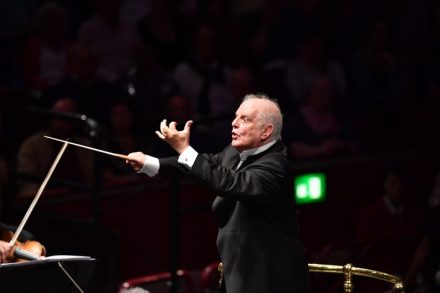
This post was first published on Slipped Disc On the first night of the BBC Proms, the German-based pianist Igor Levit played Beethoven’s Ode to Joy in Liszt’s solo-piano reduction as a token of his opposition to Britain leaving the EU. His was a reasoned and reasonable gesture by an artist who has strong views and wished to express them in music alone. Not so Daniel Barenboim who, before his Prom last night, announced that ‘Elgar makes the best case against Brexit … because he was a pan-European composer' and then, from the podium, after a performance of Elgar's Second Symphony, added 'isolationist tendencies and nationalism in its very narrow sense is something that is very dangerous'. This was out of order.

Council of despair

From our UK edition

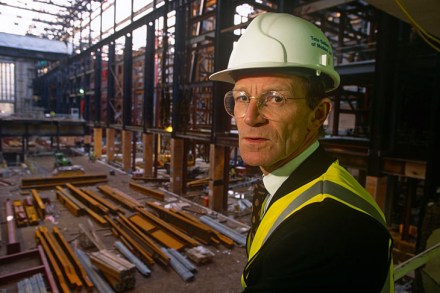
Amid the general political turmoil, a flutter of hope has greeted the arrival of Sir Nicholas Serota as chairman of Arts Council England, an organisation of fading relevance. Sir Nick, grand impresario of the Tate galleries, started life as an Arts Council gofer in 1969, taught to hang pictures by the flamboyant David Sylvester, friend of Lucian Freud, Bacon and Giacometti. Sylvester was one of many outsized brains that fuelled the quango in its heyday. Think Stuart Hampshire, Alan Bullock, Marghanita Laski, Richard Hoggart. No one like that left now. Might Serota signal a revival? The omens are not auspicious. In the past 20 years, the Arts Council has shed most of its ethos. The rot began in 1997 when the incoming Blair regime demanded social reform in exchange for state cash.

In defence of Mahan Esfahani

From our UK edition

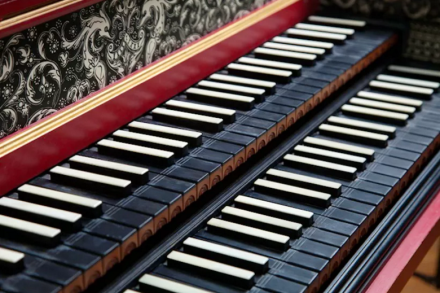
Seven years ago I ripped the CD off the front of a music magazine and found myself in the thick of a Poulenc concerto that was being played as if life depended on it. Now Poulenc is the acme of laid-back and the solo instrument, the harpsichord, had been consigned to the junkshop before young Brahms was running errands for ladies of the Reeperbahn. This recording was, for me, an act of instrumental resurrection. So I tracked down the harpsichordist, Mahan Esfahani, by name, and took him to breakfast. He turned out to be young, gay, Iranian, Presbyterian, Stanford-educated, restlessly intellectual and altogether full-on. What’s not to like?

Secrets and spies

From our UK edition

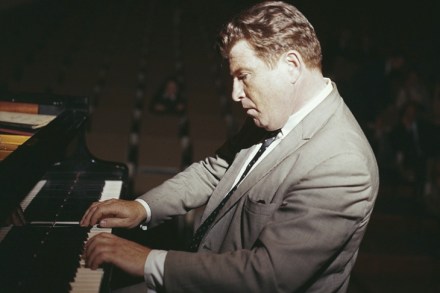
Spare a thought for Emil Gilels, still revered today by Russians as the foremost pianist of the Soviet era. The first to win a competition abroad (Brussels, 1938), Gilels was also first to be let out after Stalin died to reconnect cultural ties and earn hard dollars for the state coffers, of which he got back a few cents. Universally acclaimed, Gilels made countless recordings, among them an unsurpassed pair of Brahms concertos on Deutsche Grammophon and a transcendent set of Grieg’s Lyric Pieces, a performance so revelatory I use it to demonstrate the inexpressible difference between an interpreter of genius and all the rest. Gilels, abroad, played the role of Homo Sovieticus. At home, he was a haunted man.

The decade the music died

From our UK edition

For much of the past half-century, London has been the world’s orchestral capital. Not always in quality, but numerically without rival. Five full symphony orchestras and twice as many pint-sized ones kept up a constant clamour for attention. Each month brought new recordings with premier artists. Every orchestra had its own ethos, history and thumbprint. The Philharmonia was moulded by Karajan and Klemperer, the London Philharmonic by Boult and Tennstedt, the Royal Philharmonic by Beecham, the BBC by Boulez and the London Symphony Orchestra by its high spirits. Tales abound of maestros departing with a punch on the nose and beer bottles rolling in rehearsal. All of which added greatly to the sum of human happiness. London musicians, always cheap, learned to be quick.

Musical maestros and football managers have more in common than you think

From our UK edition

You don’t have to be a follower of Liverpool Football Club, or football at all, to spot the difference. Two months ago the Reds were running about headless as a newly wrung chook; today they are putting the fear of perdition into the best teams in the land. Or take Leicester City. Last season they were locked in an epic, desperate small-town struggle for Premiership survival. Today, they are top of the League. What changed? Both teams have the same players as before, same strip, roughly the same formation. The only new face is the manager’s. Change the boss and — presto — the mood picks up, tempi get faster, goals are scored, confidence rises and everyone charges around with a smile on their chops.

Maestro maker

From our UK edition

When Margaret Thatcher imagined perfect power, she thought of the orchestral conductor. ‘She envied me,’ said Herbert von Karajan, ‘that people always did what I requested.’ Power, however, is a mirage that fades as you get close. What Mrs Thatcher saw were the trappings, never the essence. Great conductors might get the glory, but someone else pulled the strings. Behind every power there is a greater force. Behind every conductor, there was Ronald Wilford. It is hard to think of Wilford, who died last week, aged 87, without a sneaking admiration. A self-schooled Machiavellian, a Mandelson of music, he invented a chimera of ‘the great conductor’ and, as president of Columbia Artists (CAMI), sold it at unimaginable profit.

The new head of the Berlin Philharmonic was no-one’s first choice

From our UK edition

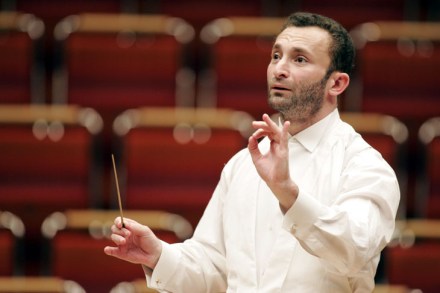
Let’s face facts. Kirill Petrenko was no-one’s first choice as music director of the Berlin Philharmonic Orchestra. His name came into the reckoning only after 124 orchestra members split fatally down the middle in an all-day election on May 11, half of them voting for the German favourite Christian Thielemann and the other half for the blazing young Latvian, Andris Nelsons. By nightfall, the players were at each other’s throats and wiser heads knew they had to seek a third candidate, a compromise. But who? The Venezuelan Gustavo Dudamel, who set the orchestra alight last week, had ruled himself out. So had Daniel Barenboim, Mariss Jansons, Yannick Nézet-Séguin and other front-runners.

Two batons better

From our UK edition

The morning after the Berlin Philharmonic Orchestra failed to elect a music director, I took a call from Bild-Zeitung, Berlin’s most popular tabloid, seeking analysis. Later, they asked me to write a full-page op-ed. Now shut your eyes a moment and try to imagine any circumstance in which the Sun would ever shine an inch of space on an orchestral conductor — unless, of course, he or she was snapped pants down by paparazzi in an M4 layby. Nothing will ever convince British tabloids to overcome their class-based scorn for art and, while we may think of German media as less counter-elitist, Bild readers consume no more Beethoven per head than Sun browsers. So why the sudden interest? Because, for Germans, this is existential. In Germany, culture defines nation.

The new CEO of the Arts Council has been announced – Guardianistas won’t be happy

From our UK edition

It is difficult to describe with equanimity the culture shock that has been administered to Arts Council England, the 69 year-old benefits office for the creative industries. Invented by Maynard Keynes to nurture the grass shoots of an English renaissance with a few quid here and there - £25,000 for Covent Garden, £2,000 for the LSO - ACE has burgeoned into a mighty quango that distributes £1.9 billion of public cash and £1.1 billion of lottery money over three years. It feeds not only the performing arts but museums, galleries, monuments, public libraries, poetry and pottery.

The Nazi origins of the Vienna Phil’s New Year’s Day concert

From our UK edition

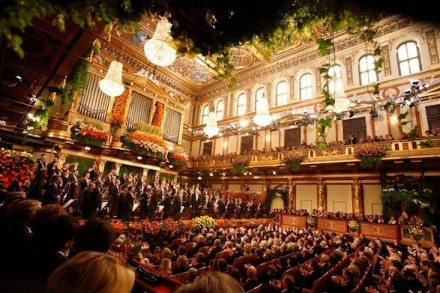
It may be the last water-cooler moment in world television. On the first morning of the year, at 11.15 Central European Time, in a place that considers itself the epicentre of Europe, a group of men in formal dress mount the Musikvereinssaal stage in Vienna to perform a ritual that passes for culture and tradition. It is, of course, neither. The music is strictly bar-room, written by members of the Strauss family as social foreplay for the soldiery and serving classes in low taverns. Like most forms of dirty dancing, the music rose vertically from barroom to ballroom and was soon performed as encores by symphonic orchestras to dowager purrs of wie schön. The New Year’s Day concert is an annual jellybox of waltzes, polkas, galops, marches and any old tritsch-trash.