Nicky Haslam

Nicky Haslam is the author of Folly de Grandeur: Romance and revival in an English country house.

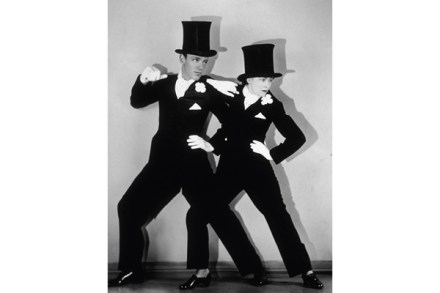
Flappers, by Judith Mackrell – review

From our UK edition

I’m never quite sure what the term ‘flappers’ means. How did these creatures flap, and why? Where did they flap? Did they flap all day, or only at night? Were theyin a flap, or being flapped, sad-flaps or flap-happy? Did they open flaps, or close them? Did they flap Jacks, or flip Jills, or both? Reference books don’t help much. The OED says the word means a fly-killer, and you really don’t want to know the Dictionary of Slang’s definitions. So what was, in the accepted vo-deyo-do-ing, headache-band-browed, fancy-dress costume and Baz Luhrmanesque image, a ‘flapper’? One might assume that in this substantial, erudite and detailed, but oddly humour-free book, Judith Mackrell would set out to enlighten us.
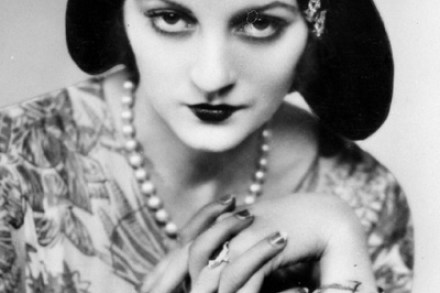
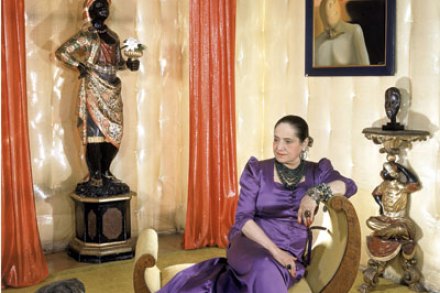
‘Helena Rubinstein: The Woman Who Invented Beauty’, by Michèle Fitoussi – review

From our UK edition

In New York, in the 1960s, in a sleek, silvery elevator, I rose from the marble halls of Helena Rubinstein’s gleaming emporium up towards the top floor office of a new friend who worked for that legendary beautician. Suddenly, unexpectedly, the lift stopped, the doors slid open and a tiny, squat figure with oily, inky hair scraped back and livid carmine cheeks above violently purple tweed capes stabbed with a jagged, surreal brooch, stood peering up at what I hoped was my youthful, English-rose complexion. A short, intense scrutiny. Then, imperiously: ‘Oy vey! But I sink ve can help. Tell Patrick he needs gif you our XXX recipe.

Old King Noël

From our UK edition

What is this I hold in my hands? Is it just a book? It’s quite heavy, but somehow, instinctively, one feels its light heart.  When I eventually prize its even glossier inner core from its glossy padded outer shell, I still ask: what is this? It looks like a book, but its pages don’t shut flat or lie open; they spring apart, gaping enticingly, as if someone had inserted bulky, once-essential memos or long-forgotten mementos between the pages. But shake it, and nothing falls out. No shopping list, no ribbon-tied bundles of unrequited love, no scrunched up scraps of half-remembered receipts. Open it at one of these many inviting gaps. What’s this? A manilla envelope, seemingly casually inserted, but integrally attached to the right-hand page.

The worldling’s pleasure

From our UK edition

Two women are the only heroes of this book. One is Princess Margaret, whom the author points out was far more instrumental in the early years of Colin Tennant’s ramshackle creation of Mustique than merely lending it her unparalleled presence. Quite apart from insisting, after Tennant had fallen out with a slew of architects, that Oliver Messel — now synonymous with the island’s building style — become involved, she advised him on possible investors and operators. She also stuck by him through all his quixotic irascibility. For his part, he flattered, feted, and fawned on this major star of his Caribbean fantasy. The other hero — or heroine —is his wife. ‘How wonderful Anne has been though all this,’ people say.

High society

From our UK edition

One evening in 1923, Edward, Prince of Wales, pretty as paint in his white tie and a cutaway-coat, went to the theatre to see a new Gershwin musical. It was called Stop Flirting. Always one to ignore instructions, the Prince returned to enjoy this froth no less than nine times more. Obsessed by anything and eventually, disastrously, anyone American, the heir to the throne was fanatical about the new-fangled craze then being displayed at the Shaftesbury Theatre by a dazzling young brother-and-sister act hot-foot from Broadway: ballroom dancing. Practising the charleston and the black bottom rather than studying charters and red boxes occupied the heir to the throne’s days, to the intense irritation of his father. Edward ‘continues to dance every night.

Portraits of an age

From our UK edition

By a fine coincidence, two legendary icons of British art were being feted in London on the same evening last month, and both are primarily famous, to the public at least, for their depiction of the Queen. At the National Portrait Gallery, the director Sandy Nairne hosted a dinner to celebrate the portrait oeuvre of Lucian Freud, while the Victoria and Albert Museum opened its major exhibition of Cecil Beaton’s lifetime lensing of Elizabeth II. In the 1950s these two artists were the epitome of London society. Beaton, by way of his groomed exquisite taste and laconic manner, was the epicene idol of sophisticated drawing rooms; the nascent Freud, 30-odd, untidy, brooding, supremely sexual, was a magnetic talisman for every smart hostess’s house, and often her bed.

Amen to an era

From our UK edition

It must be said that Patrick Lichfield — the outer man — wore his ego proudly and loudly on his sleeve. It must be said that Patrick Lichfield — the outer man — wore his ego proudly and loudly on his sleeve. And with his aristocratic yet trendy good looks, his Harrovian education, the brigade of Guards, his titled ancestry, royal connections and friendships, his persistent anecdotal recall, his ruffles and velvet or leather and denim, his stately pile, his dashing dare-devilry, let alone his reputed lotharian appetites, one can hardly blame him. Inwardly, perhaps, this braggadocio was a salad-days reaction, for Lichfield’s youth was marred by family problems.

Fish and chaps

From our UK edition

This is the ultimate ‘niche’ book. This is the ultimate ‘niche’ book. It focuses on that singular decade between the years of rockers and punks, when toffs, freed from school or army uniforms, and toughs, discarding skinhead aggression, found a sartorial meeting point. This new style, the cool child of late Fifties mods, had been given a huge public oomph by the Beatles and ‘their silly little suits’ as David Bailey (who has stated that he, along with myself, was the unwitting originator of the look) succinctly puts it. It was sharper, leaner and hinted at androgeny. Its creators were no longer found in caverns down Carnaby Street, nor high in the King’s Road, but centered round that time-honoured dandy’s inferno, Savile Row.

Deadlier than the Mail

From our UK edition

This is an effervescent, elegantly written and faultlessly researched romp through the life and times of someone whose name in Britain was spoken with genuine fondness by an urbane few, with self-righteous anger by some and with disdain or fascination by almost everybody who can read — as, like it or not, very few people don’t enjoy gossip. This is an effervescent, elegantly written and faultlessly researched romp through the life and times of someone whose name in Britain was spoken with genuine fondness by an urbane few, with self-righteous anger by some and with disdain or fascination by almost everybody who can read — as, like it or not, very few people don’t enjoy gossip. Tim Willis has caught the atmosphere of the Dempster decades with uncanny precision.

Diary – 19 May 2006

From our UK edition

The embattled Prime Minister is not the only one being dogged by Blairite woes. I ran into his namesake Lionel, my friend of 50 years, in Sloane Square. He is still deeply upset about the theft of his beloved pooch, nabbed while his wife was walking in the park. Misty-eyed, he tells me that Debbie Forsyth (Bruce’s nipper to you) has just called with the awful news that her two Yorkies have been stolen. I say I’ve heard there’s a terrific trade in pet theft. Lionel’s eyes brighten. ‘Ooh. I haven’t had terrific trade for ages.’ In the late 1950s David Bailey and I used to frequent a very straight pub in darkest Dalston called the Deuragon, where the mums would proudly watch as their sons transformed into Marlene Dietrichs or Mae Wests.

She fashioned her future

From our UK edition

Judging by her own ideals of beauty and drama, Diana Dalziel's arrival in the world must have been a bit of a let-down. That her Scottish father's lineage merely went back to 834, or that her mother was part of the narrow 1890s New York society, was not half as picturesque as she'd have liked. Her blood, she felt, should be throbbing with the violent purple corpuscles of a Montezuma or Genghis Khan, her skin as palely violet as that of Diane de Poitiers or Liane de Pougy.