Nick Cohen

Nick Cohen

Nick Cohen is the author of What's Left and You Can't Read This Book.

The conservative war on free speech

From our UK edition

The hopeful life and wretched death of Claudia Gavrilovna Popova during a previous age of extremes should speak to us now. Popova lived in Siberia in the years before the Russian revolution. She was a liberal who opposed the Tsarist empire – then, as now, was the world’s great fortress of reactionary power. Popova was a wealthy landowner in Krasnoyarsk on the Yenisei River, who thought any enemy of the regime couldn’t be wholly bad. She gave free bed and board to Lenin when he was an obscure Marxist agitator. From the 1890s on, she helped hundreds of other revolutionaries the Romanov regime sent into exile.
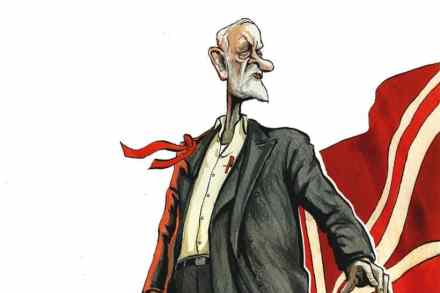
Who will dare stand against Jeremy Corbyn in Islington?

From our UK edition

Labour has announced whether its sitting MPs will step down or fight again at the next election in nearly every single constituency. By a weird coincidence, it stays silent about the one constituency Labour party members and the wider public are most interested in: Jeremy Corbyn’s Islington North. Sir Keir Starmer withdrew the whip from Corbyn because of the ex-leader’s response to the Equality and Human Rights Commission report on anti-Jewish racism in the Labour party. Rather than, for example, apologising for prejudice on his watch, Corbyn insisted that antisemitism had been ‘dramatically overstated for political reasons’ by his opponents. They’re not frightened of Jeremy Corbyn the man.

Why Labour think they’ve rumbled Rishi

From our UK edition

Labour’s leaders do not rate Rishi Sunak. I don’t mean by this that they think his policies range from the wrongheaded to the disastrous – we can take these opposition criticisms as a given. I mean that as professional politicians they look at the Prime Minister and see a rank amateur. 'He’s rubbish,' a member of the shadow cabinet told me. 'I mean' he continued bursting into derisory laughter during his speech yesterday, 'what the hell was that maths thing about?' In case you missed it, from the morning papers through to lunchtime on Wednesday, the PM’s New Year message was that he wanted children to study maths until they were 18.

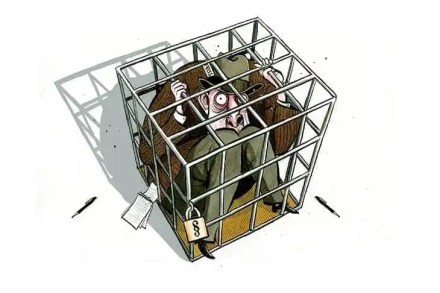
A culture of fear has taken over academia and the arts

From our UK edition

At the end of the second world war, George Orwell went to an event organised by PEN, a campaign dedicated to defending freedom of expression. He walked into a scene we encounter everywhere in 2022. The meeting was meant to celebrate the tercentenary of John Milton’s Areopagitica, one of the earliest and still one of the best defences of freedom of thought in the English language. Institutions are not censoring because they are true believers but because they are frightened Journalists, novelists and poets depend on that right. They should know that, if they lose it, they lose their soul.

Labour’s disturbing attitude to press freedom

From our UK edition

Once in every generation the Labour party gets tired of losing elections and prepares for power by neutralising potential sources of opposition.   Today’s Labour’s offensive is advancing on all fronts. Rachel Reeves nurses glasses of warm white wine through dozens of receptions for finance and business leaders. Keir Starmer withdraws the whip from Jeremy Corbyn and makes certain that no one can claim now that Labour is an anti-Semitic and anti-patriotic movement. The CBI reacts to Boris Johnson’s cry of ‘F—k business’ and of Liz Truss turning his words into deeds, by saying that it welcomes ‘Labour’s pledge to establish a modern industrial strategy’.   Starmer is lining up all the ducks – except one.

Labour can’t believe they are heading for victory

From our UK edition

Last night, Labour politicians wondered how to respond to the challenges the Chancellor was sending their way. Do you accept the Conservatives’ real-term spending cuts and tax rises? How would you revive the economy? The best answer came from a shadow minister who told me ‘We should just say “imagine how good this country could be if we had a government that didn’t do mad stuff”.’ We Won’t Do Mad Stuff is not the most inspiring of electoral slogans. For years voters across the West have moved towards Trump-style politicians who promised to do precisely that. Where is the vision in not doing mad stuff? Where is the hope that we can take back control and make Britain great again if we leave the mad stuff alone?

The silence that reveals everything about Liz Truss

From our UK edition

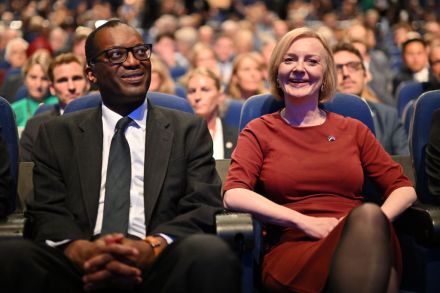
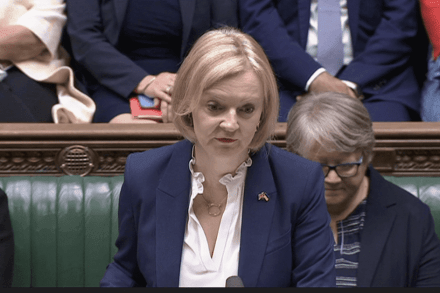
The moorings that tie the rulers to the ruled are breaking in the UK. You can hear them snapping during the Prime Minister’s silences. On Sunday morning, the BBC’s Laura Kuenssberg asked Liz Truss a question any democratic leader should be able to answer. Truss and her Chancellor’s folly had sent yields on ten-year guilts up to 4.3 per cent. It had forced the Bank of England to announce an emergency £65 billion bond-buying programme. It had threatened pensions and the finances of mortgage holders. ‘How many people voted for your plan?’ asked Kuenssberg. Silence. A silence long enough for viewers to believe that concerns of democratic legitimacy had not bothered the Prime Minister in the slightest until that moment.

‘Liz Truss hasn’t understood a word I wrote’, says PM’s favourite author

From our UK edition

As I reported this summer, Liz Truss’s favourite historian is Rick Perlstein, the great chronicler of the rise of the new right in its Nixonian and Reaganite forms between 1960 and 1980. She told journalists that she read ‘anything’ he wrote. Interviewers noticed Perlstein’s books on her shelves. In a strange compliment to the American historian, Truss or sources close to her briefed The Spectator's Katy Balls with precise (if unacknowledged) quotes from his account of the rise of Ronald Reagan. I sent Perlstein my piece and asked for his thoughts. Let me put it like this: he may be her favourite historian, but she is not his favourite politician. Not even close. Not even in the top 1,000. ‘Liz. Can’t. Read.

Truss can’t hide from the crisis she created

From our UK edition

For a politician who only a few days ago was bravely mocking Vladimir Putin as a ‘sabre-rattling’ loudmouth ‘desperately trying to justify his catastrophic failures,’ Liz Truss has turned out to be the greatest coward ever to be prime minister. At least Putin feels the need to justify the catastrophe he has inflicted. Truss and her Chancellor believe they can hide away like children putting pillows over their heads to escape a bad dream, and say nothing at all. The public may not understand the full ramifications of the crisis the Conservatives have unleashed in a moment of ideological delirium.

The City still runs on nepotism

From our UK edition

When Liz Truss says she wants to give tax cuts to the wealthiest, she thinks she is making a moral argument. The rich deserve to keep their money because they are the best and brightest among us. They have succeeded on their own merit and not because of their class, sex or ethnicity. This, she believes, is a Thatcherite view of society. But the crisis that her government has imposed on Britain is as much due to her misreading of modern history as of her economic illiteracy. Her support for the City rests on a misunderstanding of how Thatcherism transformed the top of British society, as a new and devastating study shows. ‘Highly Discriminating: Why the City Isn’t Fair and Diversity Doesn’t Work’ by Louise Ashley leads a herd of sacred cows to the slaughter.

Labour’s debt binge dilemma

From our UK edition

Labour has a populist argument against Liz Truss’s spendaholic plans to borrow money from the international money markets and direct it into the bank accounts of the privileged. ‘What do you get?’ Rachel Reeves and Keir Starmer will ask the public. ‘And who picks up the bill?’ For the overwhelming majority of the population the answer to ‘what do you get?’ is ‘not much’. And to ‘who picks up the bill?’ is ‘me, people like me, and our children and grandchildren’. The Conservative class interest in rewarding its supporters looks like a gift to the opposition. But the gift is not as generous as it appears.

What republicans understand about monarchy

From our UK edition

What ridiculous figures we republicans must seem on the eve of Elizabeth II’s funeral. We sound like desiccated rationalists who cannot understand that emotion, not reason, makes people identify with their country. Instead of joining in shared celebrations and mourning, we ask carping questions about the transparency of royal finances or the basic failure of our head of state and her advisers to stop Boris Johnson’s unlawful proroguing of parliament. We think we know our history and sociology. We say we understand that nations are ‘imagined communities’, which unite strangers with common symbols and emotions. Yet when faced with the power of monarchy to hold the United Kingdom together, we complain about feudalism and our Ruritanian love of pointless display.

Could Putin still trigger nuclear war?

From our UK edition

The world is facing the prospect of its first nuclear attack since the US Air Force dropped atomic bombs on Hiroshima and Nagasaki in August 1945. Yet that horror arouses little fear or outrage. The possibility that a cornered Putin will use ‘tactical’ nuclear weapons to punish Ukraine for humiliating the Kremlin remains a nightmare most can live with. Paranoia about nuclear conflict haunted the Cold War of the 20th century. Today our tolerance of the intolerable appears higher. The vast mass of people don't care to think about it. Policy elites believe that no one who looks at Ukraine with seriousness and compassion believes that they have done all they can do to avert it. And so we belittle threats that terrified our parents and grandparents.

Liz Truss revealed her weakness at PMQs

From our UK edition

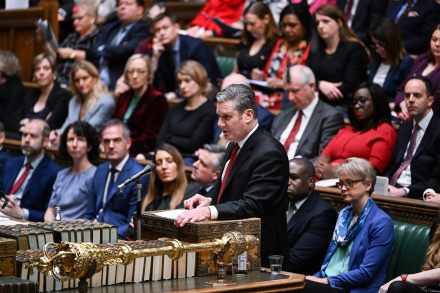
In her first Prime Minister’s Questions, Liz Truss said that before she was anything else she was ‘on the side of people who work hard and do the right thing’. In response, Keir Starmer showed that Labour’s first task was to make clear that she was nothing of the sort. And I suspect he will have the easier time of it. For a Prime Minister to portray herself as the faithful friend of Big Oil is – how to put this politely? – a ‘brave strategy’ at the best of times. It looks terrible when fuel prices and the national debt are in a race to see which can inflate the fastest. As I wrote on these pages a few days ago, Labour will regroup after losing the sitting target of Boris Johnson.

Boris Johnson was a terrible strongman

From our UK edition

The ejection of Boris Johnson from Downing Street today proves that the UK has not gone the way of Donald Trump’s United States, Viktor Orbán’s Hungary or Narendra Modi’s India. For all our faults, the strongman model of leader ends in farce rather than fascism here. Liberal critics ought to be big enough to concede that Conservative MPs – more than any opposition party, movement or institution – saved us from populist authoritarianism. No doubt they did so for impure and self-interested reasons, but this is politics and it is deeds – not motives – that matter most. Johnson’s failure to impose his will on his parliamentary party was his greatest mistake.

Liz Truss doesn’t frighten Labour

From our UK edition

Labour will attack the new prime minister from the left and the right. From Liz Truss’ exposed left flank, Labour and the majority of the electorate will hammer her for not extending the windfall tax to cover the estimated £170 billion in profits Vladimir Putin has gifted gas and electricity generators. Do not imagine for a moment that it won’t be effective. The attack from the right is less obvious but gets to the heart of the risk Liz Truss is running with the UK economy. 'We need to paint her as fiscally irresponsible,’ one adviser to Labour’s Treasury team told me. ‘That’s as important as showing she has the wrong priorities.

Is Liz Truss the British Trump?

From our UK edition

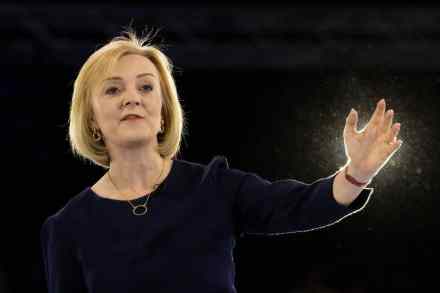
Readers must understand how the jargon of political chicanery has corrupted journalism if they are to make sense of the coming Truss premiership. Unless you grasp the slippery, new meaning of ‘pivot,’ media coverage will leave you clueless. To give you a taste of what is to come try this sentence from the Politico website. Liz Truss may have to ‘pivot away once the battle for members’ hearts has been won’. Pivot? Is our next prime minister a machine part that will bend the body politic with the prevailing wind? Or try this from the Independent: ‘Therein lies the truth about the coming pivot... The only question is how skilfully she makes the transition.’ Euphemism exists to spare the embarrassment telling the truth brings.

Would Russia change if Putin died tomorrow?

From our UK edition

Suppose Vladimir Putin drops dead tomorrow – he has to drop dead one day, after all. Will a chastened Russian elite and public decide to abandon dreams of empire and vow never again to fall for the lure of the autocratic strongman? Putin will leave a sick country that ought to be yearning for change. The myth that Russia is a military superpower, which did so much to intimidate its neighbours, lies broken amid the burned-out ammunition dumps. Putin’s unprovoked attack on Ukraine provoked Finland and Sweden to join Nato. His aggression has reinvigorated the West and pushed it into supplying Ukraine with advanced weaponry.

The Conservative party is a void

From our UK edition

Like the winter of discontent, the summer of 2022 is a season that will burn itself into the national consciousness. Predictions of a dark (in all senses of the word) future are daily occurrences. All but the wealthy wonder how they will cope with the hard times that are almost on us. The sense we’re in a runaway crisis is everywhere. Everywhere, that is, except among the leaders of our self-indulgent government. It has shirked its duty to lead the country and preferred to take a long, lazy holiday instead. For Boris Johnson, a redundant prime minister serving out his notice period, his life consists of Mediterranean jaunts.

Is Keir Starmer a populist?

From our UK edition

No one thinks of the careful, polite Keir Starmer as a populist hero. But his intervention in the fuel crisis is a classic example of a barnstorming populist intervention that pushes aside complexity and forces a complacent elite to think again. The fuel cap must be frozen at today’s level until March 2023, Labour says. Everyone’s fuel cap, that is, without exception. No clever pointy-headed schemes to target help at this group of energy consumers but not at that. Just a big, bold, simple policy that Labour politicians can explain in a sentence. Biff, Bash, Boff, the Starmster gets it sorted. Labour believes Liz Truss has walked into a trap of her own making.