Nick Cohen

Nick Cohen

Nick Cohen is the author of What's Left and You Can't Read This Book.

The BBC’s promises to change after Savile are as sincere as a prostitute’s smile

From our UK edition

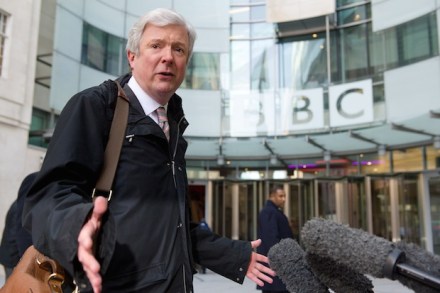
It should be easy to admire the BBC's handling of the Savile scandal. Two of its journalists, Liz MacKean and Meirion Jones, broke the story. Panorama then ran a devastating account of the corporation’s failings which is still worth watching online. This morning the Today programme properly led with the leak of Dame Janet Smith’s report on the multiple rapes Savile committed on BBC premises, which again showed an admirable capacity for self-criticism. Unfortunately, that is all it did. Organisations and individuals are defined not just by their mistakes but how they react to their mistakes. Do they deny and bluster? Or do they confront their flaws and try to make amends? The best people in the BBC behaved superbly. Their editors were, of course, a disgrace.
Why English writers accept being treated like dirt

From our UK edition

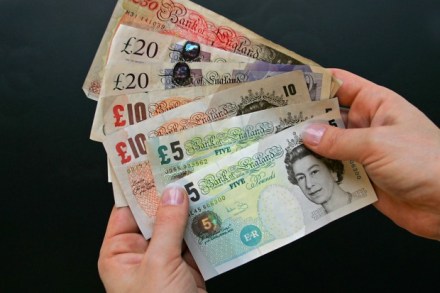
A few months ago, one of the organisers of the Oxford Literary Festival contacted me. Hi Nick I may be putting on a free speech event at Oxford Lit Festival 2-10 April 2016  and wondered if you'd be willing to take part?  It's the usual festival deal. As I have written a book on free speech, and banged on about it to the point of tedium (and beyond) in these pages, I was happy to go to Oxford and bang on some more.  I had one small query. Should be able to. Does the 'usual deal' involve anything so vulgar as a fee? Of course not. The very thought. Like the Huffington Post and newspapers hiring interns, the Oxford Literary Festival expects authors to work for nothing.

Labour’s tantrum over Pat McFadden’s ‘toddler terrorists’ question was very revealing

From our UK edition

Two points stand out from Pat McFadden's career-killing question to David Cameron. 'May I ask the prime minister to reject the view that sees terrorist acts as always being a response or a reaction to what we in the West do? Does he agree that such an approach risks infantilising the terrorists and treating them like children, when the truth is that they are adults who are entirely responsible for what they do? No one forces them to kill innocent people in Paris or Beirut. Unless we are clear about that, we will fail even to understand the threat we face, let alone confront it and ultimately overcome it.' The first is that he did not mention Jeremy Corbyn, John McDonnell or Seumas Milne by name. But their petulant vengeance proved that he did not need to.

Sweden’s feminist foreign minister has dared to tell the truth about Saudi Arabia. What happens now concerns us all | 31 December 2015

From our UK edition

The Spectator's most read article of 2015 was Nick Cohen's piece about Margot Wallström – the Swedish foreign minister who stood up against Saudi Arabi's subjugation of women. He wrote it in March; it was still in our top ten most read yesterday. Every so often, new groups of people (mainly Facebook communities) keep discovering and sharing it. This is now the most-read article in the history of The Spectator.  If the cries of ‘Je suis Charlie’ were sincere, the western world would be convulsed with worry and anger about the Wallström affair. It has all the ingredients for a clash-of-civilisations confrontation. A few weeks ago Margot Wallström, the Swedish foreign minister, denounced the subjugation of women in Saudi Arabia.

Why I’ve finally given up on the Left

From our UK edition

Nick Cohen's cover piece in the Spectator on the demise of the Labour party - and of his own support for it - is the 4th most-read magazine piece of 2015. ‘Tory, Tory, Tory. You’re a Tory.’ The level of hatred directed by the Corbyn left at Labour people who have fought Tories all their lives is as menacing as it is ridiculous. If you are a woman, you face misogyny. Kate Godfrey, the centrist Labour candidate in Stafford, told the Times she had received death threats and pornographic hate mail after challenging her local left. If you are a man, you are condemned in language not heard since the fall of Marxist Leninism.

If you are so rich, how come you are so left wing?

From our UK edition

A few days ago the Telegraph revealed that the leader of Momentum was – inevitably – the privately educated son of a property tycoon, whose father had the wealth to fund a home in Primrose Hill, a wife, children, and allegedly a couple of mistresses on the side. I shared the news on social media, because I have met and disliked too many of his kind. The complaints began at once. I should not judge a man by his background. He did not choose his parents. What matters are James Schneider’s beliefs. It is where you are going which counts, not where you come from. And so on. And on.

Inside the Corbyn crack-up

From our UK edition

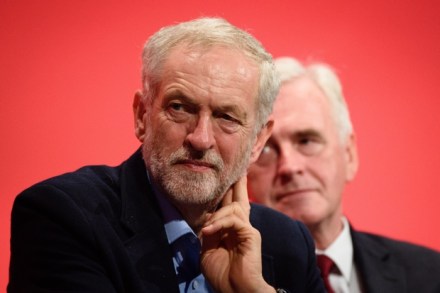
Jeremy Corbyn is a rarity among politicians. All his enemies are on his own side. For the Tories, Ukip and the SNP, Corbyn is a dream made real. They could not love him more. As the riotous scenes at the shadow cabinet and parliamentary Labour party meetings this week showed, his colleagues see Corbyn and John McDonnell as modern Leninists who are mobilising their cadres to purge all dissidents from the party. Conversations with Corbyn’s aides show a gentler side to the new regime, however. They suggest the Corbynistas are unlikely to be able to control Labour MPs when they can barely control themselves. ‘Chaos’ was the word that came up most often, followed by ‘panic’ and ‘unforced errors’. Corbyn’s staffers were working 12-hour days.

The Corbyn crack-up

From our UK edition

Jeremy Corbyn is a rarity among politicians. All his enemies are on his own side. For the Tories, Ukip and the SNP, Corbyn is a dream made real. They could not love him more. As the riotous scenes at the shadow cabinet and parliamentary Labour party meetings this week showed, his colleagues see Corbyn and John McDonnell as modern Leninists who are mobilising their cadres to purge all dissidents from the party. Conversations with Corbyn’s aides show a gentler side to the new regime, however. They suggest the Corbynistas are unlikely to be able to control Labour MPs when they can barely control themselves. ‘Chaos’ was the word that came up most often, followed by ‘panic’ and ‘unforced errors’. Corbyn’s staffers were working 12-hour days.

Corbyn has done enough damage to Labour. It’s time for him to step down

From our UK edition

Jeremy Corbyn is a rarity among politicians. All his enemies are on his own side. For the Tories, Ukip and the SNP, Corbyn is a dream made real. They could not love him more. As the riotous scenes at the shadow cabinet and parliamentary Labour party meetings this week showed, his colleagues see Corbyn and John McDonnell as modern Leninists who are mobilising their cadres to purge all dissidents from the party. Conversations with Corbyn’s aides show a gentler side to the new regime, however. They suggest the Corbynistas are unlikely to be able to control Labour MPs when they can barely control themselves. ‘Chaos’ was the word that came up most often, followed by ‘panic’ and ‘unforced errors’. Corbyn’s staffers were working 12-hour days.

Far leftists do not laugh about Mao to mock communism. They laugh to forget communism

From our UK edition

Nothing about the crisis in the Labour party makes sense until you find the honesty to admit that far leftists have taken over its leadership, and the clarity to see them for what they are. Contrary to the wishful thinking of so many Corbyn supporters, these are not decent, well-meaning men, who want to take Labour back to its roots. Nor are they pacifists and idealists you can look on with an indulgent smile and say, ‘I wish they were right, but their ideas will never work in the real world, more's the pity’. To the delight of the Conservative Party, SNP and Ukip, they are genuine extremists from a foul tradition, which has never before played a significant role in Labour Party history.

C’est magnifique, mais ce n’est pas le journalisme

From our UK edition

Andrew Neil is the best political interviewer in Britain. I am not just saying that because he is so high up here at The Spectator, although that helps. I am not saying it because he once bought me lunch, although he did his cause no harm there either. I am saying it because he is one of the few broadcasters who makes me stop what I am doing and listen. God help the interviewee who goes on his programme unprepared. If he or she has not thought through every flaw in their argument, they will find that Neil has done their thinking for them. He will expose their contradictions on live television. He will have a list of the inconvenient facts they forgot or never took the trouble to find in the first place, and will broadcast them to the nation.

Jeremy Corbyn isn’t anti-war. He’s just anti-West

From our UK edition

[audioplayer src="http://rss.acast.com/viewfrom22/parisattacksaftermath/media.mp3" title="Nick Cohen and Freddy Gray discuss whether Jeremy Corbyn dislikes the West" startat=42] Listen [/audioplayer]Before the bodies in Paris’s restaurants were cold, Jeremy Corbyn’s Stop the War Coalition knew who the real villains were — and they were not the Islamists who massacred civilians. ‘Paris reaps whirlwind of western support for extremist violence in Middle East’ ran a headline on its site. The article went on to say that the consequence of the West’s ‘decades-long, bipartisan cultivation of religious extremism will certainly be more bloodshed, more repression and more violent intervention’.

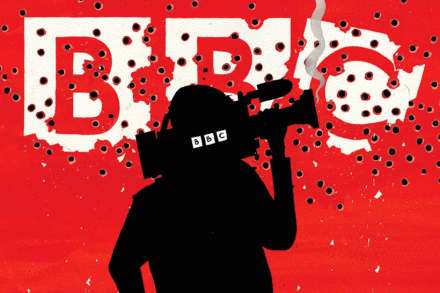
Nobody will ever forgive the right if they destroy the BBC

From our UK edition

Nowhere does the right show its isolation from its own country more vividly than when it demands the destruction of the BBC. The corporation is not like the telephone system, which you can pass into private ownership without anyone noticing. It is as integral to Britain as the monarchy and the NHS, which is why Scottish nationalists devote so much energy to denouncing it. We are a small country, which is becoming smaller. In the world that is coming, Asian and African countries will have huge populations beside which Britain’s market of 70 million will seem puny.  Hence we subsidise culture that simply would not be produced in the private sector.

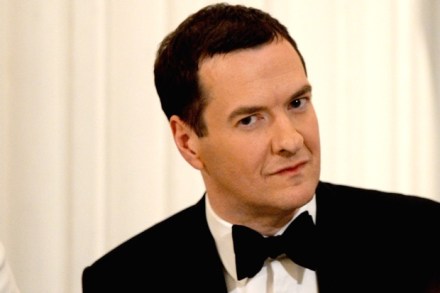
George Osborne and the death of Tory idealism

From our UK edition

The kindest way to treat your enemies is to hate them. Hate them and you don’t understand them or their appeal. Hate them and you cannot see their own doubts and divisions. The opponents of Conservatives see them as greed-driven monsters, concerned only with helping the rich and middle-class. They are so tawdry, so lacking in idealism, they make you hate your own country.

The left is no longer a happy family

From our UK edition

The far left controls the Labour leadership because the centre left did not take it seriously until it was too late. For a generation indeed, Labour and much of the rest of liberal-left Britain has lived with the comforting delusion that there was no far left to fight. The left, on this reading, was one family. It may have had its troublesome teenagers. Their youthful high spirits may have made the little scallywags 'go too far' on occasion. But everyone was still in one family, still on the same side. The old notion that the far left was the centre left’s enemy died away as the Labour party gave up on argument about what it was and what it wanted to achieve, and entered its long period of intellectual stagnation.

Converting the Corbyn cult

From our UK edition

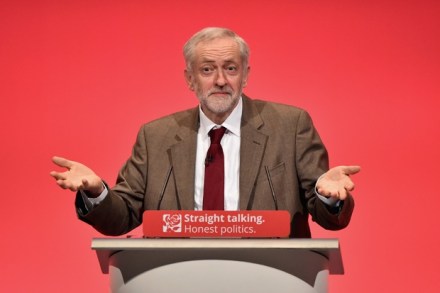
If Labour is ever to clamber out of its cage on the fringe of politics, it will have to convince the 250,000 supporters who voted for Jeremy Corbyn to turn from far-leftists into social democrats. The necessity of persuading them that they made a terrible mistake is so obvious to Labour MPs that they barely need to talk about it. In case it is not obvious to you, let me spell it out. Corbyn exacerbates every fault that kept Labour from power in 2015, and then adds some new ones, just for fun.

Cameron tells Tories they no longer have to follow international law

From our UK edition

People go on about the awful pressure of 24/7 media on our leaders, and how hard the constant scrutiny must be to bear. But politicians and civil servants know that more means less. As more news sites and tweeters repeat the same stories, and millions of 'diverse' voices say the same thing, the basics of power go unexamined. Take the ministerial code, which guides the conduct of politicians in office. It is one of the fundamentals of public life. The opposition (such as it is) and the media can use it as a stick to beat the government. The prime minister can fire ministers who break it. 'Ministers of the Crown are expected to behave in a way that upholds the highest standards of propriety,' it begins. OK, but how?

Lord Leveson’s legacy could be the death of investigative journalism

From our UK edition

Later this year, or more probably in the spring of 2016, the following scene may play out on the steps of the High Court in London. An editor will appear before the cameras and say: 'I am instructing my reporters stop investigative journalism until the law is changed.' The naïve who have failed to educate themselves on the assault on press freedom in Britain will be more confused than outraged. How can this be, they will ask. They will be enlightened by the editor of – well, let’s say it’s my editor here at The Spectator, but it could just as easily be the editor of the Guardian, Observer, Private Eye or any other national or local newspaper or magazine. The court had vindicated the paper, he or she will explain.

What Scottish professors have to fear from Nicola Sturgeon’s power grab

From our UK edition

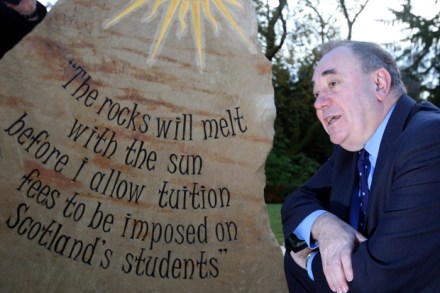
In the grounds of Edinburgh’s Heriot-Watt University stands a one-tonne sculpture. Roughly hewn and about five feet high, it carries in its top corner an ill-carved sun. Beneath it are some words of Alex Salmond, half-sunk in the sandstone, as if they were the thoughts of a Scottish Ozymandias: ‘The rocks will melt with the sun before I allow tuition fees to be imposed on Scottish students.’ This clunky celebration of SNP -policy should raise a few doubts. Free higher education is not free for all in Scotland. Edinburgh can afford to pay the fees of only 124,000 students in Scottish universities. Their contemporaries might have the grades, but they must go elsewhere because Scottish universities need fee-payers from England and Wales to balance their books.

How to defend the arts using liberal values

From our UK edition

This is a version of a speech I made to the No Boundaries conference at the Bristol Watershed Theatre on how censorship affects the arts, museums and libraries. The organisers asked me to talk about political correctness and the arts; a touchy subject which requires enormous sensitivity to the feelings of others, and long, thoughtful discussions of whether we should use the term 'political correctness' at all. Unfortunately, they continued, you have only 10 minutes and there will be no time for any of that. You will just have to get on with it. So forgive me if I belt out arguments like a machine gun, but I must get on. Politically correct culture presents four problems for writers and artists. 1. Political correctness is not politically correct.