Nicholas Shakespeare

A sensual Greek goddess

From our UK edition

Joan Leigh Fermor died in 2003, aged 91, after falling in her bathroom in the house on a rocky headland of the Peloponnese which she had financed by selling her jewellery. Afterwards, whenever Joan’s husband and companion of nearly six decades reclined in her place on the sofa to read, eight of her 73 cats would gather round him in a recumbent group — but after a few minutes slope off. Paddy (who died in 2011) wrote: ‘They had realised they were being fobbed off with a fake.

A tidal wave of grief

From our UK edition

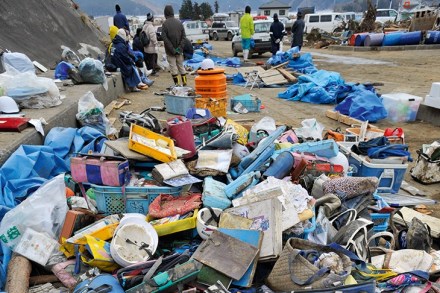
Most victims of the 1755 Lisbon earthquake — which convinced Voltaire there could be no God — perished not in the six-minute tremor, but in the tsunamis which foamed up the Tagus soon after, causing devastation as far away as Brazil. These towering sheets of water can have an impact greater than that of a nuclear explosion. The most powerful earthquake yet recorded, in 1960 off Chile, sent 80-foot waves across 10,500 miles of ocean — and struck Japan, half a world away, killing 142 people there. Japan is a magnet for super-tsunamis, which recur at intervals of 800 to 1,000 years, with lesser waves striking the north-east Sanriku coast roughly every 30 years. In 1896, 22,000 died after a moderate tremor out at sea; in 1933, 3,000 were killed by waves as high as 100 feet.

Gilded prostitution

From our UK edition

‘An English peer of very old title is desirous of marrying at once a very wealthy lady, her age and looks are immaterial…’ This desperate advertisement in the Daily Telegraph in 1901 was a barometer of the impoverishment of many British aristocrats following the Long Depression of 1873–80; dependent on agriculture, the landed gentry continued to reel from those seven consecutive failed harvests. Meanwhile, America’s prairies and railroads had never produced so much wheat, cattle, oil or wealth.

Two small boys in the sea

From our UK edition

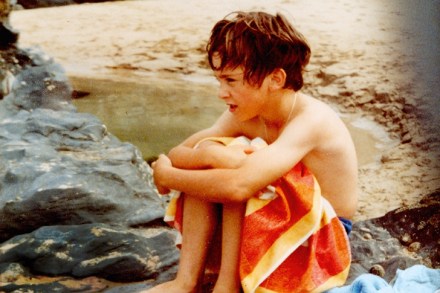
An estimated 400,000 people drown annually worldwide, 50 per cent of them children. Roughly 150 drownings occur in the UK. In the 1970s, the RNLI station at Port Isaac on the north Cornish coast responded to ‘about 30 shouts a year’, reckons the novelist Richard Beard. On 18 August 1978 at 2.30 p.m. a maroon rocket went up with a great whoosh 800 feet into the summer sky to summon the coastguard. In the language of the rescue services, there was a ‘swimmer in the water’. Ninety minutes earlier, Beard, then aged 11, was on a nearby beach with his brother Nicky, aged nine. On holiday from Swindon, the Beard family had had a picnic and had finished playing a game of beach cricket and were packing up to leave.

Righter of wrongs

From our UK edition

I used to work for Ludo, as we all knew him on BBC2’s Did You See?, and was once thought to be his illegitimate son. In 1963, on a visit to Phnom Penh, he danced with my mother in a nightclub under the stars, but I was already six years old and, according to her, nothing happened, except that he made her laugh. ‘That’s always dangerous.’ A pioneer of the interviewing art, without whom there would have been no Jeremy Paxman, Ludo once told me: ‘There are two types of people who work for the BBC. Those who use it, and those who are used by it. Make sure you’re the former.’ Ludo made sure, even to the extent of bringing his dry cleaning to the office.

Divinely decadent

From our UK edition

‘Oh the Mediterranean addiction, how we fall for it!’ So sighed Sybille Bedford, who spent the 1920s and 1930s in Sanary-sur-Mer. Aldous Huxley settled in the same fishing village in 1930, writing to his sister-in-law: ‘Here all is exquisitely lovely. Sun, roses, fruit, warmth. We bathe and bask.’ James Lees-Milne perched further along the coast at Roquebrune from 1950–61. In a reverie, he later recalled the smells of brioche, coffee, pine needles, ‘the senses heightened, expectant of lovely future days without end’.