Nicholas Farrell

Nicholas Farrell

Nicholas Farrell is the author of Mussolini: A New Life (Weidenfield & Nicolson/Orion Phoenix)

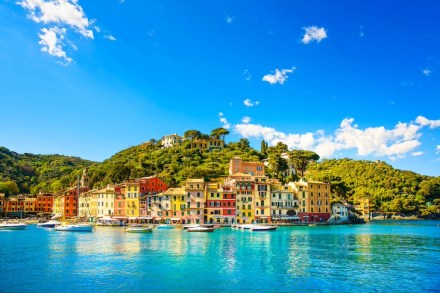
Portofino has become a living nightmare

From our UK edition

I can think of few things worse than being a tourist. So I must admit that I did manage a smirk, as I swelter my way through yet another Italian summer, at reports that the mayor of Portofino has apparently banned air-conditioning in an attempt to preserve the beauty of his town.  Yes, of course, I enjoyed the vision this conjured up of the bling and buy rich who these days infest the bijou little seaside town sweating like pigs – or the poor.

My Egyptian mau pyramid scheme

From our UK edition

Dante’s Beach, Ravenna Was it chance or destiny, I wonder, that caused the eldest of our six children, Caterina, to pull over in the dead of night and park the car where she did? She was on her way back with a young man from a beach party down the coast and had stopped next to a derelict farmhouse so she could look for shooting stars in the endless night and make a wish. That is how she found the latest animals to join our household: a very strange silver-grey cat with long legs and blackish spots and a single kitten who looked exactly the same in miniature. This tiny kitten constantly interrupted the star-gazing activities of Caterina and her suitor by straying out on to the road, followed by its mother, who was so weak that she looked half-dead.

Damian Thompson, Paola Romero, Stuart Jeffries, Ysenda Maxtone Graham, and Nicholas Farrell

From our UK edition

35 min listen

On this week’s Spectator Out Loud: Damian Thompson argues that Papal succession plotting is a case of life mirroring art (1:26); Paola Romero reports on Venezuela’s mix of Evita and Thatcher, Maria Corina Machado, and her chances of bringing down Nicolas Maduro (11:39); reviewing Richard Overy’s book ‘Why war?’, Stuart Jeffries reflects that war has as long a future as it has a past (17:38); Ysenda Maxtone Graham provides her notes on party bags (24:30); and, Nicholas Farrell ponders on the challenges of familial split-loyalties when watching the football in Italy (27:25).  Presented by Patrick Gibbons.

I still support England. What’s wrong with me?

From our UK edition

There was not a Spaniard in sight, I was pretty sure of that. But I was surrounded by the enemy, nevertheless. Naturally, the enemy included my Italian wife, Carla. We were at the open-air restaurant for the Euro 2024 final in one of the two village campsites not far from the nudist beach. If England beat Spain, I would have a plausible excuse to break out the booze after being on the wagon for far too many months and get patriotically sloshed. I knew that none of those gathered in front of the giant TV screen beneath the stars could be from Spain, because the Spanish do not come to Dante’s Beach near Ravenna. Nudism isn’t really their cup of tea. Instead, we get loads of Germans and Dutch who drive thousands of miles to strut about naked in front of each other.

Italians are beautiful – but not on this beach

From our UK edition

When Pope Francis complained recently about too much frociaggine (faggotry) in the Catholic Church, he certainly struck a chord in our house here at Dante’s Beach near Ravenna. Nudism used to be illegal on pain of up to three years in prison, but the nudists simply ignored the law We live a mile inland from one of the last stretches of Adriatic coast not lined by umbrellas and concrete but by sand dunes and pine forests. It is a spiaggia libera (free beach) as well, and so belongs to everyone. However, the most beautiful bit cannot be used by the silent majority: it has been stolen by a small minority of highly trained nudists, mostly gay. People who prefer to avoid mass nudity have had to go elsewhere. Many would call it Heaven though Dante himself would beg to differ.

Peter Parker, Wayne Hunt, Nicholas Lezard, Mark Mason and Nicholas Farrell

From our UK edition

33 min listen

On this week’s Spectator Out Loud: Peter Parker takes us through the history of guardsmen and homosexuality (1:12); Prof. Wayne Hunt explains what the Conservatives could learn from the 1993 Canadian election (9:10); Nicholas Lezard reflects on the diaries of Franz Kafka, on the eve of his centenary (16:06); Mark Mason provides his notes on Horse Guards (22:52); and, Nicholas Farrell ponders his wife’s potential suitors, once he’s died (26:01). Presented and produced by Patrick Gibbons.

Who will my wife marry next?

From our UK edition

Since I had a brush with death a couple of years ago, I have often wondered who my far younger wife, Carla, might marry after she has buried me. When I was out for the count in intensive care in Ravenna, the hospital’s duty priest, an Argentinian, even administered the last rites. ‘They do it just in case these days,’ Carla told me, as if it had all been a bit of a laugh, which I suppose it may well be if you believe, like her, that death is the prelude to eternal life. The other day, a herd of donkeys came charging into our garden out of the blue and I soon put two and two together They belonged to our nearest neighbour, Gianni, a farmer.

What’s behind Giorgia Meloni’s abortion position?

From our UK edition

Like drowning men clutching at straws, Giorgia Meloni’s opponents are trying ever more hopelessly to justify their claim that she is a far-right threat to democracy. It’s not that Meloni has stopped being far right since she became Italy’s first female prime minister 18 months ago. It is just that – despite all the apocalyptic warnings about her – she wasn’t far right to begin with. The new law is not an assault on the 1978 law that made abortion legal in Italy. Meloni as a premier has proved to be much more like a Mediterranean version of Margaret Thatcher than the heir to Benito Mussolini – which many of her opponents still call her. As a result, she and her party, Fratelli d’Italia, which tops the polls by a large margin, remain very popular.

Why Giorgia Meloni is taking on Alfa Romeo

From our UK edition

Italian Prime Minister Giorgia Meloni’s crusade to defend Italian excellence from the destructive side of globalisation has won a small but symbolic victory. Global car colossus Stellantis, which owns Alfa Romeo, has bowed to pressure from Italy’s right-wing government and changed the name of its new SUV, less than a week after its launch. Given the potentially huge expense involved in changing the name of a car – plus damage to the manufacturer’s image – such a volte face is said to be unprecedented. ‘Never before’ has a car manufacturer changed the name of a car in response to a political storm claimed Il Sole 24 Ore, Italy’s business daily.

Under the Italian sun, the insects are stirring

From our UK edition

The sun was setting on the first day of spring and I felt unusually happy as I fed the donkey. Winter, along with the fog and all the rest of it, had gone at last. But then from somewhere near my right ear I heard a small whining sound that for a moment I did not recognise. It was the first mosquito of the year. And I remembered how biblical it all gets round here under the Italian sun, insect-wise. Sometimes I wish I’d stayed up in the Apennines where there were no mosquitoes, just giant wasps There are a whole host of insects and other things, real, imagined, and in between, that prey on the bodies and minds of me, my wife Carla and our six children.

How I ran away to Italy

From our UK edition

A quarter of a century ago I somehow managed to get out of Paris where I had haunted a cheap hotel for months like a ghost trapped between this world and the next. I drove to Italy where I have lived ever since. I had a great contract with a famous publisher to write a biography of Benito Mussolini but had already spent the hefty advance and had yet to write a single word. On arrival in Italy, I did not even have enough money to pay the motorway toll. But the young woman in charge handed me a form to fill in and waved me through with a smile.

Bologna is rebelling against the 30 kph speed limit

From our UK edition

Ravenna You’re not supposed to mock the afflicted, I know, but I laughed when I read the news that the left-wing citadel of Bologna has introduced a 30 kph (19 mph) speed limit. Forcing the Italians – a nation of famously crazy drivers who make fabulous sports cars – to drive no faster than cyclists is to deprive them of an essential element of what it means to be Italian. Poor Italians. Is nothing sacred? Not even speed? Probably, thank God, not even globalisation can change the Italian psyche I’ve lived for so many years cheek by jowl with the Italians and their ins and outs that I must confess I find anything that pulls their tails funny.

The ancient roots of Italy’s Festa della Befana

From our UK edition

In Italy if you are not careful, you are condemned to measure out your life in religious festivals. There are so many of them. Perhaps that’s why I find La Befana a bit of a pain coming as it does so hard on the heels of so many others. Or maybe it’s because it is essentially a pagan festival and our civilisation has lost all contact with that world. But then again, maybe it’s just that I have become a miserable old git. The Festa della Befana takes place throughout Italy, but especially in the north, on 5 January, the night before Epiphany. It contains elements that are also found in Halloween, Guy Fawkes Night, Christmas and New Year.

Are the Pope’s allies funding people smugglers?

From our UK edition

Some of Pope Francis’s closest allies in the Catholic Church are alleged to have secretly given more than €2 million to an Italian migrant rescue charity whose senior staff are charged with people smuggling. They include Cardinal Matteo Zuppi, Archbishop of Bologna, who is among other things the papal peace envoy to Ukraine, and Cardinal Jean-Claude Hollerich, Archbishop of Luxembourg. These senior figures in the Church organised payment of the money, it is claimed, at the bequest of the Pope who had established a special rapport with the far-left founder of the charity. The payments were kept secret for fear of adverse publicity.

The Italian left wants to blame Giorgia Meloni for the patriarchy

From our UK edition

This weekend, demonstrations took place in major Italian cities to mark the UN’s international day for the elimination of violence against women. Many on the Italian left used the opportunity to suggest Giorgia Meloni is aiding and abetting the murder of Italian women – even though she is Italy’s first female Prime Minister.    The largest protest was in Rome where demonstrators, mainly women – 500,000 according to the organisers – brandished placards saying ‘The Patriarchy Kills’, ‘We Support Female Fury Against The Fascist Meloni Government’ and ‘Meloni Fascist Zionist Collaborator’.

Could Britain learn from Italy’s migrant plan?

From our UK edition

Italy has become the first European Union country to bite the bullet and set up a scheme to off-shore migrant asylum seekers to a country outside the bloc. Italy’s right-wing prime minister Giorgia Meloni says she hopes the scheme, signed off in Rome last week with Albania’s left-wing prime minister, Edi Rama, will become a model copied across the EU.  It is similar to the Tory government’s troubled Rwanda scheme, but more practical and less vulnerable to legal challenge. Italy will process asylum requests in Albania where it plans to send tens of thousands of migrants a year. Britain, meanwhile, plans to hand the task of deciding who gets asylum to Rwanda and to send only a few hundred a year.

How Giorgia Meloni stabilised Italy

From our UK edition

Giorgia Meloni has just marked her first year as Italy’s prime minister. When elected, she was described as a far-right leader, the most right-wing that Italy has had since Mussolini. So after a year in office, were these labels justified? What kind of leader has she been? And has she done anything to justify the ‘far-right’ label still lazily applied to her? While running for office, Meloni asked to be judged by her words and policies, not by the fact that as a teenager she had joined Italy’s long disbanded post-fascist party. ‘Usually, Italian politics are somewhat comical,’ Giovanni Orsina of Luiss University in Rome recently admitted. ‘But by Italian standards, we're in a moment of unusual stability.’ So not, as breathlessly warned, a descent into far-right chaos.

Italy can’t handle the migrant crisis alone

From our UK edition

EU Commission President Ursula von der Leyen’s visit to Lampedusa at the weekend – at the invitation of Italy’s right-wing Prime Minister Giorgia Meloni – is a clear sign that the Euro establishment has abandoned its Pontius Pilate policy on the illegal migrant emergency in the central Mediterranean.  In the past week, around 12,000 migrants have arrived in several hundred small boats on the tiny Italian island that lies between North Africa and Sicily. They join the 129,869 migrants who have already reached Italy by sea this year – double the number last year over the same period. This year’s total is likely to exceed the 2016 record of 181,436.  Von der Leyen dropped everything to come to Lampedusa.

The tragedy of Italy’s dead bear – and the folly of rewilding

From our UK edition

A butcher who has killed the most famous wild bear in Italy is now unable to leave his house for fear of being killed himself. The tragedy calls into question, once again, the wisdom of the ever more fashionable quest by people in cities to rewild the countryside with dangerous animals such as bears and wolves. There are no two ways about it: these animals wreak havoc. If those in the city whose closest encounter with a wild animal is a feral pigeon, sewer rat, or urban fox, want such animals back in the countryside then they must accept that those who actually live in the countryside have the right to kill them, if necessary. But as this tragedy shows, city people will lift heaven and earth to deny country people such a right.

How Georgia Meloni plans to stop the boats

From our UK edition

Few can deny that the arrival of 100,000 illegal migrants to Britain from France by small boat since 2018 is nothing short of a catastrophe.   So what word would best describe the arrival in Italy by sea from North Africa of 100,000 illegal migrants already this year?  So Meloni’s main focus is not on dealing with the migrants once they are in Italy but on stopping them getting to Italy That is well over double the number of migrant sea arrivals in Italy during the same period in 2022. It means this year’s total will almost certainly break the record set in 2016 of 181,436. This weekend alone more than 4,000 migrants arrived by boat on the tiny Italian island of Lampedusa half way between Tunisia and Italy.