Who will win the corona wars?
History shows plagues are bad for big empires with weak frontiers: ask the Roman emperor Marcus Aurelius
Niall Ferguson is the Milbank Family Senior Fellow at the Hoover Institution, Stanford University and a Bloomberg Opinion columnist
History shows plagues are bad for big empires with weak frontiers: ask the Roman emperor Marcus Aurelius
From our UK edition
The 1960s were swinging. The 1970s were stagflationary. In the 1980s we made loadsamoney and greed was good. The 1990s were dot.commy. And the 2000s were the boom and bust decade. Characterising ten-year periods in this casual way is something journalists love to do. It’s deplorably unscientific and yet pleasingly decentralised. A consensus simply emerged
From our UK edition
I spent the early part of last week in London, filming what are known in the television trade as PTCs (‘pieces to camera’). These will form the connecting tissue for a three-part documentary series loosely based on my most recent book, The Square and the Tower. Ten years ago, I did a lot of this
From our UK edition
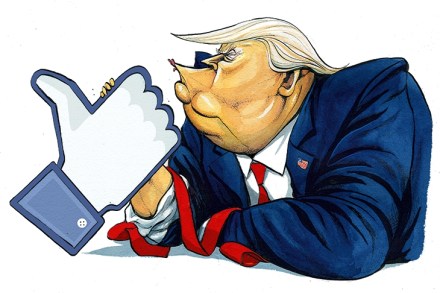
In the 1962 Japanese sci-fi classic King Kong vs Godzilla, the two giant monsters fight to a stalemate atop Mount Fuji. I have been wondering for some time when the two giants of American social media would square up for what promises to be a comparably brutal battle. Finally, it began last month — and
From our UK edition
I suppose there are such things as amicable divorces. Mine wasn’t. Like the First World War, it was fought for more than four years, and ended with the Treaty of Versailles (by which I mean that it imposed territorial losses and the payment of annual reparations for a very long time). Which brings me to
From our UK edition
In 1873, when Jules Verne published his Around the World in Eighty Days, it seemed worth betting that a circumnavigation of the globe could be achieved in less than three months. Having just completed the feat in roughly three weeks, I feel like a slowcoach. (I gather it can be done on scheduled flights in
From our UK edition
I have a sinking feeling that Joe Biden might be the next president of the United States. In a brilliant essay published by the American Spectator in 2010, Angelo Codevilla of Boston University foresaw a popular revolt against ‘America’s ruling class’. What he calls ‘the Country party’ repudiates the co-option of the mainstream Republican party
From our UK edition
It used to be that the most annoying thing in academic life was political correctness. But a new irritant now threatens to supplant it: the scourge of correct politicalness. The essence of correct politicalness is to seek to undermine an irrefutable argument by claiming loudly and repetitively to have found an error in it. As
From our UK edition
It was Clare Booth Luce, the witty and glamorous wife of the publisher of Time magazine, who coined the phrase that no good deed goes unpunished. It is all you need to know about British politics today. The UK had the best performing of the G7 economies last year, with a real GDP growth rate
From our UK edition
It was back in 2001 that my good friend Jim O’Neill of Goldman Sachs coined the acronym ‘Bric’, short for Brazil, Russia, India, China. These were the emerging markets that were going to surpass the developed economies. And so they have. Well, nearly. I, too, am partial to a good acronym and it has always
From our UK edition
São Paolo It was back in 2001 that my good friend Jim O’Neill of Goldman Sachs coined the acronym ‘Bric’, short for Brazil, Russia, India, China. These were the emerging markets that were going to surpass the developed economies. And so they have. Well, nearly. I, too, am partial to a good acronym and it
From our UK edition
It’s an ill wind that blows no one any good. The financial crisis that came to a head five years ago with the failure of Lehman Brothers has been especially beneficial to the economist Paul Krugman. In his widely read New York Times column and blog, Krugman regularly boasts that he has been ‘right’ about the crisis
From our UK edition
Last week I said something stupid about John Maynard Keynes. Asked to comment on Keynes’s famous observation ‘In the long run we are all dead,’ I suggested that Keynes was perhaps indifferent to the long run because he had no children, and that he had no children because he was gay. This was doubly stupid.
From our UK edition
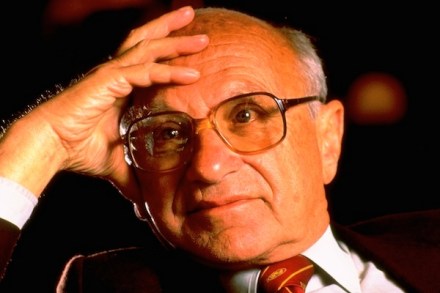
Milton Friedman would have been 100 later this month. As well as being one of the great economists, if not the greatest economist, of the 20th century, he was also what the Americans call a public intellectual. He was a regular on PBS, the American equivalent of the BBC, writing and presenting Free To Choose, a ten-part series
From our UK edition
My ‘literary spat’ with the London Review of Books Economic history is not politically correct. Many on the left therefore struggle with its findings. It is indeed astonishing that, from the beginning of the 16th century until the third quarter of the 20th century, the West (Europe and its settler colonies) did much better than
From our UK edition
Niall Ferguson says that Tony Blair and George W. Bush are perfect partners — Christian soldiers armed with Bibles and bazookas — but Britain now has more in common with Europe than with the United States ‘I kind of think that the decisions taken in the next few weeks will determine the rest of the