Michela Wrong

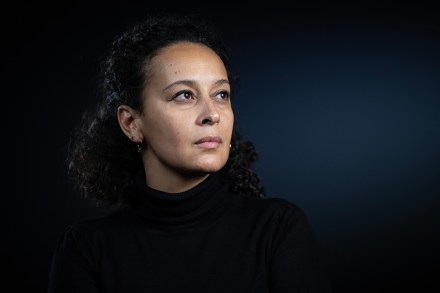
Michela Wrong is the author of Do Not Disturb: The Story of a Political Murder and an African Regime Gone Bad, published by HarperCollins.

A late Congolese ruler with a new following

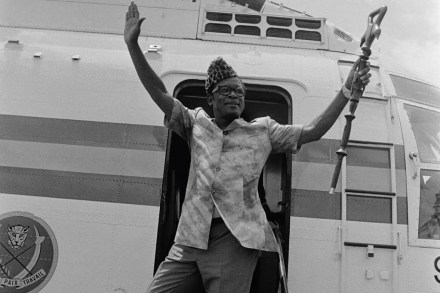
At the exit of the National Museum in Kinshasa, capital of the Democratic Republic of Congo (DRC), is a whiteboard for visitors to leave their comments. On that whiteboard, full of underlinings and exclamation marks, are messages like this: “Thank you for your life.” “Thank you for our national unity.” “You left behind a glorious

The danger of becoming a ‘professional survivor’

From our UK edition

It was a relatively minor episode in a period marked by the killing of two African presidents, months of massacres in churches, schools and sports stadiums, a biblical exodus by much of the Hutu population, a cholera outbreak in refugee camps established in the neighbouring Democratic Republic of Congo (DRC), and a rebel takeover of

The psychological toll of being constantly tracked and harassed

From our UK edition

In late 2018 a Saudi journalist living in exile in Canada, who liked to work out in between recording YouTube critiques of his government, ordered some protein powder online. When a text message landed on Omar Abdulaziz’s smartphone notifying him of a DHL delivery, he clicked on it without hesitating. The portrait Deibert paints is

Never underestimate the complexities of African history

From our UK edition

What does it take to bury an outdated argument? The thought occurred while reading Motherland, one of a series of recent books seemingly haunted by the ghost of Hugh Trevor-Roper. Back in 1964, Trevor-Roper, an expert on the English Civil War and the Third Reich, made the mistake of opining on African history. There was

The truth about the Rwandan genocide

From our UK edition

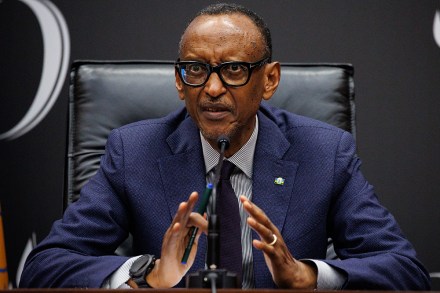
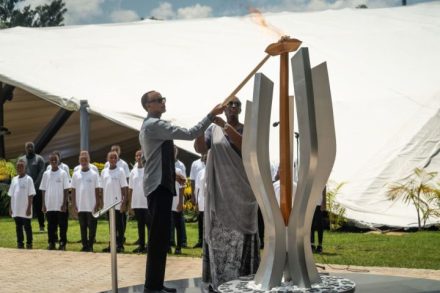
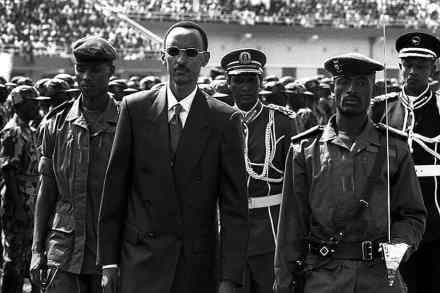
Today a solemn ceremony takes place in Rwanda’s capital. President Paul Kagame, flanked by international dignitaries – including our own development secretary Andrew Mitchell – will light a flame of remembrance at Kigali’s genocide memorial, where the bones of more than 250,000 people are interred. ‘Kwibuka’ (‘Remember’ in Kinyarwanda) – this act of commemoration –

The fresh, forceful voice of Frantz Fanon

From our UK edition

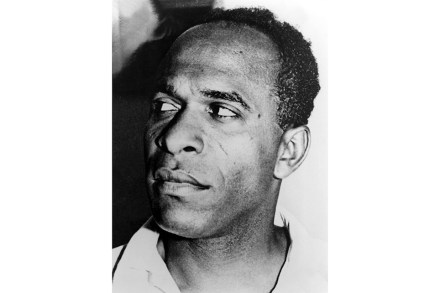
‘If I’d died in my thirties, what would be left behind?’ is the question that keeps coming to mind reading this timely new biography of Frantz Fanon, the psychiatrist and philosopher who became an icon to leftist revolutionaries across the globe. ‘Would I want history to judge me by what I wrote at 36?’ For

Why were 80,000 Asians suddenly expelled from Uganda in 1972?

From our UK edition

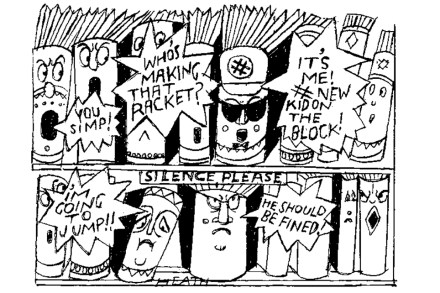
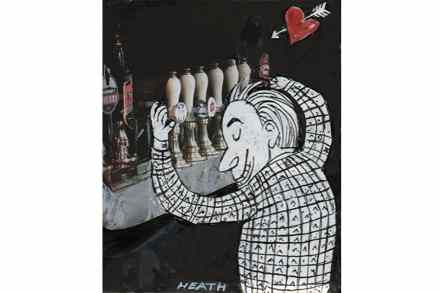
The mantelpieces of many an Asian family in Leicester and London, it is said, sport two framed photographs. One is of Idi Amin, the African dictator who expelled them from Uganda; the other is of Edward Heath, the prime minister who allowed them in. ‘This double gratitude,’ writes Lucy Fulford, ‘says thanks for throwing us

Michela Wrong, Emily Rhodes and Cindy Yu

From our UK edition

21 min listen

This week: Michela Wrong asks whether anywhere is safe for Kagame’s critics (00:58), Emily Rhodes charts the rise of fake libraries (07:54), and Cindy Yu reviews a new exhibition at the British Museum on China’s hidden century (15:25).  Produced and presented by Oscar Edmondson. 

Is anywhere safe for Paul Kagame’s critics?

From our UK edition

After weeks of travelling – first Paris, then Kinshasa – I was looking forward to my evening at L’Horloge du Sud in Brussels. Known for its poisson liboké (fish wrapped in banana leaf) and other African specialities, the restaurant is popular with the city’s African diaspora. I’d been invited by a Pan-African thinktank to discuss

The butcher of Chad who died in a private Senegalese clinic

From our UK edition

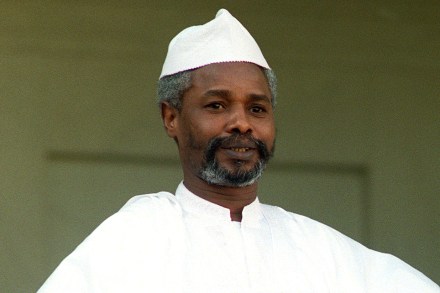
Recent years have not been kind to the campaign for universal justice. The notion that some crimes are so serious that perpetrators should be hunted down and prosecuted irrespective of where the atrocities were actually committed has taken something of a beating since the International Criminal Court (ICC) opened for business in the Hague in

How much longer can Boris Johnson keep going?

From our UK edition

41 min listen

In this episode: Is Boris going to limp on? In her cover piece this week, Katy Balls writes that although Boris Johnson believes he can survive the partygate scandal, he has some way to go until he is safe, while in his column, James Forsyth writes about why the Tories have a summer of discontent ahead

Priti Patel is playing into Paul Kagame’s hands

From our UK edition

If President Paul Kagame has been tracking the furore over Priti Patel’s plan to send asylum seekers to Rwanda, he’s been doing it on the hoof. Kagame moves constantly these days: the news broke while he was en route to Barbados after a visit to Jamaica. In the past two months he has been to

Fraser Nelson, Michela Wrong and Mark Mason

From our UK edition

25 min listen

On this week’s episode, Fraser Nelson starts by reading the leader. Britain has a labour shortage and our immigration system is a mess – why not have an amnesty for migrants without legal status? (01:00) Michela Wrong is on next. She found herself in the sights of Rwandan President Paul Kagame after she wrote a

Pleading with the emperor

From our UK edition

Yetemegn was barely eight years old when her parents married her off to a man in his thirties. Before she could become a spouse, he first had to raise her. Her education involved beatings when she left the house, even if it was only to borrow shallots from a neighbour. At 14, she gave birth

Spectator Books of the Year: John le Carré examines his own life

From our UK edition

Back in 2006, David Cornwell, aka John le Carré, hired me as guide for his first trip to the Democratic Republic of Congo (DRC), to research The Mission Song. Evenings were spent on the terrace of the Orchids Hotel in Bukavu, watching pirogues languidly traverse Lake Kivu, ice cubes clinking in respective glasses of Scotch. It

Rwanda’s new tragedy

From our UK edition

Never lighthearted, my African political exile friend sounded particularly lugubrious on the line from Washington. His voice was low and pensive. For the past few months, he said, he’d been hearing of plans hatched by the regime back home for his assassination. ‘They are very gruesome, very gruesome indeed.’ It was not the first time.

Our man in Africa

From our UK edition

This novel comes with two mysteries attached, one substantial, the other superficial. The big mystery is the author’s identity. Gender-neutral, nominally Anglo-Saxon, almost provocatively bland, ‘C.B. George’ screams ‘pseudonym’ to any reader. A call to the literary agent confirms the suspicion: the author is keeping his identity secret ‘for personal reasons’, which may or may