Michael Nazir-Ali

The Right Revd Dr Michael Nazir-Ali is a former Bishop of Rochester.

Can the India-Pakistan ceasefire hold?

From our UK edition

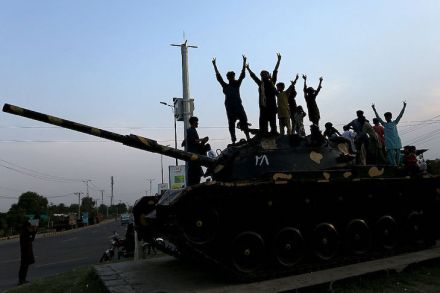
The cold-blooded killing of unarmed tourists by terrorists in Indian administered Kashmir has horrified not only Indians but people all over the world. The conviction in India that Pakistan was somehow or the other behind this attack, led it to strike at nine sites in Pakistan which it regarded as ‘terrorist camps’. Pakistan, in turn, attacked the military bases from where it believed the attacks on its territory had come and, given that these are two nuclear powers, the whole situation seemed to be escalating alarmingly.
Are Syrian Christians who speak the language of Jesus about to disappear after 2,000 years?

From our UK edition

26 min listen

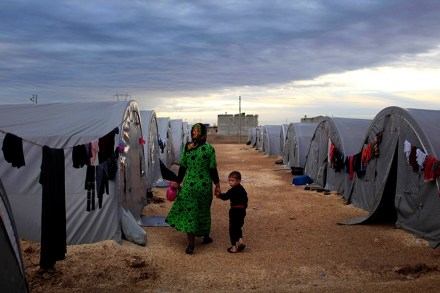
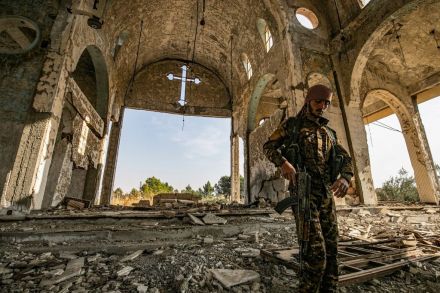
There has been a Christian community in Syria since the first century AD. But it is shrinking fast and faces terrifying new threats as the country’s government, following the overthrow of President Assad, forges alliances with hardline Muslims including foreign jihadists – Uighurs from China, Uzbeks from Central Asia, Chechens from Russia, Afghans and Pakistanis. Mgr Michael Nazir-Ali, the former Anglican Bishop of Rochester who is now a Catholic priest of the Ordinariate, has written a heartbreaking piece for The Spectator about the Christians of Maaloula in southwest Syria. It’s one of the last remaining communities to speak Syriac, a dialect of Aramaic, the language of Jesus Christ.

Syria’s Christians face an uncertain future

From our UK edition

When I visited Maaloula in southwest Syria in 2016, the Jabhat Al-Nusra (the predecessor of the Hayat Tahrir Ash Sham jihadis, who have toppled Bashar al-Assad) had systematically destroyed and desecrated the town’s churches and monasteries. Orthodox nuns were kidnapped and held to ransom, only freed after the Syrian government agreed to release extremist prisoners. During my visit, I was told again and again that young men had been singled out and executed when they refused to convert to the extremists’ version of Islam. Some of the most moving moments in my life have been to pray with the townsfolk and help to rededicate an ancient altar that had been desecrated by the militants. Maaloula isn’t just another small town caught in the crossfire of Syria’s brutal civil war.

Monsignor Michael Nazir-Ali on his first Easter as a Catholic

From our UK edition

22 min listen

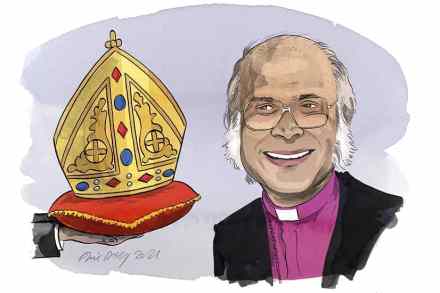
My guest on this episode of Holy Smoke was an Anglican bishop for 37 years – one of the Church of England's foremost scholars and its leading witness for persecuted Christians. He was also an evangelical who, as bishop of the ancient see of Rochester, ordained women priests. But, as of this month, his title is Monsignor. I am, of course, talking about the Pakistani-born Michael Nazir-Ali, whose decision to join the Ordinariate has come as an enormous, if surprising, boost to the fortunes of that small but dynamic organisation for ex-Anglicans set up by Pope Benedict XVI. This will be his first Easter not just as a monsignor – he has just been made a Prelate of Honour by Pope Francis – but as a Catholic.

The plot against religious education

From our UK edition

Faith is not the declining force that some secularists believe or indeed desire it to be. Even here in the UK, we have our growing and vibrant black-led churches; increasingly present mosques, temples and gurudwaras; and believers arriving from Eastern and Central Europe.  This is why it's important for religious education to continue to have a special place in the curriculum of our schools. Although RE is not a ‘core subject', it remains a compulsory one. Successive Education Acts have stipulated that it should be taught in such a way that reflects the mainly Judaeo-Christian traditions of this country — while also covering the teachings and practices of other religions present here.

The C of E has fallen for anti-Christian theories of race

From our UK edition

In its new report, From Lament to Action, the Church of England has decided to focus on race. Now, there is no question that racism exists within all cultures, but the Judaeo-Christian tradition has always been opposed to it. Christianity emphasises the common origin of all humans, made in God’s image, and contemporary science corroborates this moral and spiritual insight. The Church is right to set its face against racism. Predictably, however, the C of E report urges an audit of monuments and an examination of the Church’s complicity in the slave trade. Why doesn’t it celebrate the long tradition of those Christians who devoted their lives to abolition?

Boris, ‘greed’ and the moral case for capitalism

From our UK edition

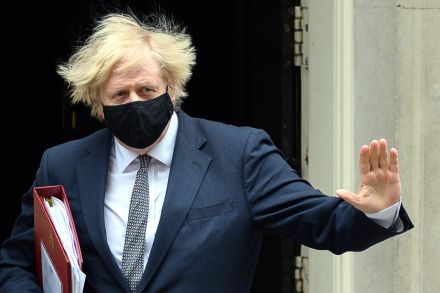
I, for one, was not surprised by the Prime Minister’s remark to his parliamentary colleagues about greed fuelling the race to develop a vaccination for Coronavirus. I well remember some years ago, when he and I were both on the Any Questions panel, he said to me in an audible aside:  'Bishop, greed is good isn’t it because it makes us rich?'  I replied quickly to say something like you would expect me to say no, and the reason is that it makes a few people rich but it impoverishes many. Greed also causes some to fall into debt and even crime, because of the desire to ‘get rich quick’. Greed makes us turn in on ourselves The Judaeo-Christian tradition is uniformly negative about greed.

The best response to Islamism is Christianity

From our UK edition

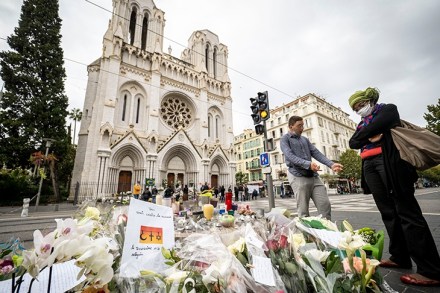
It has become normal to think of the Islamist attacks in Europe as attacks on a secular way of life. The beheading of the teacher in Paris, the murders in Notre-Dame in Nice and the shootings in Vienna are presented as a struggle between radical Islamism and a particular kind of enlightened secularism born of the French Revolution. That’s the way Emmanuel Macron sees it; that’s the way most educated atheists across Europe see it. But what they forget is that Enlightenment ethics — the ideas of tolerance and fairness — have their foundation in Christianity. And the best response to violent Islamism isn’t humanism, but the idea of a loving, merciful Christian God.

There is no justification for turning Hagia Sophia into a mosque

From our UK edition

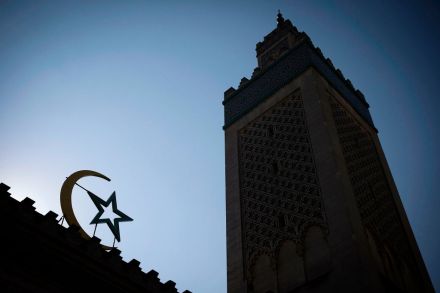
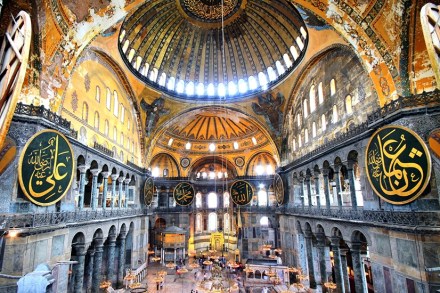
It is official: Hagia Sophia, for a thousand years the world’s largest cathedral, and since 1934 a museum, is to be turned back into a mosque. Ever since I heard of the possibility, I have been praying it would not be so because of the impact it will have on Muslim-Christian relations in Turkey, the Middle East and beyond. A suitably purged and compliant judiciary, however, has bowed to the wishes of the authoritarian President Erdogan that Turkey should become more Islamic and less secular. There has been a church on the site since 360 ad and the present building dates from the reign of Justinian in the mid-sixth century.

Why can’t Britain’s foreign aid be used to help Christians too?

From our UK edition

For years now, the British government has prided itself on how much money it gives away in foreign aid. But of course it’s not just the amount that matters — it’s how effective it is. Now that the Prime Minister is to wrap the Department for International Development back into the Foreign Office, it’s a chance for us to ask again: who are we as a country? What are our values? And how can we ensure that taxpayers’ money is well spent? It can be difficult to ensure that a recipient of aid is legitimate and worthy. That’s why there’s been a tendency for the UK and aid agencies to rely on giving to foreign governments and their bureaucracies.

Act now to save the Middle East’s Christians

From our UK edition

It is hard to believe that at one time nearly the whole of the Middle East and much of north Africa were predominantly Christian. Think of the great Christian cities such as Alexandria, Damascus, Edessa, Constantinople and Carthage. Monasticism, the great civilising force, in both east and west, took its rise to the dusty end of the Mediterranean and some of the church’s greatest theologians came from there. What changed the picture? In a word, Islam. The arrival of the newly Muslim Arabs disrupted the flow of history in the Middle East and beyond. The Christian cities capitulated one by one. Some communities were destroyed in the conflict, others were dispersed.

As an Anglican ex-bishop, I can tell you: Iran’s new president could be our best hope for peace

From our UK edition

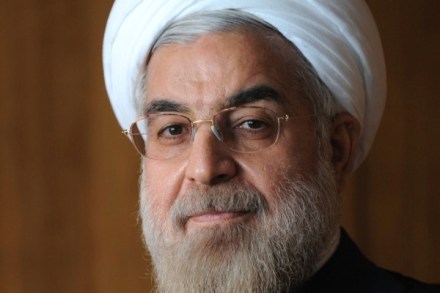
The installation of Hassan Rouhani as President of Iran next month heralds a new chapter for the country. It is clear that he was elected not only because it was felt — both at the highest levels and by the people — that he was best placed to negotiate with the West on Iran’s nuclear programme but also because he was the candidate most likely to appeal to reform-hungry Iranians. Rouhani is a protégé of the former president Muhammed Khatami, with whom I have had the chance to work. When he was President, I spent a whole day with him meeting political, civil society and religious leaders. Visiting him in Iran, I was always struck by his learning and his humility.