Michael Lind

How should AI be regulated?

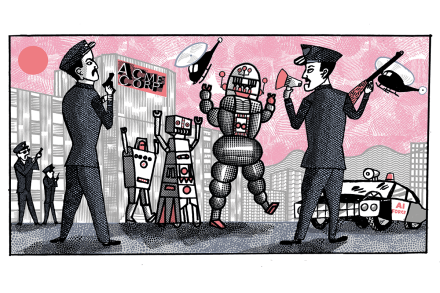
As artificial intelligence becomes increasingly sophisticated, the time has come for humanity to choose. Should the nations of the world shut down or tightly regulate AI until it is clear a godlike artificial superintelligence will not gain consciousness and exterminate the human race? Or should governments not regulate AI at all, in the hope that it will cause an acceleration of technological progress that results in our colonization of the universe, our uploading as bodiless computer programs into the galaxy-wide web – or both? Or how about a third option: AI regulation by AI-enabled industry? AI may turn out to be the latest in a series of “general purpose technologies” (GPTs) that transform the economy, politics and society.
AI

Our future is a ‘mafiacracy’

From our UK edition

If the nightmare of anticommunists during the cold war was an endless future of totalitarian terror, the nightmare of today’s critics of liberalism is an endless future of constant social upheaval and atomisation as a result of unchecked markets and radical individualism. Not a boot stamping on a human face forever, but a high-tech appliance in need of the latest upgrades – forever. What many critics as well as defenders of liberalism tend to overlook is the possibility that liberalism – in the economy, in politics, and in culture – will prove to be unstable and self-liquidating. To put it another way, a liberal social order tends to be an ephemeral transition between one nonliberal system or regime and another.

Why bad jobs are the root of America’s problems

Low wages are bad for everyone in the United States — not just for the working poor. Every major social crisis Americans face today — falling fertility, the loneliness epidemic, bitter conflicts over racial and gender identity, and growing partisan polarization in politics — is worsened if not caused by the proliferation of low wage jobs caused by the collapse of worker power. For centuries, children in the English-speaking countries have learned a proverb that has equivalents in other European languages (“want of” in this context means “lack of”): For want of a nail, the shoe was lost. For want of a shoe, the horse was lost. For want of a horse, the rider was lost. For want of a rider, the battle was lost. For want of a battle, the kingdom was lost.

west

How liberal globalism went bankrupt

When future historians chronicle the period after the Cold War, the rise of China will dominate their accounts. Beginning in the 2000s, China unleashed a flood of state-sponsored manufactures, many of them produced by western multinational corporations using Chinese labor on Chinese soil. This impoverished much of the already pressured industrial working class in the US and Europe, triggering populist revolts in rustbelts like the American Midwest, the north of England and eastern Germany. The recycling of profits from China’s chronic trade surpluses through the global financial system enriched western financial interests and helped to inflate bubbles in the real estate and stock markets. These burst in 2008, causing the Great Recession.

china

Pigeons are the solution to the statue controversy

Will nobody think of the pigeons? That thought has repeatedly occurred to me, as beloved roosts for generations of urban pigeons have been toppled in one city after another on both sides of the Atlantic by the radical left, in the greatest eruption of iconoclasm since the era when Theodora graced the burlesque stage in Constantinople. Tearing down Confederate war memorials, it turns out, is a gateway drug to toppling statues of Catholic saints, Civil War abolitionists and Abraham Lincoln himself. Gradually, it has dawned on a horrified, watching world: they don’t hate Confederates. They hate statues! All statues!Now, thanks to the actions of a lawless few, countless pigeons in cities in America and Europe have been rendered homeless.

pigeons

The rioters and the rentiers

It was inevitable that the wave of destructive rioting and looting that has swept through cities that are almost all governed by progressive Democrats, triggered initially by outrage over the sickening death in police custody of George Floyd, would be compared to the American urban riots of earlier generations. But the parallels miss profound differences in the underlying economic and social dynamics. The Detroit and Newark riots of 1967 and the Los Angeles riot of 1992, for example, took place in cities suffering from the effects of deindustrialization. Los Angeles is not often thought of as a major manufacturing center, but Southern California had a flourishing aerospace industry that went into decline following the Cold War.

rentiers

Back to the future

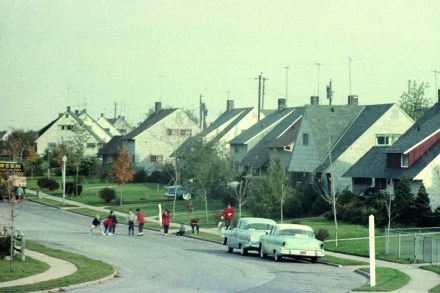
Will COVID-19 change society? If effective treatments and a vaccine are found, maybe not. After a bad year or two, the pre-pandemic status quo of dense cities, crowded subways and far-flung global supply chains might be restored, and the global plague might be forgotten as swiftly as the Spanish flu was in the subsequent Jazz Age. I don’t think so. I hope to be proven wrong, but I suspect the trauma will endure long enough to effect lasting changes in lifestyles and business models. In the United States and similar western democracies, the post-pandemic social order may seem more like that of the 1950s than the 2000s.

1950s

Right on: Boris Johnson’s Britain and the new political reality

Political realignments occur when large groups of voters desert one party for one or more other parties, shattering old coalitions and forming new ones. In America and northern Europe, working-class voters — mostly, but not exclusively, native and white — have been leaving established left-of-center parties. On their way out, they have met college-educated metropolitan professionals and managers migrating the other way. Center-left parties have exchanged the industrial workers who were once their core constituency for a new upscale clientele. The emerging center-left is supported by the college-credentialed middle classes, native minorities and immigrant diasporas.

boris johnson right neoliberalism

How government should respond

Misdiagnosis can be fatal in a pandemic. Treating the economic effects of the global COVID-19 epidemic as a conventional recession means prescribing the wrong medicine and harming the patient. This is a supply-side recession, not a demand-side recession. The shortfall includes intensive care beds, ventilators, protective gear for healthcare workers, and other medical supplies. Thanks to these shortages, as well as insufficient trained medical personnel, hospitals may soon be overwhelmed everywhere by the demands for treatment of coronavirus victims. To slow the spread of the virus while augmenting existing medical supplies and personnel, governments are promoting social distancing and sheltering in place, both euphemisms for quarantine.

health finance

Whatever happened to Trumpism?

From our UK edition

Well, that was quick. Along with President Donald Trump’s preliminary budget proposal, Trumpism as a radical new governing philosophy is dead on arrival. Trump was elected in part by voters who preferred Obama to Romney in 2012. They saw in Trump a different kind of Republican from the green-eyeshades accountants whose passion is cutting government spending on the middle class and the poor. During the campaign, Trump sounded more like a New Deal Democrat, promising a trillion dollars in infrastructure investment, the revitalization of manufacturing, and a less aggressive foreign policy. That Trump, it seems, is being held hostage in Mar-a-Lago, while the Trump impersonator who used to pose with photographers in front of Washington, D.C.

The most useful thing about drones? They fly under the political radar

From our UK edition

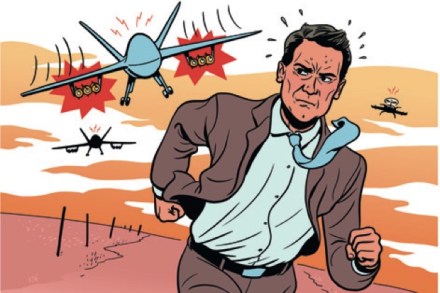
The targeted killing of suspected terrorists and enemy soldiers by drones is rapidly moving from controversial innovation to standard government practice around the world.  Pakistan’s announcement that it killed three suspected terrorists in a drone strike on Monday, September 7, makes Pakistan the fourth country to use drones in combat after the US, UK and Israel.  News of the Pakistani strike followed the controversy that erupted in the UK over Prime Minister David Cameron’s revelation that two British nationals had been killed in an RAF drone strike in Syria. Some opponents of drone warfare argue that it is immoral, nothing more than the summary execution of suspects.

The summer of Trump may soon be over – but the damage has still been done

From our UK edition

They call it the summer of Trump. Only a year ago everyone expected the 2016 presidential election to be a clash of dynasties, with Hillary Clinton and Jeb Bush enjoying coronations by the Democrats and Republicans. But Bernie Sanders, the socialist Senator from Vermont, is proving to be a formidable challenge to Clinton. Even more disruptive, on the Republican side, has been Donald Trump. While Sanders represents the left wing of a common progressivism he shares with Hillary Clinton, Trump is challenging conservative orthodoxy itself by giving voice to a robust right-wing populism. Populists love outsiders, can-do executives and simple policy panaceas, and Trump, a billionaire real estate developer and veteran reality television star, gives the people what they want.

All right now

From our UK edition

From the US elections in November, the American left will be largely absent. Americans voters will choose between the forces of moderate conservatism, headed by President Barack Obama, and the forces of radicalism, led by Republican presidential candidate Mitt Romney. Obama and most of his fellow Democrats are conservatives in two senses. To begin with, most of their policy agenda originated on the right, not the left. Obama’s foreign policy has its roots in the tradition of Republican realists like Colin Powell, Brent Scowcroft, Henry Kissinger, Richard Nixon and his first defence secretary, Robert Gates, who was a carry-over from the Bush administration.

How America’s right wing is becoming a lot more like Britain’s

From our UK edition

   Washington DC [audioplayer src="http://traffic.libsyn.com/spectator/TheViewFrom22_20_Nov_2014_v4.mp3" title="Michael Lind and Sebastian Payne discuss the growing similarities of the Britain and American right" startat=1350] Listen [/audioplayer]Amid all the commentary about the Republican party’s triumph in America’s midterm elections, a remarkable fact was ignored: in style and substance, the American right is rapidly becoming a lot more like Britain’s. And that might be the key to its success. In the last generation, American right-wingers have stood proudly apart from their counterparts in Europe, Britain, Canada and Australia. They were more religious, and more supportive of mass immigration. But that is changing.

The wars that really are about the oil

From our UK edition

Is international conflict really just a fight over oil? It sometimes seems that way. In Syria and Iraq, the militants of the so-called ‘Islamic State’ sell captured oil while battling to establish a puritanical Sunni theo-cracy. From Central Asia to Ukraine, Russia is contesting attempts (backed by the US) to minimise Europe’s dependence on Russian oil and natural gas. Meanwhile, Obama’s ‘pivot to Asia’ allows the US to threaten the choke points through which most of China’s oil imports must pass. Conspiracy-mongering petrodeterminists who try to reduce world politics to nothing but a clash for oil are too crude (pun intended). No shadowy cabal of oil company executives pulls the strings of world politics.

The age of turboparalysis

From our UK edition

More than half a decade has passed since the recession that triggered the financial panic and the Great Recession, but the condition of the world continues to be summed up by what I’ve called ‘turboparalysis’ — a prolonged condition of furious motion without movement in any particular direction, a situation in which the engine roars and the wheels spin but the vehicle refuses to move. The greatest economic crisis since the Great Depression might have been expected to produce revolutions in politics and the world of ideas alike. Outside of the Arab world, however, revolutions are hard to find. Mass unemployment and austerity policies have caused riots in Greece and Spain, but most developed nations are remarkably sedate.