Michael Heseltine

Michael Heseltine on Thatcher, Boris and Badenoch

From our UK edition

30 min listen

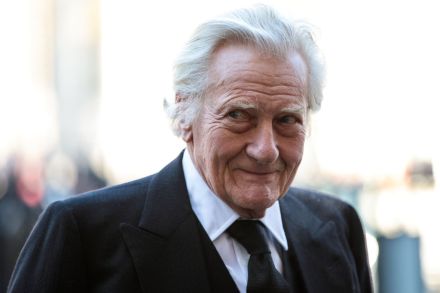
An MP for 35 years, Michael Heseltine served as Environment Secretary and then Defence Secretary in Margaret Thatcher’s government. Following his well-publicised resignation in 1986, he returned to government under John Major and was Deputy Prime Minister for the last two years of Major’s premiership. Once seen as a potential successor to Thatcher and Major, he has sat in the Lords since stepping down as an MP in 2001, and in recent years has been an outspoken critic of Brexit. Lord Heseltine sits down with James Heale to discuss his thoughts on the current Labour government, how to fix Britain’s broken economy and why devolution should go further.
Why I am joining the People’s Vote march on Saturday

From our UK edition

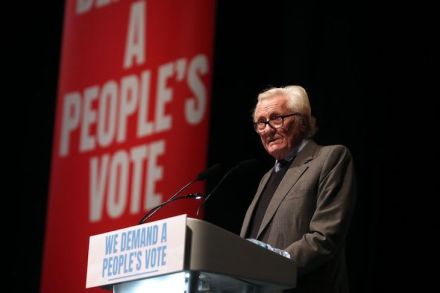
On Saturday I will join hundreds of thousands of British people demanding a People's Vote on Brexit. The Put it to the People march will give voice to the growing concern in the nation that Brexit is going horribly wrong. Of course I argued from the beginning that we were better off in the EU than out of it. Better off resolving our differences from within the European family than as an isolated onlooker chipping in from the side-lines. I believe passionately that at a time when the far-right is on the rise in Hungary and Poland and populists growing in influence in Italy, France, Germany and Holland, Britain is needed to provide leadership in Europe.

Diary – 20 October 2016

From our UK edition

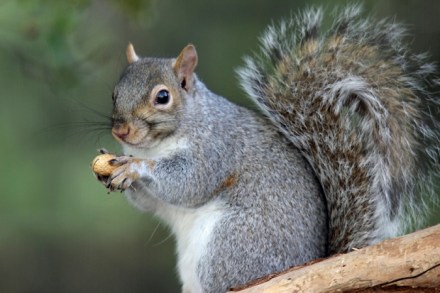
The week began badly when I spotted three grey squirrels gathering beechnuts in our arboretum. During our time at our home in Northamptonshire, my wife and I have anguished over our reluctance to indulge in wanton killing — and how far our tolerance of damage to the trees and nesting birds will stretch. But two years ago, we resolved the dilemma when squirrels wrecked our 30 nesting boxes. They had gnawed into the entrance holes before destroying the eggs and chicks. We employed two expert keepers who, in nine months, shot or trapped more than 400 squirrels over the 70-acre area. The increase in young birds the following summer has made us determined to maintain our ‘no squirrel’ policy.

Riding out the storm

From our UK edition

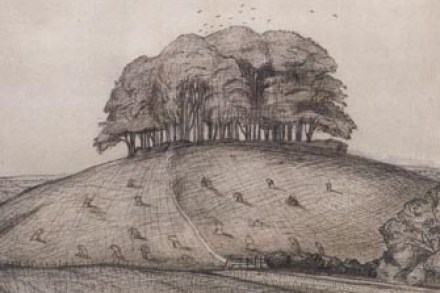
I share with Richard Mabey a love of trees. Beechcombings begins with the great storm of 1987, although Mabey’s love of trees has its origins in his childhood in the Chilterns. The childhood romance shines through. Trees were family. When I had the privilege of being Member of Parliament for Henley, and so the Stonor Valley, the great beech woods of the Chilterns were in my constituency. Mabey’s particular affection for the beech — fagus sylvatica — is touching, human and altogether understandable. I took a rather more positive view of the consequences of the 1987 storm than Mabey does. Of course there were some sad losses. Mabey refers to the beeches of Chartwell which Churchill so admired. If you looked at the carnage on the ground it was devastating.

Diary – 7 October 2005

From our UK edition

A decade ago, as president of the Board of Trade, I was responsible for competition policy. I could refer or not refer. I could accept advice or reject it. In the background — but not far away — were Parliament and public scrutiny. How times change. The Office of Fair Trading is now its own creature. Ministers have washed their proverbial hands; quangocrats rule. So what is going on in this citadel of devolved power?

I do not see how the Attorney-General can stay in the government

From our UK edition

When the House of Commons returns next week, Iain Duncan Smith will face a personal and political decision that must rank as among the most challenging of his career. He has to decide how the Conservative party handles Iraq. Iain has a special responsibility, both to the nation and to the party. Some time before British troops went into battle to seek and destroy weapons that were said to threaten this country, the Leader of the Opposition was invited to No. 10 for a briefing on Privy Council terms. By accepting a discussion on those terms he would have felt a deep commitment not to seek to abuse the privilege, or to play politics with it. That is what one would expect. Whether he was wise to accept so binding a commitment in such questionable circumstances is another matter.