Michael Gove

Michael Gove

Michael Gove is editor of The Spectator.

Local elections preview: how bad will it be for Labour?

From our UK edition

26 min listen

In this week’s Q&A: are the local elections about to deliver a political shock? With Labour facing pressure from Reform, the Greens and resurgent local challengers, Michael and Maddie assess whether the party is heading for heavy losses – and what it would mean if even its traditional heartlands start to slip away. Also this week: can journalists trust artificial intelligence? After a high-profile case of AI use in the media, they debate where the line should be drawn – and whether relying on it risks hollowing out real expertise and judgment. And finally: has ‘twee’ taken over? From Paddington to ‘be kind’, they ask whether a softer, more infantilised tone is crowding out serious debate – and what that says about modern Britain. Produced by Oscar Edmondson.

Southport inquiry: they knew he was evil, why wasn’t he stopped?

From our UK edition

50 min listen

This week: the Southport inquiry and a deeper question about why Britain’s institutions keep failing to act. After a damning report into the killings revealed that Axel Rudakubana was ‘known to authorities’, Michael and Madeline ask how so many warning signs were missed. Did a fear of getting things wrong – or being accused of racism – stop professionals from intervening?  Also on the podcast: another retreat from Keir Starmer. The government has dropped its Chagos bill – but is this a pragmatic recognition of geopolitical reality, or another sign of strategic confusion at the top of government? And finally: Labour’s growing dilemma over sex and gender.

Anas Sarwar: why I said Starmer should go – and what I told Wes Streeting

From our UK edition

50 min listen

One month on from calling for Keir Starmer's resignation, Anas Sarwar – the leader of Scottish Labour – joins Michael Gove to reflect on British politics ahead of the May elections. Does he stand by his call for the Prime Minister to go? And, having spoken to Wes Streeting the weekend before, what advice did his close ally give? The May local and regional elections promise to be the 'fiercest battle' for Scotland's future. Yet after over two decades in power, what does he make of polling that suggests the SNP will win – again? Is Reform posing a threat to Labour? And how can Scottish Labour offer a realistic alternative? Plus: which Westminster cabinet minister would he like to see campaign in Scotland – and who are his political heroes?

LIVE: Should we defund or defend the BBC? | Michael Gove & Jon Sopel v Charles Moore & Allison Pearson

From our UK edition

60 min listen

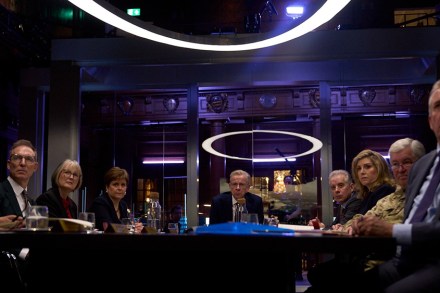
Should we defund – or defend – the BBC?   Live from London, the Spectator hosted a debate on the future of this iconic British institution, compered by associate editor Isabel Hardman. The Spectator’s chairman – and long-time Beeb-critic – Charles Moore, and the Telegraph’s Allison Pearson went head-to-head with the Spectator’s editor – and former Tory cabinet minister – Michael Gove and the former BBC correspondent – now-podcaster with The Newsagents – Jon Sopel.    Defund: do you agree with Lord Moore that the BBC is constantly breaking impartiality? That this issue ‘more profound than just about balance’ – that this is a systemic issue which hampers the British public’s opportunity to learn.

LIVE: Should we defund or defend the BBC? | Michael Gove & Jon Sopel v Charles Moore & Allison Pearson

Q&A: Do the Tories need a bigger kicking?

From our UK edition

30 min listen

To submit your urgent questions to Michael and Maddie, visit spectator.com/quiteright. In this week’s Q&A: do the Conservatives need an even bigger kicking? After their worst defeat in generations, they debate whether the party has really changed – or whether voters still see a gap between what it says and what it does. Also this week: what does Keir Starmer actually mean by acting in the ‘national interest’? As the conflict with Iran escalates, they unpack whether the Prime Minister’s language reflects a clear strategy – or political positioning. And finally: who are the best-read politicians – and which books should anyone in power be reading? Produced by Oscar Edmondson.

The truth about England’s ‘New Towns’

From our UK edition

At the end of last week, the government suggested there should be resonant names – that evoked the grandeur of past heroes – for seven magnificent New Towns to be built across England. Just as Clement Attlee had envisioned a new Jerusalem after years of Tory neglect, so Labour would once again build the wholly new settlements of the future. If Leeds South Bank is a New Town then Stonehenge is a cutting edge aesthetic installation reflecting the vibrancy of Young British Artists The ambition of post-war years, which gave us Milton Keynes, Harlow, Bracknell, Crawley and other visionary developments, was to be re-kindled. The names suggested for these New Towns – Attleeton, Elizabethtown, Seacole, Athelstan, Pankhurst – provoked debate. They were meant to.

Coexistence or ‘dominance’? The political Islam debate

From our UK edition

50 min listen

This week: the row over political Islam and a bigger question beneath it. After Nick Timothy’s comments on public prayer in Trafalgar Square caused a political firestorm, Michael and Madeline ask whether Britain can still have an honest debate about faith, free speech and the public square. Where is the line between coexistence and an assertion of dominance – and are politicians too afraid to confront it? Also on the podcast: the future of the Church of England. With Sarah Mullally set to become the first female Archbishop of Canterbury, they debate what her leadership might mean for an institution struggling with bureaucracy, declining trust and questions over its moral authority. And finally: Angela Rayner and the battle for Labour’s future.

Q&A: The Greens’ secret weapon – and what happened to liberalism?

From our UK edition

30 min listen

To submit your urgent questions to Michael and Maddie, visit spectator.com/quiteright. In this week’s Q&A: the Green party and the rise of new MP Hannah Spencer. Does a softer, more appealing political style mask something more radical beneath the surface – and is that precisely the secret of the party’s growing success? Also this week: whatever happened to levelling up? Once the defining mission of British politics, they debate whether regional inequality has quietly slipped down the agenda – and what that says about how both Labour and the Conservative party now see the country. And finally: what on earth has happened to the Liberal Democrats?

Keir Starmer has surrendered to Ed Miliband – and we are all paying the price

Labour MPs who want Wes Streeting to be their leader have, apparently, one great fear. If their man triggers a contest, they are terrified it will lead to Ed Miliband entering the race to stop the Health Secretary – and coming out top. A Miliband premiership would, they worry, be the death of Labour. I’ve got news for them: we are already governed by Ed Miliband. This is now his administration. And they, and the rest of us, had better get used to it. Keir Starmer is no longer really in charge of this government – if he ever really was. He is Prime Minister in name only. His foreign policy, at this time of war, is Ed Miliband’s. His economic policy, Ed Miliband’s. His Chancellor, his political positioning, his very quest for meaning. All. Ed. Miliband.

What’s the point of Keir Starmer? – and the Lords vs the Commons

From our UK edition

42 min listen

This week: the stark question of Keir Starmer’s leadership. After a bruising week in Westminster – from fresh revelations about the Mandelson appointment to renewed scrutiny of the Prime Minister’s governing style – they debate whether Starmer’s cautious, process-driven approach is becoming a political liability. Will Labour move to replace him? Also on the podcast: the House of Lords, as peers prepare to scrutinise two of the most morally charged issues in politics: assisted dying and proposals to decriminalise abortion up to birth. With the Commons accused of rushing through profound legislative changes with limited debate, they ask whether the Lords is performing an essential constitutional role – or defying democratic authority.

Q&A: Should Starmer go left or right? – and Thimothée Chalemet’s tragédie en musique

From our UK edition

30 min listen

To submit your urgent questions to Michael and Maddie, visit spectator.com/quiteright. In this week’s Q&A, Michael and Maddie discuss whether Keir Starmer faces a deeper political dilemma: should the Labour party tack left to shore up its base, or move to the centre to win over voters uneasy about the party’s economic direction? Also this week: are Britain’s closest allies being taken for granted? From Canada and Australia to New Zealand, they consider whether the UK has neglected some of its most dependable international partners while chasing influence elsewhere. And finally, they turn to culture and ask why institutions like opera and ballet so often struggle to justify their place in modern public life.

Is Britain still a great power? – and why Ed Miliband should go

From our UK edition

42 min listen

This week: Michael and Maddie discuss the escalating crisis in the Middle East and ask a bigger question about Britain’s place in the world – is the UK still a great power, or has the conflict exposed just how limited our influence has become? They debate whether Britain has any real choice but to follow America in foreign policy, what the war reveals about the country’s diminished military capabilities, and whether Westminster is finally confronting the reality of Britain’s global position. Also on the podcast, they examine the growing backlash against Ed Miliband’s energy agenda.

Q&A: Has the Equality Act created a ‘hierarchy of victimhood’?

From our UK edition

35 min listen

To submit your urgent questions to Michael and Maddie, visit spectator.com/quiteright. In this week’s Q&A, Michael and Maddie ask whether Britain is driving its young and ambitious abroad. As more professionals head to places like Dubai in search of opportunity, they debate whether the real problem lies not with those who leave, but with the conditions pushing them out. Why do so many talented Britons feel they cannot build a future at home – and what does that say about the state of the country? Also this week: should the Equality Act be scrapped altogether? In light of Suella Braverman’s pledge to repeal it, they consider whether the law has drifted far beyond its original purpose. And finally, they discuss which right-wing leaders around the world they admire.

Iran: Trump has a plan — does Starmer? Plus the Spring Statement fallout

From our UK edition

40 min listen

This week: Michael and Maddie debate the escalating crisis in Iran and ask whether Donald Trump truly has a strategy – and whether Keir Starmer has one at all. They examine what Trump’s strikes are meant to achieve, whether regime change in Tehran is the real objective and why parts of the American right are uneasy about Israel’s influence over US foreign policy. Turning to Westminster, they assess Britain’s response. Has Starmer struck the right balance between caution and credibility – or has the crisis exposed the limits of Britain’s military strength and global influence? Finally, they review Rachel Reeves’s Spring Statement.

‘MPs are just not good enough’ – Munira Mirza on Boris, Starmer and Britain’s leadership crisis | part two

From our UK edition

42 min listen

This is the second part of Michael Gove’s conversation with Munira Mirza. After reflecting in part one on multiculturalism and the fractures in modern Britain, this second instalment turns to the question of leadership, and the lessons both Boris and Starmer should learn. Munira reflects on Boris Johnson’s premiership, describing him as ‘a better man than many of his detractors would admit’ but acknowledging his foibles and lack of decisiveness at critical moments. Was he a good Prime Minister? They go on to debate whether the wiring of the British state – from the Human Rights Act to the Equality Act – has made effective government harder, and whether Reform are right to call for repeal of both of these pieces of legislation.

‘MPs are just not good enough’ – Munira Mirza on Boris, Starmer and the need for leadership | part two

‘This is as scandalous as the grooming gangs’ – Munira Mirza | part one

From our UK edition

42 min listen

This week, Michael is joined by Munira Mirza. Raised in Oldham and educated at Oxford, Munira worked at Policy Exchange before serving as Deputy Mayor of London under Boris Johnson and later as Director of the No.10 Policy Unit, where she helped shape the Conservatives’ 2019 election manifesto. She now leads Civic Future and the think tank Fix Britain. In the first of this two-part interview, Munira reflects on Labour’s vulnerability in the upcoming Gorton and Denton by-election, and the ‘serious threat’ it faces if the Muslim votes flees to the Greens. She discusses the politicisation of religious identity, the influence of Islamism in Britain, and what she sees as a failure of public authorities to confront hard truths.

‘This is as scandalous as the grooming gangs’ – Munira Mirza | Part one

Reform’s succession plan – and should Palestine Action be banned?

From our UK edition

53 min listen

This week, Michael and Maddie consider Reform UK's succession plan. With Nigel Farage unveiling his new shadow cabinet, attention shifts to the bigger question: who comes after him? Is Reform preparing for life beyond its founder – and if so, who stands ready to inherit the crown? Also this week, they examine the fallout from the court’s decision to overturn the government’s attempt to proscribe Palestine Action – and ask what it means for free speech, public order and the limits of the state. They explore whether Britain is drifting toward a de facto blasphemy law, and debate claims of ‘two-tier justice’ in the handling of extremist activism. Has the government lost control of the argument — or is it simply constrained by the courts? Produced by Oscar Edmondson.

Nigel Farage unveils his shadow cabinet

Q&A: Should Britain abolish the monarchy?

From our UK edition

27 min listen

To submit your urgent questions to Michael and Maddie, visit spectator.com/quiteright. In this week’s Q&A, Michael and Maddie ask whether Britain should abolish the monarchy. In the wake of fresh controversy surrounding members of the royal family, they debate whether scrapping the institution would be a long-overdue democratic correction – or a profound strategic mistake. Is the Crown an outdated relic, or one of Britain’s greatest diplomatic assets? Also this week: with Labour MP Dan Norris facing charges, could North East Somerset be heading for a by-election – and might Jacob Rees-Mogg stage a dramatic return to parliament? Would Reform stand aside, or is the right now locked in a battle for survival?

Labour crisis: ‘Starmer is more like Boris than people admit’

From our UK edition

45 min listen

This week: Michael and Maddie examine the crisis engulfing the Labour party and ask whether Keir Starmer is facing a Boris-style collapse of authority. They explore what could be to come in the continued fallout from the Peter Mandelson affair, the rebellion over the release of government files, and what Starmer’s pattern of scapegoating aides reveals about his grip on power. Is this a corruption scandal – or something more damaging: a failure of judgment? Finally, they look ahead to what comes next. If Starmer’s authority is ebbing, who could replace him? From Angela Rayner to Wes Streeting – and the outsiders hovering on the edge – will internal revolt mark the beginning of a wider realignment in British politics? Produced by Oscar Edmondson.
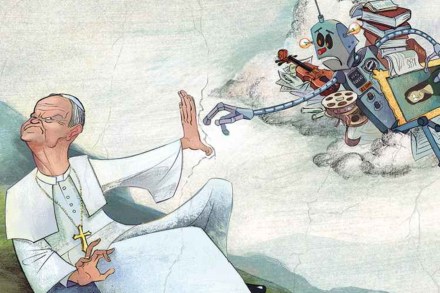
Q&A: Is Rishi Sunak English – or British?

From our UK edition

25 min listen

To submit your urgent questions to Michael and Maddie, visit spectator.com/quiteright. In this week’s Q&A, Michael and Maddie unpack the controversy over whether Rishi Sunak is English or British – and why a debate about national identity has become so politically charged. Is Englishness a civic identity, an ethnic one, or something more elusive? And why has the Labour party increasingly reached for accusations of racism when the question is raised at all? Also this week: are claims that Britain is drifting towards civil unrest alarmist scaremongering – or a warning we should take seriously?