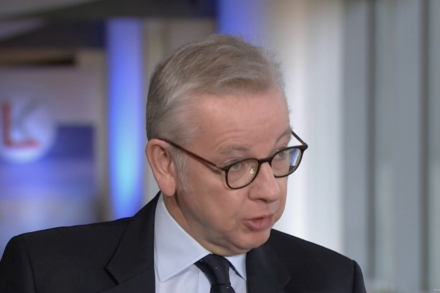
Michael Gove

Michael Gove

Michael Gove is editor of The Spectator.

Michael Gove: My debt to Jade Goody and the future of school reform

From our UK edition

In shaping education policy I have been influenced by many people... But two particular individuals have influenced me more than any others. The Italian Marxist thinker - and father of Euro-Communism – Antonio Gramsci. And the reality television star Jade Goody. Let me explain my admiration for Jade first. When she first appeared on our screens in Big Brother Jade was regarded as paragon of invincible ignorance. She was derided and mocked because she thought that Cambridge was in London. On being told that Cambridge is in East Anglia, she assumed that to be abroad, and referred to it as 'East Angular'. Her other misconceptions included the belief that Rio de Janeiro was a person and not a city.

Let’s set schools free

From our UK edition

Our dismal education system means that too often poverty is a life sentence, says Michael Gove. But it doesn’t have to be this way. Schools can be freed from stifling state control I owe Peter Bazalgette an apology. A very big apology. Peter is the man who brought Big Brother to our TV screens. His genius in spotting the potential of the original show has brought him riches and helped Channel 4 fund years of genuinely creative TV. But at a price I used to think far too high. I used to write a regular column in the Times and I took advantage of my platform there to denounce Mr Bazalgette for using his undeniable intelligence to exploit the stupidity, indeed more properly the frailty, of others for his own ends.

We must break down the Berlin Wall in schools

From our UK edition

He who controls the past, George Orwell argued, controls the future. Orwell’s warning resonates all the more powerfully as the government considers the erasure of history from the primary curriculum. A sense of the past is a precious thing. And not to know history, as Cicero argued, is to remain a child for ever. Orwell, as a student and satirist of the Soviet system, would have appreciated the special value of knowing what passed for progress in the communist world. And a knowledge of Soviet history is particularly precious when it comes to examining what’s happening in our education system at present. One of the grim everyday realities of life before the Berlin Wall came down was the grossly unjust way in which two parallel economies operated within one political system.

I admired Tony Blair. I knew Tony Blair. Prime Minister, you are no Tony Blair

From our UK edition

There are few feuds as destructive as the squabble over a legacy. In Bleak House, the case of Jarndyce vs Jarndyce provides Charles Dickens with one of fiction’s most debilitating contests — a battle over an inheritance which blights all those involved. But Westminster is still, nevertheless, absorbed by the struggle to lay claim to a legacy. The inheritance which is the object of so much attention is the right to be recognised as the ‘heir to Blair’. When the former prime minister left office the general consensus among commentators was that he had overstayed his welcome. Those of us writing in 2003 that he was, at last, proving himself a proper reformer were a small band.

An act of evil that recalled the atrocities of the SS

From our UK edition

Seldom can a New Year have dawned so bleakly as 2008 and rarely can a news story have spoken of evil so starkly as the New Year’s Day report from Kenya of children being deliberately burnt alive inside a church. The calculated, heartless wickedness of the act recalls one of the most notorious atrocities of the second world war, when the SS herded the women and children of Oradour in France into the village church and then set the building alight. And there are more recent echoes from another genocide. The principle that the Church should provide a sanctuary from violence and hatred was breached by the actions of individuals during the Rwandan horrors of 1994.

Winning the Cold War

From our UK edition

John O’Sullivan has done much more with this book than provide three potted biographies; he has laid out a compelling account of how the Cold War was won, furnished us with a manual of political leadership and told us the inner secrets of a love story. At the heart of this story of the Eighties, a decade O’Sullivan rightly champions, is the remarkable relationship between Margaret Thatcher and Ronald Reagan. The strength of their bond was at the time regarded as semi-scandalous, a betrayal by the British Prime Minister of her first loyalty, to her country, in favour of a wild ideological fling. For those of us who were undergraduates when both were in power one of the trials of university life was finding one particular poster in all too many student bedrooms.

Not what Europe wants to hear

From our UK edition

Between the revolution and the firing squad, a Russian aristocrat once observed, there is always time for a bottle of champagne. Between the demographic disaster and the collapse of Western civilisation, Mark Steyn appears to believe, there’s always time for a rip-roaring op-ed and a series of blistering jokes. No writer I can think of manages to combine utter bleakness about mankind’s prospects with a genius for one-liners like Steyn. More gloomily pessimistic about our civilisation’s future than Peter Hitchens at a fetish night in Heaven, and yet consistently funnier than any mere humorist or jobbing stand-up, Steyn is a master of gallows humour. And in this book we Europeans are the condemned men.

Anglo- German attitudes

From our UK edition

One of the most dangerous tastes any British politician can admit to is a tendresse for the Teutonic. During the first world war the Liberal cabinet minister Haldane was compelled to resign because of his pro-German sympathies. It was not that Haldane harboured any political affection for Wilhelmine militarism, or had exhibited any slackness in his war work. He had been one of the most pro-war of Asquith’s divided ministry and as war minister had vigorously prepared British forces for confrontation with Germany. But Haldane was also a sensitive and open-minded intellectual with a deep interest in German culture and philosophy.

Diary – 22 April 2005

From our UK edition

No job quite prepares you for life as a parliamentary candidate. But I suspect that a period as a monk would equip you pretty well. We are not actually obliged to take vows of poverty, chastity and obedience but observance of the last two is certainly advisable. And life on the hustings does require a certain asceticism. Of all the little pleasures which I miss, now that the election campaign is in earnest, the greatest deprivation is being parted from my new mistress. She’s a delightful little thing, and I’d long yearned to get my hands on her, but my clumsy fumblings had ended in repeated failure, until last November. Which was when I finally passed my driving test, at the seventh attempt. And since then I and my Skoda Fabia have been inseparable companions.

Labour’s heavies make the Sopranos look like the Vienna Boys’ Choir

From our UK edition

Watching Labour’s 2005 election campaign unfold, I’m afraid words fail me. The great Democrat governor of New York Mario Cuomo once remarked that ‘we campaign in poetry but we govern in prose’. And even though I struggle to find the language to do justice to Labour’s campaign, one poet does capture their approach perfectly: Rudyard Kipling. Seeing Alastair Campbell, Peter Mandelson and Alan Milburn on the offensive irresistibly brings back some lines from ‘The Gods of the Copybook Headings’. ‘The Dog returns to his Vomit and the Sow returns to her Mire,/ And the burnt Fool’s bandaged finger goes wabbling back to the Fire.

Power to the people

From our UK edition

As a journalist I got used to asking questions. As an apprentice politician I’ve had to get used to answering them. And that has meant learning all over again that the simplest questions to ask are the trickiest to answer. Most of my acquaintances have been extraordinarily encouraging about my decision to relinquish a journalistic career at the Times in the hope of being elected as the MP for Surrey Heath. But the father of one friend was perplexed. Sufficiently so to ask the question I least expected. It wasn’t ‘Why have you done it?’ He could quite understand why someone would want to give up the frustrations of shouting on the sidelines and see if they could make any difference on the pitch.

Terminal depression

From our UK edition

In all its long history, the parliamentary Tory party has never been so depressed. If a doctor were to observe its current behaviour, he would put the patient on suicide watch. When I spoke to Conservative MPs this week it was hard to find any spark of optimism, breath of hope or relish for the fight. Whether they are former ministers from the glory days of the Eighties or coming men who entered Parliament while the Tories have been in opposition, a universal darkness covers all. They feel saddled with a leader whom few imagine capable of winning an election, but most fear to remove.

It’s still the ‘nasty party’

From our UK edition

A melancholy anniversary recently passed virtually unnoticed: it is now more than a decade since the Conservative party fell behind in the polls. Never has a major opposition party been so unpopular, with so many, for so long. If Conservatives are ever to govern again, they must do three things. They have honestly to appreciate why their party has come to this pass. They must eschew false comforts and snake-oil remedies, which will only prolong their agony. And, above all, Tories must transform the way they operate. Unless the culture of the party changes, it will never reconnect with a country that it now treats as a foreign land. The scale of the Tory malaise is unprecedented. There have been more than 500 published polls in the past ten years.

The Maggie, Tony and Iain show

From our UK edition

Why didn't the Tories invite Pete Waterman to speak at their conference? The guru behind Kylie Minogue who has become a familiar television face as a judge on ITV's Pop Idol certainly wouldn't have felt out of place. He's used to helping nervous unknowns who want to make it big. And his experience sitting beside the bracingly honest Simon Cowell on the Pop Idol judging panel would have meant that he would instantly have seen the wisdom in Theresa May's uncompromising insistence that the Tories get their act together. Only when you fully realise how badly you're performing will you make the effort required to get it right. The important lesson Waterman could have told the Tories was one he shared with Times readers on Monday.