Micah Mattix

Micah Mattix is a senior editor of The Spectator’s World edition and the author of the Prufrock newsletter. He has written for the Wall Street Journal, the New Criterion, the Atlantic and many other publications.

The world’s lost manuscripts

From our US edition

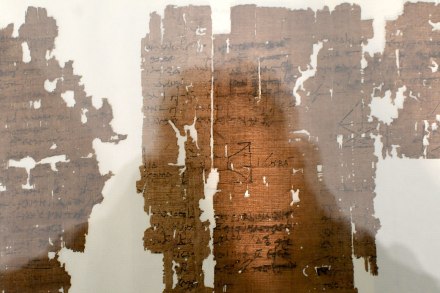
In a recent article in Science, Mike Kestemont and Folgert Karsdorp employ the “unseen species model,” which is taken from ecology, to estimate the number of medieval manuscripts that have been lost over the years. They estimate that we have lost a whopping 90% of medieval manuscripts containing heroic narratives. In the Guardian, Laura Spinney notes that it isn’t only medieval manuscripts we’ve lost. We have 543 early modern plays produced between 1576 and 1642, but these likely “represent a fraction of all those produced”: Another 744 that certainly existed have been lost, and hundreds more were probably written to fill the repertory calendar, of which no trace remains.

In praise of throwaway culture

From our US edition

My wife and I bought our first IKEA Billy bookshelf twenty years ago. We now have fourteen in various shades of sun-bleached faux yellow pine. Whenever we needed more book space, we could make a trip to IKEA, whether that was in Allaman in Switzerland, New Haven, Houston, Charlotte or Virginia Beach. Not anymore. IKEA is apparently changing the design and materials of the cheapo shelf. Gone are the annoying finishing nails that might nick the shelves as you try to secure the flappy back. Gone, too, is the thin wood veneer glued to the medium density fiberboards (MDFs). Instead, IKEA will now use foil paper. There are other changes, but the point of the redesign is to make the shelves sturdier, easier to move and more ecologically “friendly.” Fine.

The debasement of art

From our US edition

I have some thoughts on poetry and morality coming soon to a publication near you, but in the meantime, let me direct you to Alice Gribben’s wonderfully gripey piece in Tablet on how the contemporary art world is ruining art: Artworks are not to be experienced but to be understood: From all directions, across the visual art world’s many arenas, the relationship between art and the viewer has come to be framed in this way. An artwork communicates a message, and comprehending that message is the work of its audience. Paintings are their images; physically encountering an original is nice, yes, but it’s not as if any essence resides there. Even a verbal description of a painting provides enough information for its message to be clear.

Bicycles: machines of the left

From our US edition

Jill Lepore reviews three new books on the bicycle in the New Yorker. I know this because she mentions the titles in between long passages about the first bike she learned to ride, how many bikes she has owned, and how many times she’s been hit by a car. She also tells us that bicycles are machines of the left, though for some reason this hasn’t stopped them from being used in the service of war and colonialism: Bicycles and bicyclists veer to the political left. Environmentalists ride bicycles. American suffragists rode bicycles. So did English socialists, who called the bicycle “the people’s nag.” Animal-welfare activists, who opposed the whipping of horses, favored bicycles...

Return of the writing guide

From our US edition

Ward Farnsworth’s writing guides  I am a big fan of Ward Farnsworth’s guides to writing. He has published three of them: Ward Farnsworth’s Guide to Classical English Metaphor, Ward Farnsworth’s Guide to Classical English Rhetoric, and Ward Farnsworth’s Guide to Classical English Style. Each is beautifully designed and printed by the publisher David R. Godine (whom I wrote about here). In the Los Angeles Review of Books, Colin Marshall surveys Farnsworth’s guides and his two books on philosophy. In the guides to writing, Farnsworth provides hundreds of sample sentences to illustrate his points. Almost all of these are from the nineteenth century.

The energetic and tragic Keats

From our US edition

When John Keats wrote “On First Looking into Chapman’s Homer,” he had just returned from a long evening at the home of a childhood friend, Charles Cowden Clarke. Charles Clarke was the son of the headmaster of Clarke’s Academy, where Keats had gone to school. A week earlier, Clarke had introduced Keats to one of his heroes, Leigh Hunt, editor of the independent Examiner (Hunt was imprisoned for two years for printing that the Prince Regent was “a fat Adonis at forty”), friend of William Hazlitt and Charles Lamb, and literary kingmaker. Hunt despised what he viewed as the overly ornate poetry of Alexander Pope, preferring instead Chaucer’s earthy Old English and the directness of Shakespeare and Milton.

The crisis in American higher ed

From our US edition

The crisis in American higher ed It’s not quite right to say that American higher ed is in crisis. It does a lot of things very well and has, as Nick Burns points out in his history of the institution, a huge influence not just on American culture (for better and worse) but also the American economy: Expanding at breakneck speed after the Second World War, the American university has transformed from an institution accessible only to a small elite to the site of personal, professional, and political for­mation for vast swaths of the middle classes. Bachelor’s degree recipients made up just 5 percent of the U.S. adult population in 1940.

Tallying race in post-war American fiction

From our US edition

Tallying race in post-war American fiction In the Chronicle of Higher Education, Mordechai Levy-Eichel and Daniel Scheinerman have a doozy of a review of Jean So’s Redlining Culture: A Data History of Racial Inequality and Postwar Fiction. Many people think, So argues, that fiction has become more diverse since World War Two, both in terms of novels published by minorities and women and prizes won. But that is not the case. Here are Levy-Eichel and Scheinerman: According to So, the underlying feature of postwar American literature was the "inertia of whiteness" — by which he means the predominance of white, male writers like John Updike, Philip Roth, and Saul Bellow in terms of awards, reviews, and prestige.

Can right-wing comedy be funny?

From our US edition

Matt Sienkiewicz and Nick Marx try to do a couple things in their new book, That’s Not Funny: How the Right Makes Comedy Work for Them. For starters, they hope to show their liberal readers — and the book is clearly written for those on the left — that there is such a thing as “right-wing comedy.” It is not an “obvious oxymoron,” as many on the left assume. Conservatives’ “post-9/11 blunders” made them easy targets for the left-leaning (and increasingly left-wing) Saturday Night Live, Stephen Colbert, and David Letterman. While comedy and “left-wing oppositionality” seemed a “blissful marriage,” there is no reason to assume the “eternal, exclusive nature of that union.

The Atlantic’s clichéd new books section

From our US edition

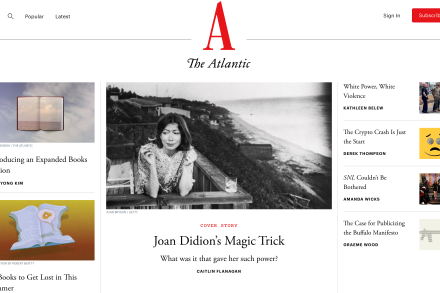
The Atlantic’s expanded books section  The Atlantic has announced it is expanding its books section. Reading can be revelatory, Jane Yong Kim writes in her note on the news. “Reading about books can have a similarly revelatory effect.” Do tell. Kim goes on. She trots out all the clichés about reading today as reasons for, well, reading — not a particularly auspicious start. Reading “has a unique quality of slowing us down even as it widens our horizons,” she writes. Books are a “vehicle for the free expression of ideas,” and free expression, in case you haven’t noticed, is under attack. But the expanded books section at the Atlantic, Kim tells us, is going to be a place where unpopular ideas will finally be given a hearing.

Richard Wilbur’s Molière

From our US edition

In the New York Review of Books, Geoffrey O’Brien reviews the complete Richard Wilbur verse translations of Molière, published in a new two-volume set by the Library of America. O’Brien doesn’t say so, but it’s a little odd for the Library of America to choose these volumes to republish. There are other works in translation in the catalogue, which focuses on “great American literature,” but those works either concern America herself (Tocqueville’s Democracy in America) or, as with Ezra Pound’s translations, are rendered so loosely as to constitute new works. According to Wilbur, however, the task of the translator is to replicate the original as much as possible in the translated text.

Remembering Midge Decter

From our US edition

Conservative editor and writer Midge Decter has died. She was 94. She was an executive editor at Harper’s and an editor at Basic Books, as well as the founder of the Independent Women’s Forum, co-chair of the Committee for the Free World, a board member of the Heritage Foundation, and one-time president of the Philadelphia Society. She married Norman Podhoretz in 1956 and is the mother John Podhoretz, current editor of Commentary, and journalist Ruthie Blum. In National Review, Yuval Levin remembers her as a “powerful and penetrating writer.” He writes: Her essays could see right to the core of the failures of the modern left — often long before those failures become apparent as a practical matter to everyone with eyes to see.

The failure of Marine Le Pen

From our US edition

Following her second-round loss to Emmanuel Macron in France’s presidential elections last month (it was her third loss on the national stage), Marine Le Pen has announced her candidacy for the National Assembly. She hopes to win Pas-de-Calais’ eleventh constituency in June — a seat she won in 2017 — to oppose Macron’s policies in the French parliament, along with her National Rally (RN) colleagues. But she is unlikely to have much leverage. In the last parliamentary elections, the National Rally (then the National Front) won eight seats out of 577. The latest poll by Harris Interactive has them winning 65 to 95 seats this year, compared to 338 to 378 seats for Macron’s re-branded Renaissance party, which would give Macron an absolute majority.

Medievalists going medieval

From our US edition

The New York Times reports on a minor dust-up in the world of medieval scholarship. Mary Rambaran-Olm, a postdoctoral fellow at the University of Toronto, wrote a largely negative review for the Los Angeles Review of Books in which she accused Matthew Gabriele and David Perry of “whitewashing” medieval history in their new book, The Bright Ages, in which (I have read the book) they attempt very much to do the opposite. They include the stories of figures (women and minorities) who are usually not included in trade histories covering over 1,000 years. The editors at the Los Angeles Review of Books requested edits to the review. Rambaran-Olm apparently refused most of them, so the editors killed the review.

A contradictory book on free speech

From our US edition

In the Chronicle of Higher Education, Jeffrey Aaron Snyder reviews a new book on free speech in higher education that argues that the idea of free speech has been used to protect racists from being punished for their racist ideas. The book is called It’s Not Free Speech: Race, Democracy, and the Future of Academic Freedom. The authors — Michael Bérubé and Jennifer Ruth — argue that the academy is full of white supremacists.

Jean Rhys in full

From our US edition

If you haven’t read Jean Rhys’s Wide Saragossa Sea, you should. It’s a “prequel” to Charlotte Brontë’s Jane Eyre, and while Rhys’s 1966 take on Mr. Rochester’s marriage to his first wife (who goes insane and is kept in the attic in Jane Eyre) is a tad heavy-handed, it is still an excellent if depressing read. Rhys’s life, it turns out, also makes for depressing reading. In the latest issue of Literary Review, Claudia Fitzherbert reviews Miranda Seymour’s biography of the novelist, I Used to Live Here Once: The Haunted Life of Jean Rhys: “In 1974, at the age of eighty-four, Jean Rhys was asked in a television interview whether she would prefer to write or be happy were she to live her life over again. ‘Oh, happiness!

What happens after Roe?

From our US edition

Earlier this week, Politico published a leaked Supreme Court majority opinion overturning Roe v. Wade by ruling in favor of Mississippi’s ban on abortions after 15 weeks. The leak is “unprecedented,” as Politico notes, and whoever provided the draft of the opinion should be fired or (if it was a justice) impeached. The court has not yet ruled on the case, and opinions can change. But it seems unlikely that Samuel Alito, Clarence Thomas, Neil Gorsuch, Brett Kavanaugh or Amy Coney Barrett, who are reported as favoring the ruling, will change their position. So what happens after Roe is struck down — if it is struck down? Abortions will continue to be available in states where they are legal. Roe provided federal protection for abortions.

The making of books

From our US edition

Lucasta Miller reviews Emma Smith’s history of books, Portable Magic, in the latest issue of the Critic. Portable Magic, Miller writes, “is not a conventional history in the sense of a chronological narrative”: Instead, it is a series of freewheeling essays, based on case studies, in which Smith explores what she calls "bookhood": a concept that focuses on the material culture of the book, while revealing how inexorably it is tangled up with human desire, aspiration and power. The range of reference is vast. One moment we are in Korea, where printed books with movable metal type long predated the Gutenberg Bible.

In defense of pessimism

From our US edition

In Aeon, Mara van der Lugt writes in defense of pessimism — sort of — by way of revisiting Voltaire’s response to Gottfried Wilhelm Leibniz in Candide: The question concerning these philosophers, then, is not just the theoretical one about whether life in general is good or bad, but also a more concrete one: face to face with one who suffers, what can philosophy bring to the table? What can philosophy offer in the way of hope and consolation? Both strands of thought have the same aim, but they plot different routes to get there: the pessimists offer consolation by emphasising our fragility, by recognising that no matter how hard we try, we may fail to achieve happiness, for no fault of our own.

The poetry of the New Right

From our US edition

If you haven’t read James Pogue’s essay in Vanity Fair on the New Right, as he calls them, do so. It is that rare thing today — a balanced and informative piece in a legacy publication. One thing that caught my eye was Curtis Yarvin’s interest in art and poetry. Yarvin is a forty-eight-year-old ex-programmer and blogger “who has done more than anyone to articulate the world historical critique and popularize the key terms of the New Right,” Pogue writes. He likes to write poetry, usually under the name of Mencius Moldbug, and is the poetry judge for the Passage Prize, a new arts award with $15,000 in prize money for poetry, fiction, nonfiction and visual art. Yarvin published the winners of the poetry contest on his Substack, Imperial Melodies.