Melanie McDonagh

Melanie McDonagh

Melanie McDonagh is an Irish journalist working in London.

The case against gay marriage

From our UK edition

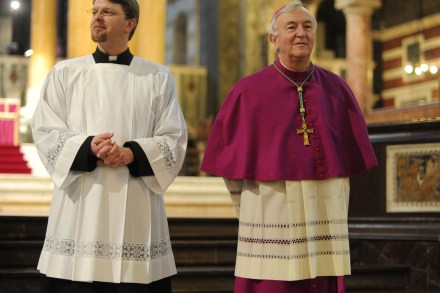
Last night, we posted Douglas Murray's conservative argument in favour of same-sex marriage. Here's the opposite view: Consultations are, for the prudent, an exercise you only engage in when you’re quite sure of the outcome. I’m not sure, then, that Vincent Nichols, the Archbishop of Westminster, is entirely wise to go all out in galvanising the Catholic community into action against the Government’s plans to legalise gay marriage. As the Daily Telegraph reports today, he is issuing a letter to be read out in churches on Sunday to urge congregations to participate in the Coalition’s consultation exercise on the proposal — against.

Why Prof Dawkins has it wrong

From our UK edition

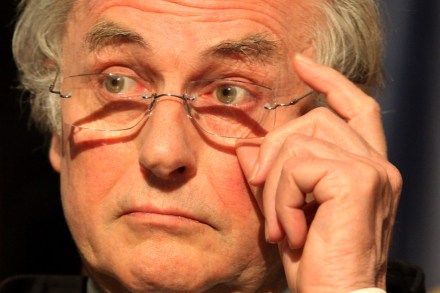
No sooner does Baroness Warsi denounce militant secularists who try to marginalise Christianity than, bang on cue, up surfaces Richard Dawkins with a survey commissioned by his Foundation for Reason and Science intended to demonstrate that Christianity is a minority pursuit. His Ipsos MORI poll, published today, is intended to unpick that bit of the 2001 census which found that more than 70 per cent of respondents identify themselves as Christian.

Cameron should leave this terrible ‘tax breaks for cleaners’ idea in Sweden

From our UK edition

There are times when you think, really, the Prime Minister should get out less. The good ideas he comes back with when he goes abroad are fine and dandy — of which, more later — but the bad ones are very bad indeed. One notion he is considering just now after attending a Nordic-Baltic summit is the Swedish/Finnish one of giving people who employ domestic help tax relief on half of the cost. On the plus side, you get more women in the workplace, by allowing them to subcontract the domestic drudgery, and you shift thousands of workers, mostly female, from the black economy to the respectable economy. For the downside, I hardly know where to start.

The benefits of religion flow from belief

From our UK edition

Most Spectator readers have probably heard by now of Alain de Botton's latest, Religion for Atheists, in which he argues that the benefits of religion are too great to be confined to believers — not least because he wrote the Diary column for this week's magazine. And for those who haven't yet read about the book, let alone read it, they need look no further than Terry Eagleton's brilliant demolition of the argument in The Guardian. Mr de Botton is, he makes clear, in a very long and not entirely creditable line of those who find religion intolerable for themselves but useful for others, notably the servant classes: Matthew Arnold and Auguste Comte in particular. Indeed Mr de Botton himself acknowledges that his big idea is not new.

What today’s immigration numbers tell us

From our UK edition

During the leaders debates before the last general election, David Cameron declared that he wanted to make immigration a non-issue and he would go about it by reducing immigration numbers from hundreds of thousands a year to tens of thousands a year. He hasn’t succeeded in the second objective — more than half a million people arrived here in 2010, only 30 per cent of whom were from the EU — and he most certainly hasn’t succeeded in the first. At least if the reaction to today’s revelations about immigrants on benefits is anything to go by.

A real-life whodunnit

From our UK edition

The Saville Report into the events of Bloody Sunday is ten volumes or 5,000 pages long and was five years in the writing. The inquiry lasted 12 years, including those five years, and cost the taxpayer £200 million. Some 2,500 people gave evidence, nearly 1,000 of whom gave oral witness. It was set up under one prime minister, Tony Blair, in 1998, and its conclusions were delivered in June 2010 under a different prime minister, David Cameron. It was the lengthiest and costliest inquiry in legal history. The events it was concerned with — the shooting by members of the 1st Parachute Regiment of 13 civilians attending a civil rights march — took place on 30 January 1972, or 38 years before the report was delivered. Was it worth it?

Lord Falconer has the wrong ideas about assisted suicide

From our UK edition

So Lord Falconer’s commission, funded by Sir Terry Pratchett, has concluded that there is a ‘strong case’ for assisted suicide, has it? Well, there’s a thing. Given their previous form and the composition of the committee, it would have been remarkable if they’d decided that, on balance, the law works perfectly well — which is what one of their witnesses, the Director of Public Prosecutions, Keith Starmer, said. On the whole, partly because some anti-euthanasia bodies refused to participate and partly because people with a blatant opposition to assisted dying weren’t invited to sit on it, the composition and conclusions of the body reflected the opinions of those who set it up.

Cameron’s missing the point: Christian values require Christianity

From our UK edition

The Prime Minister does God. At least, that's the gist of his first major speech on religion. Actually, the interesting thing is that a Tory Prime Minister feels that he has to make the point that he is a Christian. Other than Michael Howard, who was Jewish, most other Tory leaders could have assumed we’d take it as read that he or she was more or less CofE, including Mrs Thatcher, who was, of course, a Methodist.  Following Richard Dawkins' remark that the Prime Minister may 'not really' be a Christian, Mr Cameron responded: 'I am a committed – but I have to say vaguely practising – Church of England Christian, who will stand up for the values and principles of my faith'.

Christmas for the ladies

From our UK edition

At this time of year you’ve probably had it with festive planners, Christmas countdowns and those magazine features about what presents to buy — as if picking presents, rather than paying for them, were the problem. So when I say that the Christmas season is actually too short, and that we should round it off with a second, mini-Christmas, you may get a bit restive. But bear with me. Let’s get onto the second idea first, viz, the mini Christmas. In Ireland, that’s actually what it’s called, the Nollaig Beag or Nollaig na mBan — the Little Christmas, or the woman’s Christmas. That’s the name for the Epiphany in the west of Ireland and the gist of it, as you’ll have gathered, is that it was a day for the women.

Why the state should take charge of examinations

From our UK edition

Michael Gove has said that ‘nothing is off the table’ when it comes to dealing with the revelations in today’s Telegraph that a chief examiner of the Welsh examination board, WJEC, steered teachers attending his board’s fee-paying advice session so flagrantly in the direction of what was likely to feature in the next examination, it amounted, as the man said, to ‘cheating’. The irony of the thing is that those teachers who did not pay £230 a session for his assistance are likely to do much better by their pupils: the obliging examiner was telling the teachers about the cycle of examination questions — in other words, which bit of the syllabus was not going to feature in the questions.

Cookery Books: Back to classics

From our UK edition

The truth is, we could probably all get by with three or four cookbooks; half a dozen at most, which makes my own collection of dozens seem a bit OTT. But what you need among them is a book that covers all the essentials, so that if you’re stuck to know what to do with a pheasant or how to make pastry or need to do something imaginative with cauliflower, you’ve got it all to hand. One all-purpose volume is the classic Constance Spry Cookery Book (Grub Street, £30), by Constance Spry and Rosemary Hume, first published in the Fifties and now reissued with metric as well as imperial measurements. It’s very much of its time, obviously, and unabashedly French in temperament, but it’s a cracking, really useful book.

Sorry, Mr Gul, but Turkey won’t be joining the EU any time soon

From our UK edition

It's not going to happen. That's what everyone says who knows anything about the subject that we're going to be hearing quite a bit about this week: Turkey's membership of the EU.  I've heard it from someone who works for William Hague, from a political editor, from a diplomat. Which makes this week's state visit by the Turkish president, Abdullah Gul, on his three-day state visit to Britain seem pretty well beside the point.  The British government is right behind Turkey's bid for EU membership, no country more so. David Cameron and William Hague have if anything been even more effusive in their support than Tony Blair and Jack Straw before them — the duo who managed to ensure that Turkey became officially a candidate nation for EU membership.

A ban on smoking in cars should be unthinkable

From our UK edition

It's tempting to respond to the BMA's extraordinary proposal to ban smoking in cars with a Thin End of the Wedge argument. Ban smoking even on the part of an unaccompanied adult, sitting in a car by the side of the road? How long before they're banning it in the home, eh? But hold it right there. The proposal isn't just scary for where it might lead. It's scary all by itself. The notion that a grown up can be barred from self-harm by smoking a fag by himself, in his own car, his own space, on the basis that it might kill him sooner rather than later, should be unthinkable in a free society.

The Empire of Death: A Cultural History of Ossuaries and Charnel Houses by Paul Koudounaris

From our UK edition

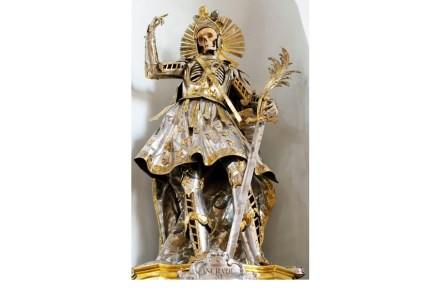
In one Capuchin monastery in Sicily, the so-called Palermo Catacombs, locals used to buy a niche where their mummified corpse would one day stand erect, clothed and on display to visitors, the way we might now buy a burial plot. Would-be purchasers would pay a visit to select their niche and stand in it to make sure it fitted. Indeed, by way of voluntary penance, some would remain there for hours, contemplating their end. At the same time, in the early 17th century, a related order of nuns in Rome, the Sepolta Vive or Buried Alive sisters, would sleep in coffins and hail each other with the observation: ‘Remember sister, we all have to die’.

Ireland picks its President

From our UK edition

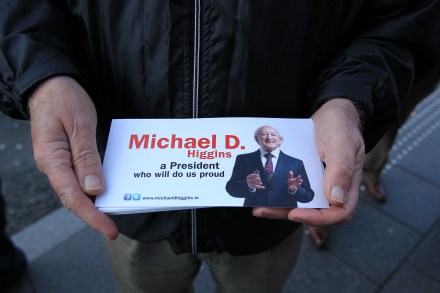
Well, the oldie got it. Michael D. Higgins — commonly known as Michael D — has all but won the Irish presidential election. The little man who resembles a bard or a leprechaun, depending on your point of view, appears to have beaten off six undistinguished competitors to succeed the formidable Mary McAleese. At 70, he was the oldest in the field and looks, in fact, rather older. You could say it’s a victory for non-partisan, non-party politics. Mr Higgins was the Labour candidate but he stood aloof from the fray during the campaign, declining to criticise his opponents.

The quotable Flann O’Brien

From our UK edition

It's hard to stop quoting Flann O'Brien, once you start. The Irish man of letters was born a hundred years ago and to celebrate the centenary there are at least three conferences in his honour, the latest of which takes place this weekend at the Irish Cultural Centre in Hammersmith, with another in the Irish club in Birmingham. For those of us who are obsessed by Flann O’Brien — otherwise known as Myles na Gcopaleen, or by his own name of Brian O’Nolan or assorted other pseudonyms — this is not an entirely welcome phenomenon. You know what happens when the lit-crit community get hold of an author, don't you?

Don’t wait for One Day

From our UK edition

The correct response to the film One Day is, apparently, to cry your eyes out. Me, I couldn’t squeeze a single tear; in fact the sentiment I could barely suppress throughout was rising irritation. If ever two characters needed a slap it’s the hero and heroine of One Day. Let me explain. This is a film based on David Nicholls’s best-selling novel — and I don’t think I’m giving too much away here given the number of spoiler reviews — about a boy and a girl who never quite get it together for years and years, almost until it’s too late.

The secret of self-help

From our UK edition

This being summer, many of us are going to spend a lot of time in airports. So we may as well make the most of it. During half an hour in WH Smith in Dublin airport, I learned to take life one small step at a time, the importance of learning how to delegate, and the best way to make decisions. I picked up Warren Buffet’s cardinal rule, which is to make a list of everything you want to get done today, begin at the top and work down. I’ve learned the 43rd of Duncan Bannatyne’s 43 Mistakes Businesses Make... and how to avoid them (it’s the things you don’t do that you regret). In short, I hung around the self-help stand of the bookshop business section and filleted each of them in turn. I love self-help books.

What women want

From our UK edition

The Tories are desperate to regain the female vote – but they have a very patronising idea of how to do it You’d never think it to look at them, but the Tory party used, for much of the 20th century, to be the natural party of women. That’s right: women are, contrary to what most feminists like to think, instinctive Tories, if you judge by the voting record since the advent of universal suffrage. Not in recent elections, admittedly, but in general. And women liked David Cameron — until about six months ago, when, judging by the figures, as a sex we started going off him. And that has created something like consternation right at the top of the government.

Vastly entertaining

From our UK edition

It may not be quite true that the next best thing to eating good food is reading about it, but undeniably food writing has its considerable pleasures. You’ve got it all there: sex and sensuality (the link between the appetites hardly needs spelling out), social history, the loving acquaintance with ingredients . . . and recipes. The Penguin Great Food series — a selection of 20 delightful, lightweight (we’re talking wrist-strain, not subject), prettily jacketed works by the finest food writers — is a feat. Just selecting 20 authors from the 17th century to now is difficult in itself. Do you go for good prose (Alice B.