Melanie McDonagh

Melanie McDonagh

Melanie McDonagh is an Irish journalist working in London.

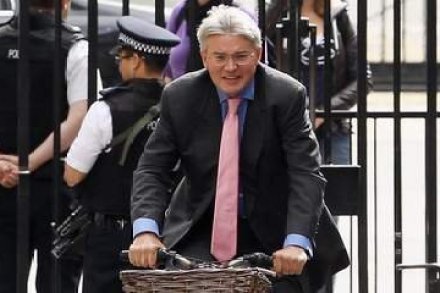
Andrew Mitchell’s Gate-gate: haven’t we all been there?

From our UK edition

All right, he’s eaten dirt. Andrew Mitchell, Chief Whip, has now apologised to the Prime Minister and apologised profusely to the policeman he may or may not have called a pleb. In a statement today – prudently, he declined offers of radio interviews – Mitchell admitted that he 'did not treat the police with the respect they deserve' when on Wednesday evening one of them refused to allow him to ride his bicycle out of the Downing Street gate and directed him instead to the pedestrian one. In the outburst that followed, he is said to have told the man that he didn’t run the government. Well, that makes two of them; neither does the Chief Whip.

Britain should call for reform of existing blasphemy laws

From our UK edition

Around the time that speculation was mounting about Tony Blair's possible return to British politics last month, I went to a public discussion about faith and public life by the man himself and Rowan Williams in which Charles Moore was both participant — or should I say, combatant — and moderator. It was, as you’d expect, a lively affair in which the two Catholic converts took radically dissimilar views on most things, and Islam in particular. In retrospect, one of the remarks that strikes me as remarkable was Mr Blair’s throwaway contention that inter-faith discussion should be conducted on terms agreeable to the faiths in question.

The vagina fad

From our UK edition

In the Musée d’Orsay in Paris, there’s a picture that, last time I looked, was curtained off. A couple of Japanese girls came out from behind the curtain, stuffing their hands into their mouths to stop the giggles. I went in to see the cause of the girly mirth and there it was, Gustave Courbet’s ‘Origine du Monde’, a painting of a woman’s open legs, with dark pubic hair and a glimpse, but only a glimpse, of th e labia. It’s obviously provocative: you could say that Courbet has cut to the chase as far as male viewers are concerned. He’s got his Mount of Venus, lots of hair and a bit of bottom and, further up, there’s some uncovered breast.

Joining Harriet Harman’s feminist club

From our UK edition

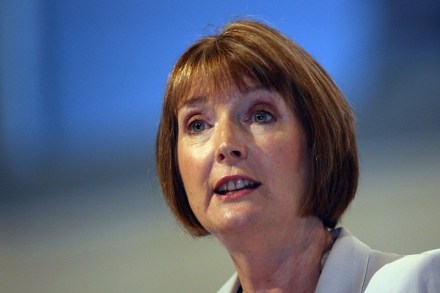
If feminism is 'a creed of women’s solidarity', do you pick and choose about which women you’re in solidarity with? In the case of Harriet Harman, the answer is, well obviously. If you’re a Tory you can’t really join in the creed. In an interview with Total Politics magazine she was incredulous at the notion that the Home Secretary, Theresa May describes herself as a feminist. 'If you’re actually political, you can’t be a Conservative and a feminist,' she said. So there you have it. But why? Because it’s 'all about equality and fairness'. 'Ultimately, delivering for women in this country – in equality, childcare, helping with the elderly, maternity pay and leave – is Labour’s mission, not the Tories.

The skewed priorities of the BBC’s abortion investigation story

From our UK edition

Did anyone else notice anything weird about the BBC’s coverage of the story last week about the 14 NHS trusts that a government health watchdog found to be breaking the law in providing abortions? Those 14 clinics used pre-signed abortion referral forms to authorise abortions, which flouts the bit in the Abortion Act that requires two doctors to allow them. But for the BBC, as, inevitably, for The Guardian, the real scandal about the investigation was that it took place at all, at a cost of £1 million and with the result that the watchdog, the Care Quality Commission, the CQC, had to delay or cancel pre-planned investigations in order to carry out this one. And how do we know that? Why, as a result of a BBC Freedom of Information Request.

Paris en famille

From our UK edition

Paris for lovers, tick. Paris for gastronomes, tick. Paris for the fashion-conscious, obviously. But children? Funnily enough, I find it one of the most child-friendly cities we go to. The proprietors of grand boutiques and restaurants who cold-shoulder grown-ups are all smiles when it comes to children. Propping up a bar with my two on the Rue St Honoré on a damp Sunday evening, the young man sitting next to us with his girlfriend chatted with my five-year-old daughter, treated her and the brother to an orange juice, presented her with €10 to buy a croissant and was rather hurt when I gave it back.

The battle over complementarity of the sexes is already lost

From our UK edition

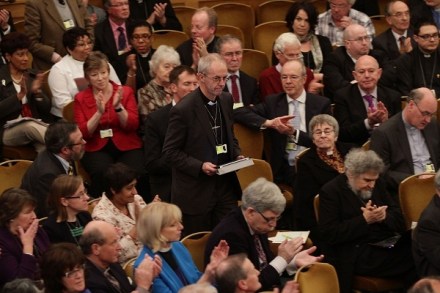
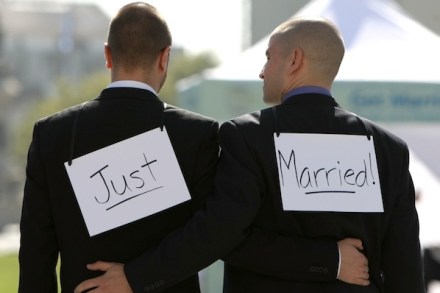
Today is the last day of the Government’s consultation about its gay marriage proposals. But as an editorial in the Telegraph points out, this is a more limited exercise than it sounds…you’re not being asked whether it’s a good idea for gay people to marry so much as how you think the Government should implement its proposals. Consultation, not. But since the opportunity is there, I’m all for sounding off about whether gay people should marry in the first place, as the Church of England has done, with uncharacteristic robustness, in its official response to the proposals. I can’t myself, see why marriage, as a status and a concept and a name, shouldn’t be left in its traditional incarnation, between a man and a woman.

The right to squeak

From our UK edition

It’s probably tendentious to say that the feminine voice is a feminist issue, but let me say it anyway. I have, I may say, a voice that spans the vocal spectrum from soft to strident — oh all right, shrill, but I never quite appreciate what a problem it is until I do the odd bit of radio. Really, I should stick to print. Last year, I took part in a fun Radio 4 programme that sought to replicate a newspaper leader conference in a BBC radio studio. In theory, the editorial line on this particular programme is decided by the strength of argument. But it was only when the thing kicked off that I realised this was not entirely the case. What clinches the matter when it comes to winning an argument on the radio, as in life, is whether you can make your voice heard.

Equality against conscience and the Big Society

From our UK edition

It was pretty well apparent at the outset that the Equality Act 2010 – the so-called Socialism in a Single Clause law – spelt trouble and now it is the Catholic Church that may run foul of Harriet Harman’s pet project. The Catholic Education Service in England and Wales has written to Catholic secondary schools to get them to encourage pupils and staff to sign the online petition against the Government’s gay marriage proposals.

Galloway and religion

From our UK edition

A few years ago, The Spectator, in an inspired notion for the Easter issue, asked a number of prominent individuals whether they believed in the Resurrection. And among the surprises was George Galloway, who replied emphatically in the affirmative: ‘Yes, I believe in the Resurrection. I believe God restored the life of Jesus of Nazareth and took him to his bosom. The example of suffering and sacrifice followed by vindication is central to my religious belief.

A man surrounded — and some assumptions exposed

From our UK edition

There was an element of bafflement in the early BBC coverage this morning of the welcome news that police have identified and surrounded the suspected killer of seven people, including Jewish children, in Toulouse. To some people's surprise, the BBC correspondent remarked in the early reports, the suspect turned out to be a Muslim, Mohammed Merah. So the entire tone of the Corporation's coverage of the killings turns out to have been misplaced. Ever since the dreadful news that a gunman had attacked a Jewish school in Toulouse after killing three French soldiers, the overriding assumption on the part of the Corporation was that, unless the killer was merely unhinged, the suspect must be a far-right extremist, animated by a hatred of minorities.

Sundays should be about more than just economics

From our UK edition

The Chancellor didn't even bother to hide the thick end of the wedge as he inserted the thin end into the Sunday trading laws. He declared yesterday that restrictions on Sunday trading would be lifted for the duration of the Olympics and Paralympics on the basis that ‘It would be a great shame if the country had a “closed for business” sign on it.’ And he went on to remark, ‘maybe we will learn some lessons from it’. What might those be, do you suppose? That people, left to themselves, will shop all day, every day and should therefore be able to?

Unsinkable drama

From our UK edition

The last hours of the Titanic were a perfect tragedy. No wonder we’re still obsessed What with the centenary coming up next month, it was hard to imagine anything that could make the Titanic loom larger in the popular consciousness. But that was before Julian Fellowes’s new series, to be broadcast this month. It’s the lot: period detail, a snobbish countess, class resentment and a darkish-blue iceberg. Each and every episode ends with the sea coming in. And all those important details get a mention.

The case against gay marriage

From our UK edition

Last night, we posted Douglas Murray's conservative argument in favour of same-sex marriage. Here's the opposite view: Consultations are, for the prudent, an exercise you only engage in when you’re quite sure of the outcome. I’m not sure, then, that Vincent Nichols, the Archbishop of Westminster, is entirely wise to go all out in galvanising the Catholic community into action against the Government’s plans to legalise gay marriage. As the Daily Telegraph reports today, he is issuing a letter to be read out in churches on Sunday to urge congregations to participate in the Coalition’s consultation exercise on the proposal — against.

Why Prof Dawkins has it wrong

From our UK edition

No sooner does Baroness Warsi denounce militant secularists who try to marginalise Christianity than, bang on cue, up surfaces Richard Dawkins with a survey commissioned by his Foundation for Reason and Science intended to demonstrate that Christianity is a minority pursuit. His Ipsos MORI poll, published today, is intended to unpick that bit of the 2001 census which found that more than 70 per cent of respondents identify themselves as Christian.

Cameron should leave this terrible ‘tax breaks for cleaners’ idea in Sweden

From our UK edition

There are times when you think, really, the Prime Minister should get out less. The good ideas he comes back with when he goes abroad are fine and dandy — of which, more later — but the bad ones are very bad indeed. One notion he is considering just now after attending a Nordic-Baltic summit is the Swedish/Finnish one of giving people who employ domestic help tax relief on half of the cost. On the plus side, you get more women in the workplace, by allowing them to subcontract the domestic drudgery, and you shift thousands of workers, mostly female, from the black economy to the respectable economy. For the downside, I hardly know where to start.

The benefits of religion flow from belief

From our UK edition

Most Spectator readers have probably heard by now of Alain de Botton's latest, Religion for Atheists, in which he argues that the benefits of religion are too great to be confined to believers — not least because he wrote the Diary column for this week's magazine. And for those who haven't yet read about the book, let alone read it, they need look no further than Terry Eagleton's brilliant demolition of the argument in The Guardian. Mr de Botton is, he makes clear, in a very long and not entirely creditable line of those who find religion intolerable for themselves but useful for others, notably the servant classes: Matthew Arnold and Auguste Comte in particular. Indeed Mr de Botton himself acknowledges that his big idea is not new.

What today’s immigration numbers tell us

From our UK edition

During the leaders debates before the last general election, David Cameron declared that he wanted to make immigration a non-issue and he would go about it by reducing immigration numbers from hundreds of thousands a year to tens of thousands a year. He hasn’t succeeded in the second objective — more than half a million people arrived here in 2010, only 30 per cent of whom were from the EU — and he most certainly hasn’t succeeded in the first. At least if the reaction to today’s revelations about immigrants on benefits is anything to go by.

A real-life whodunnit

From our UK edition

The Saville Report into the events of Bloody Sunday is ten volumes or 5,000 pages long and was five years in the writing. The inquiry lasted 12 years, including those five years, and cost the taxpayer £200 million. Some 2,500 people gave evidence, nearly 1,000 of whom gave oral witness. It was set up under one prime minister, Tony Blair, in 1998, and its conclusions were delivered in June 2010 under a different prime minister, David Cameron. It was the lengthiest and costliest inquiry in legal history. The events it was concerned with — the shooting by members of the 1st Parachute Regiment of 13 civilians attending a civil rights march — took place on 30 January 1972, or 38 years before the report was delivered. Was it worth it?

Lord Falconer has the wrong ideas about assisted suicide

From our UK edition

So Lord Falconer’s commission, funded by Sir Terry Pratchett, has concluded that there is a ‘strong case’ for assisted suicide, has it? Well, there’s a thing. Given their previous form and the composition of the committee, it would have been remarkable if they’d decided that, on balance, the law works perfectly well — which is what one of their witnesses, the Director of Public Prosecutions, Keith Starmer, said. On the whole, partly because some anti-euthanasia bodies refused to participate and partly because people with a blatant opposition to assisted dying weren’t invited to sit on it, the composition and conclusions of the body reflected the opinions of those who set it up.