Melanie McDonagh

Melanie McDonagh

Melanie McDonagh is an Irish journalist working in London.

An extraordinary event in the history of Anglo-Irish relations

From our UK edition

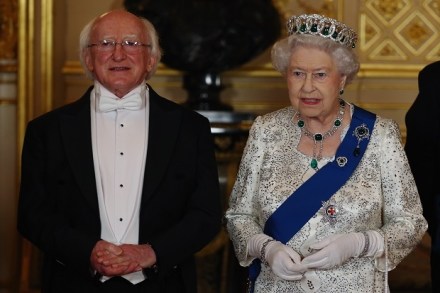
If there’s one thing a poet is good for, it’s memorable circumlocution, which is why Michael D Higgins (the D is crucial; people wouldn’t know who you were talking about if you mentioned Michael Higgins), the Irish president and ongoing poet, has been in his element during this state visit to Britain. ‘Ireland and Britain live in both the shadow and in the shelter of one another, and so it has been since the dawn of history’, he said during his speech at Windsor Castle. ‘The shadow of our past has become the shelter of our present’. That was good. The Queen was hardly to be outdone: the gag about it taking someone ‘of Irish descent’ to make her jump from a helicopter was lovely.
How do you fix MPs’ expenses conduct? Give them more control over it.

From our UK edition

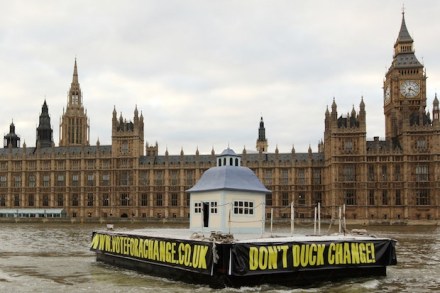
It’s not often I would, in the fashion of the late Tony Benn, pass lightly over the personalities in a row in favour of discussing what he liked to call the ‘ishyoos’ but in the case of Maria Miller, it might do no harm. It does rather look, as Isabel Hardman has already intimated, that she’s toast, but the answer to the Problem of Maria is, I would say, pretty well the opposite of what we’re all told. Which is, as Labour MP John Mann (he whose formal complaint about Mrs Miller prompted the original investigation) put it in an urgent question, that MPs should not regulate their own expenses conduct. The answer, rather, is to give them rather more control over it.

We get the message: smoking is bad for you. Now leave fag packets alone

From our UK edition

What form do you reckon the government’s consultation on cigarette packaging is going to take? Given that health minister Jane Ellison has said that the government’s intention is clear and the consultation short, I rather think it’s going to be like the gay marriage consultation – which ignored half a million objections to the thing in principle, and just focused on asking how to implement a decision already made. So this business of seeking out the views of ‘stakeholders’ is, I rather think, entirely cosmetic. I don’t know whether you could call me a stakeholder because I’m not exactly a smoker – I’ve never got the hang of inhaling – but I do like a nice cigarette packet.

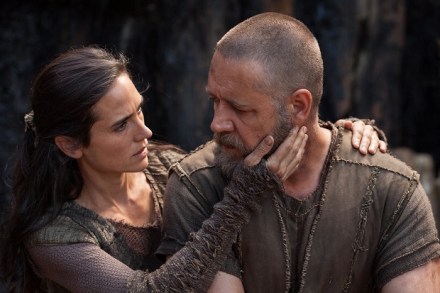
Russell Crowe and Darren Aronofsky’s ‘Noah’ is thoroughly weird

From our UK edition

The Archbishop of Canterbury has had himself photographed with Russell Crowe, after attending the screening of Noah in which Russell C has the title role. ‘A great visit…impressive,’ he tweeted of Crowe. Which was one way round saying that the film itself was tripe, though his spokesman said that he found it ‘interesting and thought-provoking’, which is presumably an Anglican way of saying ‘rubbish’. The Archbish may have been completely thrown, in fact, by Darren Aronofsky’s entirely personal take on the flood story in Genesis.

Gay marriage is a triumph for our arrogant political class

From our UK edition

Well, Peter and David, John and Bernado, Sean and Sinclair are now married and the happy husbands have the further benefit of the unanimous blessing of our political class. David Cameron said the move sent a message that people were now equal 'whether gay or straight. It says we are a country that will continue to honour its proud traditions of respect, tolerance and equal worth.' For good measure, he added that the law change would encourage young people unsure of their sexuality. Really? You mean a few more teenagers hovering between being gay or straight might go for the gay option on the back of the prospect of a wedding? And that’s a good thing?

‘Net migration’ is bogus. Maybe we should look at ‘net foreign migration’?

From our UK edition

Mark Field, MP for Westminster, has set up a brand new campaign group of Tory backbenchers called Managed Migration - as opposed, you might think, to the unmanaged sort we have at present. But he's not actually in favour of managing migration in the conventional sense; he wants the PM to drop the party's commitment to containing overall numbers of net migrants to the ‘tens of thousands’ though there seems fat chance of that just now.  Big increases in net migration, he says, are a tribute to the recovering economy. He's got a point in one sense. As the economy improves, fewer Brits want to leave, which has an effect on net numbers.

Burning foetuses to heat hospitals: a perfect metaphor for modern Britain

From our UK edition

By way of a metaphor for the way the NHS and, come to that, the law regards foetuses, you can’t really better the reality, viz, that foetal remains from abortions and miscarriages are being incinerated in NHS hospitals and possibly used to heat that hospital. If a foetus lives less than 13 weeks, it could, in Addenbrooke’s Hospital, for instance, be used as fuel as part of the hospital’s waste-to-energy schemes. And 13 weeks is just over three months’ gestation – the point at which wanted foetuses register as recognisably human on the scans that prospective parents take home and show their friends. Meanwhile, the unwanted foetuses, or the ones that die early, get dumped with the used disposable gloves, in the incinerator.

What if the Crimea poll had been legitimate?

From our UK edition

Just wondering: what would we be doing now about Crimea if the referendum a week ago had been done nicely? I know it’s not a good time to ask what with protestors storming bases in the east occupied by Ukrainian forces, but it seems pretty fundamental to me. The PM yesterday opined that the poll had been conducted ‘at the barrel of a Kalashnikov’ and was a twentieth century way of doing things (interesting put-down, that).

David Davis should be in Cabinet – or at least in government

From our UK edition

Class never quite goes away as an issue for the Tories, for the simple and sufficient reason that it matters. Lately it was Michael Gove stating the obvious, that the Prime Minister mixes mostly with people with backgrounds like his own...a perfectly human impulse, but not a good look, the Old Etonian coterie. Now David Davis has observed (on the radio) over the weekend, as John Major did last year, that it's much harder than it was when he was growing up for a working class boy to get ahead in the world. Mr Davis is a product of a Tooting grammar school, a route that's now closed, but it wasn't just grammars that he was talking about, but social mobility generally. It's not the first time he's given the government the benefit of his views on class.

Paris

From our UK edition

No city really multitasks like Paris, shorthand for romance, culture, fashion, gastronomy and the kind of street life you find on Robert Doisneau calendars. The £69 Eurostar return opens up a vista of civilised pleasures: the best cheese shops (Androuet), the loveliest perfumeries (Serge Lutens, Palais Royal), the best markets (Marché des Enfants Rouge), the prettiest dolls’ house shop (Pain d’Epices), the most engaging museum (Jacquemart-André). Armed only with Patricia Wells’s unsurpassed Food Lover’s Guide to Paris, Inès de la Fresange’s style guide, Parisian Chic, and the Penguin Map Guide or the little brown Paris version of the A-to-Z, you’re on a roll.

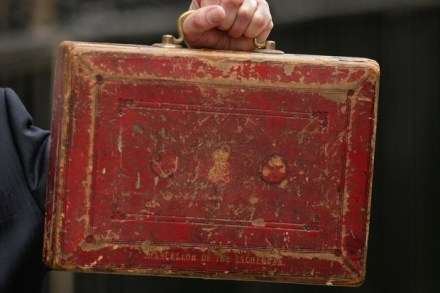
Melanie McDonagh: What I’d like to see in the Budget

From our UK edition

Every year, I sit through the Budget, and every year there are great chunks of it that pass right over my and everyone’s head because they’re arcane and fiddly. Fabulous for accountants, obviously, because it justifies their existence. What I’d like to see in the Budget but won’t, is radical simplification of the system. Not perhaps a flat system, but much, much simpler. It used to be something George Osborne talked about, but it never happened. Anthony Hilton, the Evening Standard columnist, put the case in a piece in January last year: ‘Britain’s tax regime is as much a part of the economic infrastructure as our roads, ports and airports, but at least with them the need for improvement is accepted, even if progress is slow.

Nigel Farage keeps on about EU migration, but non-EU migration is the greater problem

From our UK edition

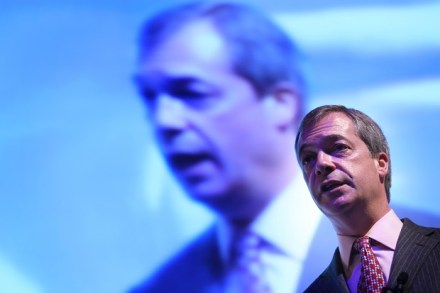
Last week, I spoke alongside Nigel Farage in a debate about immigration organised by the Evening Standard. It was good fun, as you’d expect, with David Lammy, Tessa Jowell and Simon Walker of the IoD on the other side, and David Goodhart alongside me and Mr Farage. You’d be startled, mind you, at the way Nigel Farage gets mobbed by an audience, and in a good way. I did get the chance to get to talk briefly to him myself and ask the question I’d wanted to put to him for ages: why it is that he keeps on about EU migration, when it’s non-EU migration that’s the greater problem. He was unfazed, of course, and said, look, when we meet again in the future to talk about all this, it’ll be EU immigration that’ll be the problem.

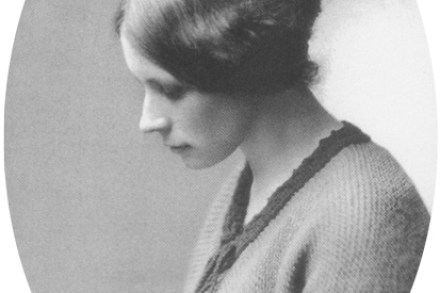
Secrets of Candleford: the real Flora Thompson

From our UK edition

When Richard Mabey was researching this biography of Flora Thompson, author of Lark Rise to Candleford, he happened to stay at a farmhouse B&B near Bath. Ambling around, he found something very curious ... There were two rows of cottages facing each other, with a dusty track between them ...There were clean curtains in the windows. The gardens were in good order, with sweet peas in flower and rows of fat cabbages. It was a vision of an English village as idyllic as a Helen Allingham painting ... I edged round the back and realised they were two dimensional ... a façade but nothing behind.

A prenup undermines a marriage before it has even begun

From our UK edition

A friend of mine, quite a distinguished lawyer, takes the view that marriage ceased to make sense after no-fault divorces came in. What, he says sternly, is the point of a contract when there’s no sanction if you break it? Well, quite. But if no-fault divorce pretty well invalidates marriage after the event, prenups do quite a good job of undermining it beforehand. The point of marriage is that it’s meant to be a lifetime affair – the hint being in the ‘til death do us part’ bit – and the point of prenups is that they make provision for the thing ending before it even gets underway.

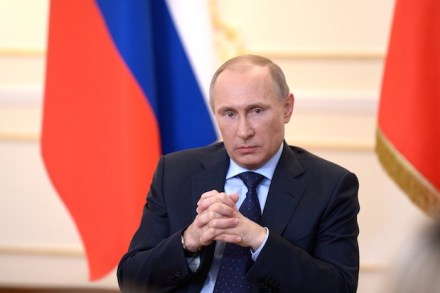
Russia’s restraint over Ukraine thus far has been remarkable

From our UK edition

Perhaps it's premature to say this now that the Russian prime minister, Dmitry Medvedev, has sounded off about Russian citizens in Ukraine being in danger, but it strikes me that Russia has behaved in the current crisis with a certain commendable restraint. Judging from most pundits in most British papers, there is no redeeming element to the Putin regime – soup to nuts, gay rights to corruption - and if it hasn’t actually sent the tanks in, well, it probably wants to. Yet, reading the statement from its foreign ministry that ‘a forced change of power is underway’, it’s hard to say that it’s not strictly correct.

Did an archbishop really call for more public spending in response to food bank usage?

From our UK edition

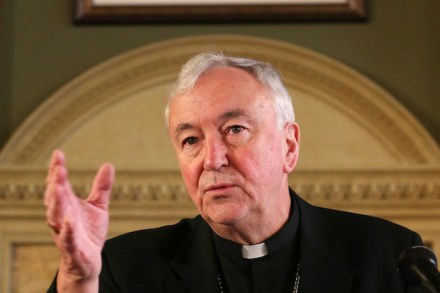
Vincent Nichols, Archbishop of Westminster, has spent an awful lot of time since his recent interview with the Telegraph clarifying just what he meant when he said that the way welfare reforms have been implemented has left people destitute and relying on food banks. When I saw him earlier today, he wasn't exactly tetchy about the coverage so much as tired explaining what he actually wanted to get across. ‘People should take the trouble to read what I said’, he said (a familiar refrain, that, from non-politicians who deal with journalists).

A Valentine Day special – Britain’s cheapest ever divorce

From our UK edition

You know, when the pope went on in his recent encyclical about how the family ‘is experiencing a profound cultural crisis’ he wasn't half right. His reflection that ‘the individualism of our postmodern and globalized era favours a lifestyle which … distorts family bonds’ came to mind when I got this very special Valentine's press release from a money saving website. It's offering your cheapest ever divorce for £36, so long as you apply today. I always thought, myself, that no fault divorce was a really bad idea in undermining the contractual character of marriage, but I never thought that the commodification of the end of marriage - cheapening the bond in every sense - would follow it quite so quickly.

The inherent strength of religion cannot mask the fragility of Christian belief in Britain

From our UK edition

Terry Eagleton, the Marxist literary critic, has been something of a hero of mine since the publication of his Reason, Faith and Revolution, a thoroughgoing demolition of the Richard Dawkins critique of religion – on the sound basis that Prof Dawkins didn’t know what he was talking about – and his latest, Culture and the Death of God, promises to be pretty good too.

Forgive me, Father

From our UK edition

For non-Catholics, the most luridly fascinating aspect of Catholicism is confession. Telling your inmost sins — and we know what they are — to a male cleric, eh? In a darkened booth. How medieval is that? Well, the fantasies that people who never go to confession nurse about it are about to be shored up by a new book on the subject by the Catholic author John Cornwell. It’s called The Dark Box: A Secret History of Confession. On the cover is a scary-looking picture of a confessional — not somewhere you’d take the children, frankly, but right at home in a Hitchcock movie. John Cornwell is a friend, and moreover an intelligent and thoughtful man, but if ever there were a book that played to its gallery, it’s this one.

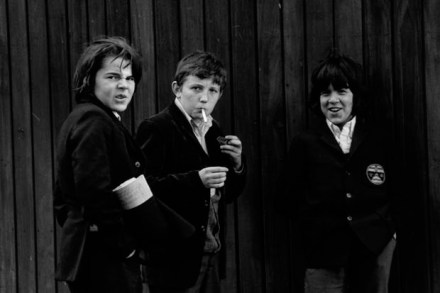
I’m no friend of fags. But this proposed ban on smoking in cars is perilous

From our UK edition

As a child, I was not a good traveller. The mere scent of a car interior – possibly the plastic seats, maybe the closed atmosphere, probably the whiff of petrol – would be enough to bring on the tell-tale flow of odd saliva that heralded a really impressive bout of vomiting. If the smell of fag smoke had been added to the mix it would have happened even sooner. So when I say that the that Labour peers’ attempt today (supporters of the amendment include Tony Blair’s old friend, Charlie Faulkner) to introduce a ban on smoking in cars with children is bossy, oppressive and expressive of the demeanour of Yvette Cooper (who has, in fact, nothing to do with it), it’s not from any childish nostalgia for passive smoking so much as a sense of unease.