Melanie McDonagh

Melanie McDonagh

Melanie McDonagh is an Irish journalist working in London.

Car alarms are anti-social and should be banned

From our UK edition

4.06 am, that’s what it was when I was woken up. Last time this week I think it was a bit after three. And by the same bloody car alarm. The thing went off just long enough to wake me up and unsettle my seven year old. Why? I mean, why is it my business whether your car is being stolen? At this time of the morning I just don’t care. It’s unfortunate; I do deplore car theft; but I do not see why I should be woken up way before rosy fingered Aurora gets going just because someone is trying to make off with whatever it is you’ve left on the back seat.
We need to know much more about ISIS’s ‘British’ jihadists

From our UK edition

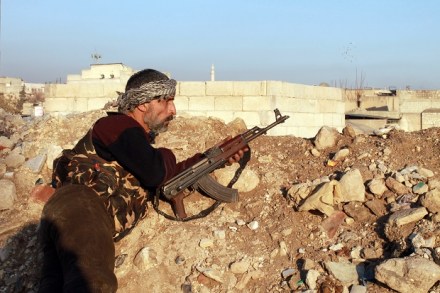
The social media exchanges of British jihadis in Syria and Iraq, as just revealed, are perfectly riveting, don’t you think? Fancy worrying about things like where to leave your luggage and internet connections when you’re a jihadi. There’s scope here for TripAdviser. But when it comes to jihadists from Britain, I’d rather like a bit more pertinent information about them than their currency exchange problems.

Churchgoing is good for you (even if you don’t believe in God)

From our UK edition

Few people, don’t you find, are as irritating as those who define themselves as Spiritual But Not Religious? There was a riveting  piece in the Sunday Times ‘Style’ magazine last week about them, featuring people who were both fabulously stylish and spiritual. Among the names checked was a shop called Celestine Eleven (‘when you buy a new dress, you’re buying into a beautiful piece of energy’) and a website called Numinous (motto: ‘material girl, mystical world’). So, you can be spiritual and design-conscious, as in Pamela Love’s pentagram ring, £1,500.

Recipe for a modern baker: first, move to Hoxton

From our UK edition

If I were the kind of person who invited people to come and have a bite to eat that very evening — and you’ve got to watch it in London, where people are inclined to draw themselves up to their full height, even by email, to ask what sort of sad case you think they are to imagine they’re free right now as opposed to in six weeks’ time — well, I’d reach for the Morito cookbook (Ebury, £26, Spectator Bookshop, £20).

DNR notices: A matter of life and death

From our UK edition

It was Janet Tracey’s family who brought about a change in the law regarding Do Not Resuscitate notices on patient’s notes in hospital. Thanks to their efforts, hospitals will now have to consult patients and their families before instructing medics that they shouldn’t go out of their way to provide life-saving treatment. Mrs Tracey had made perfectly clear that she wanted to be in on her own case; didn’t matter – she got a DNR notice anyway. I’m not sure whether I was in quite this situation a couple of years ago when my mother was in St Mary’s Paddington after a fall. She succumbed to an infection which she may have contracted before coming to the hospital: don’t know.

‘Britishness’ debate: can you do Magna Carta without also doing God?

From our UK edition

Was anyone terribly surprised by the Social Attitudes Survey published today suggesting that most people thought that, in order to be British, you should be able to speak English? Some 95 per cent thought so; the only curiosity being that in 2006 the figure was as low as 86 per cent. Nor indeed is it terribly odd that, as the authors point out, the threshold for Britishness is getting higher. As the survey from January points out, three in four people think immigration numbers should be reduced; the question of identity has to be seen in that context. One interesting aspect of the survey is the decrease in the numbers of people who think Christianity is an important component of Britishness – fewer than a quarter do so, down from 32 per cent in 1995 – or nearly a third.

Britain needs ‘Church schools’ and ‘faith schools’

From our UK edition

Following Freddy Gray’s piece yesterday about the pundits’ efforts to exploit the ‘Trojan Horse’ affair in order discredit ‘faith’ schools, I thought you might be interested in the statement below, from the Catholic Education Service, which pretty well sums up the argument. One person the CES may have in its sights when it talks about the charge of indoctrination is the former Education Secretary, David Blunkett, who observed yesterday that: there was a ‘muddle’ in the heart of government when it comes to religious schooling. ‘Our society does need an open, liberal — small ‘l’ — curriculum that embraces all faiths and no faiths, and teaches children to think for themselves ...

The best new children’s books

From our UK edition

A children’s author and illustrator, Jonathan Emmet, created a stir recently by saying that women are effectively gatekeepers of children’s books — chiefly picture books. They constitute the majority of the buyers, reviewers and prizegivers – and the result is that boys are shortchanged. Too few pirates and dragons — or the wrong sort — and too little peril, too little technology, too little non-fiction. Naturally, he’s had to spend a good deal of energy since explaining no offence was intended. Actually, I think he’s right, and not just about picture books.

Let Evangelical Protestants be Evangelical Protestants

From our UK edition

Pastor James McConnell of the Metropolitan Tabernacle in Belfast has gone and done it. He declared in a sermon that: "Islam is heathen, Islam is satanic, Islam is a doctrine spawned in hell”. Golly. Not since the Rev Ian Paisley got the boot into the pope as Old Redsocks and indeed as the Scarlet Woman herself have we heard anything quite so robust in the way of religious rhetoric. (Oddly enough, there was something almost lyrical about it; he had lovely cadences.) But the anti-popery tradition is precisely the context these remarks should be seen in. Evangelical Protestantism has a thing about false prophets; it also has a thing about telling it like it is.

Racism is on the rise, apparently. What do we mean by ‘racism’?

From our UK edition

Well, how worried should we be about racism? The British Social Attitudes Survey says 3 in 10 Brits describe themselves as “a little “ or “a lot” prejudiced against people of other races. It wasn’t just white people either. This brings us back to levels in the Eighties, though to be honest it’s only five per cent above the all-time low of 25 per cent in 2001. Not particularly surprisingly those most likely to admit to racial prejudice were male manual workers, though there was a rise in the numbers of male professionals in the category. Young people were less likely to admit to being racist – a quarter, by comparison with 36 per cent for the over-55s.

Now the BBC is censoring the word ‘girl’ – it really is in a different world

From our UK edition

It’s beyond parody, isn’t it? Mark Beaumont, a BBC presenter, has made a documentary about the Commonwealth Games and during the course of it he was filmed grappling with a judo champion. After he was sent crashing to the floor he said: 'I am not sure I can live that down - being beaten by a 19-year-old girl.' Mr Beaumont is 31. So inflammatory was the remark that though it was broadcast in full when the programme was broadcast in April, it was removed for the repeat, presumably lest, as the broadcaster Mariella Frostrup observed, the word might come across as 'dismissive'. I think we can assume that Mariella speaks for received opinion on these matters when she says 'the BBC has to consider the sensitivities of everyone who might be watching'.

Is Richard Scudamore allowed private opinions? Apparently not.

From our UK edition

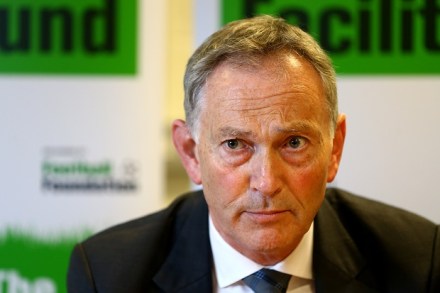
There is, you know, quite a bit to be said for having a personal email account for getting stuff off your chest, such as comparing a former girlfriend to a double-decker (don’t ask) and talking about big-titted broads. Any work inbox that your secretary automatically is privy to is, well, not quite the same as one that’s all yours. I’ve taken soundings on this sensitive subject from a friend of mine who is a really good PA, mixes with the mighty and all the rest of it, and she tells me that it’s actually difficult to do the job from her point of view if you don’t have access to the boss’s messages; you need to know what’s going on to keep on top of things.

David Cameron’s sacred cows exposed by Freakonomics

From our UK edition

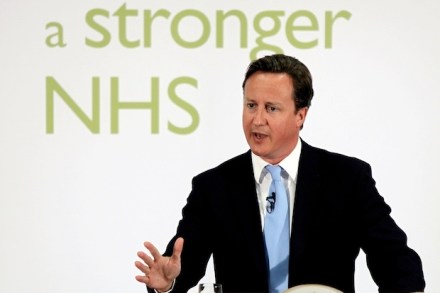
There's an interesting bit in the first chapter of Think Like a Freak, (Allen Lane, £12.99), from the Freakonomics duo, Steven D Levitt and Stephen J Dubner in which the two Steves get to meet David Cameron and a few dozen of the team just before he takes office. They are there to do what freethinkers do, viz, cut through the guff and muddled thinking that surrounds the big issues. Well, I can tell you for free that Mr Cameron is unlikely to sue for his name check. They observe breathlessly that "everything about him radiated competence and confidence. He looked to be exactly the sort of man whom deans at Eton and Oxford envision when they are first handed the boy.

It’s not acceptable to pass off halal food without telling us

From our UK edition

    It matters; it really does, if meat from animals conscious when killed is being passed off on us by stealth by supermarkets, schools and restaurants. It wouldn’t be just an imposition on the squeamish but a large-scale taking of liberties by the big food retailers which would affect most carnivores in Britain who shop in supermarkets and eat in chain restaurants, viz, the majority of us. The Mail reported today that the default option for many retailers is to sell meat that has been ritually slaughtered according to Islamic requirements. And ritual slaughter can mean not stunning the animal before killing it. What we need to know is: what kind of halal – the Islamic equivalent of kosher - we’re talking about here.

Did most women want the vote?

From our UK edition

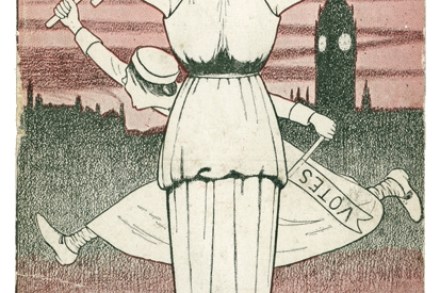
One way or another, we’re going to be seeing quite a lot of Helena Bonham Carter and Carey Mulligan in ankle-length coats with pale faces this season. They’re in the film Suffragette, which has been shooting in the House of Commons in recent weeks. The suffrage campaign was not only successful, it was successful to the extent that any other course now seems a bit preposterous. But what’s rarely mentioned is that the bulk of the resistance to it was from other women. It’s quite easy to visualise the suffrage campaign in terms of men vs women and that’s obviously the focus of the film. But the fact is, lots of women campaigned against being given the vote on the basis that it was unwomanly.

Boko Haram proves the Nigerian government to be corrupt and useless

From our UK edition

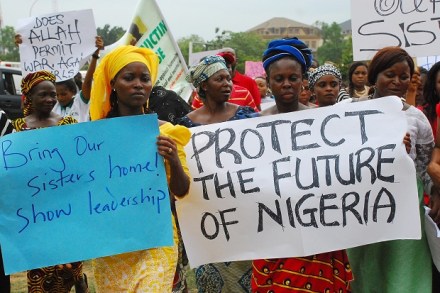
You know, the more we hear about the uselessness of the Nigerian government in dealing with the abduction – the rape, in the original sense of the word – by Boko Haram of 230-odd schoolgirls, the less appealing that government appears. The most striking and urgent action it took in response to the crisis in the three weeks since it happened was yesterday to arrest Naomi Mutah Nyadar, one of the women behind the mass demonstrations calling on the unhappily named president, Goodluck Jonathan, to get a grip and do something. Apparently his wife Patience took against her because she spoke about rescuing “our daughters” when in fact she was not the mother of any of the victims; she was speaking metaphorically, you see.

The secret life of the leader writer

From our UK edition

The latest series of Andrew Rawnsley’s ‘Leader Conference’ on Radio 4 starts tonight…keenly awaited obviously. But having been on the programme a couple of times – though not, funnily, since I did a piece for this magazine about the difficulty a woman has in getting her oar in across the masculine timbre of Danny Finkelstein et al – perhaps I should disabuse you that this admirable series actually replicates what happens in a leader conference. It’s very good, as everything my old friend Andrew does, but just not quite the same as the thing itself. This, I may say, is something of a specialist subject of mine, on account of leader writing being my bread and butter and having done it for different papers.

Did the pope say ‘inequality is the root of all social evil’?

From our UK edition

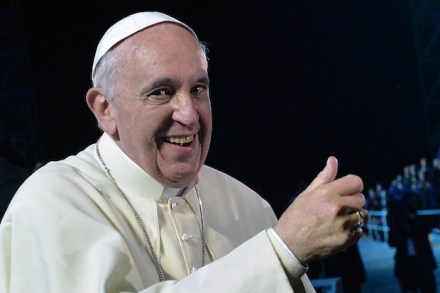
The following blog from a Catholic commentator about the Pope’s controversial tweet suggesting that “inequality is the root of social evil” puts the row about it on Twitter into context. But the real question is the language in which Pope Francis first tweeted: Spanish or Latin? In Latin, as the author of this blog observes, the critical noun is “iniquitas”, which you might as well call “sin”; come to that “malus” doesn’t mean social evil so much as any sort of evil. And to say that sin is the root of evil is sort of tautologous, at least for Catholics. But if the pope’s thought was first expressed in Spanish, desigualdad, well, that puts rather a different take on the thing; he is talking about inequality.

A day of four popes: John Paul II and John XXIII canonised

From our UK edition

To have one pope canonise another is remarkable; to have two popes canonise two popes (well, one was looking on but you see what I mean) is a marvel. These events are always a bit mindblowing by sheer dint of numbers – BBC reports estimated that a million people were present – but in terms of spectacle, the day of four popes is something else. I was in St Peter’s Square myself when Pope Francis was inaugurated; I was there too for the funeral of Pope John Paul II (me and about three million Poles) and I can vouch that these events are as ebullient as they seem from outside, invested with colossal good humour and attended by the curious as well as the devout.