Melanie McDonagh

Melanie McDonagh

Melanie McDonagh is an Irish journalist working in London.

Children shouldn’t be expected to receive sponsorship for child’s play

From our UK edition

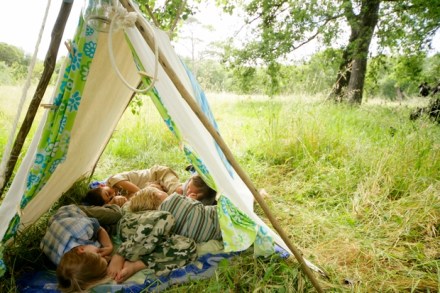
Can there be anyone curmudgeonly enough to take against Save the Children’s Den Day, a heartwarming event? – actually, make that an entire week, 29 May to 6th June – in which little children are 'being sponsored to transform their sofa, school desk or even a boring cardboard box into magical super dens. And the money they raise will help to save lives around the world.' What could be nicer and more harmless than to inculcate philanthropy in the young? Especially to help children like little Annie Mae in the Philippines, on the Save the Children website, made homeless in a typhoon and presumably obliged to make a den of her own, though not at all for fun.

The BBC debate confirmed some unhelpful female stereotypes

From our UK edition

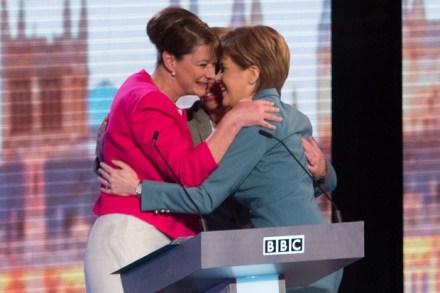
If I were a nicer person, I suppose I'd have been rather more moved by what the Independent called the moment that summed up last night's leaders debate, the 'beautiful group hug' by the three women leaders at the end while Ed Miliband looked on.  Rather, it summed up for me what I felt about the entire event, that it was a slightly embarrassing affair for women whose approach to politics is anything other than the sort of thing espoused by Greece's radical left-wing party Syriza.

The moral arguments for confronting Islamic State are increasing by the day

From our UK edition

It’s not perhaps the first thing you notice in the Labour manifesto, but one interesting commitment by the party is to establish a Global Envoy for Religious Freedom. It may or may not be an indication that Douglas Alexander reads The Spectator – which suggested some time ago that Britain should, like Canada, have a roving envoy to support specifically freedom of religion – but it’s a good move.

Putting away the fear of childishness

From our UK edition

Go to any bookshop — always supposing you’re fortunate enough to have any left in your neck of the woods — and chances are that lots of window space will be given over to two genres — children’s books and cookbooks. Step inside, and the children’s books are under your nose. Last year, children’s books were the fastest growing section of the books market. Yet the amount of space given over to children’s fiction and literature in the forums — newspapers and arts programmes — where we talk about books is remarkably small.

Don’t expect to hear anything about Islamic State during the election campaign

From our UK edition

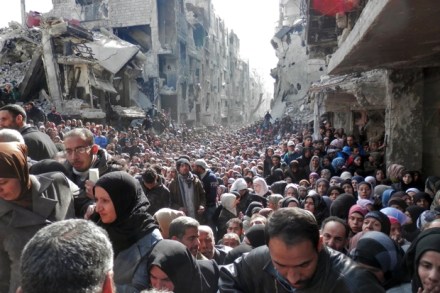
Granted, you don’t really expect foreign policy to feature much in an election campaign – we’re not saints - but it’s still shaming the way that the biggest foreign policy issue simply doesn’t register on the radar right now. I refer obviously to Islamic State, the group that just keeps on giving when it comes to reasons to want them wiped out. It’s a toss up really whether you go for the recently exhumed mass graves of the soldiers they massacred in Tikrit, the Yarmouk Palestinian refugee camp they seized control of, the images they obligingly posted of themselves smashing artefacts at Hatra or the blowing up an Assyrian church over Easter. Take your pick. And the response from the British Government?

Why is Labour making merit out of not backing an EU referendum?

From our UK edition

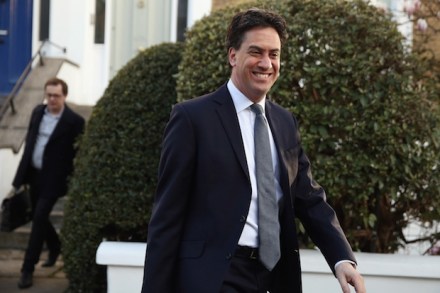
Fair play to Ed Miliband for launching Labour’s business manifesto today in Bloomberg, not perhaps the party’s natural stamping ground, at least not since the prawn cocktail initiative in 1997. And it was gutsy of it too to take out a full page advertisement in the FT – they don’t come cheap - to broadcast the party’s opposition to an EU referendum. 'The biggest risk to British business is the threat of an EU exit. Labour will put the national interest first. We will deliver reform, not exit', it says. Granted most British businesses, especially big ones and foreign-based ones, don’t want out of the EU.

If British democracy worked, we would have had a referendum on the death penalty

From our UK edition

Nice to know, isn’t it, that public attitudes are finally catching up with MPs’? It seems, from the Social Attitudes survey, that finally, half a century after parliament suspended the death penalty, 48 per cent of people no longer want the death penalty reintroduced. Opinion has been stubbornly in favour of it ever since 1965, and that was also true in 1998 when the Human Rights Act forbade capital punishment outright. In other words, until now, MPs have been wildly at odds with the opinion of most voters on an undeniably important issue. I’m unsure exactly where I stand on the issue myself, though I’ve always felt the guillotine would have been my own choice of method if it came to it.

Love child or bastard: the lottery of being born on the wrong side of the blanket

From our UK edition

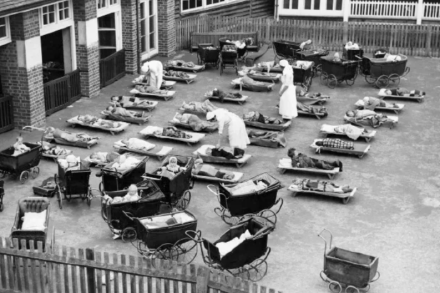
My father was handed over a shop counter when he was a day old. His aunt had tried to pass him off to a hospital and couldn’t find any takers so she brought him into a draper’s shop, put him down on the counter and declared she didn’t know what she was going to do with him. The shop assistant piped up to say that her sister didn’t have any children of her own and would quite like a baby. So off she went to fetch her sister, who took him off, tucked inside her cardigan, and that, dear reader, is how he ended up with his mother and father. I mention this prior to discussing In the Family Way because it’s about illegitimacy and some bits ring true to my father’s experience in Ireland before the war.

I’d love to buy Dolce and Gabbana just to spite Elton John

From our UK edition

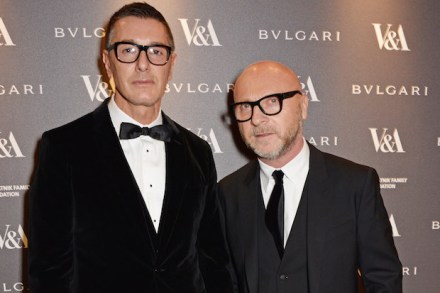
Thank God for Dolce and Gabbana. Where other fashion designers play with their image like Mr Benn, the children’s character who adopts a different persona every time he changes his hat, they have a remarkably consistent – for fashion – way of looking at the world. It’s about family, the kind of families they had, of the Italian/Sicilian Catholic variety. So, their beautiful – and I mean really beautiful, not just freaky, unlike some – models are placed in the context of grannies, grandads, picturesque peasants and children – occasionally in first communion outfits. Their last show, which the fashion press loved, brought the house down at the end, when the models came on the catwalk holding or leading their adorable children.

Sinn Féin has begun to think of itself as the ‘Irish Syriza’

From our UK edition

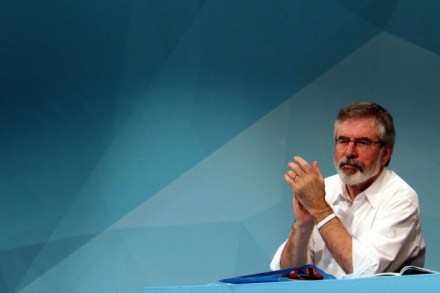
Imagine a party that’s a cross between the SNP, Syriza and Ukip - one that is anti-establishment and combines the self-regard of the plucky outsider with an intermittent lead in the opinion polls. Imagine that and you’re getting close to the character of Sinn Féin, as manifest in its party conference this weekend. The last you may have heard of Sinn Féin was as a purely Northern Irish outfit, getting on just dandy with the DUP if intermittently embarrassed by reminders of its past during the Troubles. Well, think again. The party regularly outpolls the major party of government in the Republic, Fine Gael, and seems likely to do just fine in the election in Northern Ireland.

‘Difficult girls’ are precisely who the age of consent is supposed to protect

From our UK edition

There’s a vision of hell tucked away in the serious case review, commissioned by Maggie Blyth, independent chair of the Oxfordshire safeguarding children board. According to its reckoning some 373 girls were sexually exploited across Oxfordshire in the past 15 years. The review doesn’t quite do justice to the horrors of the ‘sexual torture’ and rape of girls as young as 13 by gangs of men who were almost all Asian and from a Pakistani and Muslim background. Girls who were, to some extent or another, ‘in care’. Never has the phrase so mocked itself. At any rate, not since the last reports on the exact same phenomenon of the sexual abuse of young girls by predominantly Asian men in Oldham and Rochdale.

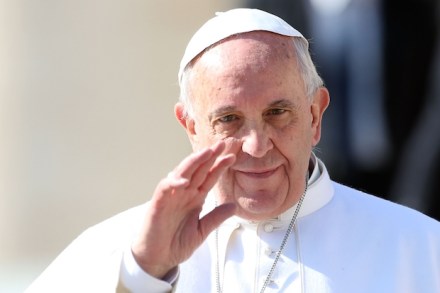
Is a married clergy on Pope Francis’ agenda? I hope not

From our UK edition

Pope Francis, is, according to Cardinal Walter Kasper - a Swabian formerly responsible for ecumenism - neither a traditionalist nor a liberal - "both of which categories have become rather timeworn and hackneyed" - but rather a radical who wants to advance a revolution of forgiveness. Well, that's what Christians are kind of for, even if most of us fall rather short of the ideal. But though the liberal/trad categories may indeed be a bit hackneyed - possibly because they're completely and utterly lost on the secular majority -- it's not to say that the old agendas aren't still being fought over with gusto. And right at the top of the liberal shopping list is a married clergy.

The footprint of Britain’s immigrants – and emigrants – is important

From our UK edition

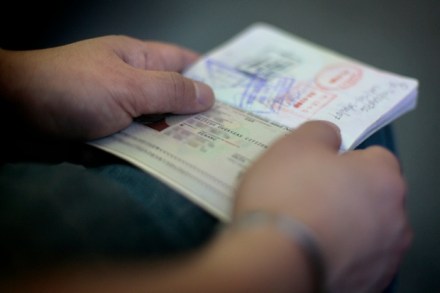
Half a million people. That’s quite a lot, isn’t it? I mean, half a million here, half a million there, why, soon you’re talking a million, which is even more of a nice round figure. But that’s the statistic we should be talking about when it comes to the migration stats today from the Office for National Statistics. The crucial figure tucked away in there is in fact 542,000, which is the number of people who came to Britain in the year up to September 2014, excluding returning Brits. And of these foreign immigrants, non-EU citizens were the majority, 292,000 of them.

The Syrian-bound schoolgirls remind us that feminism isn’t for everyone

From our UK edition

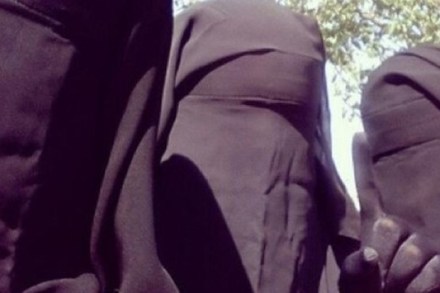
There is much to be said for Rod Liddle’s view that the fuss over the aspiring jihadi brides from the Bethnal Green Academy is getting on for preposterous and we shouldn’t, to put it mildly, over-exert ourselves to get them back. One takes the point, though I think in fairness we should spare a thought for those on the receiving end of the Isis recruitment drive, viz, the unfortunate indigenous communities in Syria and Iraq who are on the sharp end of Islamic State’s advance. I don’t know how many of the Assyrian Christians who didn’t manage to get away from the Isis attack this week on villages in north Eastern Syria were teenage or prepubescent girls, but I’d be a bit concerned about them myself.

The pope is right – smacking your kids is sometimes OK

From our UK edition

One good thing has come out of the fuss over the pope’s comments about it being ok to smack your children (so long as their dignity is maintained); it has flushed out the former Irish president, Mary McAleese, as tiresomely conventional in much the same way as her predecessor, Mary Robinson - the very incarnation of PC. Shame, because I’d been a fan until I read her letter to the Irish Times on Saturday criticising the pope for his remarks, on the basis that they’re at odds with the UN Convention on the Rights of the Child which, apparently, has zero tolerance when it comes to corporal punishment. Actually, make that two benefits to flow from the row.

Do Yazidi slaves count for less than the Jordanian pilot?

From our UK edition

There was a remarkable report on Channel 4 news last night around a film by Mehran Bozorgnia, which featured an interview with half a dozen young Yazidi women from the Iraqi village of Kucho. They were taken captive by Islamic State, but managed to escaped from their stronghold of Raqqa in Syria. It was horrible beyond words: one young woman taken as a sexual slave spoke of Isis fighters breaking the arms or fracturing the skulls of girls who refused to cooperate, of the shame of forced conversion, of the girls begging their captors to kill them. Her captor was an Australian Isis member; his Yazidi slaves were in addition to his wife. A 30-year-old woman obliged to act as minder for the younger women spoke of seeing girls as young as nine or ten taken for sex.

Even Lord Winston has seemed confused about mitochondrial transfer

From our UK edition

One expert who sounded off to great effect in the run-up to yesterday’s vote on three parent babies was Robert Winston, IVF supremo and baby maker in chief. He declared in the Telegraph that the donation of mitochondrial DNA was really no more problematic, morally speaking, than a blood transfusion. Naturally this had an effect on the way the debate was conducted – most MPs were entirely dismissive of the radical character of the bill, allowing for permanent, even if benign, changes to an individual’s genetic legacy, their germ line. (Incidentally, the donation of nuclei to an donor egg is much better researched than the more morally problematic embryo-to-embryo nuclear transfer, so it’s not quite as unambiguously safe as its proponents suggest.

There’s an ethical debate to be had about ‘three-parent babies’ but nobody seems keen

From our UK edition

There doesn’t seem much doubt about which way the Commons vote today on 'three-parent babies' will go, does there? A combination of dismissive metaphors, characteristically British sentimentalism and morally astigmatic scientists seems likely to do the trick. Today in the Telegraph, Lord Winston, IVF supremo, opined that the thing was no more problematic than a blood transfusion. In the Times, Matt Ridley, dismissed the importance of mitochondrial donation (the 'third parent' bit) as no more important to us than our gut bacteria. A Daily Mail journalist on the Westminster Hour last night brusquely observed that the technique was rather like changing a spare tyre.

Is it just on women’s issues that politicians feel they must deal with the pundits?

From our UK edition

Bit of a coup for Sarah Vine, Daily Mail columnist (and wife of Michael Gove), don’t you think? Her piece on date rape elicited a trenchant response from Harriet Harman, who was indeed mentioned in it. I can’t think of many politicians who get down and dirty with a columnist like that; mostly they loftily ignore the brickbats or deal only indirectly with the pundits by countering their arguments without attribution. Anyway, remarkably, Ms Harman isn’t letting this one go. Let me rehearse the arguments. Ms Vine had taken issue with the latest observations of the  Director of Public Prosecutions, Alison Saunders, who declared that men must be able to prove they had consent from a woman in cases of alleged rape.

French secularism is starting to feel the strain

From our UK edition

France is to institute something called a National Secularity Day, which will happen on 9th December every year, when French schools will remind pupils how to sing the national anthem, what the tricolor stands for and generally celebrate the values of the Republic. Odd, isn’t it, that this should sound so much like the reflexive, everyday practice in the United States, where flag veneration and the separation of church and state are hardwired into the consciousness of US children, without impinging at all on the extent of religious observance? Every French school will have to go through this Secularism observance day but it’s painfully apparent which community it’s directed at: France’s nearly 5 million Muslim community, amounting to, on paper, some 7.