Melanie McDonagh

Melanie McDonagh

Melanie McDonagh is an Irish journalist working in London.

Thank goodness Turkey is not in the EU

What, you might well ask, could possibly make the situation in Syria look much worse, after President Erdogan’s assault on the Kurds in Afrin? The Turks are, obviously, attacking the forces that did most of the heavy lifting when it came to dealing with Isis on the ground. Indeed, If it hadn’t been for the Kurds, it’s at least arguable that Isis would still be sitting tight in Raqqa rather than dispersed elsewhere. They are the only really reliable ally in the area for the US – though I take on board the argument that it was the US’s move in establishing a force of 30,000 border guards, dominated by Kurds, that set off the ever excitable Recep Tayyip Erdogan’s latest move. What, I repeat, could make this situation even worse? Let me answer myself.

Faith schools are more diverse than their critics make out

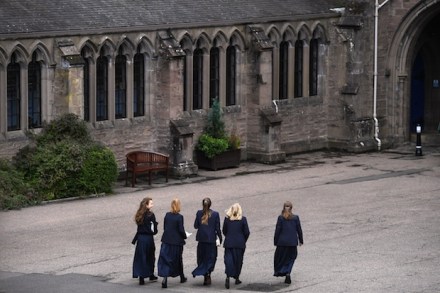
Ever willing to exploit my children, I asked them yesterday just how many actual English children there were in their class at school – one’s at primary, the other, secondary. What, English-English, they said reasonably? You mean, both parents, plus born here? Yes, I said, which meant they couldn’t count themselves – they were born in Dublin. They thought about it for a bit. The elder said, counting on his fingers, that five out of 27 were English-English, with another three more half and half. My daughter counted 10 out of 27, if you include pupils from Guernsey and Northern Ireland, which I unwillingly conceded might count as British from some perspectives; a child whose granny is from Sierra Leone counts as English. The rest were a ragbag.

Justine Greening’s departure is no great loss

You could, I suppose, feel sorry for Justine Greening if you were a nicer person than me, not just for losing her job, but for being in the job after it had been occupied by Michael Gove. Mr Gove had the radical, indeed revolutionary perception that it was a scandal that there should be such a gulf in expectation and outcomes between state and private schools. And he acted on that basis – the best bit of his programme, in my view, being his hardening up of the curriculum, so state school pupils don’t get fobbed off with dud qualifications in dud subjects. Exams are harder, and harder to pass than they were; with every fall in the pass rate, I cheer up more. Justine Greening, someone tell me, what did she ever do at Education?

Feminists complaining at being called ‘honey’ are a tiresome bunch

Not surprisingly, feminists lost no time this week weighing in behind Emily Lucinda Cole, a Virgin Trains passenger who took great exception to being addressed by a rail employee 'with that hideously patronising word women shudder at in contexts such as these: ‘honey’'. And indeed, the episode she complained about did suggest that the term wasn’t altogether friendly. When she told her ticket inspector she took exception to the brusque way he checked her ticket (and yes, I’m wondering about that), and that she’d be complaining to the bosses, he told her: 'You go ahead, honey'. He may have been an overworked Virgin employee fed up with middle-class girls getting uppity with him or he may have been a bad tempered so and so. It's difficult to tell.

Keep Christmas going through January, for God’s sake

Is there anything more evil than Dry January as an unchristian abomination and a conspiracy against Baby Jesus?  Unless it’s Veganuary. It’s part, you know, of the war against Christmas and indeed against a sane approach to the seasons. Look around you, folks: this is a bleak month if you cut out decorations, tinsel, candlelight, hot wine punch and saturated carbs, satsumas and pudding. Nature didn’t intend us to be giving things up at this time of year. Giving up drink when it’s grey and cold is a rubbish idea. And doing it is a modern way of screwing up the seasons by extending the New Year’s resolutions idea into New Year, New You programmes to do with diet…bang in the middle of the 12 Days of Christmas.

The new Bishop of London is a far cry from her predecessor

The Church of England being what it is, it was pretty well inevitable that the new Bishop of London should be a woman and as it happens the woman in question is Sarah Mullally, 55, at present suffragan bishop of Exeter. I spoke to her this morning before Downing Street made the announcement – wouldn’t you just love to know if the PM added her mite? – and the bishop designate gave every impression of being a nice and decent person, and a committed, almost certainly evangelical, Christian. Very much in the mould then of another evangelical, the Archbishop of Canterbury. She’s also a former Chief Nursing Officer who worked in the Department of Health for five years and was educated in a comprehensive (the last, a very good thing).

The Queen should force her unmarried relatives to corridor creep this Christmas

Thank God for the proprieties. This magazine's editor, Fraser Nelson, rattled a few score Anglicans today when he declared in his Radio 4 newspaper roundup at Broadcasting House (pleasingly paired with the FT’s Lionel Barber, BTW) that Meghan Markle and Prince Harry were to share a bedroom when they stay with the Queen at Sandringham over Christmas. This was on the back of a piece by Rachel Johnson, sister of, in the Mail on Sunday, deploring the fact that Meghan was to glad hand the crowds after the Christmas service, even though she’s only engaged. It was the bedroom-sharing arrangement bit that scandalised me.

Lines of beauty | 7 December 2017

The thing about Winnie-the-Pooh, 91 years old this year, is that he’s the creature of E.H. Shepard, who drew him, quite as much as he is of A.A. Milne, who created him. The words and the pictures came together for anyone who encountered Pooh Bear in the books rather than the film. Any exhibition about him, then, has to grapple with the difficulty of doing justice to the text as well as to the drawings. And, moreover, to the fact that many of those who love him best heard about him first in a story that was read aloud. And for all that Pooh is a byword for world-class — or rather, middle-class — whimsy, there is something fragile and evanescent about the world he inhabits: he evokes the time When We Were Very Young. Tread softly, then, around this bear.

Damian Green’s private life is not a police matter

So, a former Met detective, Neil Lewis, professes himself 'shocked' – yes 'shocked' – by the amount of pornography allegedly found on the computer of the Deputy Prime Minister, Damian Green, in 2008. He had analysed the way the computer in question had been used and declared he had 'no doubt whatever' that it was Mr Green, then opposition Home Affairs spokesman, who had used it. 'The computer was in Mr Green’s office...logged in, his account, his name', said Mr Lewis (at the time working as a computer forensics examiner for counter terrorism operations). 'It was ridiculous to suggest anybody else could have done it,' he added.

The trouble with Miss Markle

‘The thing is,’ said my friend, after the broadcast of the engagement interview with Meghan Markle and Prince Harry, ‘you can’t imagine actually bowing or curtseying to her, can you?’ That is pretty well the crux of the engagement issue: can you see yourself doing either in the case of the newest prospective member of the Windsor family? Personally, I would curtsey to the Queen and I have done to Prince Philip; I would draw the line at Camilla, and I wouldn’t dream of curtseying to Meghan. My friend was in fact A.N. Wilson, biographer of,  inter alia, Queen Victoria.

Cat among the pigeons

Back in 1990, Roald Dahl wrote a book called The Minpins, which was illustrated by Patrick Benson, a very good artist. By now we regard Dahl (when writing for children) to be inescapably linked with Quentin Blake, to the point where any other combination seems fundamentally unsatisfactory, like trying to decouple Goscinny and Uderzo in the Asterix books, or Kenneth Grahame and Ernest Shepard for The Wind in the Willows. The whole is somehow bigger than both halves. So it’s a matter of pure delight that Blake has now illustrated the book (Puffin, £10.99). At a stroke, the atmosphere of the story has changed from menacing to spirited and intrepid. The Midas touch of QB has worked again.

Prince Harry and Meghan Markle: the union of royalty and showbiz

It may be churlish to be unkind about a young couple who have just announced their engagement but needs must. Someone has to say it, though let me say at the outset that the engagement has made lots of people very happy. Not least journalists. Prince Harry is fifth in line to the throne so constitutionally it doesn’t matter a hoot who he marries because neither he nor his children are going to become monarch, but, for what it’s worth, Meghan Markle is unsuitable as his wife for the same reason that Wallis Simpson was unsuitable: she’s divorced and Harry’s grandmother is supreme governor of the CofE. The last person who made any personal sacrifice for that particular principle was Princess Margaret, and you could argue it didn’t end terribly well.

I love dogs but should we really give them medals for bravery?

The oddest thing about the Dickin medal awarded to a dog called Mali today, and given to animals from carrier pigeons to horses for 'conspicuous gallantry or devotion to duty while serving or associated with any branch of the Armed Forces or Civil Defence Units', is that it was instituted in 1943. Back then, there were umpteen examples of animals doing useful war work, including pigeons such as Winkie and Tyke (six of the first seven citations were to them) who helped rescue stranded airmen, and a mongrel called Tyke who sniffed out a number of Blitz victims. Naturally, there are bonds of affection and gratitude between the humans who used the creatures, and the animals.

Dark side of the Moomins

Tove Jansson, according to her niece’s husband, was a squirt in size and could rarely be persuaded to eat, preferring instead to smoke fags and drink whisky. And when she did eat, it was usually salted cucumbers — to go with the drink. You know, this late in life, I may have encountered my role model. We were at the launch of an excellent edition of four books in her Moomin series at the Finnish embassy. London is in the grip of a kind of Moomin madness right now, what with the books, a Moomin event at the South Bank and a new exhibition of Tove Jansson’s artwork at the Dulwich Picture Gallery. Which is good news for Finland, on account of the Moomins being one of its two big cultural exports — the other being Santa Claus, who obviously lives in Lapland.

The problem with the Church of England’s gender guidance

There has been an equivocal reaction, wouldn’t you say, to the Church of England’s pronouncement that little boys should be allowed to wear tiaras and high heels at school, while issuing a helpful form to encourage teachers to report transgender bullying; the new rules, it says, are designed to 'challenge homophobic, biphobic and transphobic bullying'; (the second is new to me). Stonewall – which has changed its remit quite a bit from the old days when it campaigned just for gay rights – has welcomed the move. But as you’d expect, Christian evangelicals have taken a more dusty view. It’s hardly new for the CofE, though.

May’s day

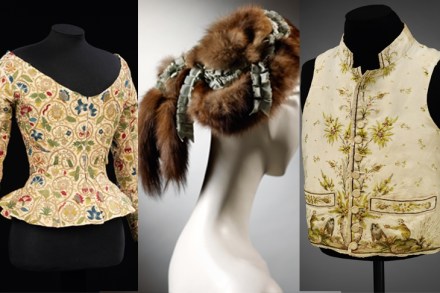
You may think you don’t know May Morris, daughter of William, but you’ll probably have come across her wallpaper. Her honeysuckle design was and remains a Morris & Co. bestseller, and it not only features in homes to this day, it’s been nicked by designer Jonathan Anderson for a Morris-inspired range for the very expensive fashion house Loewe. It’s all a bit dispiriting for a woman whose aesthetic sensibility, like her father’s, was bound up in her socialism. But it was embroidery that was May Morris’s art and craft and now a new exhibition at the Morris Gallery in Walthamstow lets us see it in its own right.

Cambridge’s ‘hard work’ don is wrong – but so are his snowflake critics

We all know, I think, what we’re meant to make of the Cambridge don who sent round a memo to his students to tell them they’ve got to do some work only to find the snowflake undergraduates calling his remarks 'extremely damaging' with mental health activists getting especially worked up. Most sensible people will feel that he deserves some sort of award. Personally, I’m with the students. Anyway, to flesh out the details, Professor Eugene Terentjev, plainly a scientist of the old school – he’s Russian – has sent an email to his undergraduate natural science students at Queens’ College to tell them that: 'You can ONLY do well (i.e.

Christian MPs aren’t ‘devout’. They’re self-confessed sinners

There are a couple of predictable elements to the reporting of sex scandals involving a public figure, and both were in evidence when it was revealed that Stephen Crabb, MP, had sent 'pretty outrageous' messages to  a woman he’d turned down for a job in his parliamentary office. When it came to the reporting, Mr Crabb was duly described as a 'married father of two', then as a 'devout Christian', which instantly raises the suggestion: 'hypocrite'. So, you establish the individual’s respectability before proceeding with a story that suggests the contrary.

Pregnant silence

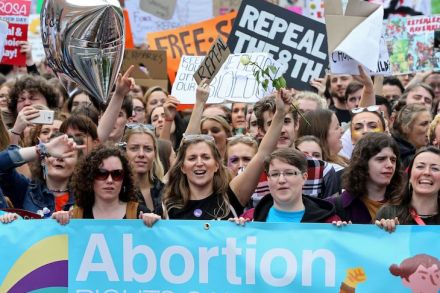
Brian Sewell once wrote an article about abortion headlined: ‘Women, the killers in our midst.’ He got an awful lot of flak for it, which he took in his stride. He came to mind during the screening of Abortion On Trial, the documentary hosted by Anne Robinson and screened this week to mark the 50th anniversary of the passing of the 1967 Abortion Act. In it, one of the participants described abortion as murder. ‘Are nine of us here… murderers?’ asked Mrs Robinson with a flourish, to which the only tactful answer was no, of course not. Brian would unhesitatingly have said yes. Abortion is one of those issues about which dissent is not normally socially permissible right now; see what happened to Jacob Rees-Mogg.

Three daemons in a boat

Philip Pullman’s new k, the prequel to his Northern Lights series — the one north Oxford academics very much prefer to Harry Potter — is an intriguing work. It’s notionally set some time near our own, but the world it evokes is the 1950s and 1960s England of the author’s youth. The hero, Malcolm Polstead, is the only child of an innkeeper — that timeless calling — and the inn was an old stone-built rambling comfortable sort of place. There was a terrace above the river, where peacocks (one called Norman and the other Barry) stalked among the drinkers...