Melanie McDonagh

Melanie McDonagh

Melanie McDonagh is an Irish journalist working in London.

The terror of choosing the wrong email sign off

From our UK edition

Just now, I wrote an email and I couldn’t for the life of me think how to sign it off. ‘Kind regards’, the default setting for most messages, felt a bit too formal, given I am on friendly terms with the recipient; he’s older than me and a priest. ‘Yours ever’ seems forward. ‘Best wishes’ is fine for strangers but may be stilted for someone you know quite well. ‘M’, my most frequent sign-off, would look downright rude. An ‘X’ was out of the question. So plain ‘Melanie’ it was. But I was left wondering which of the range of options I should have gone for, each suggestive of a slight difference on the register from intimacy to formality.

Who cares what Harry and Meghan think about Trump?

From our UK edition

Well, who can the Duke and Duchess of Sussex have in mind in their video message to Time 100 – for the magazine’s issue on influential people – when they talked about the need to reject 'hate speech, misinformation and online negativity' in the context of the US election?  There are precisely two possibilities. Do you reckon these things might, just possibly, be code for the president, Donald Trump? In which case – I may of course be wrong here – it looks as if they’re urging people to vote Democrat. As for lovely Meghan’s observation that this is 'the most important election of our lifetime' it does seem to be channelling Michelle Obama’s call to arms: vote as if your life depended on it.

Who’s afraid of Amy Coney Barrett?

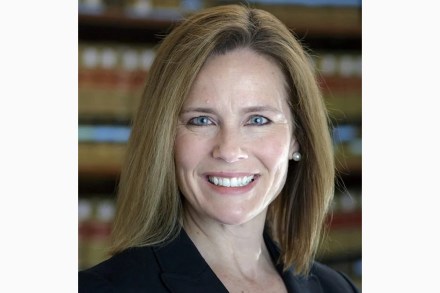
Oooff! If you’re to go by Twitter — not always a good idea — there’s one thing not to like about Amy Coney Barrett, Donald Trump’s potential nominee to replace Ruth Bader Ginsburg and that’s her religion: Catholicism. The Washington Post’s Ron Charles quoted her saying that ‘a legal career is but a means to an end...and that end is building the kingdom of God’. Cue for others to pile in to the effect that there’s meant to be a separation of church and state in the US, and others witheringly observing that it’s not far to go from here to overturning Roe v. Wade. You can expect the quote to be widely circulated in the next few days.

amy coney barrett

President Trump’s big Balkan deal

From our UK edition

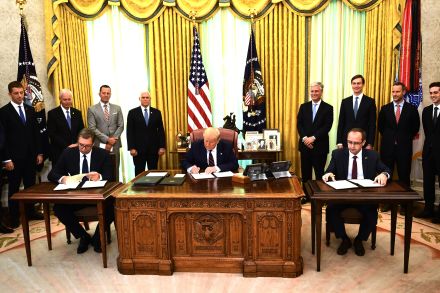
President Trump has presided over a notable deal between Kosovo and Serbia. It’s interesting in more ways than one. For starters, the deal is very, very Trump. It’s about the economy, stupid. The deal-maker-in-chief, Richard Grenell, former acting director of National Intelligence, has, as he said, flipped the script. The deal has put economic development ahead of political issues in Kosovo and Serbia. That, you may recall, was more or less the late John Hume’s prescription for peacemaking in Northern Ireland… if you focus on developing the economy and creating jobs, it makes the political issues an awful lot more manageable. And in the case of the dysfunctional economies of Kosovo and Serbia, it’s the right way round.

Ditching Rule Britannia’s lyrics from the Proms is a step too far

From our UK edition

If the Proms director, David Pickard, thought he’d get away with fiddling with Land of Hope and Glory at the Last Night of the Proms, boy, he knows better now. Yesterday, the Proms publicity people put out a statement deploring social media commentary about its plans and explaining: 'The Proms will reinvent the Last Night in this extraordinary year so that it respects the traditions and spirit of the event whilst adapting to very different circumstances at this moment in time.

Rejoice for the return of the church choir

From our UK edition

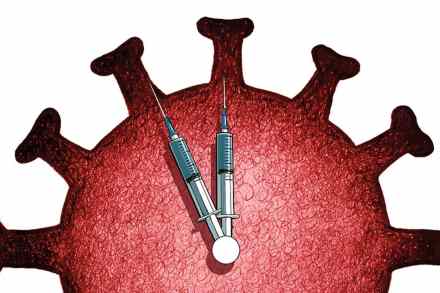
Not all coronavirus research sounds like fun, but wouldn’t you just loved to have been at the session where 25 choristers were asked to sing Happy Birthday at varying volumes to determine whether or not it would be safe for choirs to get back to business. The exercise was carried out by academics collaborating with Public Health England (while it lasted) and the Department for Culture. And you know what? It turns out that the quieter the singing, the lower the risk of transmitting droplets. The researchers found that singing did not produce much more aerosol than speaking at a similar volume, but singing or speaking loudly increased the production of droplets by a factor of between 20 and 30 compared with lower volumes.

Why the exams debacle was so predictable – and predicted

From our UK edition

Bit late now, isn’t it, to complain about the exams debacle? Where were they, Angela Rayner, Keir Starmer, the teaching unions, Nicola Sturgeon and the BBC on 18 March when Gavin Williamson fatally decided to scrap this year’s A-levels and GCSEs? If they were throwing their rattles out of the pram, it wasn’t loud enough to be heard.  The grounds for that idiot move was ‘to give, pupils, parents and teachers certainty, and enable schools and colleges to focus on supporting vulnerable children and the children of critical workers'. That, you note, was before the start of lockdown. Yet if ever there was a problem that could be seen a mile off, it was the consequences of this disastrous decision.

Dropping poetry from GCSEs is a crying shame

From our UK edition

Just when you think it’s not actually possible for the Government to get things worse when it comes to schools and Covid, along comes Ofqual to make a fool of you by proving that yes, it is indeed possible for them to make an even bigger mess of things. Today we found out that it will be possible for GCSE students next year to do English literature without any poetry. Ofqual, under its head, Sally Collier, consulted schools about whether they felt able to offer the same subjects as normal; not wholly surprisingly they said they didn’t…apparently they expressed 'significant concern' about their ability to cover all the subject areas. Well, knock me down with a girder. So teachers can drop either poetry or the nineteenth century novel or fiction and drama after 1914.

How priests were kept out of hospitals

From our UK edition

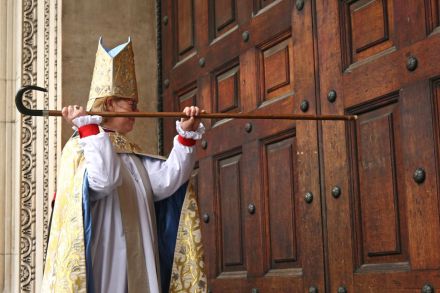
Mary Wakefield’s piece in today’s magazine – How the Catholic Church betrayed the dying – is right and eloquent in pointing out that there were Catholics dying in hospital from Covid who weren’t given the last rites for the absolution of their sins and the viaticum, the eucharist or food for the last journey. It is the least the Church can do for the faithful: to give them absolution of their sins at the last. However, in giving the bishops a very needful rebuke, she perhaps didn’t have space to do justice to the work of priests on the ground and in hospitals.

The growing educational apartheid

From our UK edition

This week would normally be the time when state and private schools go their separate ways, when privately educated children go off on their holidays while the state school lot carry on for another couple of weeks of term. Except this time, the divergence happened in March, when lockdown started and the educational apartheid began, between rich and poor – or at least, between those who can afford fees and the not so well off. At that point, private school pupils went online for their education with school days running pretty well as normal; state school pupils ceased to have any education at all apart from homework set online, which might be marked, or might not, depending on whether the teachers felt like it.

Meet Micheál Martin, Ireland’s new Taoiseach

From our UK edition

Four months after the election, Ireland finally has a government and a prime minister, Taoiseach Micheál Martin. The country has since independence been governed by the two old Civil War parties – a conflict without any resonance whatever in contemporary Ireland – and, surprise surprise, it still is. The difference now is that whereas previously, Tweedledum and Tweedledee took it in turns to govern, now they’re doing it together, with indispensable help from the Greens. The remarkable performance of Sinn Féin under Mary Lou McDonald in the February elections when the party won more votes than any other was traumatic for the Irish political establishment.

Why is the Conservative party backing ‘no fault divorces’?

From our UK edition

One of the umpteen things people don’t elect a Tory government for is to make marriage more easily dissoluble. In the last year for which figures were available, 2017, the number of opposite-sex marriages was the lowest on record – just shy of 243,000 – and I’m not sure that’ll be boosted by making marriage even easier to get out of, which is what Boris Johnson’s government has just done. The Divorce, Dissolution and Separation bill which has just received royal assent means that a spouse can now start divorce proceedings by stating simply that the marriage has broken down – currently, one spouse has to allege that adultery, unreasonable behaviour or desertion has taken place.

Our unseen Queen is more important than ever

From our UK edition

Andrew Morton is being a bit previous, isn’t he, in suggesting to the Telegraph that the Covid crisis means that the Queen has more or less abdicated? Or as he puts it: ‘The brutal truth is that her reign is effectively over. Covid-19 has done more damage to the monarchy than Oliver Cromwell. Corona has practically put Charles on the throne.' And there was the rest of the country thinking the Queen has actually been rather brilliant during the crisis, giving that televised pep talk to the nation and presiding – at a distance – over the VE day celebrations with her very own service hat on the desk beside her, a living link between past and present. The psychological importance of the Queen to the equilibrium of the nation is, I’d say, very considerable.

In defence of liberalism: resisting a new era of intolerance

From our UK edition

45 min listen

Are we witnessing the death of the liberal ideal? (01:02) Next, what's behind the government U-turn on primary schools and what effect could it have on the poorest students? (20:14) And finally, Britain's ash trees are facing a pandemic of their own, with so-called ash dieback sweeping the nation. Can Britain's ash trees be saved? (30:12)With Douglas Murray; The Spectator's economics editor Kate Andrews; Coffee House contributor Melanie McDonagh; political editor James Forsyth; associate editor of the Evening Standard Julian Glover; and professor at the Laboratory of Tree-Ring Research at the University of Arizona Valerie Trouet. Presented by Katy Balls.Produced by Gus Carter and Matthew Taylor.

Gavin Williamson needs to stand up to the teaching unions

From our UK edition

So, the Government has abandoned plans to bring all primary school pupils back before the summer holidays, in addition to the two cohorts who have already returned. The opposition of teaching unions and some regional authorities and mayors have seen to that. As for secondary schools, only two of their year groups are returning; no plans for the rest. You do realise what that means, don’t you? It’ll be nearly six months off school by the time the remaining pupils get back at the beginning of September. It’s a long time, isn’t it? And as I’ve mentioned previously, it’s an especially long time if you haven’t had any actual lessons. As everyone keeps pointing out, it’ll consolidate the existing problems of disadvantaged groups.

Relaxing Sunday trading laws is an abominable idea

From our UK edition

You’d think that any measure that would help to get people out spending would be all to the good, wouldn’t you? Well, not so. The government’s latest genius idea for rebooting the retail sector is to abandon Sunday trading laws for a year, at least in the case of the larger supermarkets. Those laws at present mean that Brits cannot actually spend the entire day of rest shopping; just six hours of it. Rishi Sunak and Dominic Cummings are both said to be all for the idea, which, I suppose, makes it a shoo-in. Personally I think it’s an abominable idea. For starters, the likelihood that at the end of the year, Britain will revert to the status quo ante is precisely nil. It’s far more likely that the laxity will extend to the entire retail sector.

Sally Challen shouldn’t inherit the estate of the husband she killed

From our UK edition

Sally Challen killed her husband, Richard, with a hammer in 2010. She was convicted of murder and given a life sentence but on appeal the conviction was replaced with one for manslaughter. A psychiatric report had concluded Challen was suffering from an 'adjustment disorder'. The judge, Mr Justice Edis, said the killing came after 'years of controlling, isolating and humiliating conduct' with the added provocation of her husband's 'serial multiple infidelity'. So far, so normal.

Dominic Cummings’s lockdown critics will never be happy

From our UK edition

Happy now? Thought not. Dominic Cummings has delivered his statement and answered questions but still the critics aren’t appeased. Not at all. In fact, the tenor of the questions that were put to him suggested that quite a few of the journalists lucky enough to be socially distancing in the Downing Street rose garden, plus those listening at a distance, hadn’t been listening to a word he said. Didn’t he realise that there were people out there who hadn’t seen their elderly parents or grandparents for months and how would they feel knowing that he’d been gadding up to Durham to see his?

The Dominic Cummings imbroglio

From our UK edition

15 min listen

The government has come out in defence of Dominic Cummings's decision to travel to Durham during lockdown. On the podcast, two Spectator writers give their opposing views on whether or not he made the right decision.

What else could Dominic Cummings have done?

From our UK edition

The question is, does Dominic Cumming’s four-year-old son possess preternatural resilience – a bit like the infant John the Baptist who went off into the desert as a boy. Or does he, like my own children at that age, need a bit of feeding, occasional supervision to stop him playing with matches and a bath at bedtime? If the former, and the child can fend for himself at this tender age, then it would indeed have been wrong for Mr Cummings and his wife Mary Wakefield (of this parish) to have taken themselves off to Durham, where his family lives, where his sister and nieces were volunteering to take care of the little boy.