Max Pemberton

Max Pemberton is a consultant psychiatrist and columnist for the Daily Mail

The front line: how the NHS is preparing for battle

From our UK edition

39 min listen

How prepared is the NHS for the coming battle with coronavirus (1:20)? Plus, what will Britain look like after the epidemic (12:20)? And last, just how are children so good at make-believe (29:25)?With Dr Max Pemberton, Dr Kieran Mullan, James Forsyth, William Hague, Mary Wakefield and Piers Torday.Presented by Cindy Yu and Katy Balls.Produced by Cindy Yu and Gus Carter.

With Max Pemberton

From our UK edition

39 min listen

Max Pemberton is a Daily Mail columnist and medical doctor specialising in mental health and eating disorders. On the podcast, he talks about his milkman father and activist mother and what family mealtimes were like, remembering to eat on shifts as a junior doctor, and dissuading patients with serious eating disorders of the 'clean eating' religion.

Common medical conditions explained: high blood pressure

From our UK edition

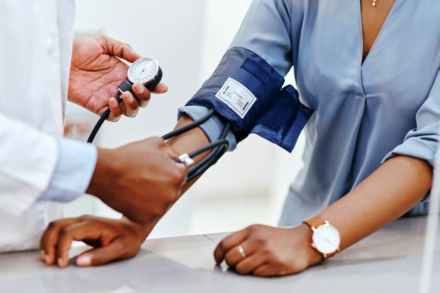
The condition High blood pressure is also called ‘hypertension’. Blood pressure is recorded in two numbers – the high number is called systolic and this is the pressure when the heart has just pumped. The low number is called diastolic and this is the pressure when the heart is at rest. The pressure is measured in ‘millimetres of mercury’ or mmHg. Ideal blood pressure is between 90/60mmHg and 120/80mmHg. High blood pressure is considered to be anything above 140/90mmHg. The problem with high blood pressure is that although in the long term it can be deadly, there are often no symptoms at all, so people can have it for years without realising.

Bill of health

From our UK edition

It would be daft for someone to offer you £1.8 billion and you turn it down. That sort of money isn’t to be sniffed at. This is how much Boris Johnson announced he would give to the NHS as an extra funding boost. And I don’t want to seem churlish or ungrateful — after all, those of us who work in the health service are always banging on about how NHS resources are near breaking point. But I have some reservations. The first is the most basic — I’m not sure this is quite the cash windfall it’s made out to be. While Boris has assured us that ‘this is £1.

Health warning

From our UK edition

Everyone agrees something dramatic has to be done to help the NHS. It is crumbling and the canary in the mine is general practice. I work as a psychiatrist but my GP colleagues are almost all frazzled, overworked and frustrated at not being able to give the care they want to their patients. They’re quitting in their droves. So it makes sense that politicians, desperate for a quick and easy answer to an overwhelming and complex problem, have leapt on technology as a solution. And, in particular, on  the idea of an app that offers a GP consultation via your mobile phone. In theory, it sounds great: the patient can dial up, speak to and (via phone camera) see a doctor, who could be anywhere. The poster boy is an app called GP at Hand, run by British start-up Babylon.

Wasting away

From our UK edition

The NHS is in dire straits. I never thought I’d say this but as a doctor, and having seen the extent of the current crisis, I’d be scared if a family member had to go into hospital. Despite the best efforts of staff, the pressures are such that it’s all too easy for mistakes to be made. Doctors and nurses are going to work fearful of the situation they will find. They know how unsafe it is, and yet they are utterly powerless to do anything about it. The predictable response is to call for more money to be hurled at the NHS. It’s all because of cuts, they say.

This is an emergency

From our UK edition

The NHS as we know it is dying. It’s no longer a matter of if it will collapse, but when. Those of us who work on the front line have known this for some time, and it’s heartbreaking. Last week’s ransomware cyber-attack served to highlight how frail and vulnerable the health service is. While many tried to blame Health Secretary Jeremy Hunt for failing to prevent such a disaster, the archaic IT system is actually emblematic of how the NHS as a whole has struggled to keep up to date and adapt to the modern world with the necessary speed. I trained as a doctor specifically because I was so proud of the NHS and the ideologies underpinning it. It is one of this country’s greatest achievements: a fair, equitable and cheap way of delivering healthcare.

The wrong cuts

From our UK edition

[audioplayer src="http://rss.acast.com/viewfrom22/jeremyhunt-scatastrophicmistake/media.mp3" title="Dr Clare Gerada and Fraser Nelson discuss the row over junior doctors" startat=34] Listen [/audioplayer]It has long been rumoured that when Jeremy Hunt took over as Health Secretary, Cameron told him to do one thing with the NHS: keep it out of the headlines. Given that the NHS is an enormous institution, the public take an avid interest in it and it is frequently rocked by scandals and financial difficulties, this was no easy task. Until a few weeks ago, Hunt had managed it with aplomb. And then the junior doctor fiasco happened. It has been cataclysmic, one of the worst public relations disasters to rock a government department for years, and it shows no signs of abating.

We could end HIV

From our UK edition

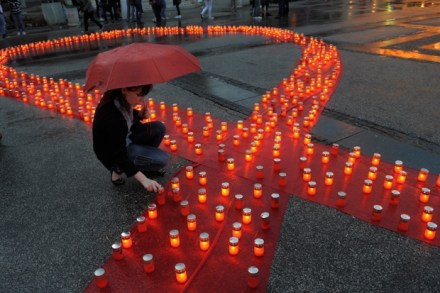
You have probably never heard of Truvada, but it is a pharmacological breakthrough that has the potential to consign Aids to the history books. The drug effectively makes its users immune to the HIV virus. In the US, the Food and Drug Administration approved Truvada for use over three years ago. Truvada is even covered by insurance companies. It formed the backbone of New York’s HIV strategy, published this summer, which aims to halt the spread of the infection and reduce new HIV infections to near-zero by 2020. Yet in this country, a conspiracy of silence surrounds Truvada, or Pre-Exposure Prophylaxis (PrEP), as it is termed. The NHS claims that it is waiting on the results of its own studies to decide whether Truvada should be introduced.

As a doctor, I’d rather have HIV than diabetes

From our UK edition

'There is now a deadly virus, which anyone can catch from sex with an infected person. If we’re not careful, the people who’ve died so far, will be just the tip of the iceberg… If you ignore Aids, it could be the death of you.’ It has been hailed as one of the most memorable health campaigns ever created. The message couldn’t have been clearer and people were petrified. For anyone over the age of 30, the ‘Iceberg’ and ‘Tombstone’ adverts — as they came to be known — with John Hurt’s menacing voice-over, still bring back a sense of crushing dread.

How to fix the NHS: a doctor’s prescription | 17 October 2014

From our UK edition

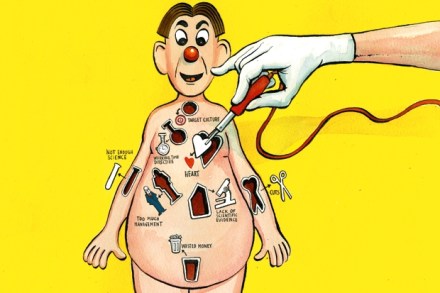
I’m a doctor, and I don’t care about the NHS. In this country, that’s an almost heretical statement — but it’s true. What I mean is that I have absolutely no interest in ensuring its survival simply because it’s a great national treasure. What I care about is making sure that we have the best possible and most cost-effective healthcare system. And as it happens, despite the strikes, panic and doom-mongering, I think the NHS — by which I mean a nationalised healthcare model — is the best option available, if only someone were brave enough to make the right changes in the right way. Don’t expect this government to try.

How to fix the NHS: a doctor’s prescription

From our UK edition

I’m a doctor, and I don’t care about the NHS. In this country, that’s an almost heretical statement — but it’s true. What I mean is that I have absolutely no interest in ensuring its survival simply because it’s a great national treasure. What I care about is making sure that we have the best possible and most cost-effective healthcare system. And as it happens, despite the strikes, panic and doom-mongering, I think the NHS — by which I mean a nationalised healthcare model — is the best option available, if only someone were brave enough to make the right changes in the right way. Don’t expect this government to try.

Introducing a new magazine: Spectator Health

From our UK edition

This week's issue of The Spectator comes with a new quarterly magazine, Spectator Health. As editor of this exciting new publication, I aim to do something no other health magazine does: give readers an informative and above all useful health guide that is authoritative without being bossy. As a doctor, I'm fed up of seeing people bombarded with conflicting health advice in the media. It's difficult for even highly intelligent readers to know what to believe and what to ignore.I'm also fed up of health nazis using the media to order people to be good. Spectator Health will cut through the jargon and confusion and give you clear, sensible and reliable information from writers and experts that you can trust.

Statins: magic bullet or massive misfire? Ask our experts

From our UK edition

In the first issue of Spectator Health, our cover piece is on the controversial issue of statins, arguably the most important 'consumer' medical issue facing people today. As Dr James LeFanu, our cover author, notes, GPs are eager to prescribe statins to anyone over 40 with even a slightly elevated cholesterol level.

As a doctor, I’d rather have HIV than diabetes

From our UK edition

'There is now a deadly virus, which anyone can catch from sex with an infected person. If we’re not careful, the people who’ve died so far, will be just the tip of the iceberg… If you ignore Aids, it could be the death of you.’ It has been hailed as one of the most memorable health campaigns ever created. The message couldn’t have been clearer and people were petrified. For anyone over the age of 30, the ‘Iceberg’ and ‘Tombstone’ adverts — as they came to be known — with John Hurt’s menacing voice-over, still bring back a sense of crushing dread.

Introducing Spectator Health

From our UK edition

I am very pleased to announce the imminent arrival of Spectator Health, a new magazine from the Spectator. As you can see from our new landing page, it will be like nothing else on the market: a lively, myth-busting quarterly publication that cuts through the claims and counter-claims you read in everyday health journalism to provide clear, concise and expert advice and information. Spectator Health will keep you up to speed on the latest health research and medical innovations, as well as providing some expert commentaries, opinions, and tips. As editor, I see it as my mission not to boss you about: Spectator readers don't want to be told what and what not to eat or drink, or how much they should be exercising. We are certainly not health fascists.

Obesity is not a disease

From our UK edition

‘Well, what diets have you tried so far?’ asked the GP, flicking through the patient’s notes. I was an innocent trainee doctor on my general practice placement at the time and watched the interaction carefully, sensing a row was about to ensue. ‘Look, I don’t want to go on a diet, I want you to prescribe me these,’ snapped the patient, bringing out a neatly folded page she had torn out of a magazine. The GP, rolling his eyes at me, took the paper but didn’t read it. I suspected he’d read it before. This was yet another example of what’s becoming a very British epidemic: obesity being self-diagnosed as disease. The doctor attempted to explain that tablets really aren’t suitable in her case.