Matthew Parris

Matthew Parris

Matthew Parris is a columnist for The Spectator and The Times.

Is it cruel to eat fish?

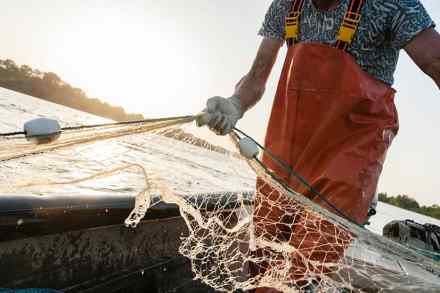
It was a hot late evening on the Greek island of Tinos, and we were sitting at a quayside restaurant outdoors, enjoying a nightcap glass of ouzo. One or two other tables were still occupied by diners, all of them Greek. Foreign tourism is only slowly coming back but Greece has a strong internal holiday market, and Tinos, a lovely island, is only an hour or two by ferry from the mainland. A couple of children, small girls, were playing around the edge of the quay. The tranquil scene was now disturbed. The girls were looking in alarm at something under an unoccupied table. A big fish, beached, more than a foot long, was flopping around on the concrete, gasping. Other diners looked on, unconcerned, but I thought the children were distressed.

The case for travelling abroad

I’m off. In the week when you may read this, my partner and I will be winging our way to the European mainland, exploring, visiting friends, and immersing ourselves in new places, among new people who speak languages other than our own. Even as I write this, I can anticipate a sour response from some who read it. Over the past year I’ve learned that any mention of travelling abroad draws from certain quarters three types of disgruntlement. Three, in fact, of the Seven Deadly Sins. The first is Envy. ‘Oh, bully for you!’, ‘It’s all right for some’, etc. This I disregard.

The death of the dream my family fought for

Before plunging into a vexed question, it’s sometimes wise to point out that one is aware how vexed it is. I haven’t been living in a cave these past few years. Even as I speak, doctoral theses are doubtless being written on ‘identity politics’: whole books have been devoted to what has become very much the topic of the day, and (without always being precise about what we mean by the term) we in the world of politics and the political media sometimes seem to talk of little else. But during a recording for my BBC Radio 4 Great Lives programme this week, it came home to me what these ideas have displaced. Out have gone the beliefs and ideals that meant so much to me as a boy.

My voyage back through the landmarks of my life

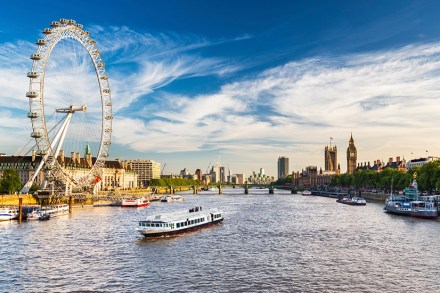
I was looking forward to my dinner at Daquise in South Kensington, a Polish restaurant that’s been there for ever yet feels curiously up-to-date; but that wasn’t until 7.30. I’d finished my afternoon’s work, I’d brought in the washing and written two thank-you cards, and it was still only five o’clock. I hate hanging around. By Tube to South Ken is only half an hour — so what to do? ‘Why not go the long way, on foot and by river?’ I thought. My flat is by the Thames in east London, so I could walk along the river to the Canary Wharf jetty and hope for a river bus to Chelsea.

The difference between looking and seeing

By the side of the road from Sudbury in Derbyshire to Ashbourne, there is a lone eucalyptus tree. This is rolling country, small fields bordered by oak, ash and hawthorn. A eucalypt in this unlikely place stands out, its grey-green foliage so different from the more vivid greens of rural England, its pale trunk slimmer, its trailing swishes of narrow leaves more elegant, its thin branches more graceful than those of its stout and stubby British counterparts. You notice. You wouldn’t if you were in Australia.

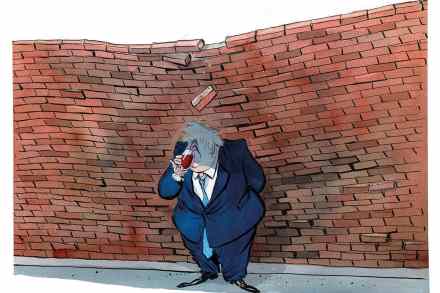
Boris Johnson has defied the pro-lockdown groupthink

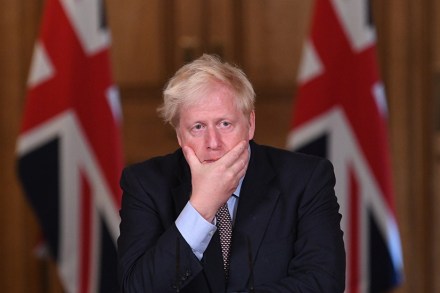
Should the name of Dominic Cummings ever make it into the Oxford Dictionary of National Biography, there’s one Cummings phrase our successors are sure to see. ‘Weirdos and misfits’ were what he valued. He said so in his blog, describing his preferred applicants for a job with his team at No. 10. I like the phrase. Such misfits can so often light the pathway where more timid minds and characters lose their nerve or their way. Cummings has always valued disruptors; always railed against Orwell’s ‘groupthink’; always rated the kind of people who question the conventional wisdom, the nostrums of the hour. And good for him. He’s one of them, and we need such people.

The two halves of Ireland can’t be forced together

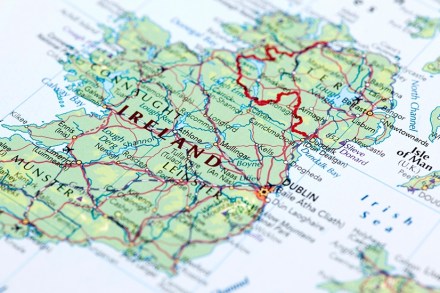
Last week, Edwin Poots was elected leader of the DUP. You will have read all about him. I have. You may not previously have known much about him. I didn’t. We should hesitate, I think, to respond to his elevation with a broad-brush sneering dismissal, or in personal terms. We know, of course, about Mr Poots’s creationist beliefs and most of us reject them, and I don’t like his views on homosexuality or abortion; but Poots has proved able to work pragmatically with republican fellow politicians. In an important way, though, this isn’t about Poots, but what he represents: a unionist shift towards back-to-basics fundamentalism.

Who regulates the regulators?

This isn’t about David Cameron and Greensillgate; it isn’t about Boris Johnson and wallpapergate or Jennifer-Arcurigate. It isn’t about Westferrygate and the illegal planning approval (later reversed) given to a big Tory donor by the responsible minister (Robert Jenrick) for that grotesque development. Nor about Mr Jenrick’s department’s awards under the Towns Fund, which the public accounts select committee found had ‘every appearance of being politically motivated’. Nor is it about (Lord) Edward Lister and the late Sir Jeremy Heywood and twohatsgate, nor about Len McCluskey, Joe Anderson, Paul Flanagan and Flanagangate in Liverpool. Some of these men (the last two) have been the subject of police inquiries and one is on bail.

How to get a police record (without committing a crime)

I couldn’t quite believe it when first I read the newspaper subscriber’s letter. Columnists for the Times and Spectator do still get real letters, and this one from (shall we say?) Mr Jones had enclosed the copy of a letter he had written to a lady whom we shall call Mrs Smith. Mr Jones had read about the public protest she was leading last year against an Emmerdale episode in which a couple, after much agonising, choose to abort their Down’s syndrome baby. Mrs Smith has a Down’s syndrome child, whom she adores. Mr Jones’s letter to her defended the broadcaster’s right to show parents who make a different choice. He believed the reasoning of such parents should at least be heard.

Shirley Williams: a woman apart

Shirley Williams, the Liberal Democrat politician, died peacefully at her home this morning, aged 90. In 2009, our columnist Matthew Parris reviewed her autobiography, Climbing the Bookshelves, for the magazine: Anticipate the demise of Gordon Brown. Imagine Labour’s search for a leader with voter-appeal. Picture a younger Shirley Williams, but with the experience and affection she already commands. Wouldn’t she be a powerful contender? Couldn’t a new Shirley Williams, updated for the 21st century and reinserted into the Labour Party, give the rest a run for their money? Lady Williams’s style of politics has weathered better than that of any of her erstwhile Labour contemporaries. She’s just the sort of thing they need.

Roadmap to nowhere: will life ever return to normal?

38 min listen

Will life ever return to normal? (00:50) Is the government pandering to statue protestors? (14:30) And what’s Prince Harry’s new job? (27:55)With Kate Andrews, the Spectator's economics editor; Spectator columnist Matthew Parris; Spectator contributor Alexander Pelling-Bruce; Historic England CEO Duncan Wilson; Dominic Green, deputy editor of the Spectator's US edition; and Sam Leith, literary editor of the Spectator.Presented by Lara Prendergast.Produced by Max Jeffery, Cindy Yu and Arsalan Mohammad.

Vaccine passports are a ticket to freedom

In principle I’m in favour of vaccination passports, and don’t understand how — again in principle — anyone could be against the theory. One can have severe doubts about whether our NHS, pubs, theatres, sports grounds and restaurants would actually be capable of operating such a scheme, yet at the same time think it would be an excellent thing if they were. To me it seems not just sensible and fair but obvious that access to jobs or spaces where there is an enhanced risk of viral transmission might be restricted to people who could demonstrate a high degree of immunity. I’d add that in order for the idea to command widespread public acceptance, it might be best to wait until anybody who wants to be vaccinated has had free access to vaccination.

The sad decline of Britain’s buses

‘If anybody can write an interesting column about buses, Matthew,’ the then comment editor on the Times told me decades ago, ‘it’s you. And you’ve failed.’ Here goes again, because the government has just published an energetic 84-page report outlining a strategy for the future of English bus services. There’s even an affectionate foreword by Boris Johnson. Buses deserve our attention. Trams are newly fashionable but eye-wateringly expensive and in many ways, being less flexible, slower and more dangerous, a regression from buses. Many of the recommendations in Bus Back Better are sensible, though there’s the usual infestation of acronyms, consultations and new structures.

Battle royal: Harry and Meghan’s brand of revenge

36 min listen

Is it fair to blame Meghan for the Royal Family's problems? (00:55) Why is China censoring a book of Dante's poetry? (12:40) Would you go to moon? (24:50)With The Spectator's US editor Freddy Gray; The Spectator's restaurant critic Tanya Gold; author Ian Thomson; Kerry Brown, professor of Chinese Studies at King's College London; The Spectator's commissioning editor Mary Wakefield; and Spectator columnist Matthew Parris.Presented by Cindy Yu.Produced by Max Jeffery, Natasha Feroze and Matthew Sawyer.

Why Elon Musk should fly me to the moon

I have just applied to fly around the moon. My chances of being selected are slim, but is it impossible? Hopefully the explosion of Elon Musk’s test rocket shortly after landing in Texas last week may have winnowed down the competition for a place on Yusaku Maezawa’s flight to the moon and back, scheduled for 2023. That Texas landing was in fact a success, proving it’s possible for a rocket of this size to launch and return intact: third time lucky, the first two rockets tested having exploded on impact.

The 31 inventions that Britain really needs

‘Get Brexit done, then Arpa’ read Dominic Cummings’s WhatsApp profile. Arpa was what’s now the American Defense Advanced Research Projects Agency. Mr Cummings has departed, but our very own British Arpa has arrived. Downing Street has tweaked the Yankee acronym to ‘Aria’ — the Advanced Research and Invention Agency. Its aim? ‘High-risk, high-reward’ scientific research. The cost? £800 million over four years. Ludicrous, no doubt: one of those fast-forgotten ‘eye-catching initiatives’ beloved of our leaders. But it got me thinking. We’re responsible for so many of the world’s great technologies and inventions.

The sticky truth about Navalny

His courage is exhilarating. Even if you think his cause hopeless, Alexei Navalny, the Russian opposition leader and Putin-baiter, deserves our admiration. To return to Moscow after being poisoned, surely knowing arrest awaited him, is beyond brave. The chances are he will be crushed. But annihilation is not certain; and if one day he wins his battle with Putin, his return to Moscow this winter will become the stuff of legend. Navalny is not crazy: he has made a rational calculation, weighing the relative safety of a tedious future in grey and indefinite exile against a small possibility of making Russian history. With open eyes he has chosen risk. That sooner or later Vladimir Putin will be swept away is likely — but when? Might it be sooner?

‘Inessential’ workers have helped keep the country afloat

A common sight across Britain these past ten months has been those rainbow flags fluttering in urban and village streets: ‘Thank you NHS.’ Many add an afterthought: ‘And other key workers.’ And who would dispute either sentiment? To these expressions of gratitude are added ministers’ and their medical advisers’ thanks to everyone who just ‘stays home’. We are saving granny. We are, if only by inaction, doing our bit in a great national effort, pulling together with the team. We join the ranks of the public-spirited, the selfless, the just. And again, who would cavil? Prudence, caution, carefulness… in a pandemic these are needed qualities.

Lionel Shriver, Matthew Parris and Jonathan Beswick

25 min listen

On this week's episode, Lionel Shriver says we believe what we want to believe. (00:45) Then, Matthew Parris says Peter Mandelson, infamously nicknamed the Prince of Darkness, could have been prime minister. (09:50) And finally, Father Jonathan Beswick explains why he's keeping his church open during lockdown.

Mandelson’s story could have been so very different

Matt Forde, the stand-up comedian and presenter of his regular Political Party Podcast, has hit on an overlooked technique for getting the most out of big-name interviewees. He pretends to know nothing. Wide-eyed and star-struck (actually he is neither), Forde puts them at their ease in conversation with an apparent fanboy ingénue. ‘Do keep up, Matt,’ said Peter Mandelson, affectionately, as in his Christmas holiday interview Forde claimed to be unaware of some half-forgotten political turbulence that Lord Mandelson, his star interviewee, once encountered. It worked a treat. Lord Mandelson is normally a wary interviewee, but with Forde I have never heard him so unguarded: more confessional even than in his own autobiography. I listened partly out of curiosity.