Matthew Parris

Matthew Parris

Matthew Parris is a columnist for The Spectator and The Times.

Price caps are a slippery slope

From our UK edition

Sometimes it’s the little things that depress most. I groaned last week to hear the news item. The government is contemplating a ‘price cap’ on ‘basic items’ in ‘supermarkets’. Forgive the quotation marks, but each of these terms is so horribly problematic that one has to start by asking what they even mean. Has Conservatism in the 2020s lost its ideological moorings? Or perhaps one should start with a quick recapitulation of the history of this idiotic idea, because price control has been tried before, first by a Labour government, and then by their Tory successors who went on to consolidate the folly.

Could Derbyshire survive on its own?

From our UK edition

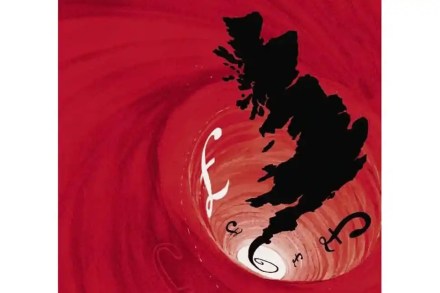
Since at least the beginning of this century there has been a mood abroad – cultural as well as political – to trash the place that contributes most to British culture and the British economy. Without London and its population, we in the rest of the United Kingdom would be unable to continue living in the manner to which we have become accustomed and which we seem to consider our birthright. But suggest as much in the English provinces, the West Country, East Anglia, the Home Counties, Scotland, Wales or Northern Ireland, and people look at you as though you were mad – or, worse, secretly in the pay of the spivs and swindlers of Canary Wharf and the City of London. Have we Derbytanians the least idea of the wealth transferral from the metropolis upon which we depend?

On looking without seeing

From our UK edition

Guadix is a windy, dusty town on the slopes of the dry side of the massive ridge that is the Sierra Nevada in Andalusia, Spain. These slopes are the rain-shadow badlands of the province of Granada: a place few foreign tourists visit. The other side of the mountain, the Mediterranean side, is called the Alpujarra and seems a world away: verdant, flowery slopes with orchards, pastures and little whitewashed villages clinging to them: a landscape and people made famous by the English travel writer Gerald Brenan, who lived there. Our music was not saying anything to these birds, any more than their chirruping said anything to us But our side could not be more different. I say ‘our’ because my partner and I own two cave houses in Guadix, and often stay.

The problem with St Paul

From our UK edition

On Easter Saturday, I wrote for the Times about the victimhood of Christ, describing this as a regrettable foundation for a world religion. In online posts beneath my column came hundreds of comments from Christians protesting that I’d misunderstood the Crucifixion’s meaning, which was (they said) the ultimate victory. Triumphantly, Jesus redeemed our sins. Or ‘atoned’ for them. Along with atonement and redemption, expressions like ‘ransomed’, ‘forgiven’, ‘pardoned’, ‘paid for’, ‘healed’ and ‘washed away’ recurred, as well as ‘sacrifice’ – Jesus’s blood-sacrifice to expiate the world’s sins: a kind of reparation. The notion of release – from slavery, debt or imprisonment – suffuses these responses.

My messiah complex

From our UK edition

In June 1999, I described on this page jameitos, tiny, blind, albino crabs on the sea bottom in a cave in Lanzarote, occasionally caught in a shaft of sunlight they couldn’t see. ‘Might there be searchlights moving across the surface of our world, too,’ I wrote, ‘catching [us] within their purview, and we the objects of this silent inspection, all unknowing?’ It was a long overnight flight from South America last month. Though comfortable, I couldn’t sleep, so I accessed the in-flight entertainment menu, selected ‘Comedy’ and decided to try The Truman Show, a 1998 American movie, not really a comedy, with (I later learnt) something of a cult following.

What I’ve learned from a lifetime of travelling

From our UK edition

In the language of the Mapuche people of Patagonia, futa (I’m told) means ‘river’ and leufú means ‘big’. So Spanish--speaking Chile could have called it the Rio Grande but instead have kept the indigenous name, Futaleufú, for this sinuous, deep, swift-flowing river, hurling its clear turquoise waters at the black basalt that flanks its roaring gorges. That this is one of the finest white-water rafting and kayaking rivers in the world is uncontested. And the river has given its name to the small town nestling beneath snowy Andean peaks and glaciers, past which it flows. Before crossing the border into Argentina on a dirt road, six miles upriver, I spent a day in Futaleufú last week.

Why ‘safe routes’ to asylum can’t work

From our UK edition

I have never met Enver Solomon, the chief executive of the Refugee Council, but I have not the least doubt that his heart is in the right place. And that’s the problem. In the current and coming furore about small boat crossings and what to do about them, too many who comment are concerned to show that their heart is in the right place. Too few appear ready to contemplate the natural rather than the hoped-for consequences of stopping the government’s plan to deport those who come here without permission to a third country like Rwanda.

Death, beauty and the writing of a will

From our UK edition

Perhaps there’s a German word – for there’s no English one – for that alloy of liberation with melancholy that comes with having faced up to something sad. I have made my will. A draft for my English will lies on the desk beside me, and early this week I flew to Catalonia to make the Spanish will that my brisk and capable Bakewell solicitor said I’d need. In decor, lawyers’ offices breathe the same mood across the planet. Gravity, money, a certain self-regard I’m in excellent health for a man of 73 and, God willing, may have many years left; but there’s no gainsaying it – these things need to be sorted out in an atmosphere of calm when there’s time to get it right. It’s what my father did, without a fuss, and Dad is my inspiration in these matters.

Only a proper shock can jolt Britain out of comfortable decline

From our UK edition

Fifty years ago I was hitchhiking down the Eastern Seaboard towards Miami overnight. It was midwinter, icy and way, way below zero. Through miscalculation, I had ended up being dropped near the Cross-Bronx Expressway. I walked up a ramp to the elevated carriageway and began trying to thumb another lift. Utterly stupid: no car was likely to stop. But I was tired, and getting desperate. We’re in slow, apparently relentless but quite comfortable decline; and no chasm yawns ahead, or not yet After about an hour the intense cold was biting deep into the bone. Though I had gloves, I lost feeling in my hands. Still I persisted, exhausted but adamant, fatigue wrecking common sense. Then came something I’d never experienced. Calm was creeping over me, and a kind of passivity.

How will it end?

From our UK edition

42 min listen

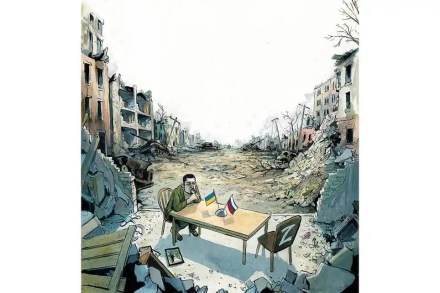
On the podcast this week: How will the war on Ukraine end? This is the question that Russia correspondent Owen Matthews asks in his cover piece for The Spectator. He is joined by Rose Gottemoeller, former deputy secretary general of Nato, to discuss whether the end is in sight (01:02). Also this week: Matthew Parris interviews the theologian and ethicist Nigel Biggar on the legacy of Empire. They have kindly allowed us to hear an extract from their conversation, printed as a dialogue in this week's issue. They discuss Nigel's motivations for writing his controversial new book Colonialism: A Moral Reckoning, and reconsider the economics of colonialism (18:52).

Matthew Parris, Lionel Shriver and Gus Carter

From our UK edition

24 min listen

On this week’s episode, Matthew Parris wonders what ‘winning’ in Ukraine really means (00:52), Lionel Shriver says she’s fighting her own war against words (08:43), and Gus Carter wonders whether it’s a good idea to reintroduce Bison into Britain (18:28).

What would ‘winning’ in Ukraine mean?

From our UK edition

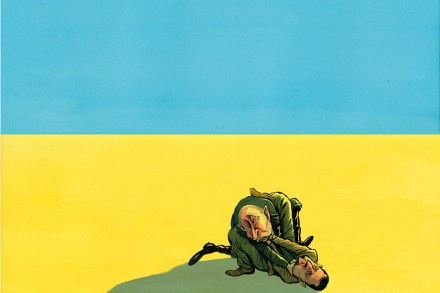
I awoke in the small hours last week and began worrying about the Ukraine war. A friend had earlier taken me to task over the airy way I’d introduced an argument with the words ‘Once we’ve won the war in Ukraine’ – as though this was a simple matter and just a question of ‘when’. But what does ‘win’ mean? Does the searchlight of our intelligence, backed by what we already know, really illuminate the landscape ahead? Might things come to pass that we just haven’t thought of? Even people as old as me remember wars that, though bloody and protracted, were fairly straightforward as narratives, with clear and final objectives and, in story terms, a reasonably clear-cut ending.

The genius of Adam Curtis’s TraumaZone

From our UK edition

Topiary is the art of making something be something it wasn’t. This is achieved by subtraction. By clipping away everything about a yew bush that isn’t a swan, the topiarist creates a representation of that bird in living foliage. The topiarist’s swan is wondrous, but spare a thought for the clippings. Formless, meaningless to the human eye, they have meaning of their own. History is topiary. From a superabundance of data, the historian and his reader make themselves a story. The parts the narrative is constructed from stay: the rest, like foliage falling victim to the topiarist’s shears, is discarded. If one Wednesday morning W.E.

The two books that made me a Conservative

From our UK edition

From time to time newspapers invite writers to describe the ‘books that changed my life’. The resulting columns too often dazzle the reader with a display of erudition or passion, rather than tell the more mundane truth. The mundane truth is that our dispositions and the courses of our lives tend to be fixed before our ages run to two digits: a time when we were unlikely to be tackling Proust, understanding Nietzsche or appreciating C.P. Cavafy. The child being father to the man, we should be looking at fairy tales, picture books and First Readers if we seek the truly formative influence of literature. Foreign and war correspondents or derring-do travel writers are less likely to have been set upon their life’s path by Wilfred Thesiger, T.E.

Lady Hussey and the truth we dare not speak

From our UK edition

Though it was sensible for Lady Susan Hussey to resign, I do find the chorus of disapproval that has greeted her unpleasant. Reading a transcript of her exchange with Ngozi Fulani of Sistah Space I feel rather sorry for both of them – the only word springing to mind being ‘misunderstanding’. Such different backgrounds; generations so far apart; these misunderstandings can easily occur. At a Buckingham Palace reception where Ms Fulani may have felt nervous and awkward (as would I) it’s altogether possible she did think Lady Hussey’s asking where she came from was meant rudely. But I think it was not. And if not, shouldn’t the incident just be put down to clumsiness?

‘We’ can’t know how the very poorest live

From our UK edition

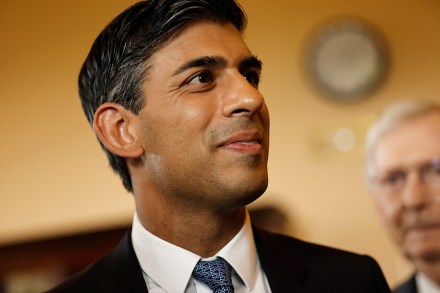
I’ve been conducting a straw poll. Using incidental encounters with people who don’t follow politics closely, I’m learning what ordinary voters do or don’t know or think of Rishi Sunak. Responses range between neutral and mildly positive. Beyond that, what do I get from respondents? (1) They really don’t know much about him; but (2) they do know he’s rich. The problem for Mr Sunak is not so much that he’s known to be rich – of course he is – but that this is almost the only thing about him that has sunk in. Here in Britain the observation that a politician is rich is typically followed by the thought that this may ‘separate’ them from the lives and concerns of the ordinary voter. ‘If you haven’t lived it,’ we say, ‘how can you fully understand it?

Isabel Hardman, Matthew Parris, Graeme Thomson and Caroline Moore

From our UK edition

21 min listen

This week: Isabel Hardman asks how Ed Miliband is the power behind Kier Starmer's Labour (00:57), Matthew Parris says we've lost interest in our dependencies (05:03), Graeme Thomson mourns the loss of the B-side (11:57), and Caroline Moore reads her Notes on... war memorials (16:51).  Produced and presented by Oscar Edmondson.

We’ve lost interest in our dependencies

From our UK edition

Let nobody say Liz Truss achieved nothing in her mayfly days at Downing Street. She gave away the vast British Indian Ocean territory, the islands and the sea around them, known as the Chagos Islands. To be more precise, in talks with Mauritian officials while in New York, she set in train negotiations with Mauritius over a handover next year. Exempted from any such agreement will be the island of Diego Garcia, nominally British but for all practical purposes under the control of the United States, who maintain a huge and important military base there, probably torturing people – but we wouldn’t know or, if we do, wouldn’t be so impertinent as to complain.

What everyone knows but no one says about Brexit

From our UK edition

Theresa May’s premiership is now a memory. Boris Johnson’s time in office assumes the status of a rather brief, if often embarrassing, interlude. Liz Truss has gone in short order. The threat of a comeback by Johnson has been lifted. What a rollercoaster. Each of these events, in its time, took centre-stage in our politics and each prime minister became for a while the object of contempt, suspicion and rage. I called Mrs May the death star of British politics; I called Mr Johnson a moral toad; I called Liz Truss a planet-sized mass of over-confidence and ambition teetering on a pinhead of a political brain.

The joy of tuning in to the night

From our UK edition

‘That element of tragedy which lies in the very fact of frequency,’ wrote George Eliot in Middlemarch, ‘has not yet wrought itself into the coarse emotion of mankind; and perhaps our frames could hardly bear much of it.’ Her thought extends beyond ‘compassion fatigue’ in the face of global suffering on a scale beyond our homely ken, but to life itself in its unfathomable abundance: the dramas, the joys and the sorrows and the sheer activity that surrounds us and would engulf us if we paused for long enough to think about everything. We screen almost all of it out. We have to. Our Derbyshire home is on a hillside in the middle of fields and woods.